AI image
Anchorage has gone over a year without a traffic safety coordinator, report says
Anchorage has gone more than a year without anyone in the city job meant to lead its effort to cut traffic deaths, according to a draft report the city's transportation planners take up Thursday.
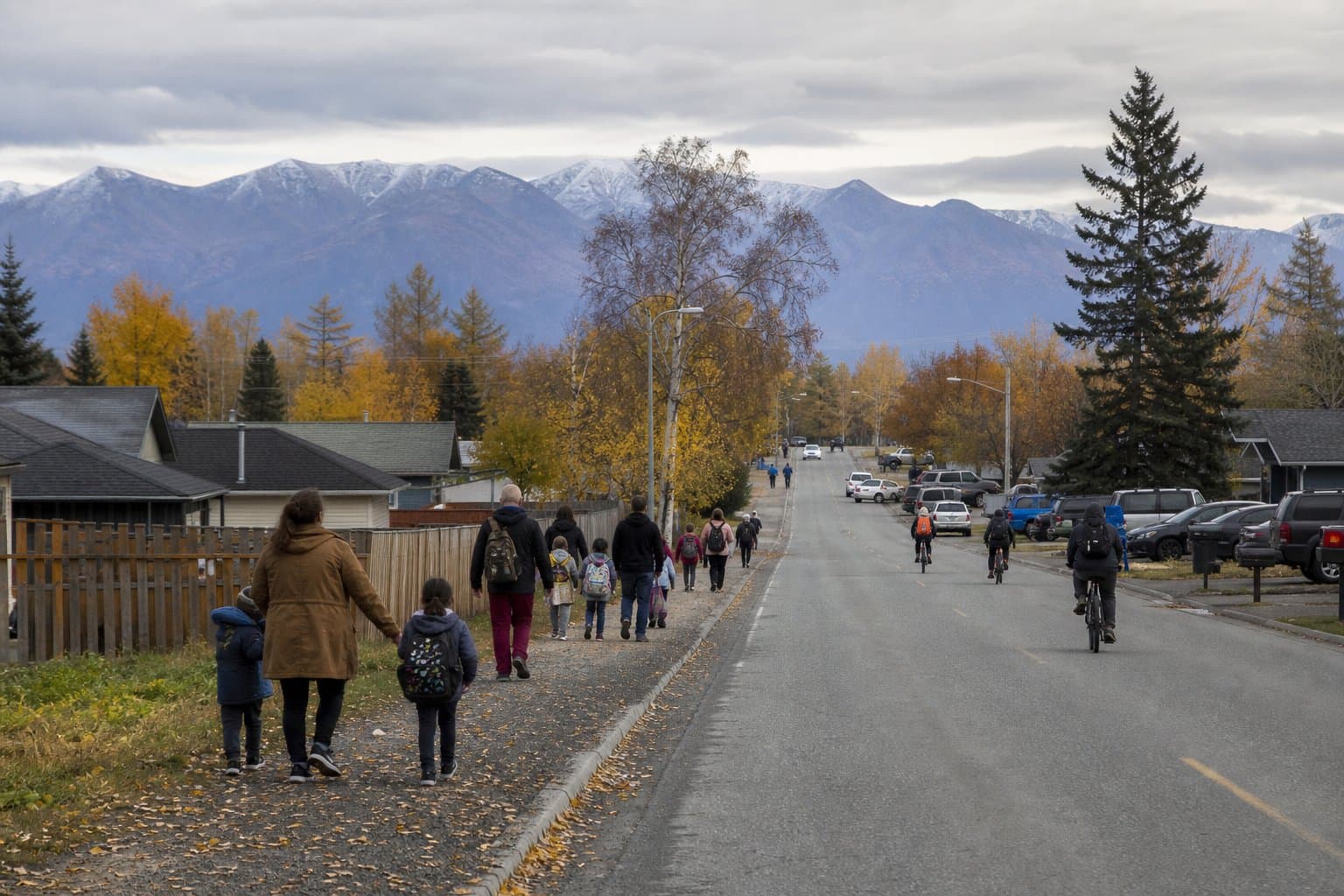
Over the past decade, deaths of people walking and biking in the Anchorage area climbed while deaths of people in vehicles fell, leaving the total roughly flat, the report found. Walkers and bikers made up 6% of commute trips but were involved in nearly half of fatal crashes.
The job is the city's Vision Zero coordinator, named for the goal of ending traffic deaths. Anchorage's 2024 safety plan called for someone to lead that work. The city created the position and filled it, but it has been vacant for more than a year, the report says.
The city has advertised the job for at least a year without a qualified candidate accepting it, Public Works Director Kent Kohlhase told the Anchorage Assembly at an Oct. 23 budget work session. Strong candidates, mostly from out of state, turned it down over the logistics of moving to Alaska, he said.
Some of the work has stopped. A city and state working group used to visit crash sites, though only staff went along. Those visits are on hold, and the report says filling the job is the next step to restart them. The 2024 plan also called for yearly safety walking tours for elected officials and the public. Those haven't started.
Of the plan's 17 steps, two are done and four haven't begun. The plan also named five top-priority stretches of road that had no projects lined up. Two still have no money set aside for design: Debarr Road from Lake Otis Parkway to Boniface Parkway, and Northern Lights Boulevard from Lake Otis to Muldoon Road.
A memo from senior planner Emily Weiser proposes that the 2028 update include an evaluation of why traffic deaths have not declined. A consultant with national experience would bring agencies together to review what has helped or hurt.
The report suggests some old explanations may matter less than they used to. Darkness in the fall and the start of winter driving have been seen as reasons more walkers and bikers die that time of year. But their deaths in summer are becoming more common, the report says, which may mean other factors are growing.
The planners' Technical Advisory Committee takes up the proposal Thursday and will make a recommendation to the policy committee above it. The public can comment at the meeting. Money for the update, $250,000, is already set aside for 2027, and staff plan to finish it by October 2028.
The day before, the Assembly takes up a state grant for police patrols aimed at distracted drivers on roads with high numbers of crashes involving pedestrians, bicyclists and motorcyclists.
Made by our human newsroom with AI. Reviewed by Cale Green. How humans and AI work here · Grow with our newsroom
Get Alaska News in your inbox
Create your free account and get the day’s top stories around 6 each morning, in a few minutes’ read.
The day's top stories around 6 each morning. Unsubscribe in one click.
Source: AMATS.


Comments
Sign in to leave a comment.
No comments yet. Be the first to share your thoughts.