AI image
Alaska's $80 million school funding appeal is still pending, and so is the rule meant to prevent a repeat
Alaska could lose $80 million in federal money for its public schools if the U.S. Department of Education does not reverse a finding that the state's school funding formula fails a federal equity test by 1.88 percentage points. The state has not lost the money yet; the department has not decided its pending appeal, and it remains unclear whether the $80 million would be lost, replaced by the Alaska State Legislature, or prorated across districts.
The Impact Aid Program issued the determination on May 16, 2025, finding that Alaska's formula does not equalize spending among districts for the fiscal year ending June 30, 2026, and that the state may not count federal Impact Aid toward the local share for that year. Impact Aid compensates districts whose tax base is federal land. A federal rule allows a disparity of no more than 25 percent between the districts at the ninety-fifth and fifth percentiles of enrollment. Alaska came in at 26.88 percent. Revenue per student at the ninety-fifth percentile was $8,703 in the Northwest Arctic School District; at the fifth percentile it was $6,859 in the Lower Kuskokwim School District.
The figures are state fiscal year 2024 data. The margin traces to a reporting change Alaska made itself, excluding all transfers from a district's general fund to its transportation fund rather than only money arriving through the state transportation formula, as in prior years. The Impact Aid Program rejected the change and recalculated, writing that transfers do not add to a district's total revenues and that any district can move money between funds. Alaska's appeal says it chose that method partly to comply with a position the department took in its first FY2022 certification report.
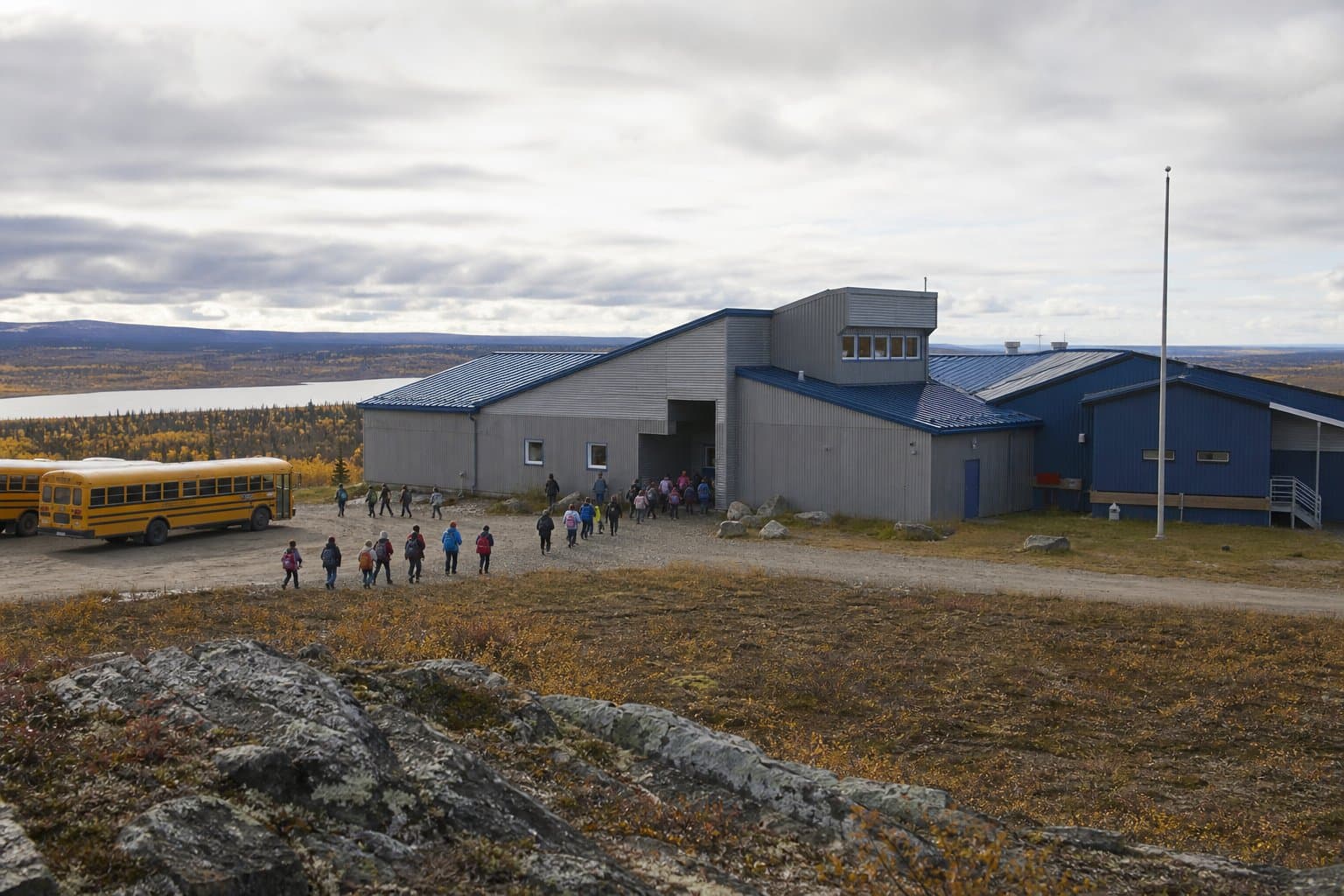
No Alaska school district requested a hearing before the determination came down. The state requested a federal hearing on July 14, 2025, within the 60 day window, arguing that a reversal is needed to avoid losing the $80 million and to prevent significant dis-equalization of education funding. The state contended that transportation and food service money is earmarked, cannot pay for classroom instruction, and reflects costs tied to geographic isolation, including daily airplane rides for students, and argued that another federal accounting method would likely show Alaska passing.
A memo to superintendents dated November 7, 2024, signed by Deputy Commissioner Karen Morrison, described a proposed regulation as a proactive step against future noncompliance, and set out two ways a failure would have to be absorbed: legislative appropriation of more money, or proration of existing appropriations.
That regulation has not been adopted. The State Board of Education declined to adopt it on an emergency basis in June 2025 and opened a comment period instead. Its supplemental notice, published June 20, 2025, proposes adding 4 AAC 09.985 to require that local contributions be consistent with federal impact aid law, and repealing or amending the definitions of "appropriation" and "value of in-kind services" in 4 AAC 09.990(b). Comments closed July 25, 2025, and thirteen months later no adoption or withdrawal appears in the record.
The department certified Alaska for fiscal year 2027 on a revenue disparity of 21.3 percent, DEED announced June 18, and that certification is separate from the pending FY2026 appeal. "Alaska's formula accounts for the unique challenges of educating students across a vast and diverse state," Commissioner Deena Bishop said.
The review began with one municipal budget: Juneau approved $2.3 million in additional school funding outside the statutory cap in 2023, for transportation, an after-school program and community activities. The department wrote to Juneau that June, and to every municipal district the following month, warning that labeling funds outside the cap does not exempt them from statutory limits.
State law sets a required local contribution equal to a 2.65 mill levy, $2.65 per $1,000 of assessed value, capped at 45 percent of basic need, the total the formula says a district requires. It allows an additional contribution of no more than a two mill equivalent or 23 percent of basic need, whichever is greater. A December 2023 department memo quotes 1997 legislative testimony explaining that the 23 percent ceiling exists to keep the disparity under 25 percent.
No district, school board, superintendent, municipality or borough assembly is quoted in the records reviewed. The records are on the department's local contribution page.
Districts are building fiscal year 2027 budgets now. The November 2024 memo had aimed to have any regulation in place before that work began.
Source: Alaska failed the federal school funding equity test by 1.88 points, told Washington it stands to lose $80 million, and its own fix has been sitting since comments closed fourteen months ago ().
AI-assisted. No editor review is on record for this article. Who is accountable.
Stay informed. Support what matters.
Free, permanent access to local news you can verify. Subscribe to support Walter AlaskaNews and go ad-free.
Related Coverage
Alaska passed a federal check that keeps its school funding system intact
Alaska News · 2mo ago
Alaska school districts could lose unspent federal money if they don't spend it fast
Alaska News · 2mo ago
Alaska districts must submit fiscal 2027 plans by May 15. Many don't yet know what the state will give them.
Alaska News · 4mo ago
Alaska districts face June 30 deadline for federal education funds
Alaska News · 3mo ago
A reserve cap just cost Fairbanks schools $11.4M. Now officials are fighting it.
Alaska News · 2mo ago
Comments
Sign in to leave a comment.
No comments yet. Be the first to share your thoughts.