Anchorage Assembly: Salaries and Emoluments Commission
Alaska News • • 55 min
Articles from this transcript
Anchorage passes surveillance rules, rejects new limits on plate reader searches
The Assembly wrote police plate reader and crime center rules into code 11-1, but left the 14-day data limit in police policy and rejected new search limits.

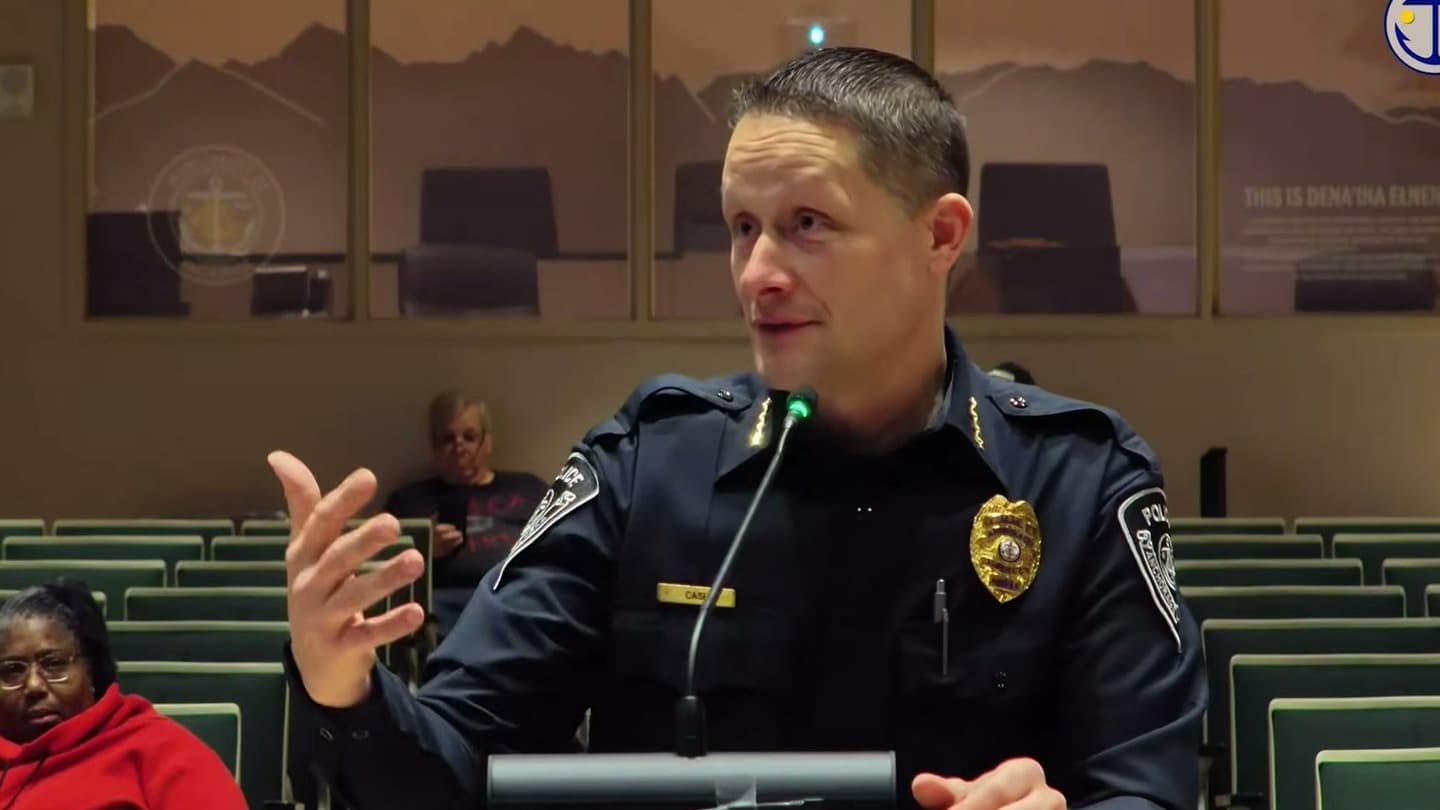
Display is public. You know, things you have hiding in your backpack, you know, that's your private backpack, but things that are visible to, you know, an officer in the public area that they could determine with their eyes. So is it fair to say that is a one-point-in-time measurement? That is, at this point in time, there is no mosaic because it's a one data point in time, but for example, The idea of mosaic would be that if multiple data points are collected, you could essentially piece together the whereabouts, the activities. So when does the quantity of pings become from the public to a private sphere?
Through the chair, I will say the one case that has been raised tonight, right, is the trial, federal trial court case from Oklahoma, which acknowledged that its ruling was an outlier among all the court cases it had reviewed nationwide. That case, in that circumstance, you know, going out on a legal theory that no other court had done, found that a 30-day period of time, pulling historical data from a 30-day period of time spanning multiple states, a nationwide network for a vehicle that had traveled across multiple states over a month-long period, that court, again, going beyond what any court had done and contradicting what other courts had done, found that was inappropriate. So I think that we— I don't know exactly where the line is for that court, but what it found inappropriate is well beyond what we have here and well beyond what APD is capable of doing.
No audio detected at 0:50
Thank you. I think the well beyond element is an opinion, and I take that opinion, but I don't know if that's in fact. What I mean by that is if the case that you described has multiple pings, and so the quantity of those pings leads to interstate identification of a mosaic across multiple states, our comparable wouldn't be across multiple states. We're not driving anywhere else from Alaska to other states, so that wouldn't be the comparable. The comparable would be multiple pings on a record that would create an aggregate mosaic.
And so why wouldn't that be a concern for us? Similarly, that was a concern in the other case. Why wouldn't that be a concern for us? Is there something that we're missing that would otherwise alleviate that concern that is being expressed through this particular amendment? Um, I think taking a step back and considering at any moment in time, um, the Chief Kishore, how many patrol officers are out in the city driving around, uh, right?
They all have eyes and they are all looking at license plates. And the, the only data that our license plate reader system is collecting are the cars that those vehicles right, can see the data that those officers within our police force can see. We are not connecting to other police forces' data, and we are limiting it to a 14-day look-back period where we only look into that data if there, there's a reason based on a specific case or investigation. So I think that that is not, um, not— I, I think that is not something that raises my eyebrows from a mosaic of somebody's life from that perspective. And courts, again, have not found that that is problematic.
Overwhelmingly, the courts have found that license plate reader use is, comports with the Fourth Amendment. And the one court case that has been cited that found differently looked at a very, very different factual circumstance. And again, its ruling contradicted the vast majority of other court rulings. So I would not recommend relying on it. So to follow up on that, do we have a sense of the rate of efficacy of our usage of the license plate readers?
How effective is it for us with respect to solving, closing crimes essentially How effective has it been as an actual tool? It seems like that's germane to this particular aspect, that the idea is that it's— this is very restrictive as an amendment.
What is the effectiveness, essentially? Yeah, I would love to kind of get a— I don't even know if we've had that data presented to us.
Uh, through the Chair, Member Martinez, since July of 2026, the Real Time Crime Center has been involved in 1,026 police responses. Of those 1,026 cases, 89 of them, or 9%, have used automated license plate readers. I don't have all of the breakdown on exactly how many arrests and all that sort of stuff, but the, the technology itself has been used, uh, in, uh, 9% of those particular cases. Uh, you said 9%, Chief? Yes.
No audio detected at 5:00
No audio detected at 5:10
That's a pretty low percentage. So it's kind of, I just, I wanted to step back from that. It seems like the arguments here have been made that this particular type of constraint would be limiting to police operations, but the police operations are pretty limited with respect to usage of this technology already. I think that's an intriguing point.
And to the sponsor of the amendment, if you won't mind potentially answering one of my questions, I'll ask it.
Is there a difference for you between— and why the language of searches versus a more descriptive way to utilize that? Is that direct from code, or is it the difference between active or passive, or Do you have a—. I think it's a plain common sense meaning. I think it would be the same meaning if APD was going to search someone's home.
No audio detected at 6:10
And I know you mentioned before, I mean, it was mentioned earlier, reasonable suspicion as another level of measurement.
So, Chief, I wanted to go back to the bomb threat and just make sure that we're both on the same page. A bomb threat in Anchorage is an exigent circumstance, or is it possibly an exigent circumstance? Through the Chair, Mayor Martinez, it's possibly. It's case-specific, fact-specific. Just a general statement, not super comfortable about that.
Depends on a lot of the information. I would expect no other answer except the complexity of the type of answer that you gave. It shouldn't be as simple to you all as it is to us as the policymakers.
The change to "and/or/or," is that substantively different to you?
It's different. I would just say that in the example that we're using of the bomb threat, it does— the facts and details of the call determine whether or not that in and of itself is exigent. So, for example, we have these calls that are called swatting calls or fake calls that come in. And we have little bits of pieces of information that if we act on the totality of that call and we kick in a door, do a felony traffic stop, do a whole host of things, and that's not a reasonable decision based on all the fine details, uh, that's, that's, that's going to be not a good search, not a good, uh, reason to point our guns at people and do a felony stop. However, if it, if it does have some of those limiting capabilities that moves it outside of the exigent circumstance category, we would be able without this to use license plate reader to potentially find that vehicle, conduct a lower-risk traffic stop to confirm what we think may not be a bomb call, but still make contact and do that investigation and use— Madam Chair, I need to move to extend debate again.
No audio detected at 7:30
No audio detected at 7:40
No audio detected at 7:50
No audio detected at 8:10
So I move to extend debate until 11:20.
Right, okay, um, there's a motion to extend debate by 20 minutes to 11:20 by Mr. Bolland. Is there a second?
Second. Okay, second by Miss Erin Baldwin Day. Um, also I just need to note before we proceed, um, well actually let's, let's do this and then, uh, so Is there objection to extension of debate? Not this time. Yes.
Okay, okay, members, we proceed to vote on that. And again, it's to 11:20. This does not change the end date of the meeting per the motion.
Okay, and a vote of 7 to 5, that has passed. Again, that it takes 7 votes. Also note, just for about 5 or 6 minutes ago, it appears that our livestream went down briefly, so I will remind everyone that it is still being recorded. When this happens, I know we get emails about it, but we will be replacing the missing piece of the meeting that is still recorded tomorrow, but it is not available live Uh, and the IT has been working on it, so it may go back up, but there might be a few minutes. So just wanted to note that for the record if you're listening for the recording later.
Um, so I believe Mr. Martinez was still in the queue. Thank you. And so to follow up, Chief, um, first of all, thank you for the work you do. Thank you for being here with us and for taking the time to work through these things, both on the dais and, um, in the back channels. The change, just to confirm of the word "and" to "or" is substantively helpful?
No audio detected at 10:10
I know you don't like the amendment in the first place, but is that an improvement with respect to the capacity that you all are looking for? Through the Chairman, Martinez, it's helpful, although it doesn't impact my non-exigent case that we're theoretically— so it's helpful. It's better. Well, we have an ad hoc committee to look at some of the other cases and policies and procedures as we move forward. We passed that tonight as well, so I'm sure that more work will be done on all of these items.
No audio detected at 10:40
No audio detected at 10:50
Um, thank you for taking the time on this particular amendment. It's been identified that this is the crux of things. I think there are several elements to this that are really important, um, beyond this particular element, but I've expressed that as any— at any level that I can, I want additional protections for the public while, as best as we can, not hampering the tools that our police need. And, and I don't see that the case has been made that this is a hamper as an amendment. I think this is, uh, aggressive in terms of protections, and, um, and I think the data will demonstrate whether or not that the outcomes are impacted.
But I would be more concerned if we had the rate of usage of the license plate readers at a higher percentage, that would be very concerning to me because essentially it seems that we are able to still be police, police able to still do their jobs without necessarily all of the most modern tools even being utilized while they have them. So, thank you. Yeah, follow-up thought. Welcome it. A little unorthodox, but I think that goes into the— this idea of the mosaic theory.
And that's kind of the point that we're trying to make about our use of the license plate readers. The fact that we— that we're mobile and we're not fixed in our license plate readers. The fact that we have the 14-day retention. It's not a pooled network. We know who's querying it.
No audio detected at 12:20
And also we have— we've addressed the AI component of it. We are having— we don't have tens of thousands of hits because we have the mobile. So essentially, what, you know, when you look at this idea of a mosaic theory, where we're, we're versus creating this nice picture, we got a couple tiles that we're working with to some of the things that the municipal attorney has said as to why she believes this is not a high-risk using ALPRs like we currently have them without this amendment. And just to confirm, this does not outlaw the usage, this just provides some guardrails and some limitations on it. I really appreciate that you took us back to the mosaic because one of the challenges that I have is, um, you're under scrutiny, and rightfully so.
No audio detected at 13:00
No audio detected at 13:10
I mean, you, you have the legal use of deadly force on the streets, and you are the ones that we employ, hire, and do— to do this work for us, to protect us. But it's interesting that from my vantage point, the mosaic that I'm most concerned with is the mosaic of the corporate data. Corporate data being gathered on individuals. And so when people talk about, you know, like the flock camera, they also talking about corporate data in the background and the cloud and those providers. But to my colleagues, with respect to the mosaic, Facebook is one of the biggest offenders of privacy rights.
They have had a multi-billion dollar lawsuit And so when we think about tracking people and creating a mosaic, the first offenders of privacy and of tracking individuals are corporations that are those social media companies. So I just wanted to also put that out there, that we're interacting with technology that is used for mosaic tracking lifestyles and advertisements all the time, and many of us on the body, I don't think myself as much and others less than myself, but certainly others more, are broad inviting more contact into those spaces as well. So I'm concerned about people's rights to privacy, and I concern myself with corporate, with the corporations who don't have the scruples that you do. And so I'm concerned about all of this beyond just the practical implications that you all have in the larger sense. But thank you, Chief.
I don't think that this— I don't think the feedback that I've received now says that this amendment, as amended, is something detrimental to the operations of policing and keeping us safe. I also think it's important that it does speak to some of the major concerns that I am hearing from the constituents with respect to limiting the ability of some of this technology that can go rogue. But thank you. I don't think you're going rogue, and I think you're doing a wonderful job trying to bring it to our attention. And I think this is very difficult stuff to work through.
And, uh, but I will be supporting this, this amendment and, um, and any other mechanisms to, to make sure that we're protecting, uh, our right to privacy, your tools to effectiveness, but without the hyperbole of absurdity. Thank you. Okay, there's no one else left in the queue, so members may proceed to vote. This is Amendment Number 11.
And I'll note there was the word change from and to or. So point of information, Chair. What's your point of—. The screen makes it look like we're voting on the motion to amend the amendment. Am I reading that right, or are we voting on the amendment itself?
Yeah, this is on the actual amendment, and then it's just noting the word change that was made by the sponsor of that amendment. Okay, thank you.
On a vote of 5 to 7, um, Amendment Number 11 has failed. I'll note we have, uh, 12 minutes left, and I believe we have, uh, 3 amendments that have not been moved yet, so don't see anyone in the queue, so— queue. Okay, Mr. Bond. Okay, hopefully this one can go quick.
No audio detected at 17:10
I'm going to move Amendment Number 6. It's from myself, Members McCormick and Scout. Okay, motion by Mr. Bond to move Proposed Amendment Number 6. Is there a second?
Second. Second by Miss Scout. Please proceed, Mr. Bond. Yep, so this provides that the Anchorage Police Department shall not share ALPR data info with the Department of Motor Vehicles without the prior approval of the assembly by resolution.
So I think potentially this could be part of the ad hoc committee, you know, looking at this issue. Should this be— this type of information be shared with the DMV? One of the concerns that brought this forward, myself and my co-sponsors, would be, you know, potentially using ALPR data to target people for traffic infractions or unpaid parking tickets or that kind of thing. So just something that we feel merits more discussion and would like to have that guardrail in code until that discussion can happen. Thank you, Madam Chair.
Okay, Mr. Perez-Verdia, on the amendment. I would just like the administration to speak to this, please.
Um, through the chair, I might defer to Chief Case on this one. My understanding, just for what it's worth, is that Right now, APD is not connected to directly to the DMV system and does not have any imminent plans to do so. But, okay, Chief Case. Through the Chair, Member Perez-Verdia, currently and never have we had any ability to upload anything into the DMV system. The DMV system isn't loading data into ALPR system.
No audio detected at 18:40
All of that information is held within the way we look and query both DMV and, and APSIN. The only thing that the LPR system can do is query that information that we put into it. It cannot connect to the DMV, and it won't be used for any traffic offenses other than expired registration— DMV, that is, the database that's in DMV— because there's no you know, unpaid traffic tickets. These things aren't in the DMV database. So, and then we have access to all this information anyway.
If we type in a license plate number in our computer in the car, it's going to pull Absentee DMV data. So in effect, it's not possible to connect to the DMV. This is again a little bit older technology, so I don't anticipate that's going to be something that just automatically happens. And you can't put information into DMV. It doesn't, doesn't go that direction, just like we can't do for AppSync.
So you already have an all— you already have access to— you have access to, to DMV information? That's correct. Right. Um, I guess I would just ask the sponsors. I'm not sure.
I mean, well, let me ask you another question, Chief. Do we, do we have— do we share the ALP data with any other agency? Is that a normal practice? Do we, do we need to put guardrails on on, you know, whether you should share it with the Department of Health? I mean, what other guardrails should we be putting on to make sure that it's not shared with agencies that we don't want it shared with?
No agency is connected to the ALPR system that can look at what's in that system. No one is. We have no agencies. Yeah, but you could print it out and hand it to someone. Yeah, that's correct.
But I think several of the amendments that we've talked about are the guardrails that are in place. We keep that data. We, we are going to share that data in our annual report, how many times we get a request, and then we share the data in the ALPR system. Okay, so then I guess I would, I would just ask the sponsor, I'm not sure what problem we're solving here. Can you maybe speak to why specifically that the DMV— and if it's not even possible to share it, why do we have an amendment restricting sharing data?
No audio detected at 21:10
With this particular agency? Sure, it is possible to share ALPR information with anyone, and in fact, in the underlying ordinance are protections against sharing with other entities. So even the underlying item speaks to that. I think though, on this particular one, as I've mentioned before, it's to prevent ALPR information from being used for minor traffic things, but I will also turn over to Member Scout. She was, um, I guess the primary sponsor of this one.
Okay, uh, Miss Scout, if you want to respond. Yeah, um, I appreciate the additional information tonight because in, in the conversations we've had, I did not hear, um, what was just stated tonight about us not being able to connect with the DMV I have real concerns about ALPR data being used to enforce registrations that are out of date, crimes of poverty, things that are not harmful to the public and top priority issues in our community. And so that was really the primary motivation here. And I also know that the DMV pretty actively shares information with other agencies. And so I saw this as a workaround to our prohibition of sharing some data with other agencies, is that it could go through the DMV first and then be passed along.
No audio detected at 22:10
No audio detected at 22:20
No audio detected at 22:30
I'll share a little bit more illustrative information. I'm not sure if it will help this amendment, but— There are multiple individuals in my district, um, legal residents who are incarcerated, um, and being held as by ICE right now in our municipal jail. These are people who are being targeted because of the way that they look, um, and I do not want to allow for any technology that we are building out here to be used to arrest people, to put them in a situation where they are being pressured to self-deport, being lost in Tacoma because the DMV gets access to information and then shares it broadly to places that we are not consenting to it being shared to. So that is the intent. Of this amendment.
No audio detected at 23:10
No audio detected at 23:20
No audio detected at 23:30
Got it. I agree with everything you've said. I'm just not sure how this solves that problem. Maybe I could just ask the municipal attorney— Mr. Volland spoke to this— but the underlying— does the underlying ordinance already restrict sharing information? And is this duplicative in terms of, of not sharing any information with this particular agency?
No audio detected at 24:10
Through the Chair, so the original S version, if you look, it's on page 5, starting at line 12. There are specific restrictions placed on APD, and one of them is APD is only allowed to share surveillance data with non-municipal individuals or entities. That would include the DMV. Unless it's for criminal justice law enforcement purposes. And so APD is already, if this S version passes, already unable to send any license plate reader data, which is defined as surveillance data here, to the DMV because the DMV does not engage in criminal justice law enforcement.
They do not have, you know, perhaps the troopers sometimes enforce things, but that would be through the troopers, not to the DMV, and that would presumably not be I don't think they get involved in expired registrations. Okay. Yeah, I really appreciate understanding the intent behind this. I am really concerned about putting more information in code than what's necessary. And that if the intent of this is to restrict our ability to share information, ALPR information with DMV, and the underlying item already does that.
Then I don't see why we need to have this amendment. So, um, anyway, that's, that's my thought. Thanks. Hey, um, next we have Ms. Scout.
Moment. Yeah, as a follow-up to that question, um, either to Assembly Council or the Municipal Attorney, can the DMV request information on behalf of other agencies and say it's for criminal justice purposes?
No audio detected at 26:10
Through the chair, I think I would, I would ask the chief to confirm if that has ever happened, but I will say there, there are strict rules about the sharing of criminal justice information, and we've talked about this in a few, a few times over in assembly proceedings. But APD can't just give information to anybody who wants it. If you're sharing criminal justice information, you have to be sharing with somebody who is authorized to access it, has appropriate clearance.
And I'm not aware, again, the DMV is not a criminal justice law enforcement agency, so I have a hard time believing they would even be able legally to receive the data even if we wanted to give it to them, even if code allowed it. But I'll ask, maybe the chief could just pop up and say if the DMV has ever requested criminal justice information.
To Chair member Scout, uh, the simple answer is no. I'm just going through the things that our DMV does. I'm not familiar with other DMVs outside of the state of Alaska, so I, I can't— I'm just going to your story and experience. Uh, I mean, essentially the DMV, uh, enforces whether or not, you know, registration, driver's license, and like we— well, through the courts they get information, like if we write a ticket to somebody, and so it's a 2-point ticket on the driver's license. That will be transmitted from the court system to the DMV, and the DMV will keep track of that point system to eventually suspend a license.
No audio detected at 27:30
Like, that's the kind of the extent of what I would call the enforcement. So they don't come to us asking us for any information to help them do their job outside of when we issue someone a citation and there's a point value to that. Okay, um, yeah, I guess I asked that question because I personally know someone quite well who was, um, arrested by ICE at the Anchorage DMV. Um, move to extend debate until 11:30 and the meeting until 11:45. Second.
Okay, there's a motion to extend debate by Miss Baldwin Day to 11:30 and then extend the meeting to 11:45. Second by Miss Scout. Is there an objection Okay, I'm seeing, hearing no objection. We'll continue. So, and I'll remind folks that this is the last item we're probably going to get to tonight unless folks really want to go for the midnight marathon.
So I would ask folks to really keep your comments brief because otherwise we will not get to the end of this. Thank you. Yeah, with that said, I've heard that this is a duplicative amendment, So I'll join some of my colleagues in voting no and hope I can— or I can withdraw it. I'll withdraw it. I moved it, so I'll withdraw it.
Thanks. Okay, so Amendment 6 has been withdrawn. So we, uh, we have 3 folks in the queue currently on the main motion, so— or 2 folks in the queue. So Mr. Martinez on the main— uh, it's you on the main motion. No, I was on the amendment and the amendment's been withdrawn, so I'll just wait on the main.
Okay, thank you. Uh, uh, Ms. Baldwin Day on the main motion.
Okay, then I'll note I believe there's two more amendments, so I'm just going to ask if anybody intends to move amendments, please do so now. Otherwise we're going to vote.
Madam Chair, I think there's one that we're not going to move. Just FYI. Okay, I guess I'm seeing that there's two. I'm seeing Amendment 3 has not been moved and Amendment 7 has not been moved, so I'll ask one more time. Does anybody intend to move any of those amendments?
Okay, I'm not seeing any. Then we are still in the main motion. Um, I am not seeing anyone in the queue, so members may proceed to vote. This is on AO 2026— sorry, 2026-108S as amended.
Member Silvers, are you going to vote? You're not connected.
Okay, on 11 to 1, AO 2026-S as amended has passed the body.
So next— one second.
Okay, so the next item on our agenda is our last continued public hearing item, that is item 13A. I guess at this point I will suggest that we attempt to finish this item, and then rather than attempting to do any of the other items which are new public hearings, that we would consider that the end of the meeting, provided time for audience participation. So 13A is AO-2026-98, an ordinance of the Anchorage Municipal Assembly amending Anchorage Municipal Code Chapter 4.60 and 27.30.085 to enact a new Section 4.60.310 and establish the Chugach State Park Access Advisory Board. Public hearing on this has been continued. I'll ask jokingly, does anyone wish to testify on this item who is in this room?
No audio detected at 31:10
No audio detected at 31:30
Anyone at all? We don't have anyone on the phone. We did have some folks who already testified. They are not here. So I'm going to go ahead and close the public hearing.
What is the will of the body? Move to approve the S-1 version. Second. OK, there's a motion by Mr. Bowen to approve the S-1 version, second by Ms. Scout.
Mr. Bowen. Thank you. I want to move, um, Silvers-Voland. Sorry, I'm shuffling my papers, but there's an amendment from myself and Member Silvers I'd like to move. Number 1.
No audio detected at 32:10
I got it. Perfect.
Okay, motion by Mr. Voland to move, uh, Silvers-Voland Amendment Number 1. Uh, and was there a second? Second. Second by Miss Silvers. Mr. Voland.
Thank you, Madam Chair. So what this all this does is move the composition of the board back to what was proposed in the S version.
Myself and the co-sponsor of the underlying item, Chair Brawley, had a lot of robust input on this, which we're very thankful for. We received input from the Basher Community Council, Rapid Creek Community Council, Glen Alps Service Area, the advisory board who worked on some of the CASA programming for, for this next round, and they all gave us different ideas, different input, and we tried to collate all of that. In the S1 version, we changed the composition, some of the, the certain seats on the board. Member Silvers received some feedback from some of her stakeholders and constituents that they preferred what was in the S version rather than the S1. So basically Everything else in the S1 version is preserved, um, but Chair Brawley— well, actually, I can't speak for Chair Brawley, but I'm aligned with returning to the S version board composition, keeping everything else the same.
No audio detected at 33:10
Thank you. Okay, and I have myself in the queue on the amendment. Miss Brawley. Thank you. I'll just say I am, uh, indifferent to, uh, whether members prefer— I should say Either way, members can either prefer the S version or the S1 version.
As Vice Chair Volland stated, this is the only change in this amendment, so it does not pull in some of the other changes from back to the S version. I will note the, this, the S1 version has 9 members, so it has 2 more than this one, and then it does add the biggest change that it makes is it adds the citizens Chugach State Park Citizens Advisory Board, which is an existing group at the state level. And so this would not have a seat on there. I imagine that they would still have plenty of opportunities to collaborate either way. And then I would also note that, um, the difference in kind of how the road service areas are represented, um, I would say either of these has representation for folks in various road service areas or includes opportunities for folks who aren't in one.
But I think those are the two main changes, so I just wanted to highlight those for folks. Um, and it's really what a majority members would prefer this board composition to be.
Thanks. Okay, I don't see any— I don't see anyone in the queue, so members may proceed to vote. This is on Amendment Number 1 to AO 2026-98-S1.
Member Silvers, I did ask for assistance with your computer. I vote yes.
Okay, on a vote of 11 to 1, Amendment 1 passes. Um, we are back on the main, uh, motion. That's AO 22698 S1 as amended, and I don't see anyone else in the queue, so members may proceed to vote.
No audio detected at 35:30
Member Silvers?
Yes.
On a vote of 12 to 0, this item passes the body unanimously. Um, that takes us through our continued public hearings. I will note, um, it is 11:27. This meeting has been extended to 11:45. It does not need to continue to that point, so I will just, um, ask if anybody— I guess I'll ask a motion to either change the order to take up any of the remaining items in the few minutes we have, or a motion to change the order to move directly to audience participation.
No audio detected at 36:00
Either of those. Motion to change the order to move directly to public participation. Second. Second. Okay, um, any objection to moving to audience participation?
Don't see any. I will also note that means that the 8 public hearing items remaining that we did not get to tonight, all in the 14s, will move to the next regular meeting of November 17th. So we are moving to audience participation, uh, and I'll ask if anybody in the audience would like to participate this evening, please come forward quickly if you intend to participate. If, uh, you are not the first person in line, I will ask others to get in line if you intend to speak tonight.
No audio detected at 36:40
No audio detected at 36:50
Okay, microphone is on. State your name, part of town, you'll have 3 minutes. All right. Jamie Lopez, East Anchorage, formerly Coalition for the Homeless. So there is no meth in this box.
There is no meth in the backpack. And there are no members of APD here to violate my rights tonight. So with that said, you will own nothing and you will be happy. Bob Dole, code enforcement. No, I'm sorry.
That was Klaus Schwab, World Economic Forum. So you are all very naive in so many ways. The rooster is guarding the henhouse, and one of them just checked out right then and there. So we're all having this robust debate over privacy and guardrails and all of these things. Possession is 9/10 of the law.
No audio detected at 37:30
And when you have a vendor and that vendor has proprietary code and you are storing data in the cloud, you own nothing. They have your data, they can back it up at any point in time, you know, the encryption, you don't know if it can be broken at any point in time. And so this is all moot. A very long discussion and it's a shit show. And you really— I am disappointed in so many of you.
No audio detected at 37:50
Surveillance apologists. Mr. Perez-Verdia, Ms. Silvers, you know, Public Health and Safety Committee for better part of a couple years. And more or less, what did we have? We had basically the annual surveillance reports that were due every single year by June 1st. We're talking about oversight.
Where were any questions about that? Where are the drone reports that, you know, you were supposed to ask questions about? Or anything about facial recognition tracking. It was basically cheerleading. And I'm disappointed in you too, Miss Baldwin Day, um, for a reason or two.
But with all that said, who was the Deputy Chief of Police in 2023 when we were having this discussion about AO 2023-35-S1? Uh, it was Mr. Case. Uh, who was the chair of essentially the assembly at that time? It was Mayor LaFrance. And so why did she not ask questions?
Where are these annual surveillance reports? You know, she could have done that for the past 2 to 3 years, but she didn't. And so this is what I'm getting at. Even if you put guardrails in place, which you're whittling down pretty much through this entire discussion, is anybody really paying attention enough to ask questions? And then I'll get on to the other thing.
No audio detected at 39:00
So the HOPE team, apparently they're no longer doing the MDOT meetings. You know, daily. They're sending out the despair team. Uh, 2 weeks ago you had basically over in Snowdump where, you know, they stripped a guy of his possessions in 15 minutes. They told him get out.
Then he had a bunch, 4 or 5 officers hanging around having a jovial time at other people's expense, marginal and vulnerable and poor people. And then Officer Caddy says, hey, I want to search you, and then he gives him a pat down, and then he grabs his you know, junk. And so the whole point is, that is, uh, number 4, number 5 on Officer Caddy. And I approached basically Officer Fuchs, and I approached basically the chief of police 4 months ago, and I said, you should pull this guy. He should not be around marginal and vulnerable and poor people.
No audio detected at 39:50
Uh, and more or less, he's still there. And right now you had basically 30, 50 people circling a Circle K over there, and they are violating those people's rights too, because they're not even going through a process to warn them that they have to leave the property. Apparently they're citing people with no warning. And at night there are other things going on too. And so the roosters are basically guarding the hen house.
The vulnerable and the poor are being traumatized endlessly, and none of you will actually help people and feed those people that are out there. But apparently I'm doing it for years and you don't have money for that. Thank you. Thank you. So I will note, um, I— we neglected to start the timer, so we started— uh, I would have cut in as soon as it went to 11:32 if, uh, the person not stop speaking, but he did.
No audio detected at 40:30
No audio detected at 40:40
Anyone else wish to provide audience participation? Please come forward if so. Anyone at all? Okay, seeing and hearing none. Oh, okay, Mr. Higgins, if you would like to speak, you have time, but please come forward quickly.
Okay, um, welcome, uh, audience participation. The microphone is already on. State your name, part of town. You will have 3 minutes. Okay, I, I I know it's late, it's late for me too.
Uh, thank you, uh, uh, Chair and members of the assembly. I'm, I would want to speak about 130. Uh, I know that the Anchorage School District, uh, passed something to basically oppose letting the voters decide whether to change the way school board members are elected. That raises a lot— there are pros and cons to how we elect school board members. We are responsible for all kids in the school district.
No audio detected at 41:20
No audio detected at 41:30
But our communications within those various areas is deficient. And as you know, our relationship with the public has been seriously damaged. We have taken steps of secret meetings to precede closing schools. We have selected schools because the public voted to give them funds to fix the school. The legislature voted to do it, and we used— because those funds, we could take them away— we chose that school.
No audio detected at 41:50
No audio detected at 42:00
We talk about betrayal of the public relationship, we've done that. We are in very, very, uh, over our head in public relations with this, with the, with the public, and for good reason. This particular act is basically saying, should the public decide? And what you've heard from the school board is, no, we don't want the public to have that decision. I can go pros and cons, but all communications within, with the with the public is very poor.
No audio detected at 42:20
No audio detected at 42:30
We get letters and we get emails, phone numbers. I'm the only one that calls them. Uh, we get, um, I give out my phone number to everybody, 907-952-5871. I don't care. Uh, but I talk to people when they're doing it, but, and go to, go to community council meetings that don't get anybody from the school board.
No audio detected at 42:50
But when we do, we keep switching them from one area to another. We don't— they're not visiting schools, they're not seeing the impact of their decisions. We don't have a loud enough voice on what we're doing, and the public is upset, and the public should be. But regardless of whether we should change it or shouldn't change it, I don't think that's the board's role to say we don't want the public to have a voice. We've already done that.
No audio detected at 43:10
No audio detected at 43:20
We've paid $90 million in, in April because they voted no because of Campbell, and we're trying to think of other reasons why they voted no. It's pretty clear. I don't want us to be in a position of saying we don't want the public to have a voice. That's what we're doing. And I appreciate what the, what the, with the assembly and, and the support we've had from the mayor has been spectacular.
No audio detected at 43:40
And your voice of concern about our relationship is right on, and I appreciate that greatly and your efforts to help us. But I don't think right now for the board to say we don't want the public to have a voice, we are going in the wrong direction and we are not going to help out the system. Thank you for participating. Uh, there's one member in the queue, Mr. Handeland. Just wanted to say thank you for, uh, coming and having coffee with me and, uh, discussing that.
No audio detected at 44:00
You were, uh, the one school board member that reached out to, to talk about this, so I do really appreciate that. Thank you. It was good coffee. Okay, next, Miss Scout. Thank you.
Um, you talked a little bit about public trust, and one thing that I've been trying to learn about as I and we get constituent outreach about school district matters is I've, I've learned a little bit about the bylaws governing the school board and your ability to meet one-on-one with members of the community. Would you be willing to speak to, um, if and when you are allowed to speak with your constituents about school board matters and what you're required to report out on from those conversations? I can't speak on behalf of the board. I can speak as a school board member, so that's permissible. You were not going to stop people from school board to be able to speak, but I'm not here on behalf of the school board.
No audio detected at 44:50
No audio detected at 45:00
As I said, they have—. Sorry, Mr. Higgins, I'm going to cut in and ask you to directly answer her question, please. The question was what communications you can have with constituents and what needs to be reported back. So can you please speak to that question? I have got one hearing aid, but the battery went dead when I've been here for the last several hours, and I apologize for that.
So normally—. And my phone is dead, so I don't have it. We have 8 minutes left in the meeting, so I'm asking you to be brief, please. I'm just not hearing it correctly because, like I said, my right hearing aid is completely down. Feel free to say I'm hard of hearing, okay?
No audio detected at 45:50
Okay. I appreciate that.
Miss Scout, can you restate your question? Well, it's, it's okay. I, I can follow up with Pat directly. Thanks. Okay, thank you.
And there was one more member, Mr. Martinez. Okay, right on. I have one question for you. Okay, thank you, sir. Thank you for being here.
Thank you for your service on the school board.
Do you consider this action as a— do you consider this potential proposal as an opportunity to improve student outcomes?
I think, um, closing schools doesn't help academic outcomes at all because we move the schools further away. The studies show that adversely impacts it. And along those lines, the school board used the issue of finance for cutting schools. The estimate is for all three of those schools we closed, long-term, $51,000 per school is what we are going to save because you get less personnel. We don't get any benefit out of that.
No audio detected at 46:40
No audio detected at 46:50
We are losing money closing schools. Mr. Higgins, can you please answer the question? Do you see the proposal that you have spoken to having an impact on student outcomes? That was the question. Thank you.
On the positive outcome issues, the superintendent has said he knows that smaller schools can—. Mr. Higgins, the question is not about closing schools. It is about About whether—. Point of order. About what now?
Point about the voting. Hold on. What is your point of order? Madam Chair, why are we screaming at members of the public? He's trying to—.
He's trying to answer a question to Member Martinez. Mr. Higgins stated that one of his hearing aid batteries has stopped. And so when I was speaking in a lower tone of voice, he did not hear me. I am trying to ask him to answer the question that was asked by a member. It's just we don't normally engage with members of the public.
Quite like this, where you're quite as direct as this. So I guess I'm not sure I understand why we're treating Mr. Higgins this way. So can you rule on the point of order, Chair? Well, I think if the point of order is about the chair, then I need to turn it to the Vice Chair.
So I believe the point of order is whether I was speaking, uh, incorrectly or inappropriately to the member of the public. Um, I think, I think Madam Chair, maybe if you could calmly make the request to Mr. Higgins one more time, and hopefully it will resonate. Okay, thank you. And I apologize if my tone was strong. I am asking, can you please respond to— member Martinez, can you please repeat your question?
Thank you, Chair. I'm going to repeat the question very, very succinctly. No, you got to stay by the mic so we can hear you. Don't come over this way.
Yeah, no, but he could hear me.
You could hear me without the mic. So, okay, here's the point, here's the question. The proposal is about how school board members get elected. Is how school board members get elected germane to student outcomes?
I believe when we've got more engagement with the community, if we switch to the district kind of situation and we have more engagement, more education within the teacher, the parents and involvement, I think that could be favorable. But I don't have any evidence one way or the other that it's going to improve educational outcomes either way. I mean, I can argue both sides. No, no, I appreciate that because I think that that's fair, it's honest and there isn't a measure related to this, and I think that's the answer. Thank you for your time.
No audio detected at 49:10
No audio detected at 49:20
No audio detected at 49:30
Yeah, thank you. No further questions or comments. Thank you for being here. Thank you very much. Okay, we will move on to assembly member comments.
I'm going to start this evening with Mr. Johnson.
Okay, Miss Park, member comments, please. Have a good evening. Mr. McCormick. No comments, thank you. Miss Scout.
Sorry, I do have a comment. I think we— I'm excited to see this policy passed. I also just want to— I've been contextualizing us within the broader landscape we exist in, and I think I feel very optimistic about change that we're seeing in Alaska and across the country, and the mandate that the public is giving those of us who are in elected office to lead right now and be brave and bold in addressing the issues impacting working families. So I'm certainly inspired and motivated by the events of this week so far and hope that we listen to what voters are telling us, that they want us to really use our powers and, um, help them right now. So thank you.
Miss Baldwin Day.
Um, stay tuned for, um, an S1 version of MHOP. Thank you. Mr. Volland. Uh, no comments. Thank you, Madam Chair.
Mr. Perez-Verdia. I do have a comment. I didn't comment out that the— once we, um, were voting on the, the whole surveillance package, but I think in my years on the assembly, that was one of the worst examples of policy development from the very beginning, for how— from how it got introduced to the public, to the entire process, to how it ended. And so I think it's something for us to reflect on in terms of how you do that well, how you inform the public well, how you work together as a body to bring forth all of the amendments and and, and produce something that's, that's, um, that's done well. So I just want to say, um, that I apologize to the public for a process that I don't think was handled very well, and I think we can do better.
And I would agree that it was a good week in a lot of ways, and I'm excited to see what we do in the future. Thanks. Uh, Ms. Silvers.
No comments. Thank you. Mr. Girdwood. I likely don't agree that it was a great week. In many regards.
However, I will say congratulations to our dear colleague, Mr. Johnson, on what appears to be a pretty decisive victory.
Mr. Martinez. Thank you, Chair. I do have a couple of comments. First, an encouragement to my colleagues. I think when Member Perez-Verdia described the process, part of what he's describing is that I use the term hyperbole of absurdity before I think it's challenging when, when we as public officials will use unscrupulous communication methods to get a point across.
I think that's challenging, and so I encourage my colleagues to really consider the way we communicate, uh, accurate and reliable information. Additionally, Chair, it was asserted earlier, and I just wanted to put a fine point on this, some members of the body described that they had work obligations and why they couldn't attend some meetings. And I wanted to just describe that I'm a stay-at-home homeschooling father, and that's work. And so I just think that the nature of some folks identifying work instead, or as a counterpoint to being able to do the work here, this is challenging work as assemblypeople. We all have a variety of jobs.
Jobs. And that's why my encouragement to all of us is, um, don't overstep and remember that we are working through complex issues and rely on a lot of grace for each other. Thank you, Chair. Okay, and with that, it is 11:45, and so, uh, this meeting is adjourned by the clock. Have a good night.
No audio detected at 54:20
Speakers in this transcript

Anna Brawley
Vice Chair, Anchorage Assembly · Anchorage Assembly

Daniel Volland
Assembly Member · Anchorage Assembly

George Martinez
Assembly Member · Anchorage Assembly

Jared Goecker
Assembly Member · Anchorage Assembly
Pat Higgins
Board Member · Anchorage School Board
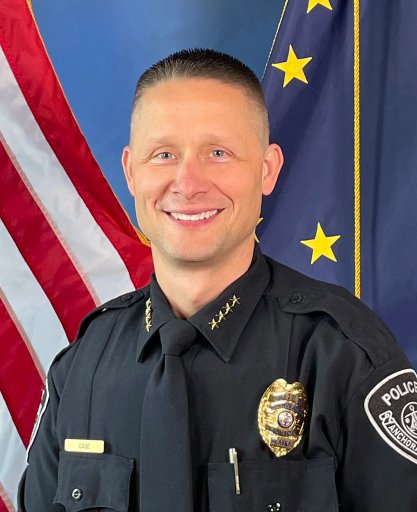
Sean Case
Police Chief · Anchorage Police Department
Sydney Scout
District 1 North Anchorage · Anchorage Assembly