Anchorage Assembly: MOA Fiscal Future Summit
Alaska News • • 323 min
Source
Anchorage Assembly: MOA Fiscal Future Summit
video • Alaska News
Articles from this transcript
Anchorage police and fire chiefs say meeting demand would take about 100 more staff each
At an Assembly-hosted fiscal summit Friday, Anchorage police, fire and public works leaders described the staff and money they lack, from 100 officers to shrinking state road grants.
Anchorage mayor says regular budget process alone won't close 2028 budget gap
At an Assembly-hosted summit Friday, Mayor Suzanne LaFrance said Anchorage's 2028 budget gap, nearly double this year's $15 million, needs a community decision on services and revenue, not just the annual budget process.
Okay, we're right at 10. I think we need to give people a final warning.
Good morning, everyone. Just a couple-minute warning. We will get started in about 2 minutes. So please get settled, pick a table. There is coffee and breakfast back there if you haven't seen it already.
And then reminder, the restrooms are down the hall. We'll go through our housekeeping, but give us 2 minutes and then we'll get started. Thank you.
No audio detected at 1:30
No audio detected at 2:00
Good morning, everybody.
I hate interrupting a great conversation, but I am going to ask you all to find your way to a table, grab a seat, um, and I'd like to welcome you to our Fiscal Future Summit. My name is Erin Baldwin Day. I represent Midtown on the Anchorage Assembly, and as you can see up here on the screen—. Uh, woo! Yeah, I got a whoop from Midtown!
All right, yes. Um, we are going to be using the Menti polling app today, uh, for some audience participation and for you to submit your questions. And we'll, we'll have several things we're going to ask you about throughout the day. And so please take a moment, go to menti.com and enter the code which Vanna the Bee is highlighting for you up on the screen today. We are going to try to answer as many of your questions as we possibly can.
So please do take the time to submit the things that come to mind for you. If you haven't had a chance to answer our first polling questions, which are already loaded, please go ahead, pull up the Menti app and get ready for the next round of questions.
Thanks, Erin. So I'm Anna Brawley. I am currently the assembly chair and represent West Anchorage on the assembly. So we're the ones on stage today at this moment. But I want to also share this is an assembly-wide initiative and really a muni-wide initiative.
So we are joined in the room by our fellow assembly members. Any members here, can you please stand? I see members Scout and Vice Chair Voland from District 1. And I think that's everybody right now. But I will say, I know— shout out to District 1 North.
But I will say we'll have other members here as well. I know we have busy schedules. And generally you'll see folks kind of coming in and out. So if you do need to leave, please feel free to do that. If you know folks who are coming in lunchtime or the afternoon, please feel free.
So also we are joined by Mayor LaFrance and municipal staff. So if you are here with the muni, please stand.
So we got our mayor, folks from the mayor's office. We'll also see some department directors cycling through, so welcome everybody. So thank you so much for being here, and thanks for your work to steward our municipal finances. We can't do it alone. The questions on Menti aren't popping up.
Okay, we're hearing that the questions are not popping up, so we'll do a technical check on that. So thank you. And then reminder, you can use Menti on your phone or a computer. The website's there and the code. So I guess also if we're still having issues, staff can run around and troubleshoot with folks as we need to.
So also I see at least maybe one or a couple of state legislators in the room. If you represent us in the state legislature, can you please also stand up? I see Representative Eichide and his staff. Thank you for being here. We know there's an election going on, so I imagine a lot of folks are busy.
So please vote by November 3rd on Tuesday. The state is a major partner in this work, so we thank you also for being here today. Today and for all of the work to move our state forward, state and local. I'll turn it back to Erin. So before we actually begin our program, just a couple of housekeeping items.
First, this event is being livestreamed on YouTube, so if you know folks who weren't able to make it today, maybe the wind has derailed their plans, please feel free to let them know that this is being livestreamed. The restrooms are down the hall this way on the left-hand side. Please feel free to take breaks as needed. We haven't really scheduled in a lot of bio breaks, so feel free to do what you need to do, both in terms of the restroom and also in terms of food and coffee. Please be appropriately caffeinated today.
We will all do better for it. There is fancy coffee. If you don't want drip coffee, there's fancy coffee upstairs. The student-run coffee shop has lattes and other espresso drinks. Let's support UAA students.
If you are a fancy coffee drinker, take advantage of that. Breakfast is going to be in the back, some light snacks until 11:00 AM. Lunch is provided today. And when you have the opportunity to talk amongst yourselves, we ask that you keep your comments brief and constructive and on topic, but understand that we are here to foster a healthy dialogue, and that means disagreement is normal and very, very healthy. So please be good neighbors with each other as we are discussing tough topics.
If you have strong feelings about pineapple on pizza, you know, that's okay for you to say out loud. My feelings will not be hurt if you tell me that you can't stand my costume. So understand that this kind of disagreement and this kind of dialogue is so, so critical for our city, our municipality to engage in as we move forward into the future. If you're watching us on the livestream, a reminder that you too can also participate in the interactive portions if you go to Menti also. And all of the materials that are shared here today can also be found on the assembly website, which is muni.org/assembly.
So finally, as we begin, I just would like to recognize that we are gathered today on the unceded Dena'ina lands, and we are grateful for the past, present, and future stewardship of these lands by the Dena'ina people. We are here today to learn more about the fiscal future, the fiscal picture of the municipality at this present moment, gather this community together and have a conversation on how we can improve Anchorage's financial health for the future. That is our intent, and we are so, so grateful that you have joined us here today. Thank you. And one additional note on costumes, we did have a long discussion about whether we should maintain the gravitas of wearing a Halloween costume while we're presenting.
So we may have to go into serious mode pretty soon. But also, thank you, everybody who showed up. We know it's the day before Halloween, and that was actually one of the biggest questions we got is, can we wear costumes? What is the vibe? So thank you, everyone.
Feel free to be seasonal, but you can also save it for tomorrow. OK, so to get us grounded in the conversation about our fiscal future and help provide some context, I would now like to invite Mayor Suzanne LaFrance to say a few words. Thank you so much for joining us this morning, and we will hear from the mayor. Here, let me step down.
Hello, everyone. Thank you so much, Chair Brawley, Member Baldwin Day, and thanks to all of you for taking time out of your busy schedules to talk about our fiscal future. The municipality's fiscal position is one of the big challenges we all face as a community. We have an obligation at the muni to provide the services that residents expect, that residents rely upon. Every single day, Anchorage residents depend on municipal government to keep our community safe, our roads passable, our neighborhoods livable, and our economy moving.
We depend on thousands of miles of roads and sidewalks, public buildings, and critical infrastructure like the Don Yung Port of Alaska. None of it's free and none of it takes care of itself. I really want to thank our assembly members for bringing us together to have this conversation. Chair Anna Brawley and Member Erin Baldwin Day, you are doing incredible work. Facilitating a community dialogue.
And so thank you both so much for that. And thanks to Assembly Legislative Services for all your hard work. Clare Ross, Ali Hartman, thank you. Yes, we should clap for them because they're awesome and we should clap for awesome people. When we took office 2 and a half years ago, municipal government had some serious rebuilding to do.
Years of vacancies had weakened essential services. Residents saw the consequences in snowplowing, public safety, road maintenance, and more. We have spent the last 2 years rebuilding that capacity and restoring the services that people depend on. And we've made real progress. And I want to thank the Assembly for their partnership in that.
But our work isn't just about getting government back on its feet. It's about building a stronger Anchorage for the future. That's why our 2027 budget focuses on housing and neighborhood revitalization, outdoor recreation and tourism, affordable and reliable energy, and preparing for the enormous opportunity presented by Jay Bear's Fighter Town expansion. Our proposed operating budget is a continuation from 2026 operations with minimal changes. This budget funds core municipal services while making targeted investments to improve community safety, support affordability, and encourage economic growth.
Our proposed 2027 operating budget builds on that progress. First, we're protecting core services. That means keeping our roads plowed and maintained, supporting more police officers on patrol, and making sure that our firefighters have the staffing and the equipment that they need. Second, we're addressing the things that make Anchorage less affordable. We're working to build more housing, bring down energy costs, reduce homelessness, and expand access to childcare.
And third, we're investing in quality of life. Our parks, our trails, libraries, and recreation centers— they are not simply luxuries. They are part of what makes people want to live here. To raise their families here and to build businesses here. This is a budget that is designed to protect our progress and keep Anchorage moving forward.
Today, there's going to be lots of discussion about the state of our infrastructure and the cost to maintain it. We have almost 1,300 miles of road. Our stormwater system, which, you know, you never really think about, until it fails, right, needs over $1 billion of work. Our public facilities like the Performing Arts Center and Lusak Library have reached what we might call their midlife crisis. They're not ready for retirement, but they're starting to show their age.
And like some of us, a little maintenance now can prevent much bigger problems down the road. The trouble with deferred maintenance is that We're not avoiding the bill. We're just letting it collect interest. And we're also setting ourselves up too for potential really big failures, right, in some things that cost even more money to fix. So with this in mind, we proposed a capital improvement budget to fund the upcoming maintenance, the improvement and development of our core public infrastructure.
Voter-approved bonds fund these critical upgrades and repairs, often with matching state, federal, and private grant dollars to support local projects. Thank you to our state partners. Bonds provide low-cost financing and are paid back through property taxes over many years. Key highlights of the 2027 capital improvement list include safer streets, traffic calming, pedestrian safety, road repairs, and drainage improvements. Public safety, replacement of fire equipment and ambulances, and repairs to police facilities, municipal facilities, energy efficiency upgrades, critical repairs, safety improvements, recreation improvements to neighborhood parks, playgrounds, trails, and Chugach State Park access.
Again, we all love our public spaces, and making sure everyone can access our wonderful public spaces is something that is so important to so many of us. Over the last 15 years, state support for municipal infrastructure has dropped sharply, hugely. Today, our community is forced to rely almost entirely on local property taxes and is therefore limited on what we can build and maintain. These proposed bond projects reflect not only critical maintenance needs, but will also make significant investments in the areas that make our community a good place to visit, to work, to live, raise a family and own a business. We have spent 2 years rebuilding municipal government, restoring services, and making Anchorage a better place to invest.
And we are beginning to see that work pay off. There's a new investment downtown, new housing in our neighborhoods, and enormous opportunities ahead from the Fighter Town expansion to growing visitor and logistics industries. You know, and I should add here too that we've hit 500 new housing units permitted in 2026. If the year ended here, that would be the largest number in over a decade. And I know there are some folks here in the room who have helped to make that happen.
And thanks to all of you, we're going to keep going. Economic growth doesn't happen in a vacuum. Businesses don't invest in places where the roads don't work, public safety is unreliable, or basic infrastructure is falling apart. Public investment spurs private investment, and at a moment when Anchorage has real momentum, we can't afford to lose ground. Which brings us to the hard reality we're here to talk about today.
For the 2027 operating budget, we faced an almost $15 million budget shortfall. We found efficiencies, we trimmed non-essential spending, we eliminated about $1 million in vacant positions, and we used $12 million in one-time funds to close the gap. That means we've protected essential services for another year. We've bought ourselves time, but we haven't bought ourselves a solution. That one-time money won't be available next year.
And the projected budget gap nearly doubles in 2028. Unless something changes, we're going to face choices that none of us want to make. Our budget relies largely on property taxes, and we are bound by the tax cap, which means we can't levy taxes above a certain threshold. At the same time, the cost of doing business has skyrocketed Like every family and every local business here in Anchorage, the municipality is facing higher costs for health insurance, for shipping, for fuel, for heating, for construction materials. Mandated contractual labor obligations continue to rise while revenues from alcohol and cannabis taxes have declined.
Between inflation and rising costs, The backlog of deferred maintenance and equipment needs— costs are outpacing the municipality's revenues. The math simply does not balance. That brings us to this conversation that we are having today. The challenges I've described are serious, but they're not insurmountable. Anchorage has faced difficult decisions before, and we have always found a way to move forward.
But we won't solve this problem through the regular budget process alone, and we certainly won't solve it by kicking the can down the road another year. We need to have an honest community conversation about what services we expect from our municipal government, what we're willing to pay for them, and how we can deliver them more efficiently. There aren't going to be easy answers. Every option comes with tradeoffs. That's why you're here today.
We're not just asking you to understand the challenge. We're asking you to help take ownership of it. Bring your ideas, challenge our assumptions, be willing to consider solutions you might not have supported before. And most importantly, please stay engaged after today. I believe that Anchorage has tremendous future ahead.
We have enormous opportunities for growth, and we have made real progress over the last 2 years. But realizing that future will require us to make some hard choices together. This is our community, our challenge, and our opportunity to shape comes— what comes next. So thank you all so much for being here today. For taking part in this conversation.
Thank you, Mayor, for getting us grounded for today. For the rest of our time together, we would love to dedicate the bulk of our time to discussions at your tables. So we are not— Anna and I are not going to give you a long lecture on municipal finances. We have done some deep dives on this topic through a a series we did last fall and winter called Our Muni, Our Budget. Those recordings and resources are available online on the Assembly's Budget and Taxes page.
So if you would like the 45 or 60-minute version of this information, please feel free to check that out. But for those of you who are new to the conversation, or perhaps it's been a while since you've interacted with a municipal budget, we wanted to cover the basics and give you a little bit of a crash course on our fiscal situation. Essentially, the 5 big things you need to know. But before we dive in, we want to ask you a couple of questions. First, we would like to know on Menti, quick raise of hands, how many of you have been able to access Menti successfully?
Looks like most folks. Okay, if you need tech support, please do not hesitate to ask for it. Ali is standing up right there with a coffee mug raising her hand. Please ask Ali for help with Menti if you need it. So the first question that we want to ask you on Menti is how confident are you about the municipality's ability to deliver local services today?
That question should be up.
Click it. Yeah.
You should be able to vote now.
And there's one slider that shows how you feel about today, and there's a second one that shows how you feel in the future. So you should be able to drag that little dot to reflect your opinion. We're gonna give you about 20 more seconds to play with your phone.
Do you want to— yes. 5, 4, 3, 2, 1. Interesting.
OK. So this represents the scents in the room and anyone who is also participating online. Oh, somebody voted late. 2.2 On a scale of -10 to +10, how we feel about the Amini's ability to deliver today and in the future, almost a -2. Thanks for participating.
And you'll see on all of these questions, there's some landscape there, some hills. So that's essentially the distribution for the data nerds. So it gives a sense that if it's really a high peak, it means everybody's answering the same. But you can see these are averages, right, because we've got a lot of folks across the board. So certainly a lot of different opinions here.
Okay. So in order to— and we'll have a lot more questions. And again, we will document these results. So to talk about our fiscal future, we first need to talk about our past and present. So to prepare for this event, we really invited folks to answer a survey.
And thank you to all who— those who did or folks who were not able to be here today. We wanted to get a sense of their fiscal priorities and insight about our fiscal future. So I do want to shout out one response that we got. We got some open-ended responses as well as the sliders like you saw above. So as you'll see, it's basically asking for the story that we're about to tell.
So first, how many people know the name Tony Knowles? Raise your hand. Yeah, I think, I think we're all good Alaskans. We know Tony Knowles. So I'll just remind folks, he was mayor in the 1980s.
So 1982 to 1987. And of course, went on to be governor later. So this was the— I want to read this out loud. This was the person's response. I don't know if they were being sarcastic or serious.
They might be in this room. But they said, how is it that the city run under Tony Knowles had plenty of money to run the city in pristine condition and build the coastal trail system and more? And today the city is a dump. Why is that? So I will say I will respectfully disagree that the city is a dump.
We do own a dump. We own a landfill. But I think, you know, we do have some good things going for us. Still. But I think honestly this question is really the whole thing, right?
And you'll see pretty quickly we're going to unpack how things have changed since the 1980s. Why do we feel like we're paying more for less and that the stuff around us is aging? So we'll go quickly through these. Some of these might look familiar if you've been here before. So the first thing you need to know is the municipal budget is capped and it has been for 40 years.
So in 1983, our operating budget, what we pay for services, was $194 million. That's $655 million in 2026. '06. So inflation is real, y'all. And if you notice, about $600 million budget or upwards of, that's about what we're still paying today, as the mayor said, what the proposed budget is for next year.
So at that time, the Trans-Alaska Pipeline was flowing. So was the money. We built a ton of infrastructure and we had the money to maintain it at that time. But amid an explosion of population growth, capital investments, and government spending, voters enacted that tax cap with 57% support at the time. The tax cap remains in our municipal charter, and the cap limits the municipality's budget to no more than last year's budget adjusted for inflation, population change, and new construction.
Those three things in the funnel, and that is it. So the formula is not a choice. It's automatic and it's in the charter. And right now it's really not working the way it used to. So today Anchorage has a sprawling footprint to maintain and roughly the same size budget for the city we had in the 1980s.
Our budget is capped, which means you have to budget within the cap. You can't go over last year's total budget without asking voters to pay the difference, which we do through things like our bonds, mostly bonds. So remember that word inflation I said? We're feeling that now, but the costs have been going up for a long time, as the mayor said earlier as well. Health care, energy, materials.
Our tax cap growth has not kept up with the actual cost increases to run this city. So over the long run, we talk about a flat budget, but really a flat budget can and does mean cuts.
So the second thing that you need to know is that anytime we enact a spending cut, it means cutting vital services. About two-thirds of our operating budget is spent on three departments: the police department, the fire department, and maintenance and operations, who take care of our roadways year-round. Most of the police department's budget, and actually most departments' budget, is labor costs. The people who actually deliver our services, who take care of our assets, our stuff, our facilities. Most of the maintenance and operations budget actually goes to maintain the infrastructure that we use every day.
That's keeping public buildings open and in repair, plowing, street sweeping, sidewalk clearing, sanding. In other words, most of our municipal budget pays for people who provide services, who work every day to take care of the public. And that means fixing light poles, that means plowing snow, obviously, responding to emergency calls, but also internal services like managing our bills and supporting the people who do the work of the municipality. Cutting spending means cutting services on some level. Paired with the tax cap, which again takes last year's budget as a maximum threshold for the next year, a cut that we make this year, or any year in fact, is, is a cut forever.
And in fact, that happened under the Dan Sullivan administration. We cut $10 million from the budget, and that has never been restored. We have been operating with that $10 million cut ever since. So keep in mind, we've made that choice many times over the years. That is not the only time that we have cut the municipal budget, but the tax relief that we enacted through budget cuts 15 or 20 years ago is a prior budget cut that we still live with today.
And I think it's important to keep that in mind as we move through our conversation today.
So next point, uh, that our budget is mostly funded by property taxes, as we saw earlier, but we pay for different things depending on where we live. So across the municipality, certain geographic areas vote to fund certain public services. These are called service areas. Uh, how many people in this room live in a service area? Road service area.
So the answer is, I think we all live in a service area. So whether you're in Girdwood, whether you are looking at police, building safety, we have— we all live in a collection of service areas. So the amount everyone pays, no matter what part of town they're in, to fund the municipality's general government, those area-wide services, uh, that thing is things like libraries, planning, administration, municipal prosecutors. That's actually a small part of our budget. Most of what you're paying on your tax bill is one of those service areas.
So the amount everyone— or sorry, a typical tax bill is mostly collecting dollars to be used in one service area for that particular area's particular function. So like I said, police, fire, parks, building safety, or roads. The service area concept means that not everybody is paying the same for the same services and that some people who are using services and amenities that they don't pay for is also happening. So like a park across town or the road to get to work. This is a legacy of the way that we were designed after we unified the city and borough in 1975.
And so that's something that we— a choice we made a long time ago that we're still living with. It's also important to keep in mind some of our biggest economic drivers don't even pay property taxes. So JBear, our military base to the north, our airports, other government and nonprofit landowners, they may be creating a lot of jobs and economic activity. Certainly they do. So they are important, but they are not— they're exempt from our local taxes, so they're not contributing to the tax base.
So that's an important thing to keep in mind. You might see a very high-value facility, but it's not necessarily paying for the city that is running around it. So next point, number 4. Thank you. Number 4, the state used to help pay our bills, and now they don't.
This is no shade to Representative Eichide or any other state representatives or senators who might be listening in, but the tax cap that voters passed in 1983, that effectively capped our municipal budget for the future. At that time, the state of Alaska funded 42% of our operating budget. That's not capital, that's not building things, that is day-to-day services. The state funded 42%. Today, their contribution makes up half of 1%.
Of our operating budget. When oil prices are high and the state has more money, some of that has gone to capital projects, uh, like the Port of Alaska modernization project that has happened with the support of the state for capital projects, and we are grateful, make no mistake. But even that money has mostly dried up, not just for local projects but also for fixing state roads that crisscross our community. So in other words, Uncle Juno has gone broke, and he cannot afford to pay our bills anymore, and so we have some decisions to make. We can wait for his luck to change, we can hang out and eat ramen noodles in our parents' basement, or we can enroll in classes and maybe put in the work to understand better where we are and then create our own future and decide how we are going to invest in ourselves.
Yes. So finally, we will put one more item on the table. So we have actually three related problems, and this is the triangle that I have been pestering people about for months now. So no one can solve them but us, really. We need to take the lead on this.
So the first problem, the first part of the triangle, we have billions of dollars of backlog in infrastructure maintenance, and we have miles of roads and pipes to maintain. We're going to talk a lot about that in the afternoon. Second, related to that, we've built a sprawling city. We are very spread out. There's a lot of miles and a lot of acres we're talking about, but we have not to date put enough housing density and the tax base generally, the amount of buildings and, you know, things that are paying taxes to sustain that long term.
So we are very spread out. We're spread thin in multiple ways. And the third one is that our current budget structure doesn't have enough flexibility to address our economic realities today. And we can't grow without building more. That's the way our tax cap works.
So every year that we put off these decisions, the cost grows. Kicking the can down the road has become a dead end. We got a whole pile of cans at the end of a cul-de-sac now. So these are the three big problems our community needs to solve together. This turnaround is going to take some time, and we need all hands on deck to point Anchorage in a strong, sustainable direction.
So as a community, we must decide what services local government should provide. Can't do it all. And what level of service we're willing to pay for. Do we really want the A+ service, the C- service? Where do folks want to be there?
And so all of us, not just the elected officials, need to decide who pays and how we're going to pay for these things. So these are the choices that we're going to need to make together in the near future.
But to plan for our future, let's focus on what we can do today.
So that was a lot of information that we just threw at you rapid fire. We would love to get your real-time response. So as a reminder, we are going to take questions through Menti and we'll answer them as we go along. So you should be able to submit question— submit questions that you have right now. But in the meantime, we have a couple of questions we would like for you to discuss with each other.
So these are turn-to-your-neighbors questions. Number 1, we'd like to know, what did you learn today? We'd like you to tell each other, what did you learn just now that surprised you? And do you think that the municipality's fiscal situation is more or less drastic than what was presented just now? So we're going to give you a few minutes to discuss those questions at your table and then share your answers on Menti.
So that we can get a feel for the temperature in the room. Ready? Begin. You have 5 minutes. Go.
Nice. So I think we'll run through those.
No audio detected at 37:30
No audio detected at 38:00
No audio detected at 38:30
No audio detected at 39:00
No audio detected at 39:30
This is your 1-minute warning on question 1.
This is your 1-minute warning on question 1.
Okay, everyone, feel free to keep discussing, but we're going to click forward so that you can answer the first question on Menti. So if you want to take a second respond, just your individual response. You don't have to do it for the whole table. And then we'll turn to the second question.
I think, um, we could roughly say 10:55 we turn to questions, but that's still 20 minutes. Yeah, I don't—. This could be like a 10-second answer. That's all I was asking about the school. Oh, that's a great question.
Okay, so let's make that one first. Yeah, let's do that first.
This is awesome. People are getting it.
That's why you see some kind of— I hope there's skeptics in the room too, right? Like, do we want to click over to the next slide, or do we want to keep this one? I don't know how that works. Like, does it shut down the question? I think it does, yeah, if it's like other systems that we I think there's probably a way that you can have it populate, but—.
You have about one more minute to submit your responses if you would like to, to the Menti question, what did you learn today that surprised you? And then we're going to move on to the next one.
And I think persisting is a separate, like, sin in your question. It's like, that's always there.
Is that in the book?
Is that the very last page?
Oh, you know what, maybe it's not. Okay. You can always just—. Yeah.
Okay, last call to answer this question. If you want to type in an answer, and then we got one more that we'll turn to. It's just a quick multiple choice.
Not up there. When we turn to the panel, we'll make a little gap. I think I want Oscar on the dance floor. All right, we are going to move to the next question on the mentee poll. So if you'd like to follow along with us, please do.
We would like to know what you think about the severity of the scenario that we've outlined for you. Do you think that we are being Chicken Little and telling you that the sky is falling? Or do you think that it is somewhat more drastic than what we have shared with you today? And you get to play the slider game once again.
I'm gonna give you about a minute to weigh in. And just a preview, right after this we're gonna move into Q&A, so you can also keep submitting questions as they come up throughout the day. Just anything you wanna know.
Do we want to tell people that like that's actually the button that opens? Oh yeah, we can do it when they're done.
Oh shit, there's a few on the other side though. Yeah, but like the entire The spike is interesting.
Yeah, I wish it could display zero. I mean, it's like implied, but I wish there was like a marker. Yeah, where the zero is. That's okay. That's the price of the clean design.
Should we go ahead and move on?
Yeah, I think—. All right, it sounds like conversations are wrapping up at tables. So, interesting perspective from the room here. Thank you all so much for participating in this part of the poll. We are going to take a little moment now to answer some questions that have come up already today.
If you are in the Menti app, There is a little gray button down the bottom that says Open Q&A. You can open that at any time and submit a question. Noah, would you raise your hand and wave? So Noah is another member of our Legislative Services staff, and he is helping to collect and collate your questions. We're going to tackle a couple of those right now before we get into our panel conversation.
So Anna, go ahead. Yeah, and I'll say too, we are not committing to answer every question today in this room because we will be here until Halloween, but we are going to collect them because we really wanna know what you wanna know. So here's a few of them. First, we're gonna take this, this is a really big topic that we're gonna cover really quickly, and that is the ASD budget, the school district budget is not on your charts. Why is that?
And what percent of the budget is our school district budget? So very briefly, it's about half. I think it's actually maybe a little bit, 45%, I think was the last that I saw. So it's about half of your property tax bill. School district, very important, very huge budget conversation, kind of different mechanisms there, right?
Because they're fully state funded, they aren't able to collect revenue themselves. So we could spend a whole other day on the school district budget, but we will say that there is a whole process for the school budget. It is about half your taxes. It is separate from our municipal operating budget. So we collect the same taxes but they are separate pieces of the budget.
And if you are interested in that topic, you are in luck because we have a school board and every year they take up the budget process. And we know that it's been a difficult few, few years, right? It's a tough conversation, but really encourage folks to engage with the school board, engage with their budget process. They're on a little bit different timeline than we are because they have a different fiscal year. And so when we talk about the budget in November, they are really starting out their process.
For their budget process, and then we'll get their budget sometime in March. And so look for that discussion over the winter. I'm sure it'll be another lively one. But just to say, so we care about schools. We want to talk about the school district.
But the reason is because we're really talking about what is in our budget book, what is considered the muni budget today.
Okay. Next question. We had a couple of questions about the tax cap. So here's one of them. The tax cap includes inflationary allowances and growth.
So why can't services be maintained at the status quo? And I'm actually going to flip back. So the Menti will still work. You can submit questions, but I want to bring this back up. So the tax cap in our charter has 3 pieces.
It has what essentially says you start with last year's budget, you copy and paste that, and then you make adjustments. So those 3 adjust— well, some of the adjustments that you make in terms of the budget are labor increases, things like that, part of our contracts. But that's really on the spending side. So on the revenue side, on the how much you can collect in property tax, taxes. The formula is this.
It says, did we gain or lose population, a resident population? What is the 5-year adjusted inflation average? So when we have a huge spike in inflation, or we actually had negative inflation in 2020, it's not negative. It's that 5-year average. It's kind of like the PFD calculation.
And then the third one is new construction. So the reason new construction is in there is because that is how our tax base increases over time. So if you are building a bunch of new buildings, they may not be fully done, but they're in process. Those get added to the tax cap over time. So that's a way that it's intended to grow.
So if you imagine back in the '80s, we were a growing city, we had growing population, we were building a bunch of stuff. We knew that there was a dip during the late '80s, but really we were, you know, generally building. And then inflation was what it was, but it really allowed for increase. It allowed for expansion. So as we had more people, we had more money in the budget.
Now, you know, we've had a flat population more or less for several years. We've had pretty high inflation. But again, that 5-year average smooths out those spikes. So when we had huge inflation in 2022, we'll see another huge inflation in 2026. It doesn't go to the level of that year.
It goes to the average. So it smooths that out. So that really kind of caps it off. It makes it a smoother number, but it also means it's not responding to what happened in that particular year. And then new construction, we had a huge drop-off in what we were building in terms of housing, commercial, all of that stuff.
And we know that housing values are going up, our property values are going up, but it doesn't mean that we're building more stuff. So we have the same tax base that is trying to pay for more things than we had in the 1980s. So that's essentially why we have for maintain the status quo, but that would only work if we were still adding people, we were still building a bunch of stuff, and we stopped adding new things that we were paying for. To our bills. So the more roads that we build, the more pipes, of course, that's our utilities.
All of those things add to the total cost. And if we are not growing our population and that revenue side, then that's where the disconnect has come in for several years. So next question. Yeah, next question. How would you change the tax cap policy to better serve Anchorage if you could, or would you?
So I think every person on the assembly has a different opinion on this. Um, personally, I would make a change to the tax cap formula. I would make several, but the first thing I would change about the formula is the automatic ratchet down. And the reason that I would change that is I believe that that ratchet down mechanism is a perverse incentive to spend to the cap every single year because we don't have a savings mechanism built in. So if we don't budget to the cap, cap, we lose that capacity for the next year.
We can't save money as a municipality. We can't have a rainy day operations fund. And I don't think that that's good fiscal management. I think that that incentivizes us to, to tax and, and to spend to the cap every single year. So that's the first thing that I would change.
The second thing that I would change is the population flex. We anticipate that we're going to have a relatively a flat population, or perhaps even a declining population in the near future. And I don't think that, that factoring that into the tax cap actually works on our behalf, because regardless of how many people live in Anchorage, we still have the same number of lane miles to maintain. Our population could drop by 30,000 people between now and next year, and we would still have to maintain every single road and sidewalk that we do at this moment. We would still have to police the same geographic area.
We would still have to provide fire services over the footprint of the municipality that participates in the fire service area. Those costs don't fluctuate based on our population. And in fact, when you compare what we spend on some of those services relative to cities that have similar population to us, or even a marginally comparable footprint as us, We spend far less on those services than other places that we are comparable to. So that's what I would change. And I would actually echo those changes.
So we did not coordinate ahead of time, but I think those are some obvious ones that are working against us. And I'll give an example. I've been on the body for 3.5 years now, so I've gone through 3 budget cycles going into the 4th one. We have had to cut the budget based on that population. If you go back, I think it's the FY24 budget.
We reduced the budget by $1 million, or I should say I think inflation was up, so it kind of comes out in the wash. But essentially we had to put on the table and let go $1 million of budget capacity because we lost population. That was not a choice. It's in the charter. And so that is a real challenge we have.
So even if we just put a floor that says our costs don't go down when a few more people move away, that in itself would kind of help stabilize the budget. And one thing I want to be very clear about is that I do not have the power. We as the assembly do not have the power to change the tax cap. So in case you missed it, it's in charter. And that means any change to the tax cap has to go before all of us, the voters.
We all have to decide together that we want to amend the charter to change that calculation. And so this is not something that the mayor can just, you know, wave her magic wand and do unilaterally. It's not something the assembly can vote on as a body of 12. It is something that we would have to consider. It would have to pass the assembly with 8 votes to land on a ballot in April.
And then you all would have to decide whether or not that was a change that you wanted to make to our city charter. So that process is also a part of this equation, no pun intended. Yeah. Okay, next let's turn back to service areas. So I will go back to our slide, uh, number 3.
Yeah, so, um, this, this question is an interesting one, and it says, would you support getting rid of limited road service areas and having one area-wide road service area? So I want to back up just a moment because I think it's important to understand how we got the service area model that we have. So 50 years ago, when Anchorage was a little city and the borough was this big sprawling thing and folks who lived on the hillside really did live out in the boonies, and we were trying to sort out how we were going to unify this borough and city into one unified municipality, we cut some deals with each other. The folks who are living out in the boonies said, "We don't want to pay for the police officers you guys have down in the city. They don't come up here, we don't use that service, we don't want to pay for it.
No audio detected at 56:00
And all those roads that you're building down in town, we don't use those roads, we live up here, we don't want to pay for those roads. We want a little bit of our taxes to help maintain the roads we have up here. And also the fire department, they don't really come out here, so we don't want to pay for fire either. But we'll pay some property taxes because we we will be a part of the municipality with you. So this was the deal we struck 50 years ago, and 50 years ago that deal made great sense.
However, the footprint of Anchorage has changed drastically over the last 50 years, and now parts of town that used to be way out in the boonies are actually part of Midtown. So we, we have not kept up. This service area model has persisted, right? And so now we have lots of pockets, and you can see on this slide right over here Girdwood, all of these little pockets are limited road service areas that do not pay property tax towards road maintenance in this big service area in the Anchorage Bowl. And one of the things that I hear frequently from folks who live in other parts of town, who, you know, drive through Midtown, they tell me, "Why— the roads in Midtown are terrible." Like, what's happening to my property taxes?
I'm paying to maintain these roads. And one of the— a conversation I've had frequently with folks is to say, well, actually, you don't. You don't pay for those roads. I know where you live. You live in a service area, a limited road service area.
You're not paying for the road that takes you to Costco. But everybody else is. So we have this asymmetry between the services that some people pay for and use, and then other services that people don't pay for and still use. Parks is another great example. Not everyone pays into parks.
Those are amenities that our whole city uses, but only part of us is paying for that service. And this is something we've inherited. This is a structural piece of the way Anchorage has developed that we have inherited, and now we need to grapple with. Interestingly enough, there are folks who live in Anchorage who don't pay into any road service area at all. They don't pay into ARDSA, our big area-wide, and they don't pay into LURSA, or a limited road service area, either.
Crazy, right? But they still drive to Costco. So that's a question we need to ask ourselves, is does this system still fit us? Now again, there is a variety of, of thoughts about this, both in the mayor's office and on the assembly. But do I think that there needs to be an adjustment to our service area system?
You better believe it. Because I don't think that the pay-to-play system is working for us anymore. I think we need to reevaluate those choices and try to decide, is this something that we want to continue to live with for the next 20, 30, 50 years? For me, that answer is no, but I think there are a lot of people who have a different opinion, and that's why— that's why this conversation is happening. That's why we're starting the ball rolling.
And I think one of our goals is we want our elected officials and the public to make informed decisions. So this is also an area that needs more study. We don't know exactly what the costs would be if we put everybody in one. A lot of these road service areas don't allow for capital improvement, so they can't bond for themselves. And so that's a whole other discussion.
If we add all of those projects and all the areas that are not in road service areas, what does that do to the total backlog of our maintenance? We know it's there. We know historically state grants and federal grants have paid for those those things. As we discussed earlier, that money is drying up pretty quick, so we're not going to solve it that way. But that is another big discussion to have, is, is, um, does it make sense for some folks to still be paying locally for their services?
And so I think it's, it's a complex conversation. The good news is, um, I don't know if this person was, uh, was involved with our agenda or not, but we are actually talking about this very thing in the afternoon. So this is just one option on the table. And again, we have a lot more analysis to do before we can actually answer, is this a better choice or not? But it's something that we have to put all the options on the table.
So we're going to ask you all to talk about some of those things and also to think about what do you need to know to make that decision. We're not asking you to do hot takes about, you know, the future of our city. We want to know what you want to know so that we can go back and do some analysis and think about what these next conversations need to look like. And I think a refrain you're going to continue to hear today is that this is not a decision that the assembly makes unilaterally. This is not a decision that the mayor makes.
This, once again, the service area model is a decision that has to go before voters. So again, you decide. In the end, we as a community will decide whether we want to continue to live with this model or if we want to make some changes. Okay, so we'll go to our next question. I'll also note, just as a time check, so we'll do about 10 more minutes or so for questions.
We'll give a couple minutes for break and transition, and then we're going to move into a panel that will start at 11:15. So just for a time check. So I think we can probably take at least a few more questions. The next one is, what steps are you taking to ensure budget decisions also reflect younger generations' priorities, especially when work, family, school, and other barriers limit their participation in the process? That is a great question.
So we— of course, this is one piece of this bigger conversation. So we also recognize a lot of folks here are— some folks are here because it's part of their job. Some folks are here because they're really interested and they have a stake in the budget in one way or another. Some folks have time to take during the day on a Friday. And we know there's all these other folks out there, whether it's students who are going to class or, as we said, young families, you know, high schoolers, people who may be not even born yet, that we aren't going to be able to ask their opinion, but we need to think about what affects them as well.
So those are all folks that we need to reach. So we are working on how to have multiple versions of this conversation. We have a fun interactive thing at lunch that we hope you think about. And take back and get your hardworking folks to come have a dinner conversation with you. We'll get to that soon.
But I think this is something that's really important. And one part of it is asking folks, engaging them, and really saying directly, like, how do you want to— how do you want the future of your city to look? And also, regardless of whether they are showing up, they are still part of our community, right? So my background is planning. A lot of what we do in planning is how do we reach everyone and how do we think about the needs and the priorities and the preferences and the desires of everyone, whether or not they are standing in front of us testifying or showing up at public meetings.
And so that's something I think that we are working on and need to think about. And it's something to ask everybody in the community, how do we help? Talk to your neighbors, bring your kids along, right? There's a lot of different ways to do that. And we would love to know if there are effective ways that you can think of that we haven't tried yet to engage folks, whether it's a big discussion or a short thing on the park strip, right?
That's what we're looking for. Yeah, please don't hesitate. If you have better ideas, we want to hear them. And I think what you'll find is a very receptive audience among those of us who are a little bit on the younger end of the spectrum. I can't believe I'm identifying myself as younger.
Yeah, we're in our 40s. Maybe we're not. Maybe we're not younger. Just kidding. We're Anchorage young.
We're Anchorage young.
This is another question. Can we alter the bed tax and use some of it for services? Visit Anchorage reported getting $14 million in 2023. Do we need to spend that much money on marketing the city? I can briefly tackle this one.
So I think, yes, we can do that. The we is voters. The bed tax, the amount of it is and where the money goes is in the charter. It is a charter change. And so I think that is one of many things on the table.
But it's again, not just our decision what happens with that. We certainly talked about that. There's been proposals before. The other thing to understand, just to unpack, and again, we will not have time to do a deep dive on all of the budget, but there are many resources out there. We actually don't spend all of that amount on marketing the city.
So just a very brief— and this is something that's been in our charter that voters have voted on multiple times way back in the day. In the 1970s, we created a 4% bed tax that did go to marketing the city. It's gone to Visit Anchorage for a long time. And now we have Julie Sapi here from Visit Anchorage. Shout out.
So that's— and marketing can mean, you know, advertising. It can mean the dancing moose and all of that. Right. But it— but it really is also going to trade shows. It's really bringing conferences here.
There's a lot of work that goes into it. So I don't want to minimize that work. That's 4%. Another 4% goes actually to general government. There is a portion of it that goes into our city budget.
It goes in with everything else to the property tax. It's not dedicated to anything. It goes into providing services. The third 4%, so it's 12% total. Voters approved in 2005 to help build the Denaina Center.
And the folks who were around back then had the good sense to say, you know what, it's not just this new convention center, we're also going to fund improvements to the Egan Center, one of our Project '80s buildings. So both of those were included to say we're going to make sure that those facilities are taken care of in addition to the revenue they bring in. So certainly we could increase the bed tax. We could change where that money is going. There's obviously a lot of places it's going now, so we'd have to talk about what the impacts of that would be.
We can increase it, right? There's a lot of different things we can do, but at the end of the day, like pretty much all of our tax discussions, it will come back to voters and you all will decide what happens.
I think it's important to point out that, you know, the tourism economy is really critical to Anchorage. If we don't have folks coming here, not just in the summer but year-round, our economy falters. And so funding the folks who help to keep that tourism economy and that conference economy running is a, is a positive feedback loop, right? It is a, it's a thing that helps us to get folks to come here, to invest in our economy, to spend money here. Um, and, and I think that we, we need to be really clear that, uh, the, the $14 million that we invest comes back to us in a variety of other ways, um, that I I believe Visit Anchorage has done a pretty good job of documenting what that ROI looks like, and it's pretty dang good.
So, but again, all of these discussions about how we change our tax mix, they require 8 votes on the assembly to place it on the ballot, and then it requires 50% plus 1 of voters. And I think we'll do one more question, and then like I said, we'll do a break at 11:10. So we don't have one before us, but I think one that's come up a lot, and I saw it actually in the things that surprised folks folks is how much housing or, or development is part of the budget discussion. So I think let's unpack that a little bit, and that's something we'll continue to be talking about. Obviously, where we live matters, and we know that, that regardless of whether you own a house or you are renting, uh, or you're staying with friends, right, whoever's paying some kind of bill for where you live, all of that is paying property taxes.
No audio detected at 1:07:00
So I think it's important because we talk about taxpayers and we think of homeowners, we think of folks in their single-family homes, whatever it And that is one part of our tax base. We also have everybody who's renting and they're, and basically part of their rent that goes to their landlord is going straight back to property taxes unless the landlord is very generous. But I don't, I think if you're doing it right, then you are not paying other people's taxes. There's also all of our businesses, right? We talk a lot about taxpayers in terms of residents.
Those are our voters. But we also have businesses which are also run by residents or non-residents. But we have large businesses. They own a lot of property. We have businesses that rent to other businesses.
But it's really important to understand that that's our tax base. If you've looked around Anchorage, you might have noticed that we are not changing our buildings that much. We're certainly seeing new construction. The mayor talked about an uptick in construction, which is great, especially with housing. But the physical built environment and how much of it is paying taxes versus how much of it is public infrastructure or things that aren't paying taxes like our airport— airport's in my district.
I love the airport. But it is not paying taxes to the city. It's certainly generating a lot of jobs. It's, it's, it's helping a lot of other taxpayers, but they are not— they're a huge part of my district and they are not paying taxes in that district. So I think, again, it's important to understand, and because so much of our budget is based on property taxes, that we are heavily dependent on what our buildings and what that activity looks like in our city.
If we had other types of taxes, then we would be more dependent on people spending things or more dependent on visitors, right? But it's important that the choices that we've made and the physical city that we've built, all the public things that you need to get to that private property, all of that has a cost. And so the disconnect is that we stopped building so much. And so, you know, housing is a whole other thing that we've had summits on, that, that is not our main conversation today. But it is important to understand that housing choices, the types of things we can build, do affect what our budget looks like as well.
Again, because of the tax cap formula, because it's property tax dependent and all of those other factors.
So please continue submitting your questions. Again, we want to hear, we want to know what you want to know, and we're not going to be able to get to all those questions today. But we— this is helping us think about what these next steps of these conversations are. So I will say that we'll come back in a few minutes. So we'll take a short break and then we will be back at right at 11:15.
And then I'll ask also that our panelists come up and start getting ready to be seated, and then we will introduce them. So thanks, everyone. Stay tuned.
We don't need to clap.
All right.
No audio detected at 1:12:30
No audio detected at 1:14:30
I just want to go back.
I just want to go back.
Okay, everyone, if we could ask folks to come back, take your seats. If you do want to continue a conversation, please take it outside into the hallway, and then we want to get started with our panel.
You don't. Great. Yeah. And your phone too. I want that.
Yes. Thank you. Okay.
Okay, everyone, let's come back. I was about to say come back to order. This is not that meeting. So, okay. Okay.
So next up we're going to hear— so thanks everybody for a good conversation this morning. Again, we're going to have more discussions over lunchtime. We'll take a little break for lunch after this and we'll do a working lunch. We'll have a fun game for you all to play. Spoiler, there's no winning or losing the game, but it's a good place for discussion.
And then in the afternoon we'll have some more interactive discussions. So again, if you do need to head out and leave or if you just showed up, I don't know if we saw new folks, please feel free just to get situated. So next up, we are going to hear from some municipal staff. We'll introduce them shortly up here. They're going to talk about how these fiscal issues affect departments and operations on the ground at the service delivery level.
So really where the— literally where the budget meets the road. So leading the panel discussion, we have Ms. Ona Brause, the municipality's Director of Office of Management and Budget. I will also note that she is also seasonally appropriately dressed. Extra points. So I will turn it over to Ona, and I'll say— introduce your panelists.
Thank you.
Oh, thank you. Fancy. Normally I don't get applause when I start meetings.
Thank you, Chair Brawley and Member Baldwin Day. I am Ona Brause. I am the Director of the Office of Management and Budget, and I am glad to be here in front of all of you today and have this opportunity to have this conversation And particularly to have this conversation with some of our municipal leaders who do a lot of work every single day for our community. And I think a lot of it we see, but a lot of it we also don't see. So we'll be talking through some of that.
We, we've been talking about the past and the future and where we fit into that. And the Office of Management and Budget is a bona fide record keeper for the municipality of Anchorage. And so today I brought with me the 1993 approved operating budget. And I will tell you that this is the actual budget book from 1993 because the signed budget document is in it, the original. The point for that is that this book has an original document in it that was for the entire municipality.
How did you get it in 1993? You went to City Hall and you looked at it. That is where we were that long ago. We didn't have the internet and all of the tech that we have now that is making all of this more expensive than it was then. If anybody wants to look at this fantastic book, you're welcome to.
It's really good. But I would like to introduce our panelists for today. We have Chief Sean Case, Scott Pulice from the Anchorage Police Department, Bill Falzy, the municipal manager, Kent Colhays, who is the public works director, and Doug Schrage, the Anchorage fire chief. Each one of them has a lifelong career in public service, I believe. Yes, I believe the chiefs have been in their career field since they have been adults, and Kent has held various jobs at the municipality, as has Mr. Falsey.
And so their experience gives us a lot to talk about here. We can start with one of our questions. Let's start with Chief Case.
Chief, do you want to tell us what the status quo means for operations at the Anchorage Police Department, what you have gone through over the last many years and the absorption of non-labor, etc., etc., how that process impacts you and operations. I think starting with 1993, like you did, is a good starting point. If you think about what the Anchorage Police Department looked like back then, it was a very simplistic operation. You had patrol officers, detectives, and you had a small number of administrative staff, both in dispatch and taking those pieces of paper and filing them them in large filing cabinets. The officers are writing handwritten reports, which means they write a couple a day when they had to because it was by hand.
No audio detected at 1:24:00
You fast forward to today and everything is documented, both in writing, on cameras, audio recorded, and the expectation that is on just government in general, but certainly within the Anchorage Police Department, gets higher and higher. Because we have more capabilities. And so when we talk about keeping the status quo the same, we talk about taking 1993 and adjusting it to what we have available to us today and nothing more, which means certain services that we provide, like our Impact Team, which is our community outreach, problem-solving at the neighborhood level team, doesn't exist. Our mobile response units that pair up a clinician with an officer those things don't exist. Those are outside the normal status quo of what we look at of policing around the country.
No audio detected at 1:25:00
You know, having the department team up with resources outside the Anchorage Police Department to provide peers so that when we engage in vulnerable populations, we can connect them with the peers to communicate and connect them to services. When I got hired, when I first became an officer, 28 years ago, there was really, I just had two jobs, show up to a call for service and take people to jail. And if like, that was the only solution and the only thing I did. And if I came in contact with somebody that I didn't get to take to jail, I said, "Sorry, I can't help you today," and I left. Like, "This is your problem to solve." And that's just not where we are.
And so when we talk about the status quo, I think that APD status quo is just a little bit further above than what we see around the country because because we have added a lot of these new pieces of technology as well as people to do certain type of work, like our clinicians. And so without our ability to purchase stuff and pay people, we actually have to go back and regress and make our job that we do a lot more simplistic, which means officers responding to your homes and businesses and saying, "Hey, I wish I could help you, but there's just nothing I could do for you." Chief Schrage, what about the fire department? You have similar advances and also challenges. Yeah, thank you. I could have said many of the same things as Chief Case said with respect to our infrastructure, the number of fire stations.
No audio detected at 1:26:30
We're living the status quo from 1983. We have in that amount of time, we've added one station. But we've reduced— we closed Station 2 on Government Hill. So in all those years, we have not added a new fire station. And what we are observing is that as the community has grown in the decades since and infilled, we're finding that some of the fire stations are not in the correct locations and there aren't enough of them to serve the community.
Status quo for us means that without an increase in non-labor spending capacity, we will continue to erode our purchasing power, which will ultimately lead to budget cuts, which translates into reductions in emergency services. The status quo means that more people will Over time, on the current trajectory of the economy, will be bumped off their medical insurance. They'll continue to rely on the hospitals and the ambulance services for primary care. And what we need to do is we need to evolve our services to meet that demand. And then finally, I would say the status quo also means that that in a year the wildfire program that we have stood up has been a 4-year program will come to its end without a funding mechanism to continue that.
No audio detected at 1:28:00
And so that unit has been busy, very productive over the last 4 years, filling in, doing fuel breaks and fuel mitigation, public education, and increasing our capacity to respond to a major wildfire.
And to the point that they are speaking about the sort of non-labor issue, when we are working through the municipal budget as a continuation budget, as Chair Brawley and Member Baldwin Day said, we stack upon the previous year's activity. In the 1993 budget, you can see in each of the departments a section that says non-personal services inflation absorption, which is the budget way of saying We had to cut this budget, but we're just going to make them eat the difference and make do. And I'm saying this because we have continued that behavior of inflation absorption since 1993, depending on the year. But I don't know when the last time we actually told you that's what was happening in the budget, that line item, that clarity, being able to see that those non-labor costs are not being covered is not visible in the way we present the budget plainly. I'm saying this because I want everyone to understand that we are not crying wolf.
No audio detected at 1:29:30
This is not we need to cut more government waste. This is that we have narrowed the budget down to personnel services, meaning our labor cohort, and a non-labor component paying for everything else within the budget that does not cover the costs the costs that we currently have, let alone any growth that the community wants to see. So we'll try to do better and make that more plain as we go forward, but that is one of the challenges we deal with. Mr. Colhays, would you like to tell us about the status quo for maintenance and operations, public works, street maintenance, all the good stuff? All of the above.
Thank you, Ona. First, I would say that Chief Case's comments really struck me. Their job has changed significantly over 20, 25, 30 years, right, as has the fire department with the introduction of MIT and MCT and the other things that they do that they weren't doing then. By and large, the public works world has not changed. We build roads, we maintain roads, we build buildings, we maintain buildings.
That's happened since the city merged with the borough. And when you think about status quo, my comment that I wrote down in my notes was that that we have really not maintained the status quo in the public works world. We have lost ground as time has progressed.
We do a handful of things in the public works world. We spend operating money to maintain buildings and to maintain roads and to plow roads. And we spend capital money that voters approve through bonds to build new roads or to fully reconstruct roads or to build new buildings or to put roofs own buildings. In the road world, I'm an engineer, so I can't stay away from numbers. In the road world, in 2009, the road bond happened to be $34 million in 2009 dollars.
In 2025, the road bond happened to be $34 million in 2025 dollars.
Inflation over that time, according to ChatGPT, was 42%. So I do the math in my head, we're buying, we're buying, you know, 60% of what we bought in 2009 in 2024. And costs have increased exponentially and probably more than the standard inflation rate in the construction world. Costs are probably above a 42% increase. The average road bond over the past 20 years was coincidentally $34 million with a high of $47 million.
And a low of $17 million. The last number I'll throw out is that between 2005 and 2014, the state of Alaska contributed a grand total of $450 million in state grants for road projects over that, that time period, which was, I guess, 9 or 10 years. From 2015 to 2026, that number was $16 million. So $450 million. $16 Million.
The city's bond program has remained essentially flat in the $20 to $40 million range. So our ability to stay ahead of the deferred maintenance has been significantly deteriorated. And what that means is— and I think the mayor mentioned it during her comments— is the longer we don't repair the things that need repair, the more costly it becomes to repair them. So that's why I say that the status quo really has not been the status quo in the roads world. The condition of our roads and the condition of our facilities has just continued to decline.
And it's horrifically expensive to repair a road. I said I was done with numbers. I'll give you one more number, then I'll pass it off to Mr. Falsey. In about over 2016 to 2020, in that time frame, we reconstructed a subdivision in South Anchorage, 180 homes in that subdivision. Was an $18 million project.
That's $100,000 per home. They don't pay that cost, but $100,000 per lot to reconstruct a subdivision. That $18 million, well spent. But the dilemma we're facing now is, do we put $18 million into a subdivision with 180 people, or do we put $18 or $20 million into a road that serves multimodal transportation people to get to work, for people to take transit, for drivers, for bikers, for walkers. Those are challenges we're dealing with.
And to Mr. Colhays' point, one of the things that does not necessarily exist the same way in 1993 as it does now is our debt service. The amount of debt service that we have to pay now based on all of these road projects and bond projects means that we have a cost cost on a cost, and part of this conversation is, is that the best way to do this? Should we restructure the way we contemplate these capital projects and our funding for them? Mr. Colhays said that we have our operating dollars for maintenance and operations, and I would like to offer to the room, does anybody know how much money is in our operating in our budget for facility maintenance for the municipality of Anchorage? Aside from Kent.
No audio detected at 1:34:30
It's $475,000. That's how much money is in our budget on an annual basis for facility maintenance. The rest of the funding comes from the capital bonds and capital projects as they come into the city. That's the result of all of those cuts over years reducing any previous maintenance funding that used to exist because because it is not a job providing service to the community, except that it is. So we have a real challenge on that front because we have slowly eroded the process over years, and it's landed us in a place where we have to talk about whether or not that's the right process.
No audio detected at 1:35:30
Mr. Falsey, what does the status quo mean from your perspective as the municipal manager? Well, thanks everybody for putting this on and for having me. I'll say I have a slightly different vantage point from the three previous speakers. My journey with the municipality starts in 2015 when I came in as the municipal attorney, and then I was municipal manager from '17 to '20. I came back in this administration with the internal services departments as the chief administrative officer, and I'm back as municipal manager since July.
And I think the way that I would phrase it is that the status quo appears in a very similar bottom line to what you've already heard, but with a couple additional qualitative observations. So the municipal manager in this current version has the public safety portfolio— police, fire, and health— some of the public safe— public-facing cultural institutions, the library, the parks, a lot of the internal service functions, HR, IT, etc. And my observation from the 2015 to present is that that shows up in the following way: that we are living with the decision that we made in 1984 to more or less freeze the local amount of taxes that can support government services. In 1984, about a quarter of the local budget was just a check that the state wrote to us. Today, that check is less than 1%.
So in 1984, when the community said, we want to keep property taxes at a predictable level and we want to wring out any excess that is coming from this years of plenty in Project 80, that what— to the extent that made sense, I think that project is fully complete, that we have, uh, wrung out whatever excess existed because we have subtracted the state quarter that used to support the municipal government and left only the same amount of local contribution. And what has shown up as since 2015 in the meeting manager role is every administration looks at the fire department and at the police department and it says, we have to maintain that core essential public safety service. I think that's right. That's the first duty of, of any government, is to provide for public safety. And then since 2015, there has never been a budget that I have ever seen that starts with, there's an extra dollar, how do we want to spend it?
Every budget process starts with How are we going to make this work? And then there is all sorts of financial alchemy that happens in order to keep the fire department and the police department at status quo first, and then to keep the lights on for everybody else. And that financial alchemy has in some ways been good. That has forced a lot of very penny-pinching conversations, forced a lot of innovative ideas. You sell the telephone utility in the '90s, You sell ML&P more recently.
But it has also forced some hard decisions which are short-term plausible, but long-term not great. Meaning that you can say, how am I going to keep the police department and the fire department fully staffed this year? Well, Kent, this is the year I'm not going to fully fund the fleet fund, because none of the cars are going to break today. And if I underfund it today, that problem is going to show up 10, 15, 20 years from now. And so what does the status quo mean now?
I think in 2026, we have been playing this game of how do we keep the frontline public safety services in full strength or something close to status quo full strength, not saying what new innovations do we want to bolt on, how do we get to the community policing that we'd really like to have, how do we add a fire station so we can reduce cardiac arrest response times in a more sensible way that our population has changed, but how do we just keep them at more or less the baseline line, and I think we are somewhat out of rabbits to pull out of hats, that we have done as many tricks as we know without things starting to actually fray. And so you saw a few years ago we told the community that the fleet was crashing. The Bronson transition report had, I think, the money line was we are at the risk of imminent collapse, and we had to tell the voters that unless there is more support for that frontline snowplowing fleet meet, bad things are going to happen. And to its great credit, the community said, fine, we're willing to invest in that. And that's made a big transformative difference.
But I think to your question, what is the status quo look like now? I think we're at this inflection point where we are really trying to figure out how to keep it going in its current iteration.
Okay. I think we touched on this a little bit in the first question, but how have things changed for your department or your field since the '80s and '90s to today. If you have a specific example, you can start with that and you can keep it short simply because you touched on it earlier. Let's start with Chief Schrage.
Well, thank you, Ona. I was working during the '90s. I actually got hired as a firefighter in 1985, so I've been here for the entirety of the span of this discussion.
The biggest changes, I think the changes would fall into two classifications and they're related. The biggest change is that back then, the fire department and the paramedic service were distinctly separate services within the fire department. The paramedics had different uniforms, they had different leadership, different language, different policies and procedures. And we were very siloed in that way. The firefighters would jump on the truck with their boots and leather fire helmets and go put out fires and sometimes help on medical calls.
And the paramedics would respond to medical emergencies of all types, ALS, advanced life support, and basic life support. And in the '90s is when we really earnestly began integrating those two services into the combined, highly functional, very effective, nationally renowned EMS system that we have today, where every firefighter is also an EMT or a paramedic, and every paramedic and EMT is also a firefighter. That's enabled us to increase our capacity, to improve our response times, and to improve the outcomes for the people that we serve, the medical outcomes. That was a very difficult episode for the fire department because there were a lot of paramedics who did not hire on to be firefighters and vice versa, and we forced them together. The second thing is similarly related.
In so doing, we We split our ambulance service into— we scaled it now so we can provide basic life support services, which is life sustaining, and advanced life support services, which requires a higher level of training. So we have fewer elite ALS ambulances on the road, but we're much better at dispatching them to the true medical emergencies. And then the BLS providers, respond to all the calls where people need physical assistance, medical assistance. They can in some, some cases administer medications and they all get a ride to the hospital. And so we've diversified and made better, more effective use of the talent that we have.
And along with that, we've expanded the repertoire of services that we provide as our community has changed. We have stood up services to respond to that need, and that includes our mobile crisis team, for example, our CORE team, which responds to people who are suffering from an opioid overdose, and they can administer a medication to bring them out of it, reduce their cravings, and actually take them and transport them to a place where they are immediately referred into, into care.
We've—. We had— the fire department has taken over the safety patrol, and these are the vans that go around and treat people that either need warming or transportation or are inebriated and need to go to the sleep-off center. And all those things together are our effort to recognize that the people who are calling for our services need something other than an ambulance. And, and those are the two biggest changes since the '90s. And to the chief's point, you'll see a part of our budget conversation includes a question for voters on whether or not we should pay for an additional ambulance within our medical service area because the demand for services has grown so much.
No audio detected at 1:44:30
These are the kinds of questions that should have been coming before voters every time we made made some sort of expanded model happen in our operations. But those questions have not come forward, as Mr. Falsey was talking about, because of some of the dynamics and the political nature of those questions. It's really challenging to have those conversations in, in a year-over-year basis. But the idea is we have now seen the demand for ambulance service grow so much that it is not sustainable with our current staffing, so we're putting forward a ballot proposal that asks voters to approve additional funding for an additional ambulance, and the service, in working with some of the assembly members, would expand also Girdwood and Chugiak State Park fire service so there is additional capacity to support response within our community. Mr. Colhays, would you tell us what's different between the '80s and '90s and now for your department?
Sure. I think the biggest thing that, that has, has not changed is staffing has remained relatively flat as we have added more facilities and more roads. The demographics of residents have changed. Many of us have been here a long time. And with that change in demographics comes changes in zoning codes and changes in expectations of citizens.
And I bring that up only as an example that zero lot line subdivisions provide very little space for a snowplower operator to leave snow when they're plowing. So many of these subdivisions and developments end up having to be hauled, and hauling snow is tremendously expensive. At the same time, we have lost snow dumps. We've declined in the number of snow disposal sites we have available to us, which means when we haul, we have to drive farther, which means we're paying contracted truckers more to haul that snow. And building new snow dumps is very expensive.
The last one we built, we completed it just this year, was $11 million. Some regulatory changes have affected us. Stormwater management is a big one. I worked for street maintenance a long time ago, about the time Chief Schraggy started the fire department, and it wasn't right, but we could push snow into the inlet then. We certainly can't do that anymore.
Managing our stormwater. At that time, we would go out and clean our storm drains when they stopped flowing. Now we're mandated through some flowdown from the EPA to clean our storm drains at least on an annual basis with a vac truck. This is a very expensive piece of equipment. It takes man— takes people power to do that.
We're legally required to sweep our streets 2 or 3 times depending on the classification of the street every year. Year, which is a good thing, but those are costs that we didn't incur years and years ago. Recruitment and retention has been a challenge. Pay has remained flat as compared to industry, particularly in the equipment operating arena. We're very fortunate that we were just able to negotiate a good increase to the Local 302 contract, which has really allowed us to attract some highly qualified operators.
At the same time, the administration has added 7 positions to the street maintenance staffing organization, which will— I think residents will see a direct positive impact from that. And then the other thing that Mr. Falsey mentioned is the voters approved the levy for equipment. So our, our street maintenance equipment is in the process of being brought up to date and we're getting rid of equipment that is— has 3 and 4 times times the number of hours recommended by industry before replacement. Then I just want to talk briefly about facilities. I've been talking about roads.
Our building inventory over the past decade or so, the facilities group has absorbed about 12 new buildings to the tune of several hundred thousand square feet, one of them being City Hall. At the same time, from 2011 until now, their staffing in real people has declined by 5 people. And their organizational staffing and where they should be with respect to an industry standard, they're probably down 12 to 15 people. So that affects— they end up being very reactive. We— the facility maintenance folks are going from issue to issue to issue, and they're not able to be out in front of things and doing the maintenance, the preventive maintenance that would prevent us being as reactive.
So I think we will combine the next two questions just to sort of high-grade them, make this a little quicker. Let's talk through the expectations that the community holds for your department and operations and what level of funding you think it would take or staffing would be required in order to get to that level of service delivery? And is that expectation your version of solid, thriving departmental operations? How much do we need to invest in each of your areas to get to a place where we can fulfill our community expectations? Chief Case, let's start with you.
So as I mentioned in my first answer, I think the expectation continues to grow the more that we get involved in the community and the more that we do take on new jobs and tasks. And if you look at just right now, the demand that we have, we need about an additional 50 officers just to start kind of answering what that demand looks like, knowing that to fully get to the level of appreciation that the community required is probably another 50 on top of that. And when you think about projects that we've recently done, which are not new things, These have existed for years and years, like a foot patrol project. You know, this is not a new concept that we came up with a year ago or 2 years ago. This is something that's been happening in law enforcement for decades and decades.
But we know that having an officer in neighborhoods on foot going from residence to residence or business to business provides a significant impact on just feelings of safety, feelings like the neighborhood is someplace they can walk around at all hours of the day, whether there's arrests or not making happen is completely irrelevant to that, that behavior. So when you talk about providing that level of service that we've known existed for 100 years in law enforcement and adding on top of that the expansion of resources like mobile intervention teams, like having social workers involved, like having partnerships with some of our nonprofits throughout the police department, deflection and diversion programs so that we don't have to take everybody to jail that we can divert them to things that are going to be more beneficial to them. You're talking about adding a lot more personnel and staff to be able to accomplish those tasks. And we're looking at in the vicinity of about 100 additional police officers. I think the other thing this community understands very, very well is because we respond 24 hours a day and we're willing to expand those services to get into kind of the social service work at 3:00 in the morning when nothing else is open and nobody else is there.
No audio detected at 1:51:30
APD does a pretty good job of dealing with some of those situations that the ideal condition is 2 in the afternoon inside a brick-and-mortar location, whether it's a, you know, a residential treatment service or counseling service or things like that. And now we have those resources out in the field. So we're certainly ready, willing, and able to engage in some of those things. We're doing the best we can with the staffing that we have. Have, but it requires roughly about 100 additional swarm positions to be able to accomplish that task.
Chief Schragi, what do you think?
Thank you. Well, for the fire department, thriving means a reduction in our response times. Our response times have eroded over the last couple of decades. As call volume has increased. And we continue to ask the same number of responders to do more work as the call volumes have gone up.
So, so the first, the first thing we would want to do is improve our response times. That means reducing our utilization rate, which means relying less on each individual responder to go on on as many calls on during an average day as they do.
And provide them— free them up for adequate time for rehabilitation on shift and for training so that they can maintain their skills in an uninterrupted way. And one of the solutions that we are very fond of that really seems out of our reach right now is to add to the number of responders that we have, go from 3 platoons to 4, 3 shifts to 4 shifts, as many metropolitan fire departments around the country have done. That's a very expensive proposition. It would need over 100 additional employees and more than $20 million on an annual basis. In the meantime, we're going to continue to do our best to provide the best service that we can.
With the resources that have been provided to us.
To Chief Schragi's point, $20 million in our area-wide service area would cost an additional $11 per 100,000 to each household. That is the order of magnitude that we're talking about. The difference between our current operations and an operation that is sustainable and supports a community of our size with our community infrastructure maintains our insurance rates, maintains all of the other quality of life issues that are associated with this kind of response need. And these are the questions that we have to talk about because the idea that we don't answer the question, do we want this or do we want to stay as we are, means that changes will come because we do not have the revenue. Cuts will happen unless we choose the path that we want to take here.
Mr. Falsey, I think we can go to some of the questions that have come from the room. And specifically for you, since APD, AFD, and maintenance and operations represent such a large percent of the Muni budget, do cuts impact the rest of the municipality in a larger way? Yes. And I would say that because they represent the lion's share of the municipal budget, if you hold them harmless, and say everybody else has to fight— service up some sort of percentage cut, that's really magnified for the smaller agencies. And looping back to the previous question, in some ways, what does thriving look like for the municipal manager is a component— it's a vector sum of what does thriving look like for the police department, what does thriving look like for the fire department.
I think if Kent had answered that question, you could say we could improve our snowplowing times, our plow-out times. It's a question of resources and people and machines. When you get through all of that baseline services, there's a whole suite of additional questions that we just are so far out of our reach right now. That I can remember in the '90s, there was a downtown— there was a library branch in the Diamond Mall. How many library branches ought we to have?
We have only been reducing them since the '90s and the '80s. There is no Eastside Community Recreation Center. That's a part of town that has grown tremendously, and it would really benefit from from it, but we have no ability to offer that service now. So I think that answers both of the questions there. And if we live in a budgetary world where we start with police and fire and maybe maintenance and operations are held harmless and everybody else has to figure it out, because those denominators are much smaller, they feel it much more acutely.
And to Chief Case, when submitting— this year we asked budget or departments to submit both flat budgets, meaning the scenario where they absorb absorbed any increases that they were going to have to pay for outside of labor costs, and a 5% reduction scenario. So if we had to cut 5% from your budget, what would a sound cut or the least harmful cut be? What, what, what kind of program changes would we need to make? And we asked them to interrogate not only the sort of onesie-twosie around the edges— I guess we could cut this vacant position, but because of the order of magnitude, the $30 million potential need, we have to contemplate ending full programs and stopping anything that we cannot do in a sustainable way. That's part of this conversation.
When you were going through the exercise to present the potential cuts to OMB and the mayor, how did you decide what to cut and what to keep.
So first of all, about 8% of my budget is non-discretionary, non-labor, meaning paperclips, pencils, things that I can choose to buy or not. Only 8%. Uh, and so if we want a 5% budget reduction and I don't touch employees, that means I take 5 of that 8%, which, um, my— that, that my budget vacancies that I have actually supplements my non-labor. In other words, I'm buying papers and paper clips at the end of the year using savings from vacant positions. So that's, that's not really workable.
Can't pay the bills that way. That means I have to cut labor. And if I have to cut labor, I'm going to go back to my first question, which is I got to make sure I have dispatchers, some record clerks, police officers on the street, detectives, and everything else goes. So we're not just going to hit the old school status quo, we're going to go backwards. So that means our clinicians, that means our school resource officers, that means our mobile intervention team, all of those things that are above and beyond just answering 911 and 311 calls, they have to go because I don't have any other money in my budget other than to cut personnel cost.
And if I could jump in and provide some color commentary on that, I think one of the institutional roles the municipal manager is supposed to play is that when you say, "Police department, tell me what a 5% cut looks like for you," and the answer you get back is, "I have to eliminate all of my special details," the first response is, "Oh, come on. Really?" Is that— and you hear that at the national level as the Washington Monument strategy. When the Department of Interior's budget is cut and they say, "Well, what would a cut look like?" "Well, we have to close the National Mall. No one can visit the Washington Monument or the Lincoln Memorial." The cut is so unpalatable Jahr Powell, that you won't actually take it for us. But I think what I conveyed to this audience is that when we receive this kind of proposed cut— this is the only way I could get a 5% cut out of the police department— and then independent verification is like, okay, well, let's open up the budget, let's go line by line, it's true.
There isn't another place to go. If you start with what is the theoretical minimum that the police department must do— patrol, dispatchers— there's nothing left above that is a soft target.
I asked for more money, by the way. He did.
That's the flip side of this, right? What we aren't talking about is all of the requests that the departments made because of their needs and the demands that they have for the service that they currently provide. And we aren't able to contemplate those really in any way, shape, or form outside of adhering to our contractual requirements. Adjustments. And, and we talked about some of those adjustments through the budget process last year.
I would like to clarify that while we have been talking about reductions for the bulk of this conversation, Mr. Falsey's comment about a new downtown library coming back is happening because of both state funding and an endowment. It is not taking up any taxpayer funding at this point, and it's not intended to at any point. That is why we are able to do that. But the response that we have gotten from the idea of the downtown library coming back is very good. And that means that we are filling the spots that the community wants to see happen.
That's why this conversation has to occur. For Kent, if we were able to take over maintenance of all state roads in the muni and LURSSAs, what would your team need to be able— need to do— need to have to do that effectively? And should we look into it? It?
That one caught me by surprise. I just off the cuff, I would say I don't know the exact number of miles of, of state roads within the municipality, but I think we would need a 50% increase in staffing. We would need additional storage for equipment because the current modern equipment can't sit outside and operate on a regular basis. We would need more mechanics. We would need the equipment that goes with that workload.
You know, so far, if our current maintenance and operations budget is $117 million, I think you're looking in the $140, $150 million range, plus some capital outlay for buildings and equipment, perhaps more than that.
Okay. I think we are at time. Thank you so much to all of you for your time and your experience and your work that you do every single day. I will say again, I watch them do it. They work very hard and you should be proud of the people who are doing this for you because I think we're going to get to the right place, but we need to talk more about it.
So I'm here for the rest of the day if you guys need any Thank you. Let's have another round for our panel. Thank you very much.
I also want to do a quick fit check with our representatives up here. Not only do we have seasonally appropriate Ms. Brawley with her spider hat, but also check out the footwear on our lovely folks. This is not a fashion show, but I just want to note interesting— we have our folks in uniform, various forms of boots. We have our office worker with his suit, and then we have our public works guy who is ready to go out on the field. So anyway, thank you.
Okay. I'll also note that this is a heavy conversation, right? We're hearing a lot of, you know, things that really, if you're inside the muni, you've been dealing with this for many years, or maybe you just came to the muni and you're like, wow, this is a lot. But these are why we need to have these conversations. So we are attempting some levity with our silly hats and costumes.
But also, we want to remind folks, we do not have to accept this as our— as the endpoint, right? We have choices, and that's what this is about. But it has to start with understanding why we're here, why we are bringing these conversations, and really why it is important, right? These things will not solve themselves, and they did not come out of nowhere. So we really want to keep talking about it.
So just really quick, thank you again to our panelists and to Ona for moderating. Very insightful. And helpful to learn how these big challenges are playing out in real life. So very briefly, uh, what— and I'll say too, um, there is some good news in there. So I just want to flag, we, we are having new programs that respond to the changing needs in our community.
We are finding efficiencies. We are not buying extra paper clips if we don't need them, right? So there's a lot of work, and these are just some of the departments. Every single department has had to go, go through this exercise. It is not fun.
It is not easy. But also they are doing the absolute best they can with the resources they have, to quote Chief Schraggi. So I want to also say thank you so much to our departments and also that part of it is finding efficiencies, right? Changing how we do things, working better. So those things are happening and that by itself is not going to solve this problem.
So to recap the story so far, one is we budget annually, but as we said, the big fiscal decisions we need to make, the big picture, we need to make those decisions to impact what happens in our future. So we need to look past last— look past next year and also think long term at the same time. That's what this conversation is about. The next thing is the muni has already made tough budget choices over time. We heard about that today.
And we know that residents are impacted and that they are feeling those impacts. So because of all the reasons that we shared so far, we can expect that if nothing changes, as Ona said, it will change. And we know that it is not going to be great, right? We're going to have to keep making these difficult decisions. And then lastly, our current budget structure is a zero-sum game.
And that is a preview for lunchtime. We have to prioritize what services we need and want. We can't have it all. And we— everyone in the community will need to choose. So it's not that we are saying we should fund the most of everything and have the biggest tax bill that we have ever seen.
But the question is, what is most important to us? Us, and where should we be funding? What are we prioritizing? What do we need to keep?
So we are going to take a little bit of time before we break for lunch to answer a few more questions that have come through. As a reminder, you can submit questions all day via the menti.com and the code that's on the screen. I did want to note Ona was kind enough to leave the 1993 budget book, so if any of you would like to take a look at this during lunch. She's not going to actually leave it because it is, again, the only official copy that exists in the world. But I would love for comparison's sake to show you what the municipal budget looks like today.
It is this binder. And that's just the operating budget? That's the operating budget. It is this binder. Which is the Utilities Enterprise and Community Development Authority budget.
And it is this binder as well, which is our capital budget.
Those are my copies that I brought with me today. And if you would like to take a look at them over lunch, I encourage you to come up and dig through these binders. The content is fascinating. I didn't know that I was a budget nerd. It turns out that I am.
So feel free to read my scribbles in the margins. If you want to leave some scribbles in the margins yourself, please leave me notes. I would love to see them. But take a moment to actually engage with your municipal budget. You don't have to go to City Hall.
You can actually just walk up to the stage today and dig through the budget binder. Also, this is available online, so I wouldn't suggest suggest printing these behemoths, but you can access all of these in PDF form on the municipal website. Okay, and just a brief note, so we will be breaking for lunch, so folks can stand up, get your lunches. We'll take a little bit of break at 12:15. So we'll do a few more questions and then we'll transition into our lunchtime.
So one of the questions that we received, how much does the Muni spend on homelessness? Homelessness? Could we just not?
So the answer to this question is actually quite complex because what the muni spends out of general government, in other words taxpayer dollars, versus what the muni spends on homelessness via other funding sources including the alcohol tax, federal funding that comes to us in a variety of ways, other funding sources from sometimes the state. Those are different pots of money. So if the question is how much does the taxpayer, how much of taxpayer dollars are spent on homelessness, that is a relatively new thing. We have not spent general government funding, that is taxpayer dollars, on homelessness until last year. Everything before that was alcohol tax and funding from outside of the municipality.
Body. Now, this year, we are spending general government funding on homelessness, particularly the low barrier year-round emergency shelter system. And we are spending roughly $10 million on that. And I want to be very clear that that $10 million that we are spending on low barrier emergency shelter, whether it is shelter that we ourselves are funding. So there are 3 shelters that we fund, and then there are other shelters that we help— excuse me, I'm saying that backwards.
There are 3 shelters we operate. We pay for it and we operate them. And then there are a handful of additional shelters that we help to fund using alcohol tax dollars. And if we did not have that in place, if we, as the question said, could we just not? If we weren't funding those shelter systems, we would be paying in a similar fashion through increased utilization of our fire department, of our health department, of APD.
Like, we would still be paying the cost. It would just be coming to us in a different way. And so this is a trade-off. And this is also a function of our situation as a unified borough or county and city. In other places, cities don't fund homelessness services.
Generally speaking, that is a function of the state or a function of the county or both, some combination thereof. It is very odd for a city to cover the cost of low barrier shelter in the way that we do. And this has been a function of necessity, right? We have understood that no one is coming to save us, no one is coming to bail us out And so it is imperative that we find ways to creatively support the needs of folks who are unsheltered and who are struggling in our community. And I'll also add, I think another two places that we're not talking about today that we do see basically any stress on our emergency response system, the two things that we need to keep in mind and really this, this idea of, well, should we just put everybody in jail?
No audio detected at 2:11:00
Should we institutionalize everybody? Right. Maybe that's a better solution. That would take some of the cost out of the muni. But then we would all be paying at the state.
We would be paying for a much larger API. We would be paying for a backlog, even bigger backlog in our court system. We would be paying for opening new prisons. There's been a lot of discussion. Do we need another prison?
That is one of the most expensive ways to take care of a human being. That is one of the biggest places. The, the biggest mental health provider in the state is our prison system. System. And again, these are big questions that we are not tackling today, but they do show up.
So if we push something off of our bottom line, it's going somewhere else. The other one, I'll just say two words: healthcare. Part of the cost of healthcare is because some people don't have insurance and they go to the emergency room because they have no choice, or whatever issue they have has become an emergency. And we all pay for that in our health insurance premiums. It is called uncompensated care, and our hospitals pay for it.
Providence right across the Regional down the road. So, again, these systems are not disconnected from each other. And so, the choices we make affect these other pieces. The choices those systems make affect us. And so, we have to talk holistically.
We're not solving healthcare today. But I think it is something to keep in mind that pushing a cost somewhere else is still a cost.
Okay. I think we have time for a couple more questions. These are more operational questions that we've gotten. So, I know we didn't have a chance to ask our panel these. What happens when actual costs like fuel, the gas that we pay, is higher than the budget allows?
How do departments eat that cost? So I think some of those answers were already provided. I think Chief Case brought up if there are vacancies in his department and he's not paying the salary of someone, that is not free money. It is really just paying for the things that are otherwise not in the budget. So we know gas prices have gone up.
Those same gas prices are true for our school buses, for the school district. For our fleets. Anytime you see a muni vehicle, they are using the same gasoline that we all use. We don't get a government discount. And so, so basically those things all just get absorbed into the budget.
So because we have not budgeted for them, they are pulling from whatever little bits of money that we're not spending through the end of the year. But essentially they do have to eat the cost.
Next question. We keep hearing we are a winter city. But we constantly hear and see snow being stored in neighborhoods because hauling is too expensive. What's the cost to actually be a winter city and clear streets and sidewalks? This is a great question.
And I think this is where I would love to phone a friend if he is willing. I don't know if you have those numbers in hand, Director Colhays. Do you happen to know what that cost would look like for us to to, to both plow and haul all the time? I'll say, as he's walking up, I remember on the Budget Advisory Commission many years ago, I asked that question to Paul Van Landingham. The number he gave me was the number is too large to be feasible.
I would defer to Paul on that. I don't know the number to haul all the subdivisions in Anchorage. What I can tell you, I can give you a couple of examples. We haul downtown. Down every time it snows.
That's about a $50,000 bill every time it snows. And if we have to go down 2 nights in a row, it's $60,000 to $70,000.
To haul a mile of road is about $30,000. And that's not the downtown— downtown corridor is a little different. But if we had to haul a mile of 3 or 4 lane road in Midtown Anchorage, that's about $30,000 per snow event to do that. There's 1,400 lane miles of road in Anchorage. So if you figure that's two-way roads, that's 700 miles of snow berms that would have to be hauled.
Paul probably was not far off by saying that the number is, is too big to comprehend. We do haul some subdivisions. We could haul more with more budget. But as Mr. Falsey and others said, it's a zero-sum game.
Thank you very much, Director Colhase. I think that is all the time we have for questions right now. We are going to continue to warehouse questions, so please don't hesitate to keep sending them in. We are going to have more Q&A later on today. Can we have one more round of applause for Ona and our panelists and the time they've spent with us today?
All right, it is lunch break time. So first, if you are a table captain, would you please go pick up lunch first so that you can be back at your tables and ready to facilitate conversation? Do we have lunch ready to go? We good? It's out there.
Okay, great. Lunch is actually out this way. It is not where breakfast was, so I'm gonna ask you to either head out the side door or out the front and walk around. So table hosts first. And then to everyone else, this is going to be a working lunch.
We're going to ask you to do some things while you're eating. Please don't talk with your mouth full. But please take about 15 minutes to stretch and refill your coffee in the cafe, use the bathroom, grab a bag lunch. And then here's the kicker. Pay attention.
I would love for you to get up and to move to a different table so you meet some new people today, okay? So those are your instructions. Go take care of whatever business you need to take care of, get your sack lunch, and then move to a different table. You have 15 minutes to do all of those things. All right, we'll see you back here in 15 minutes.
That is 12:30 on the nose, and we will get started. Thank you.
Speakers in this transcript

Anna Brawley
Vice Chair, Anchorage Assembly · Anchorage Assembly
Doug Schrage
Fire Chief · Anchorage Fire Department

Erin Baldwin Day
Assembly Member · Anchorage Assembly
Kent Kohlhase
Public Works Director · Municipality of Anchorage Department of Public Works
Ona Brause
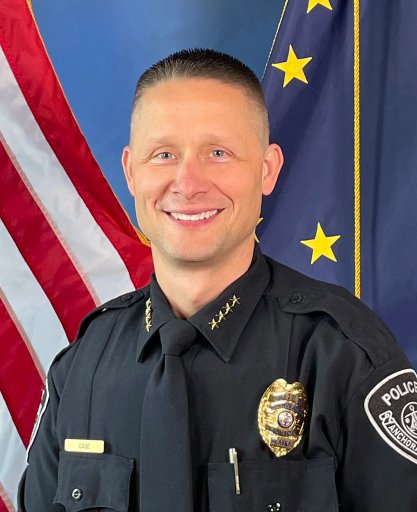
Sean Case
Police Chief · Anchorage Police Department
Suzanne LaFrance
Mayor · Municipality of Anchorage
William Falsey
Municipality of Anchorage