Anchorage Assembly: Health & Homelessness Committee Meeting
Alaska News • • 82 min
Articles from this transcript
Anchorage delays homeless housing vouchers until a case-management contract is in place
Anchorage will delay its 40-voucher homelessness housing program until a case management contract is set, likely March. Officials want every voucher holder guaranteed a case manager first.

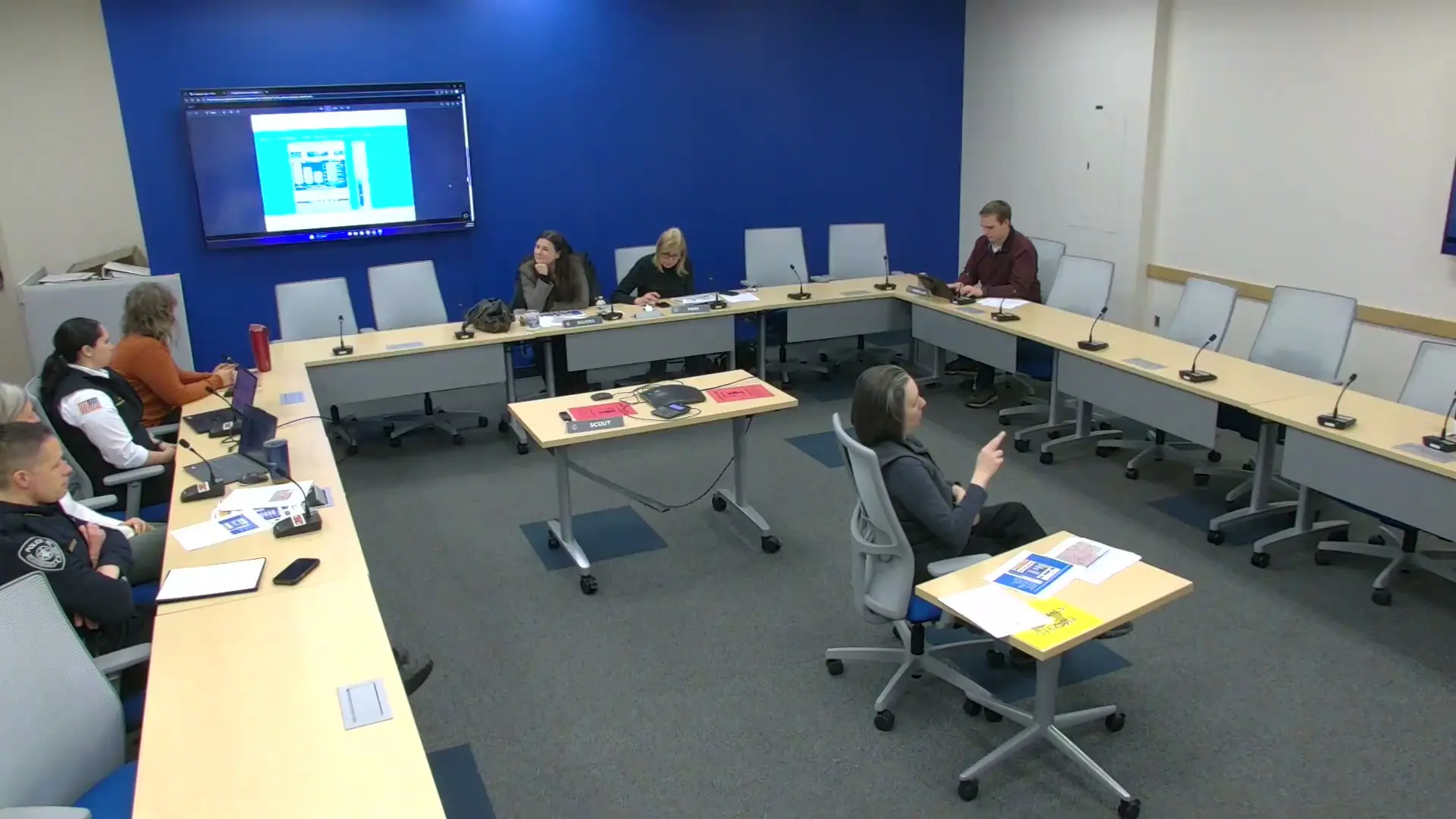
No audio detected at 0:00
All right, I'm going to call this meeting of Health and Homelessness Committee to order. It is 12 or 11:04, and we'll start with introductions in the room. Donald Handeland. Yarrow Silvers.
Kimberly Rash, Anchorage Health Department. Dr. Jennifer Pierce, Anchorage Fire Department.
Sean Case, APD. Thea Agnew-Bemben, Special Assistant to the Mayor. Just kidding. All right, and we're getting ready to move into our presentations today, um, working with the IT a little bit. More.
Also, I wanted to say that we have a second presentation after the health and homelessness data dashboard, which is on our agenda, and that is the HUD timeline update. And I apologize that that did not get on the printed agenda. And you can just let me know when you're ready and introduce yourself and start.
Okay, we're going to switch up the order and we're going to go with the HUD presentation first because he does not have slides.
Thank you, Member Silvers. So yeah, so I'm Jed Drolet, Community Systems Program Manager, Anchorage Health Department. I don't have a PowerPoint formal presentation. I'm just going to give a quick update on some of our projects and some of the timelines that we have for those. If you— if anyone who was at last month's committee meeting, there was a presentation by Frankie Dahl from our office on our new homelessness to housing voucher program.
Unfortunately for us, but fortunately for the Health Department as a whole, Frankie has since moved on to a new role within the Health Department, and our team is not going to be able to backfill that position, and so we are reshuffling some of our work and priorities, and that is leading to some changes to the timelines for the various projects we're working on. So I'm just going to give a quick summary and update of some of those. And also one update, again, since last month is we have decided to, in addition to the Homelessness to Housing Voucher Program, which we're using some of our HUD home funding for to also fund a case management project in coordination with that using some of our Community Development Block Grant public service funding. And so the, the idea behind that is that we'll put out an RFP for an experienced nonprofit partner to provide case management for the voucher program as well as other case management needs relating to the homelessness response system. We are going to put that RFP out, get applications in, and score those and do all that over the course of the next few weeks.
And given those timelines, we're expecting probably that contract AM will come to the Assembly in February, either the first or second meetings in February. Or possibly the first meeting in March. And that's just due to the timelines of the RFP process and all the steps that go through that.
Due to guidance from the administration and Assemblymember Erin Baldwin Day, who has been involved in discussions with this, we have decided to coordinate the voucher program timeline with the timeline for that case management contract and to not launch the voucher program until we have the case management contract in place, which does push out the voucher timeline We are fairly far along with our negotiations with Alaska Housing Finance Corporation, so we are still potentially anticipating that we will have the agreement with AHFC ready for Assembly approval at the December 15th meeting. That might get pushed out if we have some complications along that, but we would not be actually launching the program until probably March when we have case management in place so that we can ensure that we know that the case management is available for people who would be receiving the vouchers. So we can give an update at the December meeting if the committee would be interested in that. We will have more details at that point about the specifics of both of those processes. Another update that I just wanted to give generally is our housing redevelopment program, which will have multiple tracks and types of projects that we'll be funding through that.
As part of that, we will be doing a substantial amendment to our HUD Action Plan to allocate funding to specific types of projects through that. We're anticipating probably that, that substantial amendment will come to the Assembly for approval in January, and then the launch of the redevelopment program would be after that. And that'll have components that would be demolition of derelict or uninhabitable properties, rehab of habitable properties with income limitations on the owners to comply with the HUD requirements, and then also a track that would be for actual redevelopment that would involve more extensive municipal involvement. And that will be launched with an RFP for redevelopment and piloting modular housing. But all those will have to be launched once we get the substantial amendment to allocate the funding.
So that's just basically my update for this. I can give a more in-depth update at the December meeting if the committee would be interested. And I can answer any questions anyone has now.
Okay, yeah, that would be, I think, good to have that update in December.
I'm happy to hear that you're doing the case management alongside the voucher program, because from some of the stuff that I've looked at, some of the statistics, it's more successful in being able to keep people housed when you pair it with case management. Can you tell me any of the statistics and stuff that you looked at when making that decision? Or not offhand, but yeah, we did look at kind of a lot of the information on how those programs work and case management. And since we did have a pot of funding available with the CDBG public service that can be used for case management, we decided that was a good way to go. Okay, well, I'm really glad to hear it, so thank you for that.
And, um, okay, thank you. Thank you.
We were joined by Member Park at 11:12.
It says, Member Scout, I'm on the phone too.
Thank you, Member Scout.
There's one update to this version that I will transmit and post afterwards, but I'll just do it verbally. So great, here we are. Thanks for having us. This is the quarterly presentation of our data dashboard that relates to our homelessness and health strategy. And so a lot of the data— sorry, I should have introduced myself.
I'm Thea Agnew-Bemben, Special Assistant to Mayor LaFrance. And we'll also have some other presenters. They can introduce themselves now. Go ahead, Chief Case.
Shawn Case, APD.
Dr. Jennifer Pierce, Anchorage Fire Department. Kimberly Rash, Anchorage Health Department. Great.
Yeah, we'll dive in. Okay. Next slide, please. So just a reminder of what our strategy is seeking to do. We've had the same set of goals since the mayor took office, and we're happy to report to you today on our progress.
Our main vision, or kind of overarching goal, is that we have a safe community for everyone who lives, works, and visits here. That involves fewer people sleeping outside, much fewer people sleeping outside, that we'd really like to have no one sleeping outside, but that's, that's a bold goal, but we're working towards it. That requires a year-round safety net system. We pair this with our crisis response and crisis care system, more housing, you just heard some of that work from Jed, and all of that requires partnerships, additional funding from other sources, and data like the data we're sharing with you today. Next slide, please.
So I wanted to start with some accomplishments from the beginning of the mayor's term back in 2024, since we're now almost 2 and a half years into this work. So the top one here, this is the one I updated because I looked last night. At the dashboard that has this information, and as they clean data, they update the dashboard. So the final number for September 30th of '26 changed. We now actually have seen a 19% decrease in people who are experiencing all types of homelessness in Anchorage between January 2025 and September 30th of 2026.
So that is counting the number of people who are engaged with the system that we use to track people experiencing homelessness here in Anchorage and who are active in the system at the end of the month. And so when you look at the end of January 2025 compared to the end of September 30th, 2026, it's a 19% decline. And I think that's especially significant because over the time that we've been working, we've been really seeking to add more people to the system. We're doing a lot of outreach and a lot of engagement, so that I think is a significant result that we can all be proud of. As you know, back in April, we shared with you that there was a 28% drop in unsheltered homelessness between the count that occurred in January 2025 and the count that occurred in January 2026.
That's also a significant achievement. We are seeing a very sustained reduction in residents' reports of camping and trash. We'll show you a little bit more data later on about the work that Parks and Rec has been doing, and we are seeing those reports go down. Some of that is just natural with the change in season, but it did start earlier than that, so that's, I think, also significant. Some of these other ones you're familiar with.
Willow Commons, we have 32 micro units operating there as a treatment program. It's now been operating more than 6 months. They've served over 50 participants and So far so good. We have 300 year-round shelter beds and happy to report that as evidence of how our system works, on Monday of this week, we learned that the Safety Center was seeing a high volume of individuals coming in for voluntary sheltering and so much so that over the weekend they had to turn some people away and so we learned that in our 9 AM call on Monday I worked with Director Rasch, who is awesome and always super responsive, and she worked with her finance folks. And as of this morning, we figured out how to add 10 beds at 56 today, and then we'll add 20 more beds on Monday.
So that's taking our surge, which we were going to complete by November 30th, and getting it done by next Monday so that we can respond to those needs. So that's the kind of system that we're, we're managing and working. And that takes us to the next bullet, which is our morning Anchorage Multidisciplinary Outreach Team call, Amdott, that the HOPE team started. We now have over 40 people that regularly attend that meeting every morning. HOPE team is no longer facilitating it, which is great because that allows them to be in the field.
We now have either the coalition or a member of the health department clinical staff facilitating that, and we use it to coordinate our work every morning. The Good Neighbor Fund, we started— community members started, and we really supported and pumped that up last, let's see, November. And between then and now, we now have over 300 donors. We've raised almost $280,000. That's going out to all of it.
There's no admin charged against that. All of the funds go out through our outreach teams to meet immediate needs and help people get safe. Our safety center is really fully utilized. I just mentioned that it's— but that's been all summer long. You'll see that in the data, their occupancy has really gone up, which is important because that's a significant contract that we pay for, and it's staffed 24/7 with EMTs.
So it's a really important resource for us. We currently don't have any large encampments in the municipality. We did do one abatement this year. That's down from a lot more than previous years. We'll show you that number in a minute.
Our pre-arrest deflection program at APD is up and running. Well, you'll hear about that in a minute. Our HOPE team has peers attached to the HOPE team. You'll hear about that in a minute. We're getting a lot of success at getting people immediately into treatment through those two mechanisms.
Our MCT is operating fully at 24/7. We have our core team up and running. We have mobile medication-assisted treatment. In the field happening between the fire department and then also at the health department. We've successfully brought in additional funding to leverage our municipal funds.
As you all discussed last night, a lot of the funding for this work comes from the alcohol tax and some from general government, but we've been able to leverage those municipal funds with private, state, and federal money to the tune of, you know, probably close to $5 million in there. And coming soon, as you heard from Jed, we will have housing vouchers, which, you know, it might seem like it's taking a while, but believe me, I've been waiting probably 15 years for that to happen. So pretty happy about that. And I was going to ask you at the beginning, if— can we hold questions till the end? Because we have a lot to get through, and I was hoping we could get through it and then have a good discussion.
Sure. Is that okay? Okay. Thanks. Okay.
Next slide, please. So just a reminder, Point-in-Time Count, we did see a reduction in 2026 and a 28% decline in the number of people who are unsheltered in the community. Next slide. This is the chart I was referring to. You can look at this on the ach.org/data website.
If you click on all individuals, you can choose your timeframe. So This is looking from January of 2025 to September of 2026. And as I mentioned, if you look at it today, it's actually a bigger decrease than I had when I, when I pulled this slide. So it's actually 19% decrease over that time period. And that's people experiencing all kinds of homelessness who are active in our system at the end of the month.
Next slide. This is a data point that we don't normally share. Frankly, because it seems a little crass to me to make a bar chart out of the number of people who've died outside without a fixed address, but I did want to share this with you because it is something that does get a lot of attention at the end of the year when APD publishes these numbers, and I do think this is something that we track internally probably every 3 weeks or so, and I do think it's a, it's a very important and very basic measure. We should not have people dying outside because they have nowhere to go that day, and I'm happy to tell you that through November 17th, we've had 23 people die, which is 23 too many, but that is a significant reduction from last year where we had 45 people by the end of the year. So I'm hoping that with these additional shelter beds and all the work that we're doing, We will end the year with far fewer people dying outside than occurred the previous year.
Next slide. Yeah. So this slide focuses on the opioid crisis per Anchorage Fire Department patient contact. So averaging about 168 opioid-related incidents, that does not mean overdoses or anything like that, just means that the individual has noted to be struggling with opioids. And then as you see, about, it's about 5 per day, and then with the Anchorage Health Department has also distributed over 1,400 Narcan kits to community locations as well.
Next slide, please.
Oops, thanks, Jen. Sorry, I'll just repeat myself. Just a reminder of the strategies that we use to attain these results and what we're reporting on today. On the, on the left-hand side of the slide, that's really our safety net crisis response. That's really showing you how our outreach and crisis response connects with our shelter system that we've developed.
And then on the right-hand side of the slide, that's showing you the components of what's called the Crisis Now framework. This is is a framework being adopted statewide that Anchorage has been working on for probably 8 years now. So all of our teams that we're reporting on are part of this framework. And the first piece is someone to call. So that's where our APD and AFD dispatch comes in.
Someone to respond, that's our mobile crisis teams, the ones we have through the municipality. It's also exciting to know that we have new teams forming through True North Recovery that will also be doing mobile crisis and mobile outreach. And then just this morning I was meeting with Alaska Behavioral Health. They are also launching a mobile crisis team. So we now will have even more.
We also have VOA that does rapid response for youth. So we will have more community partners to supplement the work that the MUNI is doing there. The next two components are a place to go. It's extremely exciting to announce that Providence just sent out an invitation for a tour and opening of their, at least the first component of their crisis stabilization center on December 1st. And we did hear an update on Tuesday from South Central Foundation that they'll be opening their facility still on track for about February.
So this winter, we're gonna see a massive increase in our ability to bring people to a location where they can really get the help that they need in a crisis. Next slide.
This next slide really focuses on the mobile teams within the municipality that are responding to individuals in crisis in the community. And as you see here, the blue on the bottom is the Anchorage Police Department Mobile Intervention Team. The red is the Anchorage Fire Department Mobile Crisis Team. And like the peach-orange color is the Anchorage Safe Patrol. So you can see that all the teams are out there with it, really a continuum of care responding to individuals.
And then the Anchorage Health Department Clinical Outreach Team has had over 13,000 contacts. And then of course Restorative Ranchi Services contacting individuals as well, having over most, almost 1,500 unique clients that Restorative Ranchi Services has also contacted. Next slide.
So the question is, are we reaching people in crisis, which is really important, and how many people are we reaching? And so this is looking at unique individuals. And again, in the red maroon color, that is the Anchorage Fire Department Mobile Crisis Team, how many unique individuals they're seeing a month. And then the blue is the Anchorage Police Department Mobile Intervention Team, how many unique individuals they are seeing. What is important to note is about, 65 to 75% of the unique clients that MCT and MIT are contacting are actually housed.
So a smaller percentage of those are unhoused. Next slide.
So this is looking at the Safety Center admissions. So if you're looking at the top, that is the total, you know, the total admissions is about 12,000 in 2025. And year to date already in 2026, you're at 10,239. When we look at unique clients on the bottom, you can see the unique clients number kind of going up through time. And then also admissions are significantly higher.
So we do have individuals who do seek help and services through the Anchorage Safety Center frequently. Next slide.
So this side is— look, this slide is specifically looking at voluntary and involuntary. So the involuntary is those individuals who meet criteria for what we call Title 47, and so that is the darker shade, like the dark brown on the bottom, which would be the involuntary rate. And then the peach color on top is the voluntary rate, people who are just seeking shelter within the Anchorage Safety Center for a short period of time.
Next slide.
Okay, so, okay, so now we're moving from the kind of the, the outreach portion of our system to what we do to help prevent people from becoming homeless. And this is, this work is done through a number of community providers. Many of whom can be reached by calling 211. And it's also done by our team that Jed leads at the Health Department. So through our, through our community providers, through the end of the third quarter, they had served just a little bit over 1,200 clients in 769 households and provided resources to help prevent homelessness.
Through the Health Department specifically, We were able to help 100 people with rental assistance in quarter 1, 261 folks in quarter 2, and 119 in quarter 3. And those might be duplicated between those quarters. We don't have it unduplicated between the quarters, so just so you know. Also through the Health Department, we were able to do 11— complete 11 mobile home repairs in quarter 1. None were completed in quarter 2, and 3 were completed in quarter 3.
Of the people that we, as a whole system, were able to house 2 years ago, 73% of them, as of this quarter, are still housed. And when we look at people who were using emergency shelter or transitional housing in 2026 through this quarter, about half of them were using it for the first time. Next slide, please.
We're also very active in connecting people with shelter, treatment, and housing. And so, as I mentioned, through AAMDOT and through other work, we have a number of community providers that are doing outreach, and those community outreach providers had 424 contacts through this quarter, this year, and helped 136 individuals enter shelter or housing. So about a third of the folks that they contacted, they were able to help get into shelter or housing. Next slide, please.
This slide talks about our Anchorage Fire Department core team. While our Anchorage Fire Department Mobile Crisis Team responds to behavioral health crises in the moment, our core team focuses on referrals from our EMS providers. Through these referrals, what we're looking at is for individuals who are frequently using emergency services because they're falling going through the cracks and their needs aren't being met. Individuals who are struggling with opioid use disorder and are seeking treatment, and we're also responding to opioid use disorder calls. And then also vulnerable individuals who just need more help with basic needs and healthcare access.
So when our EMS providers see someone struggling in the community, they can do a referral to our core team, which is made up of a paramedic and a mental health clinician, and they can respond and assess and see how best to help that individual navigate the healthcare system or the social needs that they have. So through quarter 3, from January to the end of quarter 3 in 2026, they have had over 894 total contacts, and that's just one team working Tuesday through Friday. We've had over 242 EMS referrals, seeing 267 unique individuals. So that's also them doing outreach and contacting individuals who are struggling with opioid use disorder. That's why the unique individuals is higher than the EMS referrals.
They've done 469 new connections to resources, and 54 of those have been successful, and they continue to receive those resources today. 30% Of those unique individuals were identified as unhoused. Most of the individuals we do work with on the core team are at risk of losing housing or really struggling with getting their needs met. Specifically for opioid use disorder, we launched our sublingual buprenorphine program March 1st. We've had 11 administrations of helping people who are struggling with withdrawal symptoms.
7 Of those were connected to treatment and 4 of those were identified as being unhoused and 6 are still in treatment today. We've had 61 total opioid-related encounters of trying to help people navigate into treatment.
Okay, hopefully from the presentation so far, we've seen that we're each grabbing a sliver of the population that we're trying to impact. And as Dr. Pierce mentioned a minute ago when she was talking about MCT, MIT, with the high number of people needing care in crisis that were home that had a home. This next slide represents a team that really focuses on those that are unhoused. So this is the HOPE team combined with peer support. And we've been running now, currently we're 9 months in the program having HOPE teamed up with the peer support.
And what this slide indicates is just the volume of clients that we've had through the first 3 quarters. And you see there 365 clients I think really the one that I wanna kinda point out is all the way over to the right side, that number 91 in a month that we've helped address an underlying issue. Now this money is used, so there are some limits on exactly who we can offer help to. So, you know, think about someone going to detox or someone going to residential treatment or all kind of some of the, a range of options that can take place. When the officer asks the individual if they're interested in getting some help from some of the underlying challenges that they have, we then call out our third-party vendor that shows up on scene.
That response time to date is about 16 minutes for that third-party vendor to show up, to have a contact with the individual, and then take the individual off scene. It's about a 26-minute process from start to finish, from the time the officer calls to the time that True North Recovery takes the individual away, and what that means is the individual gets the assistance that they need. That's all handled outside of the police department, and if they're successful, that charge goes away, it never actually happens. And if they're not successful, then the investigation still took place and we move forward with, uh, the prosecution on that offense that they were arrested for.
Um, and as the Chief just mentioned, we're really trying to connect people with the care that they need, and that really is a team effort. So this slide really speaks to a lot of the work that's happened through the Health Department and specifically through the federal funds that the Health Department receives that Jed's team oversees, as well as through the opioid settlement funds that the Health Department also manages. And none of this is, is new news from our last report, but other than to say that Willow Commons is still operating successfully and Alder Place is still under construction but should be completed soon. So we will be letting you know as soon as we have that ready for you to, to take a tour and see that new location.
Next slide, please. So now we're going to talk a little bit about cleaning up camps and making public spaces safe. Parks and Rec wasn't able to join us today, so I'm just going to report on, on this for them. This slide is maybe a little bit hard to see, but it's actually a really— these two graphs are really compelling, so maybe you can zoom in on your screens if you're there. But what these two graphs on the right-hand side show you, the top one is how tons of trash removed from public spaces by our Healthy Spaces team.
And then the bottom graph on the right-hand side is how many public, public reports we have submitted through our online portal for camp and trash. And again, I just want to stress that this year we've really promoted having the public report. And in that green line there, in that bottom chart, that is the 2026 this number. And what you can see there is that those reports really peaked, you know, right when the snow melted, and you can see a lot of debris from that's accumulated over the winter. And you can see in the upper chart, there's a similar peak in our trash collected during that time.
But what in that bottom chart, what I think is really significant is that the reports then really start to go down and really then fall below the other two years, even though we've really been promoting people making reports. And I receive those reports once or twice a day depending on how many are being reported, and I can tell you over the last, you know, couple months they've really gone down. On the right-hand side of the slide here, just to kind of underscore the point, in 2025, you know, I know you all saw this, it's some number of beluga whales, or I can't remember how it was described, but basically over 1,200 tons of trash were cleaned out of our public spaces, and that was double the previous year. And through this year, even though we had the same teams working and reporting, you know, we've really pushed up the reports, we're not even halfway to the amount that we had last year. So to me, what that says is we are over the hump.
We're now able to get out when we get a report, the team gets out there that week, and we are keeping up. Which I think is really great news. Next slide. Again, just thinking about camping, between 2023 and 2025, we had 32 abatements of camping in public spaces. In 2026, we've had one abatement that was pretty deep in far north Bicentennial Park where we had a pretty extensive set of structures and stuff.
There weren't a lot of people there, but there was quite a bit of stuff and it necessitated doing an abatement so people could remove their property if they wanted to. And that we completed that in October.
Next slide, please. Okay, we're now going to move over to talking about shelter and how to connect with resources. Kim? Yeah, so, excuse me, you've seen this chart many times before, and really it doesn't work unless we have of all the partners working together in tandem with one another. So as you can kind of see from the top here, like where are we providing shelter and how many spaces do we have to connect people to those shelter spaces?
As Thea mentioned a little earlier, we now will be surging up to 200 with the support of the adoption of the code change from the Assembly earlier last month. And so by the end of this month, which is much faster than last year in getting people into shelter we will be at 200 at East 56. We will remain steady at 150 at Linda's Place, and then we continue to have 100 beds at Alex too. And then again, as we work through like this continuum, is what I like to call it, we work with our partners and either does the individual need to go to treatment, and you've kind of seen all of the different partners kind of filtering through. We use RRS, heavily to help us coordinate everything.
Without their assistance, I think it would be, it would be a heavy lift for the Health Department to try to coordinate all this. So we're grateful for the help that we can get through RRS with this coordination and really how this happens is it's real, real time. They have a Teams link, they have, they use their cell phones and chats to really say, "I have a person. Where is there an open bed? How do we get the person in the bed?" right now.
And then you can kind of see, then we go through the transitional and low-rent housing that are MOA-funded. Again, it's a continuum. The more resources that we can bring online, the better. So as Jed mentioned earlier, really bringing on those vouchers and that voucher program in early next year is going to be tremendous to how we can really continue to move people along our continuum. In addition to that, the Health Department is currently reworking our nighttime-only shelter RFP, and we're hoping that will go out at the end of this month, and that will look for provider or providers within our community that could provide overnight shelter only, which would be in addition to what you see up here on this chart.
Okay, so a little bit of data on our, our, how many people are using our shelter. So through quarter 3 of 2026, and this is emergency shelters, not just the ones that the Muni funds directly, but all, all emergency shelter, We had just over 3,200 unique clients served in those shelters. Just over 2,400 of those are single adults, and then in family shelter, 700, almost 750 individual family members. The median length of shelter stay is, for individuals, is between 8 and 44 days, and for families, it's longer, which is appropriate, between 39 and 60 days. Days.
Our shelters, and this is again all emergency shelters, so not just the ones we operate, were 97% occupied. And I think there is a data glitch saying that the family shelters were 121% occupied. I don't think they were, but that hasn't been corrected yet, so sorry, it's still on there. Next slide, please. In shelter, especially the shelter that the municipality contracts for directly, they're required to have case management there.
As well as behavioral health providers and other types of support. So the, the table on the left is showing you the participation rate in case management for the shelters that we fund directly. It's often asked, you know, where do people go from, from an emergency shelter? About a third, 34%, unknown, another third going to another homeless situation, 13% going to a transitional situation, which is like friends, family, hotel, about 16% going into permanent housing straight from shelter, 3% transferring to another emergency shelter, and then about 5% going to some type of institutional care. And then just a reminder that, especially in our shelters, many people have disabling conditions, so two-thirds have some type of disabling condition, About 50% have one or more, and then about 23% have more than 3 disabling conditions.
So we serve a very high-needs population. Next slide. Just a little quick report on the Good Neighbor Fund. We're now up to 341 donors, 52 people donating on a monthly basis. We really would like to get the number of monthly donors up as high as we can because that way it can really be self-sustaining.
We've had about $278,000 contributed to date.
Next slide. Just like to give you a real quick review of our priorities for the year and where we're at with them. Next slide. The ones that are denoted with a check mark are ones that are happening and completed. The ones with a star are the ones that we're still working on, but we're actively working on.
So For fewer people sleeping outside, you can see the work we're doing there. Next slide is more crisis care. We've talked about all of these things today. Next slide is more housing. Talked about these.
And last one is more partnerships, data, and funding. And that's the end. Thank you very much.
Thank you. Yeah, I got a number of questions here, so I guess back to slide 4.
So with these, can you kind of give a quick, I guess, description of what what it means to be unsheltered transitional housing and then what the shelters, I guess, kind of those categories of housing, or I mean, obviously, Anchorage, not housing, but can you give, I guess, a little bit of a definition of those? Sure. Through the chair. So emergency shelter, that's in the light blue, that counts anybody who's staying in an emergency. So this is counted at one, it's called the point in time count, 'cause it's counted on one night and it's actually counted over 2 or 3 nights just to make sure that we don't duplicate people and that we, count everybody.
But so the light blue is telling you how many people were counted on that night at an emergency shelter location. The slightly darker blue transitional housing, that's how many people were counted in a transitional housing situation. And then the dark blue on the bottom is how many people were counted in a— they were either outside, in a car, someplace not meant for human habitation. And then how are you getting the counts for the unsheltered? I guess, how is that determined?
So we go out, we have teams that go out physically.
We map the municipality into quadrants and then dispatch teams out of volunteers to go and walk those locations. And then whenever we find somebody, then we do a very quick interview with them and count whoever else is with them. So it's a physical count. Okay, and then with that, I mean, I guess with some of the—. Oh, can I add one more thing?
Sorry. Go ahead. It's also, we do that and there are teams that go to, for example, like Third Avenue Navigation or to the library or to other places where people might be and ask the question, "Where did you sleep last night?" And if they say, "I slept outside," or, "I slept in a car," then they would get counted as well. Okay, and then I guess with any of that, I guess, are you guys, I guess, going to different locations or is it kind of like, "Hey, here's where the kind of usual areas where people," are hanging out. I guess my question on that is, as people kind of are being like, oh hey, we're being interviewed and stuff like that, hey, this, this location is known, are people shifting to, to other locations and then not being counted potentially?
So the value of this data point is that the count is done the same way every year. So we get to, we go to everywhere in the municipality. We don't just go to places where we think people will be, we go everywhere. And then we, so, and we do it with the same method each time. And then other places around the country do the same thing.
So this is probably the one data point that is easiest to compare with other locations as well. And it's, it gives us a trend over time. Okay. And if I could add too, so this is a HUD requirement. So we partner with ACH to do this count.
So that's kind of what Thea was saying, that other organizations across the US do the same count every year 'cause it's a HUD required function. Okay, let's see.
And then in for the, how many, let's see on slide 6 here, how many people are unhoused individuals? Is that using, I guess, the same definitions? I remember hearing from someone that the definition of someone dying and being unhoused had slightly changed recently. And so is that definition, I guess, consistent across all of these years? I will use the word it's generally consistent.
And the reason why I say that is when we started when we were first producing this number, this was not a systematic approach that we made up to, that this was gonna be a reportable number. It was, hey, we're seeing a rise, we should like, how many of these folks are unhoused? And so we just started counting with a very basic definition. Now obviously once we started counting and started putting this information out, there became higher and higher levels of interest on what these numbers represented and now what they did trended over time. If you look at from the time we started to the time we are now, uh, there's been some very, very minor changes that have been made because we look at each and every outdoor death and we look at the facts and circumstances around it and determine whether or not, well, should this be counted as an outdoor death.
And so as you can imagine, 2 years into this, we'll have a case and go, well, we haven't seen this one before, what are we going to count this as? So little variations like that where you see one of these rare cases, but the basic definition of what this is has remained the same. And I would say that that variation of what that definition has looked like over the years, you may see a plus or minus, you know, 2. This is not any drastic definition change where you're going to see a significant change in the numbers. Okay.
And then, okay, let's go to slide 12.
Is there a reason for the sharp, or I guess kind of the increase in the voluntary admissions there starting in, looks like, um, July 2025?
Yes, yes, we, that's when we started voluntary admissions to the Anchorage Safety Center. So prior to that, um, individuals could not stay there voluntarily for shelter. Looks like there was a little in March prior to that. I'm unsure about that data point there, but that's when, in July, is when we—.
What that's saying is public-submitted camp and trash points. So when you go online to submit a report, you have to click on the map and it's kind of like a point on the map. Okay, points and stuff. Okay, it's not a trash point. Yeah, yeah.
And then on 22 here, why is there a range for kind of the median shelter stay? Is that, I guess, different periods of time?
Good question. Let me just use my brain on it. Because it's kind of interesting how they And if Jessica was here, she could give like the really precise description, but the way that they track that data is because they're, they give you a number for what they call leavers and stayers. And so when someone leaves shelter, they're counting the number of days that person was in shelter. And then at each month they're counting for people who are here, how many days have they been here.
So there's kind of two numbers for people who have already left over the course of the month and people who are there on the day that they're submitting the data. Does that make sense? If it doesn't, Jessica would be the right person to describe it better. Yeah, I mean, I guess, I mean, because I mean, if they're still there, then I mean, wouldn't they be, I guess that median would be, I guess, continue to grow. Right.
Well, maybe. I mean, honestly, when you look at this quarter to quarter, it's very similar. So I think what it's telling you is that there's a range that people, some people are rotating in and out of shelter very quickly, and then other people are there for longer periods of time. I mean, it's kind of giving you pretty obvious information. And that, that when we look at it each quarter, this is the number for the leavers and the stayers.
Yeah, I mean, I guess, yeah, I mean, it's just kind of a big range between, I mean, between 8 days and 44 days. I mean, that's a, that's a huge range there. And so I mean, if you guys have have, I guess, some more data and stuff of like, rather than just a median of like, hey, here's the different kind of, uh, standard deviations and stuff, or some kind of other graph to, I guess, get it of, okay, there's this many people who are only 1 or 2 days and stuff, kind of along the things. And that way we can kind of— yeah, um, I think that's all the ones I was able to write down.
Okay, Member Park. Thank you, Chair.
Going back to slide 12 with the number of people that are admitted, just wondering, are those new people each time or a lot of them are repeat so that you're serving the same person more than once?
Yes, they're repeat individuals as well. Can, can you estimate what percentage are repeat and what percentage are new contacts? So if you go to slide 11, that identifies the unique individuals at the Anchorage Safety Center, and then you also see the number of admissions as well. Okay, thank you. Yeah, um, on slide 17, Chief, um, you said that, that, uh, the deflection is going to be opened to, um, to all the patrol officers.
Is that correct? Yes, ma'am. And everybody's been trained on this now? Training is happening this week. Awesome.
Um, And when you're engaged with someone who may have committed a misdemeanor and you're inquiring about their drug history, do you find that they're forthcoming for the most part? That's limited. In fact, when we first started the training with the test group, we wanted to provide them, the officers, more training to get more information. And what we found with working with our peer providers is The more we talk and the more we dig, the more they shut down a little bit. And so best to just crack the door open enough to where we know there's some light and then let the peers come and open that door wide open for us.
Okay. And my last question was, when you say peers, are you talking about True North or you have other peer groups that you work with? True North is our, is our provider. Yes. Thank you.
Okay. I have a few questions also.
Going back to someone to call, who are people calling? Are they calling 911, 311, 211? Is there a dedicated phone number or crisis line also that people can call? Or—. Yeah, so our system is really dispatched through our 911, 311 system.
People can call the Safety Center directly. So sometimes that happens, but it's— is that answered through AFD? Jen? When the Safety Center, they call the Safety Center number? Yeah.
So really it's all of the dispatch is routed through APD and AFT. And what we're trying to create is a really good kind of triaged system. And we will be enhancing that with some of our work that we're doing that's funded by the Rural Health Transformation Program. But essentially, you know, 911 answers the call. They then determine danger level, they would be the ones to dispatch MIT if that was needed.
They can also transfer calls to the Care Line if actually the acuity level is low enough that really Care Line would be the best point of contact, and we report on that number in our crisis response data dashboard that we'll show you at the next meeting. And then they can transfer the call to 311 that can then figure out which of the teams, whether it's Safety Patrol, MCT, We don't yet have our community mobile teams linked up with our dispatch, and as Director Manrash mentioned, there is a lot of coordination that's also happening, you know, between like MCT and the hospitals and the shelter and the safety center and RRS. Like, there's a lot of coordination happening there that's outside of our dispatch system.
Okay, thank you.
I want to go to the 100 people helped by AHD rental assistance. How are people accessing this, or how is that— yeah, how are people accessing it? Yeah, great question. So I would say last year is when we put out the RFP, and so we had I think about 6 proposers that were funded through HUD funds. And so they are doing all the outreach to the individuals, and then they report back to the health departments through the CSC team, all the connections that they are making.
And so there is a group of individuals that are engaging with the population to make those connections.
To the pre-arrest deflection slide, the 5 that declined, do you know what the outcome in those cases were?
Yeah, we get arrest warrants for those cases so they can move forward in the prosecution phase.
Alder Place, is that the former Golden Lion?
Yes, also called the Alaska Center for Treatment as well, had many names.
I think that is it for my questions. Looks like Member Park has another question.
Thank you, Chair. Yes, actually there was a piece in Anchorage Daily News on the 15th that said you were having problems finding operators for night-only homeless shelters. Has there been any more progress on that?
So like I mentioned earlier, we are putting the RFP back out, and so we are currently retooling that RFP, and it should go out later this month. Thank you.
Any questions on the phone?
Okay, Member Handeland. Yeah, I was just curious, do we do anything to, I guess, track these services by like the individual so that we are sitting there saying like, oh hey, this person's interacted with, I guess, like 3, 3 of these kind of things? Or do we have anything like, I guess, some kind of like, I guess, matrix to kind of see, hey, how many people are using multiple and stuff like that. Yeah, through the chair, great question. That's what we're working on now.
So the funding that we received from the Rural Health Transformation Program is to get all of our clinical teams at fire, police, and health all using electronic health record. Because right now, we're kind of using them a little bit in a patchwork and they're not connected to, to anybody. So we are going to, we actually this week have all of our agreements signed with the Health Information Exchange, which every hospital in Alaska is signed on to, and there's many more providers signing on to it every month. So once we get our teams using their clinical records, we now have an agreement signed so they can at least start viewing information on that platform, and then we will start uploading information once we're all up and ready. And then once we're doing that, we will be able to do the kind of work that you just described.
So right now, we don't really have the data systems that even can tell us, you know, of all the folks that MIT is seeing and all the folks MCT are seeing, how many, what's the crossover? We have no way of saying like, here's an MCT client, how many times have they been to a hospital this month? We don't have any of that. So that's what we're building with the funding that we received from the state through Rural Health Transformation. So by June 30th, we should have, um, that our records set up and having that connectivity with our other providers.
And then we also should have our pilot projects all up and running and our evaluators under contract. So there's a lot happening. That's kind of our next phase, what you just described. Okay. And then back to the pre-arrest deflection, is there anything preventing someone from lying about drug use to, I guess, get enrolled in this and then, I guess, avoid a misdemeanor charge?
I mean, technically, I guess they could. I think we would have to think about what would happen during that process. Number one, having a conversation with a peer is a little different. It's a little hard to have a conversation with somebody that's been, had lived experience, and the person that's lying in the scenario is trying to kind of fake their way through it. And then let's assume they do do that, accomplish that task, then They're going to go to detox potentially, which means they're probably under the influence at the time, or they're going to enter some sort of program.
And those programs can be, you know, 9 months to a year. So now to beat an A or B misdemeanor charge, someone's going to enter some sort of, you know, rehabilitative program for up to 12 straight months.
And I don't want to sound like harsh, but I'm not sure that I really care if they lie at that point to get 12 months of help help so they don't commit more crimes. But I don't think that's going to be happening. Okay, so there's— there is, I guess, a significant, I guess, amount of thing. I didn't know if it was like, oh hey, you go to the thing and then being like, oh hey, like I go and steal something and then be like, oh hey, I've got a drug problem, be like, well hey, I'm cured now, and then like, yeah, no, there's not that. Their commitment that they're making far exceeds the time that they would ever see the inside of any sort of correctional facility by Months and months and months.
Okay. So the, I guess the accepted versus the enrolled, I guess what's then the, I guess the kind of the dropdown from that of like, so once they have contact, initial contact with the individual, uh, and they've accepted services, sometimes there's that delay between the time that they've accepted and they get into like an actual program. So they're monitored and they're So once they are, once they have accepted and are enrolled, enrolled means that they are functionally participating in a treatment program. And anything shy of that is we're still working towards that. And that delay time isn't long.
Okay, thank you.
I have just a final quick question. Does the Health Department have access to the HMIS data now?
Yes and no. So the, the ADRC, which is the Aging and Disability Resource Center, has access to HMIS because they are administering the ESG, which is the Emergency Solutions Grant, on behalf of the Health Department. The Housing and Homelessness team does not because Um, per ICA, we are the funder, and so we are unable to get that data. Um, so yes and no. But can I just add to that, Chair?
So, but a lot of the data that you've seen is from HMIS directly from ICA. So basically what we negotiated with them is that even though we can't have direct access because their concern there is that because we fund the program, we might be like, 'Oh, look, people are only spending 3 days in shelter and they all get housed.' Like, we might, like, monkey with the data. They don't want us doing that. But we now have a really great, actually, contact there who produces— he does the export from HMIS for us for each quarter. So it's coming straight from HMIS, which I think is a better solution.
Yeah.
Okay, thank you. Do we have any other questions? Chair, could I make one final comment before we The part, um, the work that we're doing that involves a lot of different departments, as you've seen, and many different community providers. We— this is a system that we're building that is the result of the strategy that we set out at the beginning of the mayor's term, and I just want to share, because I was there last night and listened to some of the debate, that the funding that we're using, whether that's alcohol tax general government or bringing these other funds to, to the table like opioid or rural health transformation. We are using that funding to implement the strategy.
So I heard a lot last night about organizations wanting money from the municipality, and I guess I would encourage you to turn that around. The way that we approach it is we hear the concerns from the community every day. We respond by developing a strategy of the things that, as, you know, experts in their fields, they say will work. Then we use the municipal funds to get those services as much as we possibly can, and to kind of strong-arm people into working with us and with each other, because otherwise that doesn't happen. And then we get the results that we're reporting to you today.
So And, and just for reference, all of that is in keeping with this alcohol tax strategic plan. So I guess I just want to emphasize to you that the work that's happening is the result, at least in part, of the funding that we're deploying to community organizations to get them to do that work with us. Otherwise they wouldn't do it. They would do other things because they would have no reason to do what we wanted them to do. They would do the things they thought they should do, which plenty of community organizations do, and that's fantastic.
But if we want to build a system and a safety net, part of what the municipality has to offer is the funds that we have control over that we can then use to get the work done that we need. So I just want to say that that's what we've been doing. And when I present to you what the Safe Anchorage budget, that's what that is. It's saying, here's a strategy you all said was the right one. Here's the activities we need to implement the strategy.
Here's the funding that we're going to use. To get those activities done, and then we're going to come back to you and tell you how we did it. So just wanted to level set that from the discussion that happened last night. Thank you, and I appreciate all the work that you're doing and all the coordination and effort.
All right, we will move to public comments. Would anybody like to speak today?
Come on up.
Are you able to put the timer up on the screen?
I'll start over. Hi, my name is Chris Stoner. I'm president Midtown Community Council, and I'm here to address the situation we have at 36 and C. And I'm sure, I'm sure a lot of you know about it. It has been a mess. It's a lot better.
We've had Lieutenant Fuchs and his team have come in and helped us, but we still have a problem with drug dealers. And I never hear anything anywhere about arrests for drug dealers. We know one of them, he came from a trailer park, he was evicted from it, he moved over to 36th and C in an apartment. We've identified him, he's still there. And we know that another drug dealer had to have been there before this first one, because drugs have been sold in that area for a long time.
I'm just asking for help. We need help getting rid of these drug dealers. So thank you very much for all you do. I wanted to do a little bit of a backup. Last night I heard someone give testimony about the terrible police officers harassing people.
I've seen a lot of police officers through the years. Working with homeless people, working with people who are not homeless, but they're on the street during the day. They are kind, they are gentle, but they're also strong, and I appreciate everything they do. Thank you.
Thank you for your testimony.
Next.
All right, uh, what? It's already started. Uh, Jamie Lopez, East Anchorage, formerly Coalition, formerly homeless. So, uh, I am deeply disappointed that Dr. George Conway, Chief Medical Officer of Anchorage Health Department, was not here today to give a presentation on cold-related injuries. Um, I watched that presentation on November 6th on a Lunch and Learn.
And more or less, as I said, when your body temperature drops 98.6— 98.7 to 95, basically you are trying to protect your— or the blood— the body is trying to protect itself, and then the blood stops flowing to the extremities, and that is when frostbite sets in. And it takes less than 2 hours according to a slide that he presented. Basically, there was time series data which then showed that there was a spike in the number of cold-related injuries in 2026. Which more or less correlates with AO2025-74S2 and driving people like cattle, stripping them of shelter to the point where they can't get out of the cold. And it used to be someone would pay for propane and they would pack into tents and RVs like clown cars and stay warm, and people would avoid losing fingers and toes and amputations.
And so, you know, we had this presentation basically in September And so you had slides 21 or 22 and 23 this month. And so more or less you went to, are we providing shelter and connections to resources? 34% Unknown, 30% essentially other homeless. It's really 64%. But then, you know, it goes straight to the next slide, which is Good Neighbor Fund.
And if you look at the last slide from, or the last presentation a couple months ago. So you had the same sort of thing, uh, where it talked about where people went unknown or homeless. And then you go to the next slide, and this was from George Conway's presentation— level 1, level 2, level 3 related injuries. And more or less, this slide was absent from this presentation today, and I wonder why. Because when you show data that you're maiming and crippling people based on safe streets and safe trails, it does not look so rosy and good.
But people are being hurt. And there was a gentleman named Jason Cryer, and more or less fall 2025, he had first stage frostbite. He went to the hospital, the hospital discharged him. One month later, he went to the hospital again. More or less this time they tried to discharge him to East 56, no beds available.
He was put back out on the street. One month later, frostbite again, still treat him. They tried to put him in Brother Francis Shelter, Alaska Regional displaced him. And then more or less there was no bed available. 4Th time, no, sorry, they had to chop his toes off.
And then I bumped into him in March and something similar where basically I tried to take him to Brother Francis after he got discharged from Alaska Regional and there was no bed available. And so I placed a phone call and I got him into shelter. But I am telling you right now, you're not helping people. There are people all over this town that are not getting help right now. The outreach efforts are poor and they're tied to police, and that's why people are not accepting services, sir.
Okay, do we have anyone else here? Come on up.
Hi, Phil Cannon. I'm the president of the Mountain View Community Council, but that is kind of here nor there. I'm here just to say a couple of things.
And it's me kind of trying to tie together a few different, what I think are related things having to do with shelter. I liked the presentation. I am on the MDOT call most of the time in the mornings and appreciate the network that happens there. I also understand that people currently tend to be discharged from hospitals to the street on a pretty regular basis, but hospitals have committed to joining that call soon, I think. And so I think in an effort to kind of decrease that from happening, that will hopefully soon change, that people will say, we want to discharge this person, but maybe there's a network out there that can— somebody can say, hey, we could take this person into shelter here, or whatever.
But I'm thinking specifically about an issue related to the upcoming discussion around the— I forget what it's called, but Linda's Place essentially getting a— what's it called— conditional use permit. Yeah. And so what that does, what that accomplishes is it makes something that is, I guess, temporary potentially permanent, right? And so In here we talked about, I think, 16% of people being discharged into permanent housing from shelters right now.
I think we should consider how to incentivize raising that number. Like, how do we— because I think that when you make a shelter permanent, then the goal of the shelter operator is to keep it full. I mean, I guess if money is the bottom, like, if it's all about the bottom dollars, every bed that's full means we can keep funding it at this rate, right? But if we can somehow incentivize moving people out of shelter into housing at a higher rate sooner and quicker, it also creates less pressure, like, in terms of, like, getting people out of the cold and getting people into Like, when we— it's terrible that our shelters are full. There should always be open space, and it'd be really great if someday we didn't need one of our shelters, you know.
And so I'm just kind of thinking out loud about the— we are doing what we can right now, and I think I'm proud of what Anchorage is doing right now, but I just want to kind of keep the eye on the horizon and say, how do we keep it moving to a place where our need for places like that is lower. Thanks. Thank you for your testimony. Anyone else?
Okay, this meeting is adjourned.