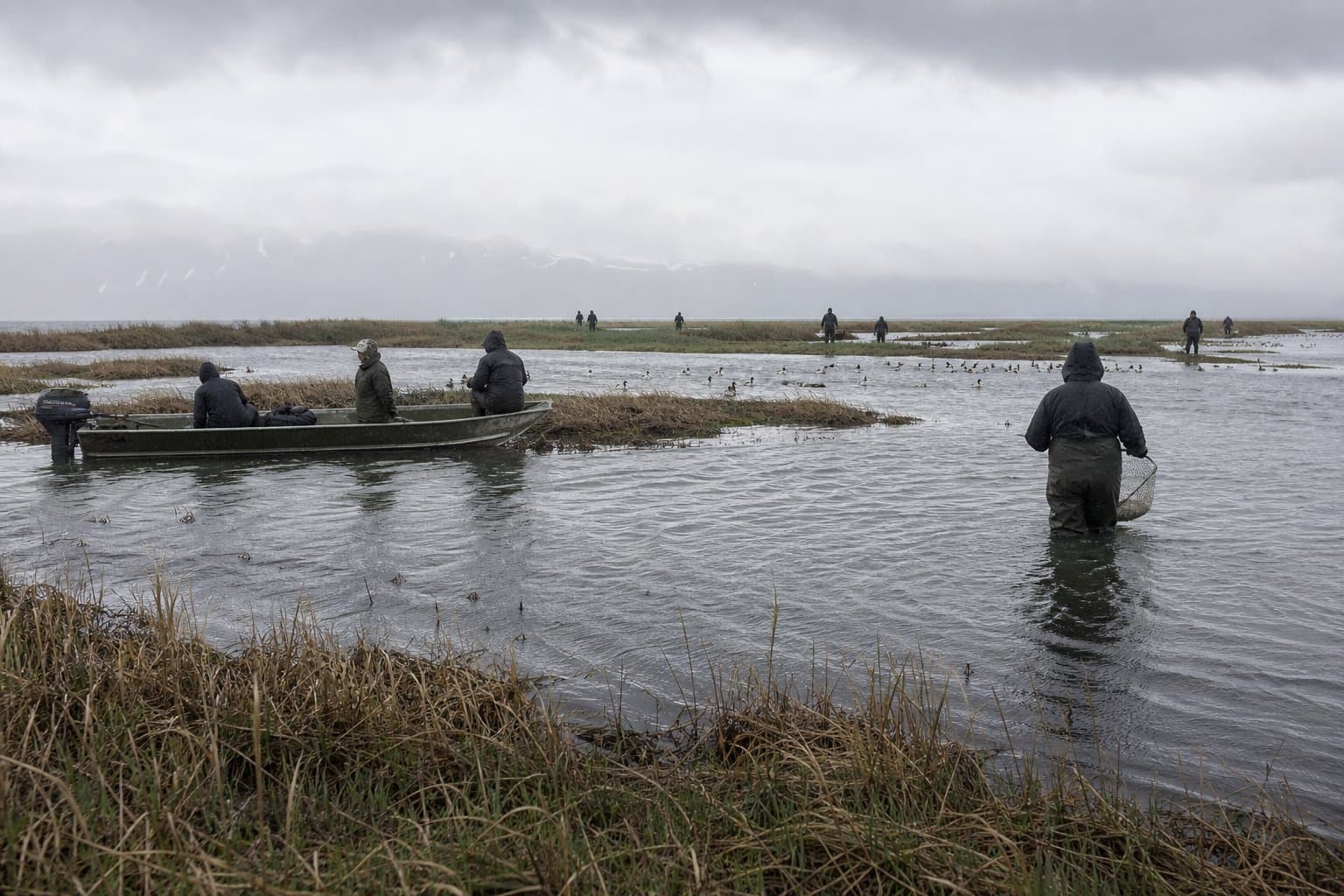
Photo from Alaska Region U.S. Fish & Wildlife Service via Flickr (Public Domain Mark) · Photo source · Public domain

2y ago
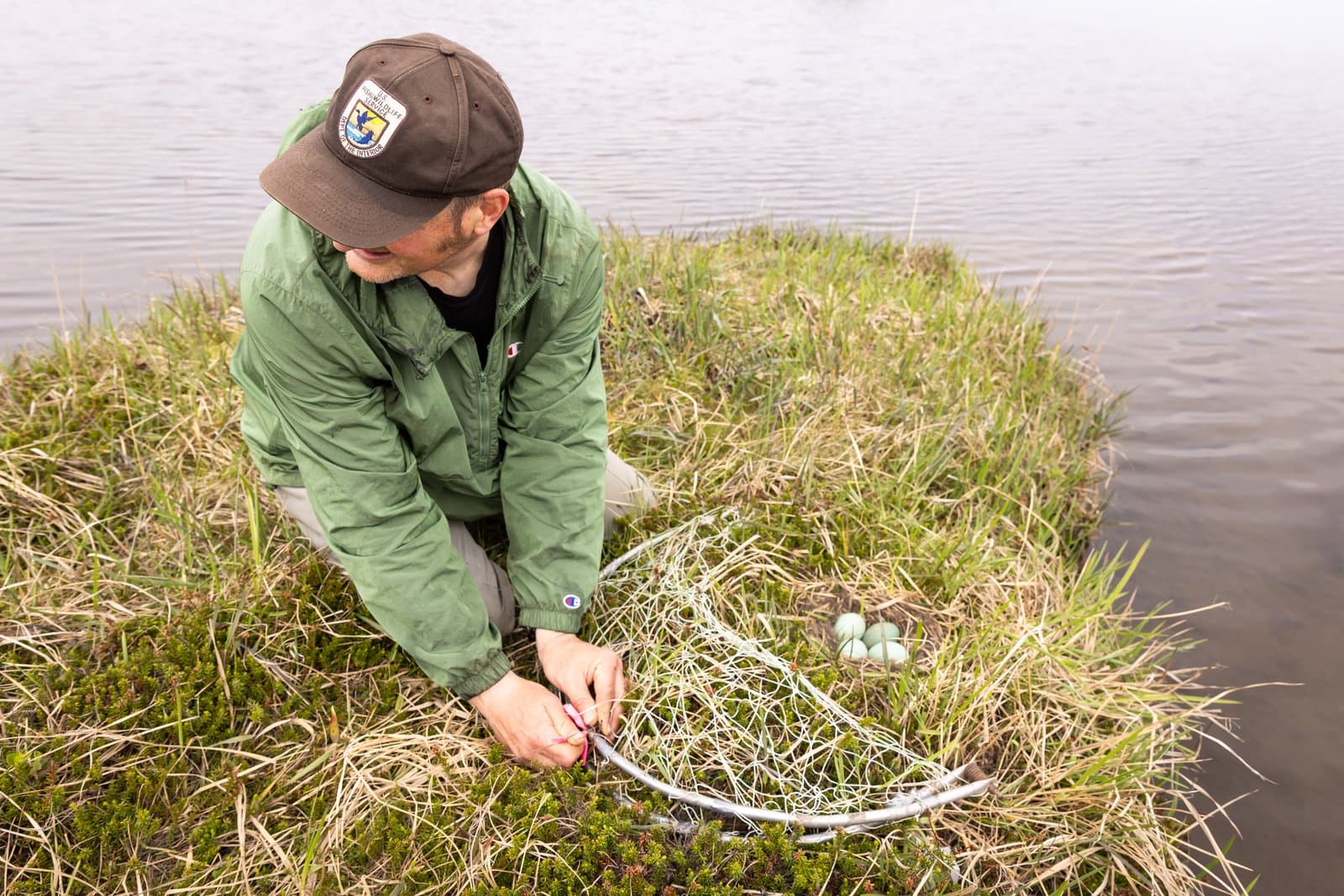
Biologist setting a bownet for research
A biologist wearing a U.S. Fish and Wildlife Service cap sets a bownet near a bird nest containing four eggs in a grassy wetland.
Setting a bownet
Comments
No comments yet.
Related Articles
Fish and Wildlife lost quarter of staff, faces questions on refuge management
Fish and Wildlife Service lost a quarter of its staff, including 530 biologists. Nine percent of refuges now lack on-ground management. Alaska holds 16 refuges covering three-quarters of the system's acreage, but the agency has not disclosed which Alaska refuges are shuttered or how many Alaska staff were cut.

Federal rule renames Alaska subsistence bird-harvest region as Ahtna Territory
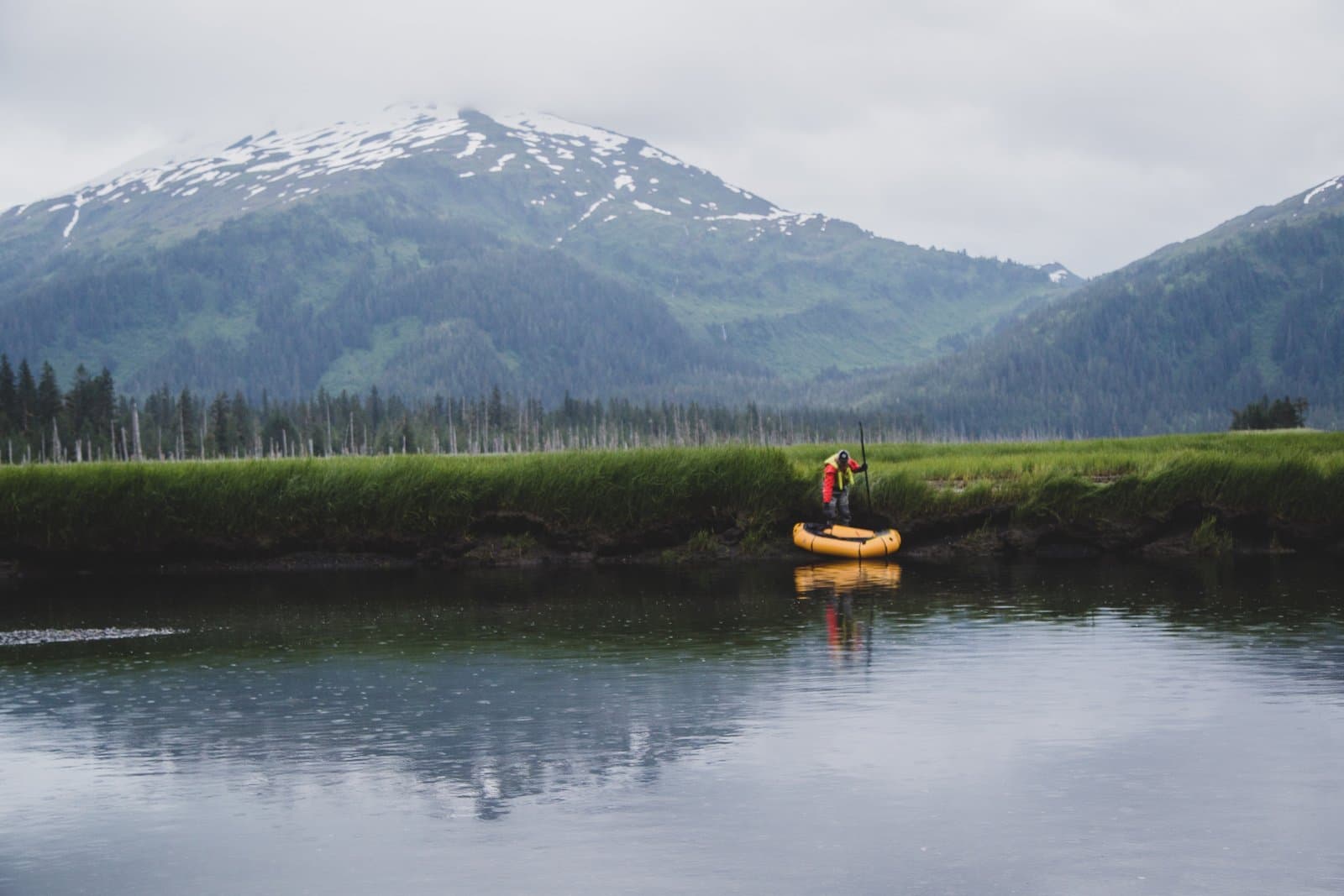
Federal wildlife officials renamed the Upper Copper River subsistence bird-harvest region as Ahtna Territory and aligned spring and summer harvest dates to match local Indigenous Knowledge.

Federal migratory bird subsistence rules take effect across Alaska
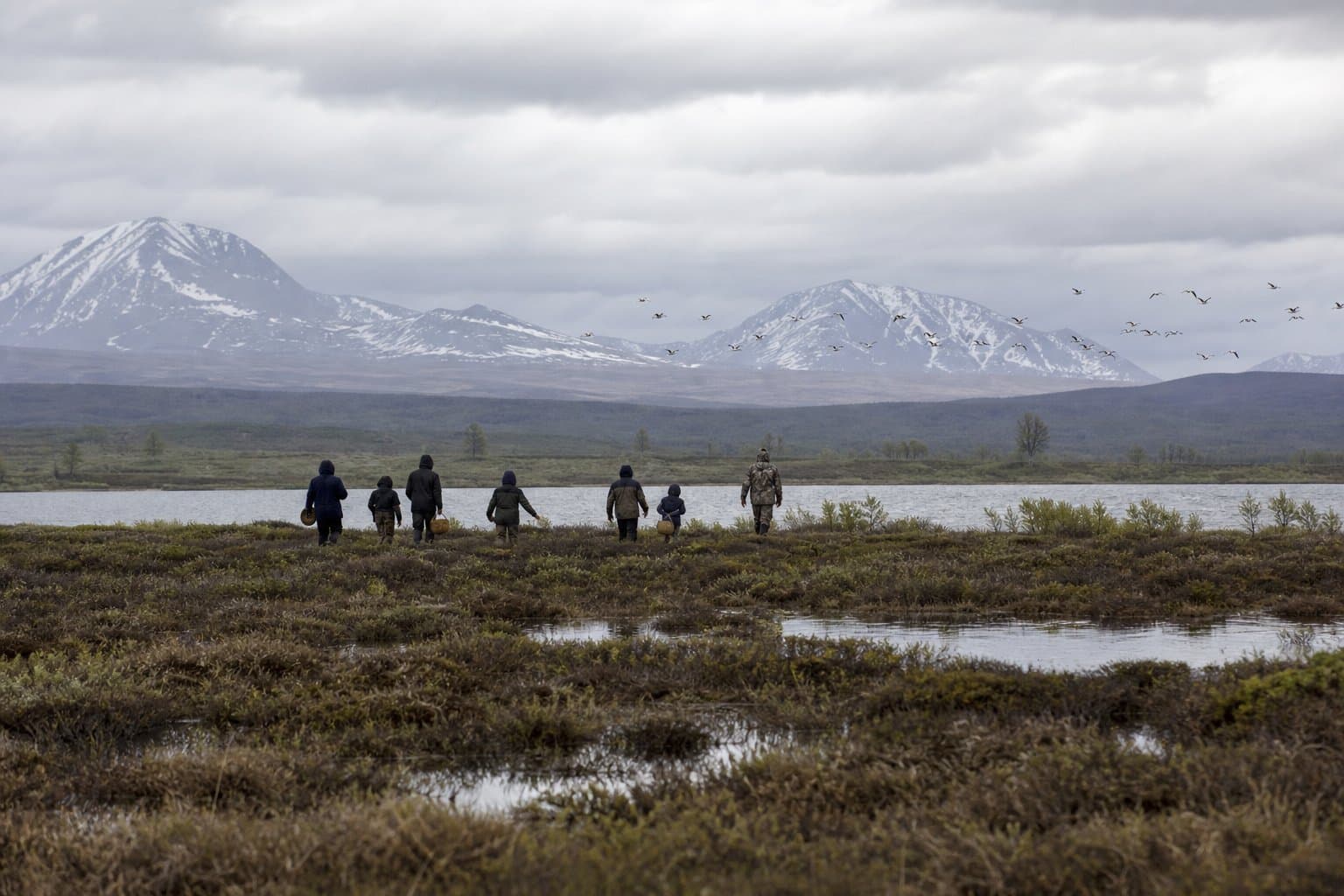
Alaska's spring subsistence bird harvest is older than the U.S. — and a 1916 treaty effectively banned it until 1997. This week's update continues a hunt Native communities never gave up.