Video Clips
Quoted moments from Alaska public meetings, hearings, and press conferences.
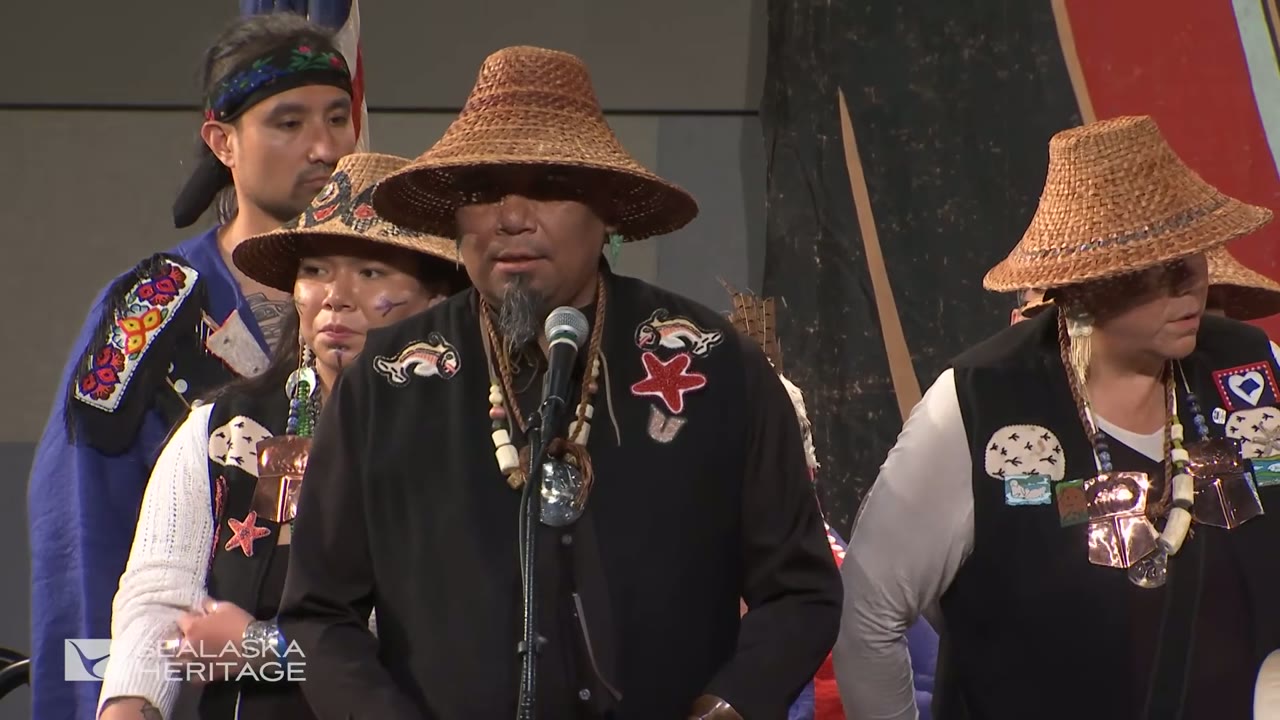
Lyle James
“This is 22 years for this dance group.”Sealaska Heritage Institute: Woosh ji een Dance Group, Juneau ·
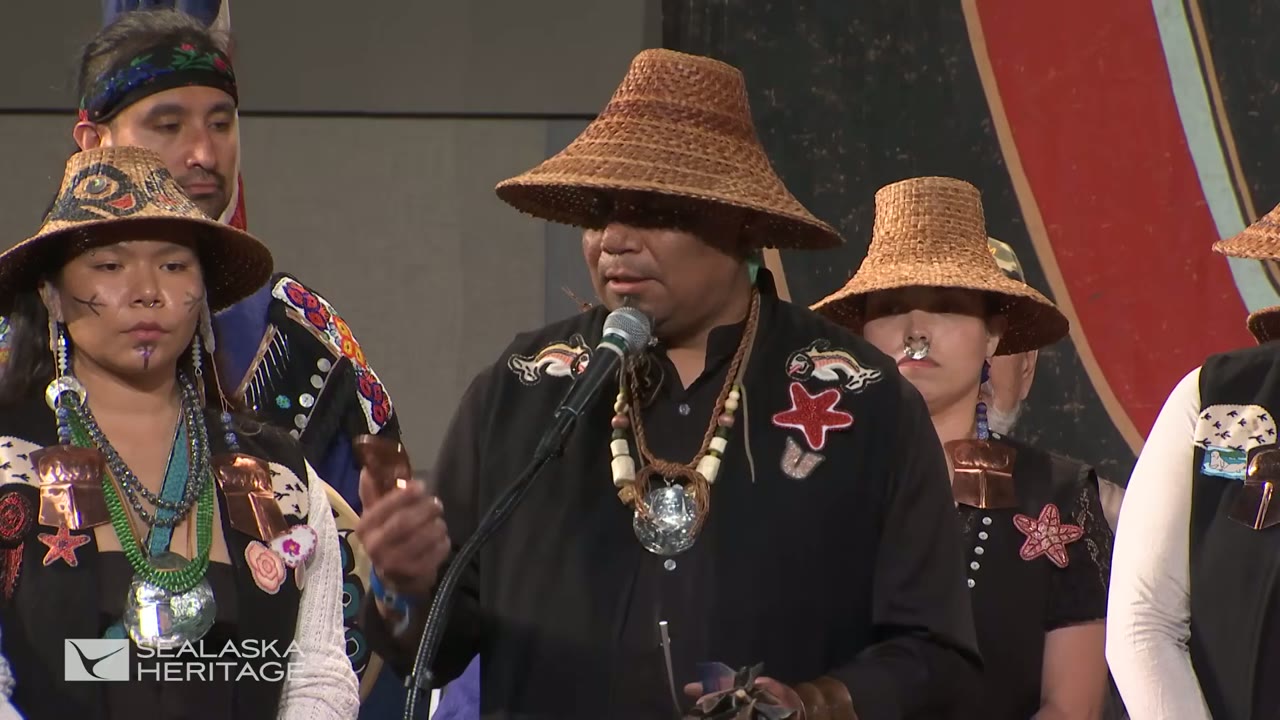
Lyle James
“This next song that we're going to sing, we call the Gift Song”Sealaska Heritage Institute: Woosh ji een Dance Group, Juneau ·
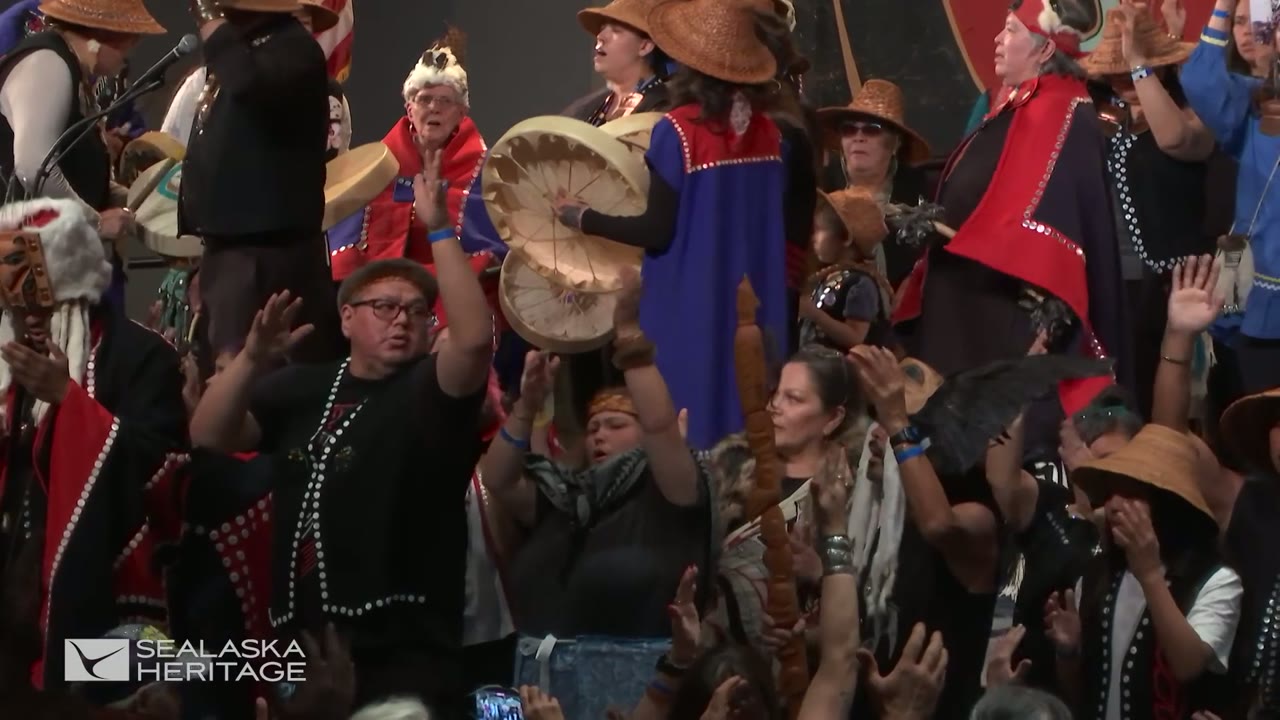
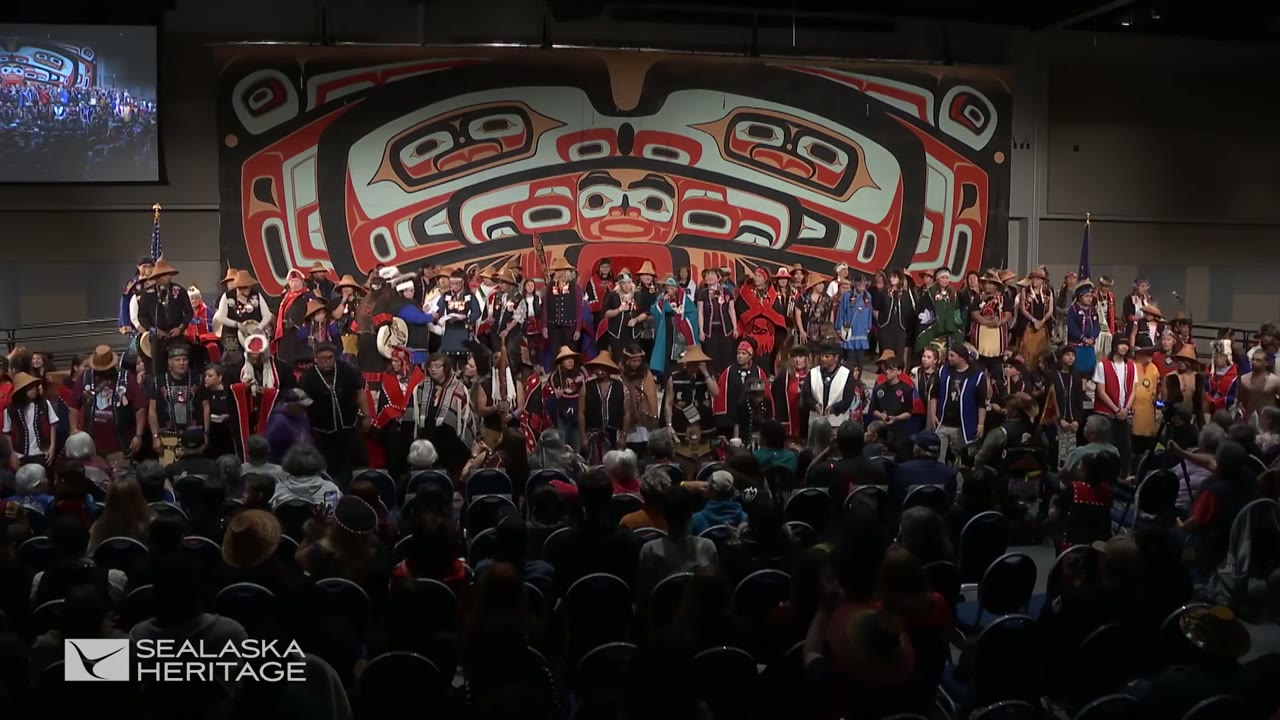
Lyle James
“To all our relatives here who identify in the LGBTQ+ community, Native Americans, community, we see you, we hear you, we love you. You are precious.”Sealaska Heritage Institute: Woosh ji een Dance Group, Juneau ·
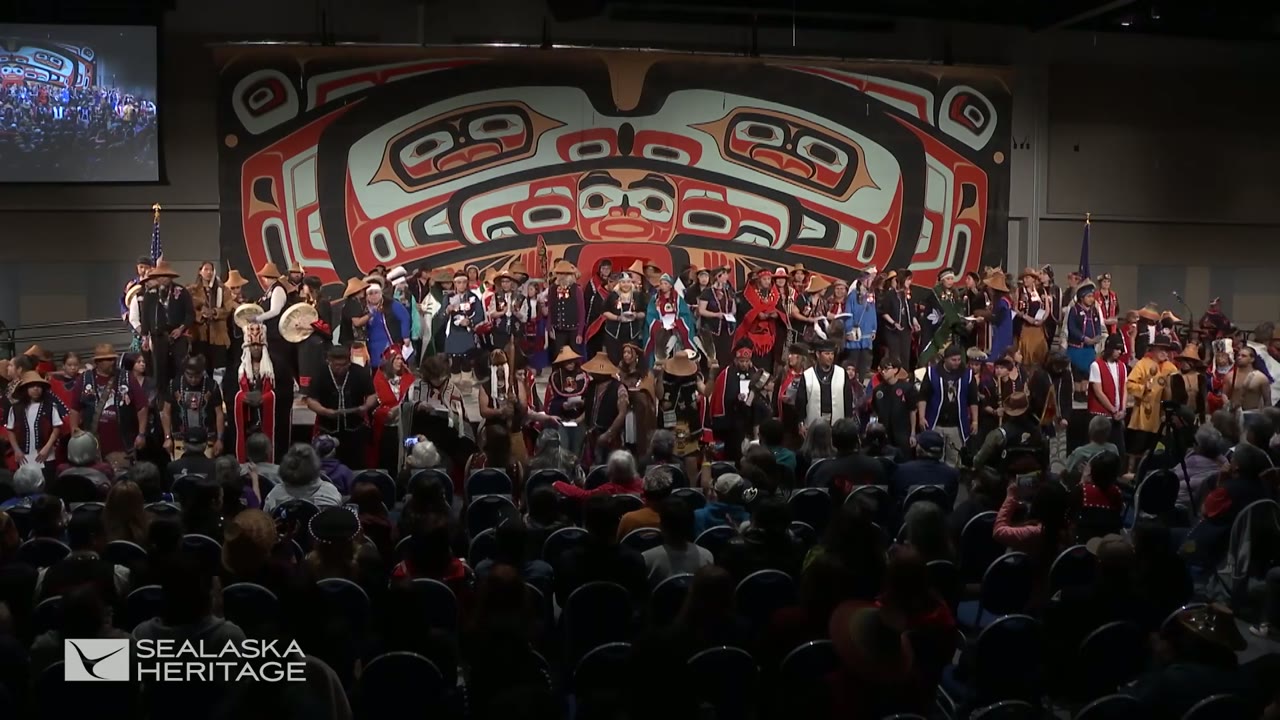
Lyle James
“We know your service doesn't end when you leave the service, and we know you don't ever leave. It stays with you forever.”Sealaska Heritage Institute: Woosh ji een Dance Group, Juneau ·
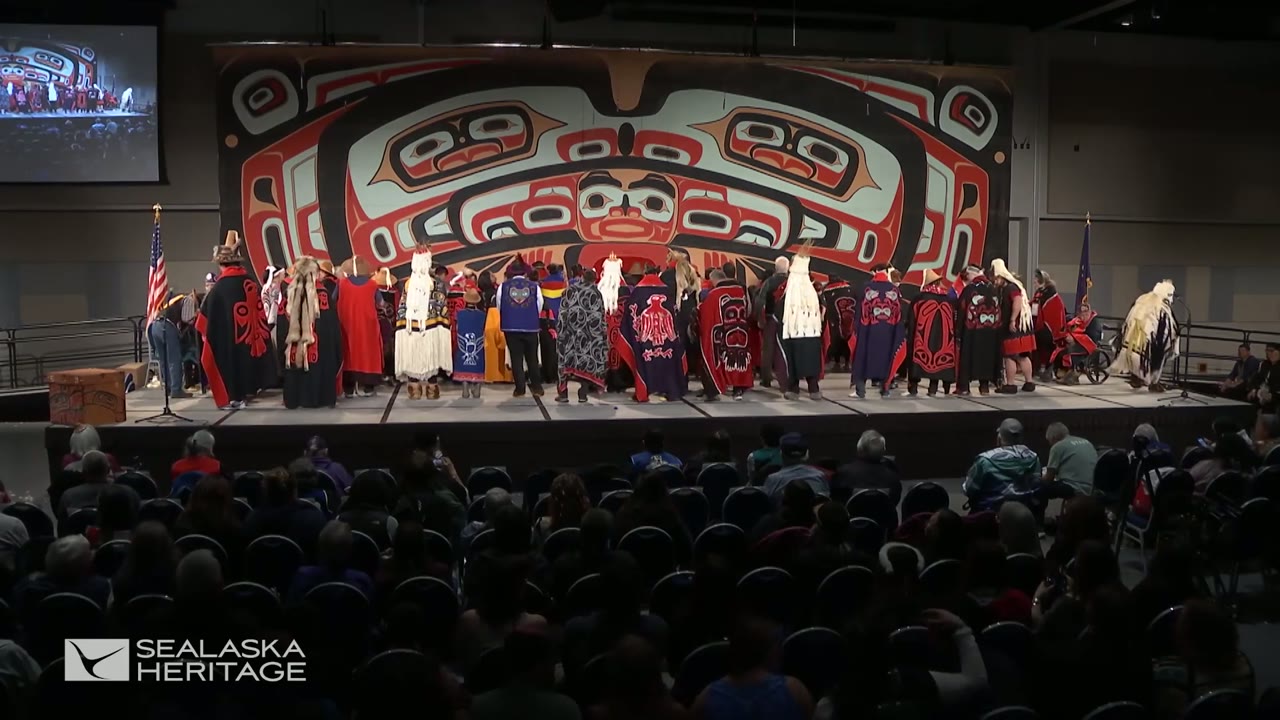
Cheryl Duncan
“I too would like to thank all the contributors that helped us get here to celebration. Kagwantan appreciates it very much.”Sealaska Heritage Institute: Sitka Kaagwaantaan, Sitka ·
Stephen Langdon
“what we see here in the Doctrine of Aboriginal Rights is first of all use, that's clearly demonstrable in so many ways. Claim, which is demonstrable through the Tlingit principles and Aat'uu. As well as the articulated information, the relationships with Beardsley, and finally protection.”Sealaska Heritage Institute: NAHM Lecture Series: Territoriality in Offshore Waters Sea Otters Tsimshians and U.S. Response | SHI ·
Stephen Langdon
“they lost the case for Aboriginal rights on the very narrow 6-5 vote, with the majority said that the Tŋu Gəč had not provided exclusive use and occupancy, nor had demonstrated the capacity to exercise control over the claimed territory and exclude others using violence if necessary.”Sealaska Heritage Institute: NAHM Lecture Series: Territoriality in Offshore Waters Sea Otters Tsimshians and U.S. Response | SHI ·
Stephen Langdon
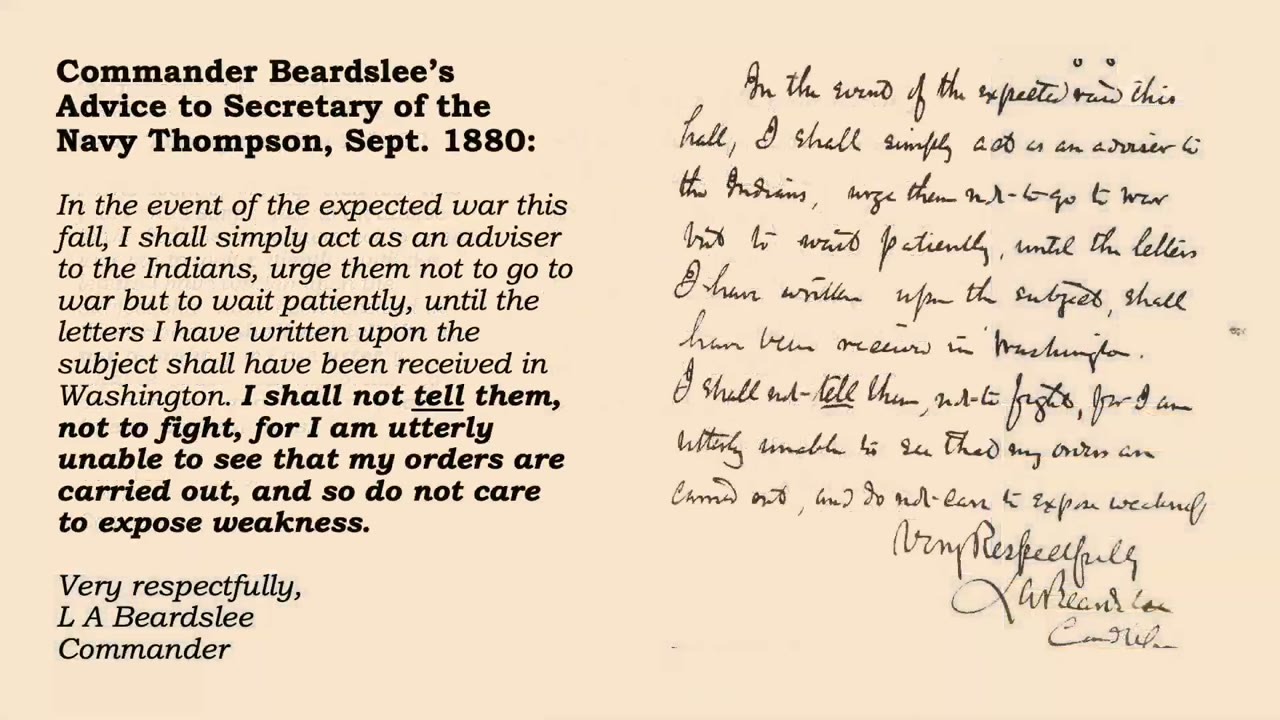
“I shall simply act as an advisor to the Indians, urge them not to go to war but to wait patiently until the letters I have written upon the subject shall have been received. I shall not tell them not to fight, for I'm utterly unable to see that my orders are carried out and so do not care to expose weakness.”Sealaska Heritage Institute: NAHM Lecture Series: Territoriality in Offshore Waters Sea Otters Tsimshians and U.S. Response | SHI ·
Stephen Langdon
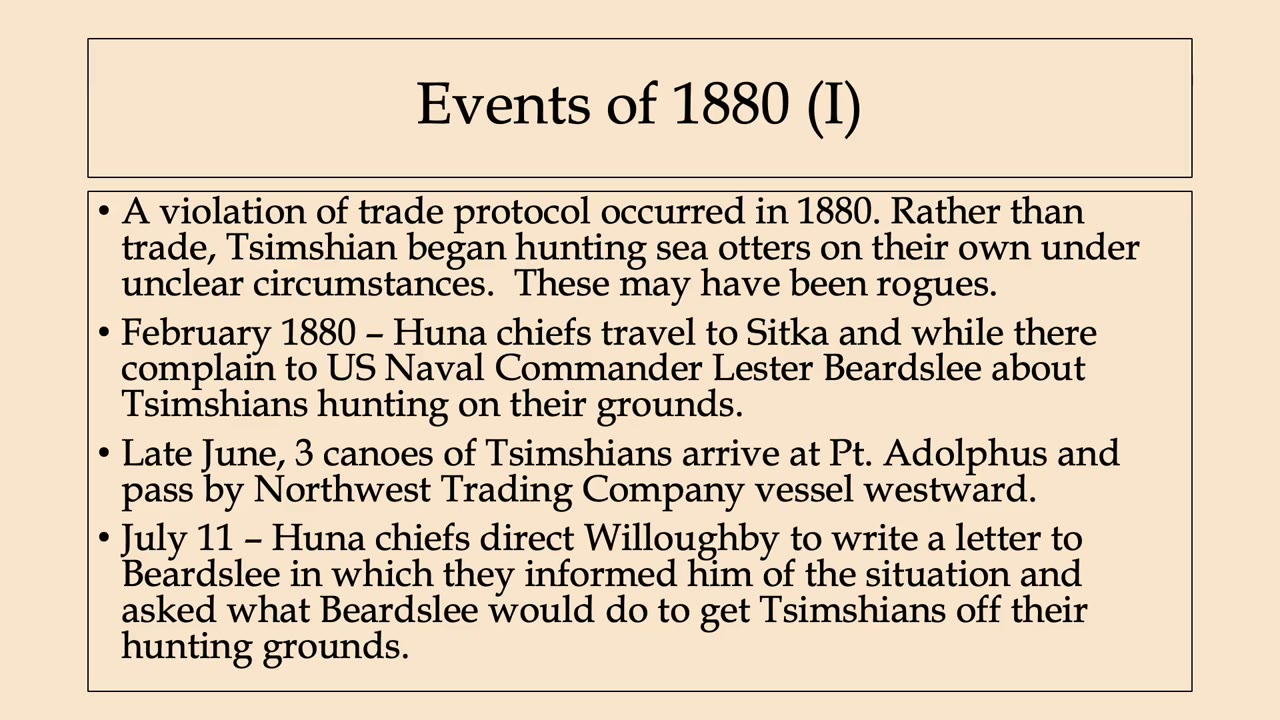
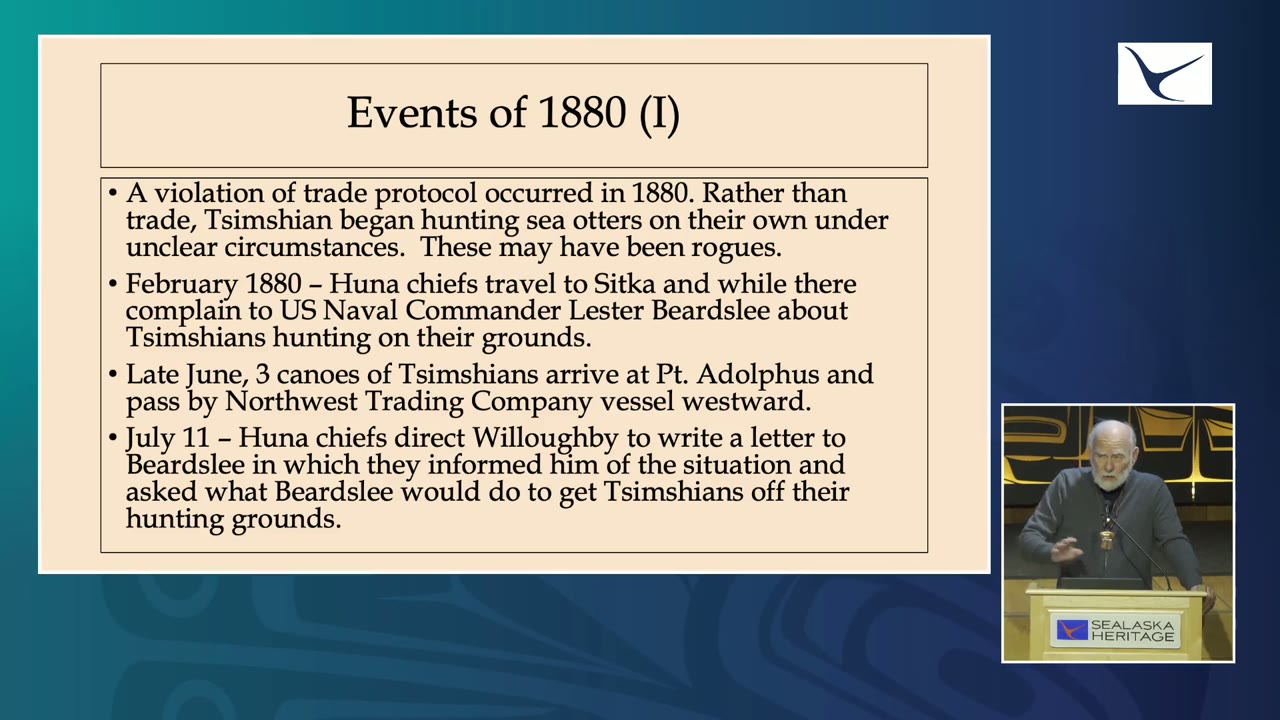
“In February 1880, Juneau chiefs traveled to Sitka and while there complained to U.S. Naval Commander Lester Beardsley about the Tsimshians hunting on their grounds.”Sealaska Heritage Institute: NAHM Lecture Series: Territoriality in Offshore Waters Sea Otters Tsimshians and U.S. Response | SHI ·
Stephen Langdon
“this establishes two Two aspects of aboriginal title. First of all is use of the area, and second of all is claim to the area.”Sealaska Heritage Institute: NAHM Lecture Series: Territoriality in Offshore Waters Sea Otters Tsimshians and U.S. Response | SHI ·
Sealaska Heritage Institute: NAHM Lecture Series: Territoriality in Offshore Waters Sea Otters Tsimshians and U.S. Response | SHI ·
Sealaska Heritage Institute: NAHM Lecture Series: Territoriality in Offshore Waters Sea Otters Tsimshians and U.S. Response | SHI ·
Stephen Langdon
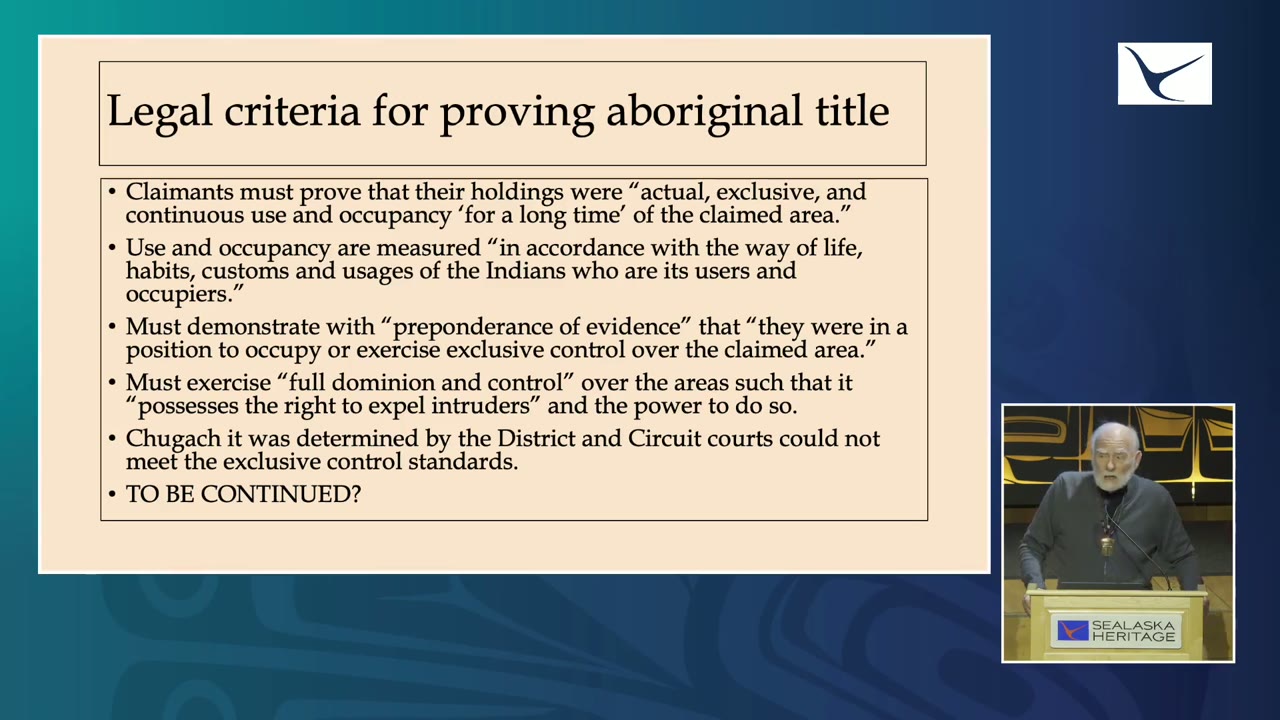
“there's 3 principles of Aboriginal title that they found that the Chugach couldn't demonstrate in the E Act. The first is use.”Sealaska Heritage Institute: NAHM Lecture Series: Territoriality in Offshore Waters Sea Otters Tsimshians and U.S. Response | SHI ·
Stephen Langdon
“the case that I'm making is that the Hona case from 1890 provides the evidence for unextinguished indigenous rights, resource rights, in the offshore extended jurisdiction area.”Sealaska Heritage Institute: NAHM Lecture Series: Territoriality in Offshore Waters Sea Otters Tsimshians and U.S. Response | SHI ·
Stephen Langdon
“through the US Navy documents, the Tlingit willingness to defend and also more importantly the naval recognition of their— I won't call it an authorization but that they would not intervene when the Juneau defended their claims.”Sealaska Heritage Institute: NAHM Lecture Series: Territoriality in Offshore Waters Sea Otters Tsimshians and U.S. Response | SHI ·
Stephen Langdon
“The Northwest Trading Company gave note to the Beardsley and Sitka reporting the Hoonahs openly stated that their intention was to take and kill the entire Fort Simpson expedition on their return from the sea otter grounds.”Sealaska Heritage Institute: NAHM Lecture Series: Territoriality in Offshore Waters Sea Otters Tsimshians and U.S. Response | SHI ·
Stephen Langdon
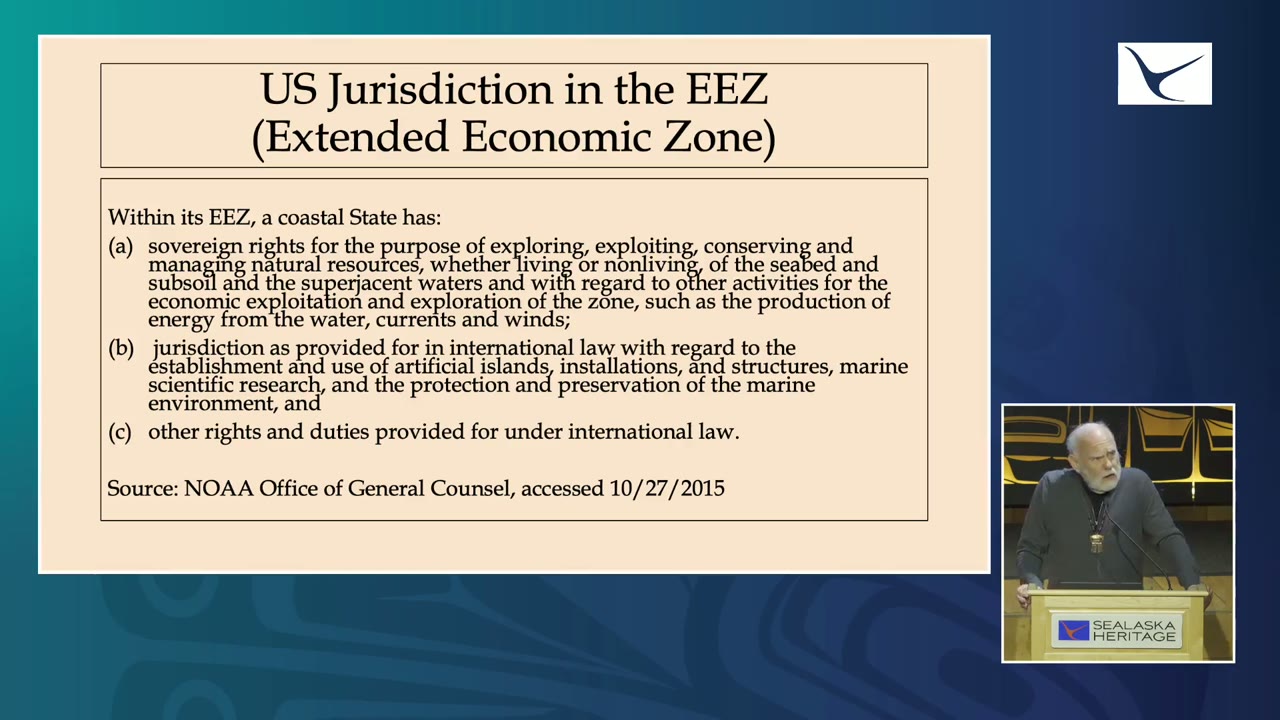
“This were first tested in the court case called Gamble where the St. Lawrence Island Yup'ik asserted aboriginal rights in the EEZ were violated when their hunting outside 3 miles was ignored in an oil lease sale. The decision in 1989 stipulated that aboriginal rights were not precluded by paramountcy doctrine and could coexist.”Sealaska Heritage Institute: NAHM Lecture Series: Territoriality in Offshore Waters Sea Otters Tsimshians and U.S. Response | SHI ·
Stephen Langdon
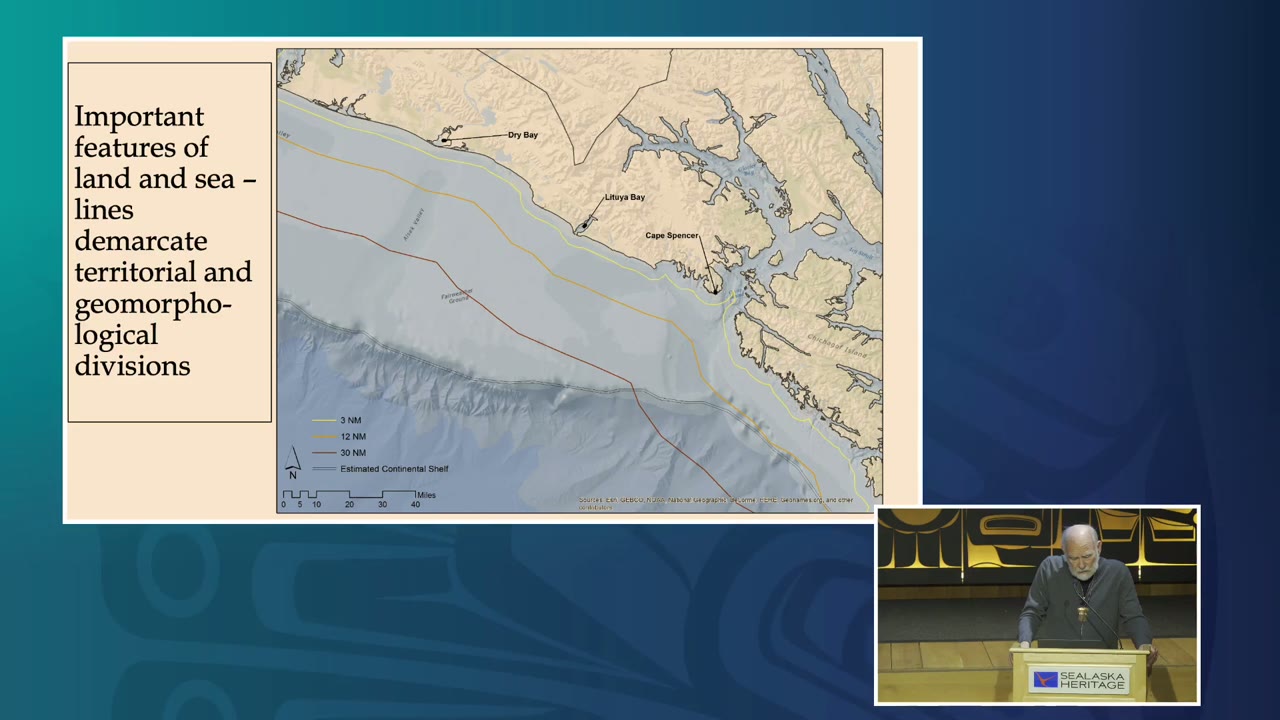
“What's crucial groundings to the issue of unextinguished aboriginal rights is that in ANCSA, indigenous aboriginal rights were extinguished in Alaska.”Sealaska Heritage Institute: NAHM Lecture Series: Territoriality in Offshore Waters Sea Otters Tsimshians and U.S. Response | SHI ·
Stephen Langdon
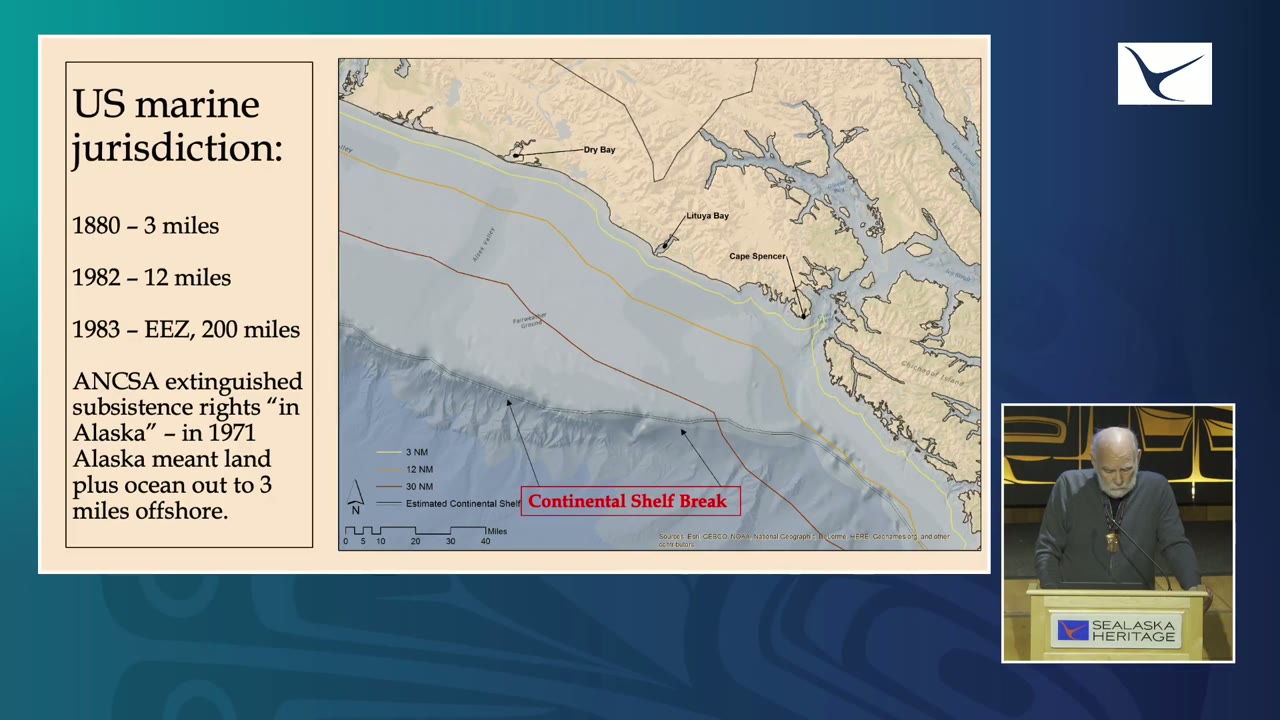
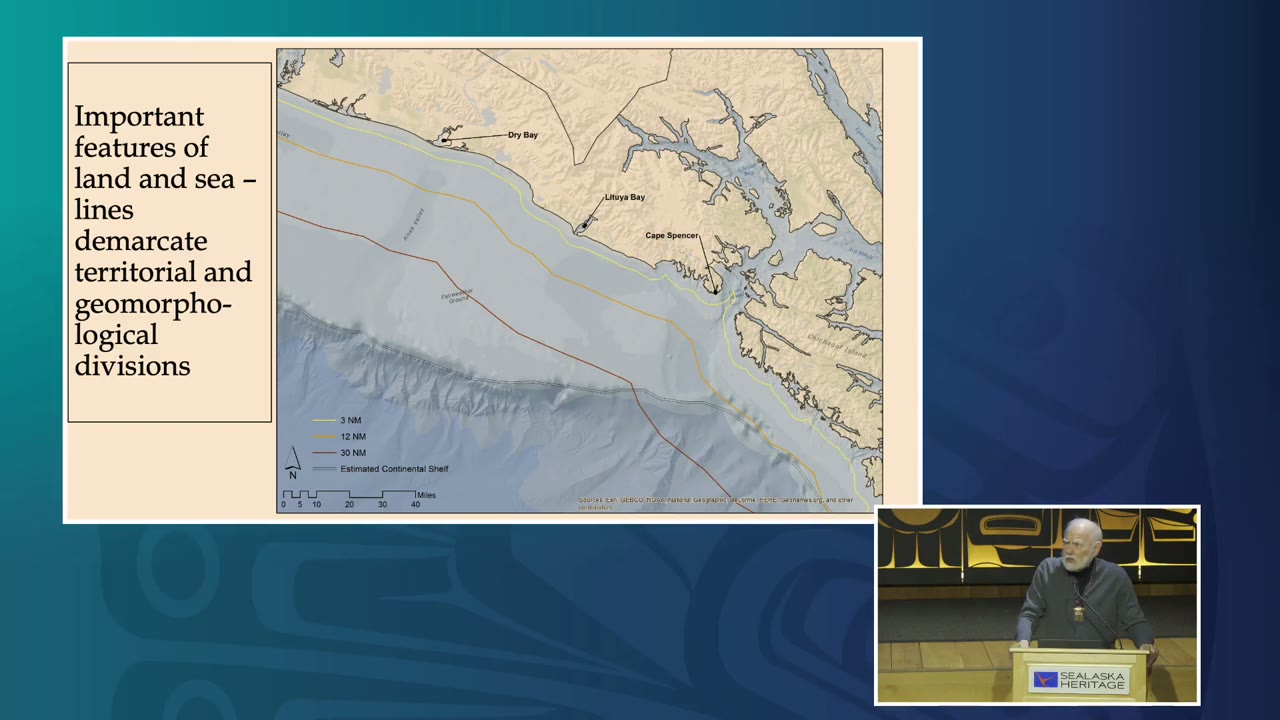
“in 1983, the U.S. extended to what is called the EEZ. That's the outer line there. 200 Miles. ANCSA, as I mentioned earlier, extinguished subsistence rights in 1971 in Alaska, which meant to 3 miles offshore including ocean waters.”Sealaska Heritage Institute: NAHM Lecture Series: Territoriality in Offshore Waters Sea Otters Tsimshians and U.S. Response | SHI ·
Stephen Langdon
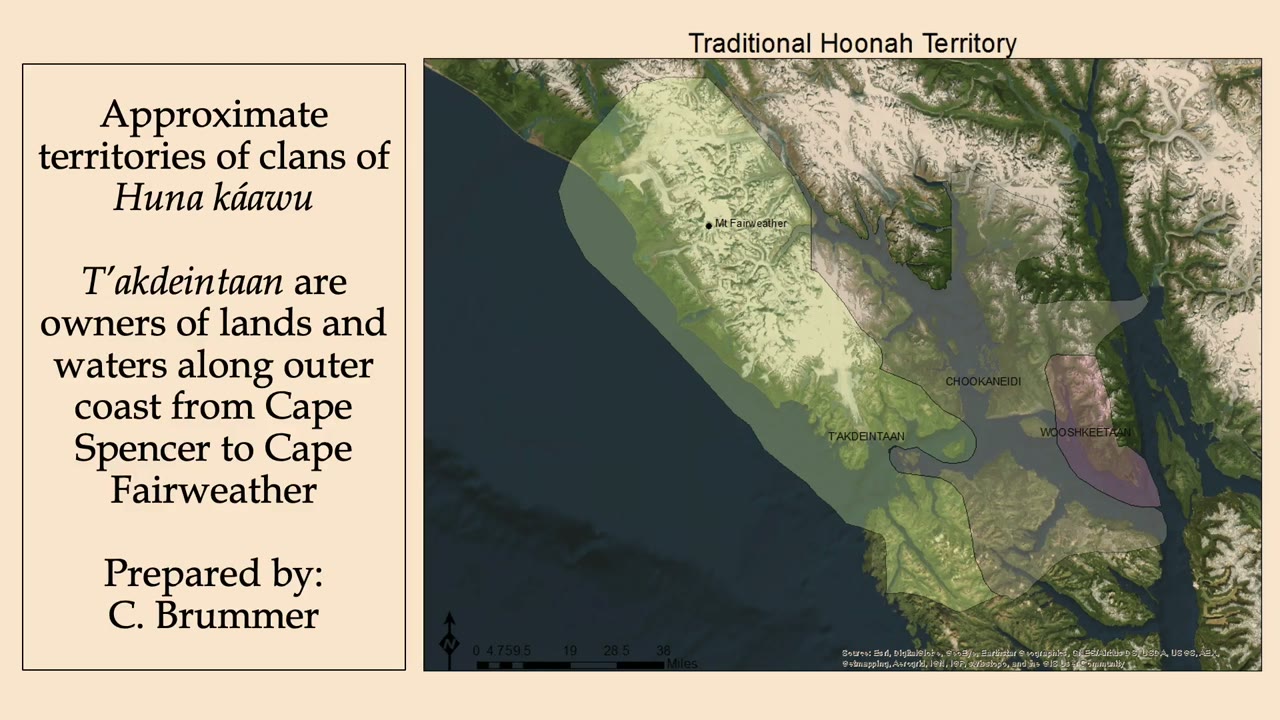
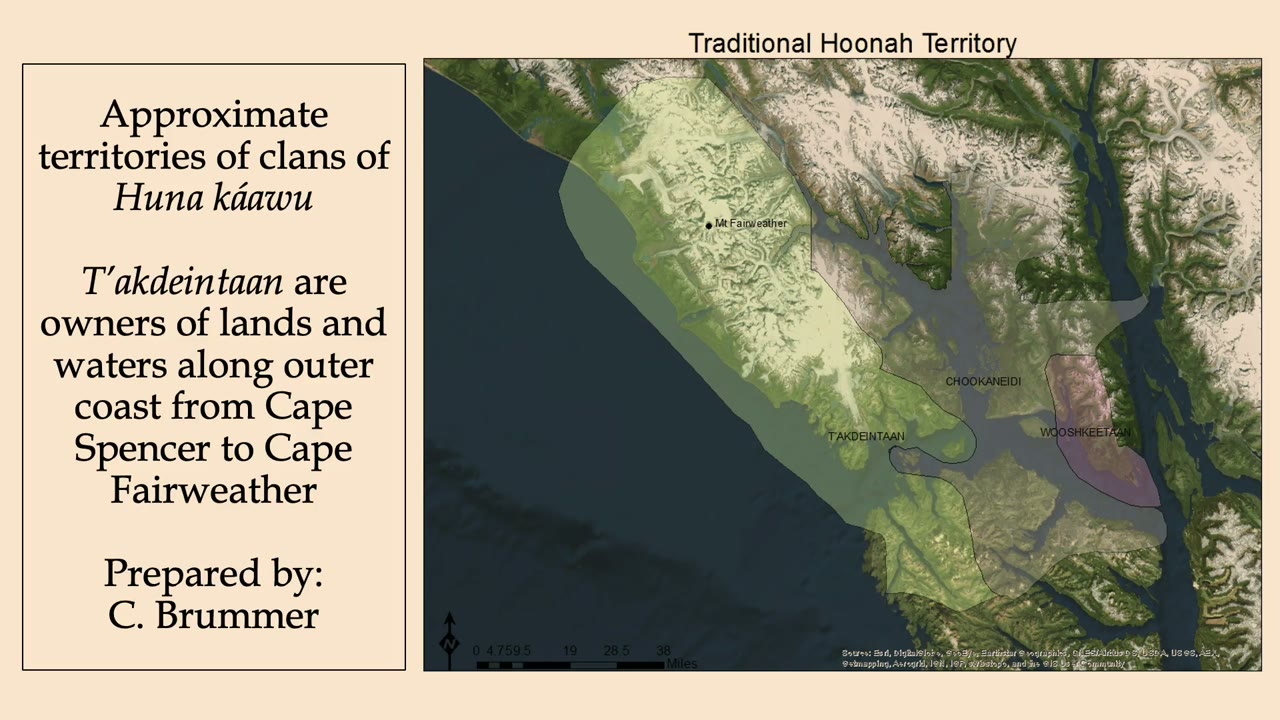
“this clearly is— the Duk Dinh Taan relationship with these waters meets those two tests.”Sealaska Heritage Institute: NAHM Lecture Series: Territoriality in Offshore Waters Sea Otters Tsimshians and U.S. Response | SHI ·
Stephen Langdon
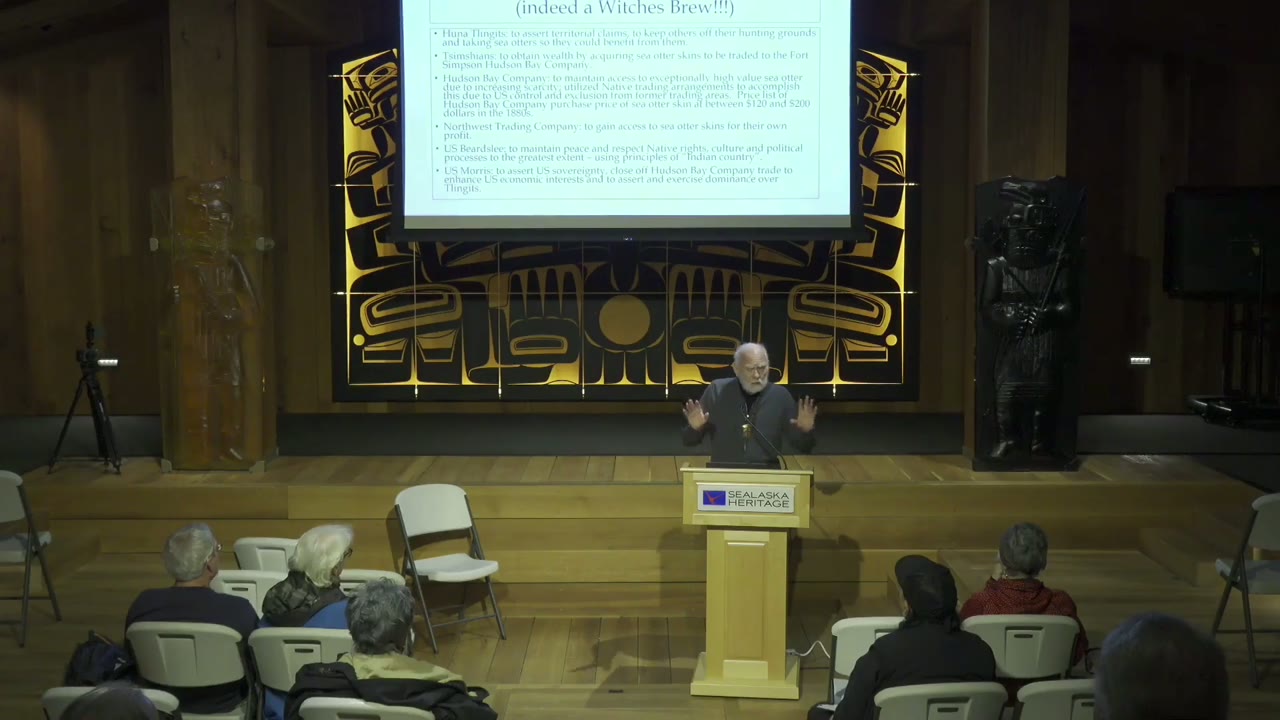
“Beardsley, to maintain peace and respect Native rights, and Beardsley was a strong proponent of Indian country. Unlike Gouverneur Morris, who was a pursuer of U.S. sovereignty.”Sealaska Heritage Institute: NAHM Lecture Series: Territoriality in Offshore Waters Sea Otters Tsimshians and U.S. Response | SHI ·
Stephen Langdon
“in 1971, Alaska extended only 3 miles offshore. So when the U.S. extends jurisdiction out to 200 miles, there are all of those uses which are outside of 3 miles that have not been either extinguished or attended to as yet by the federal government.”Sealaska Heritage Institute: NAHM Lecture Series: Territoriality in Offshore Waters Sea Otters Tsimshians and U.S. Response | SHI ·
Stephen Langdon
“the crucial feature here of what we're talking about today is that the unextinguished indigenous resource rights outside of 3 miles”Sealaska Heritage Institute: NAHM Lecture Series: Territoriality in Offshore Waters Sea Otters Tsimshians and U.S. Response | SHI ·
Stephen Langdon
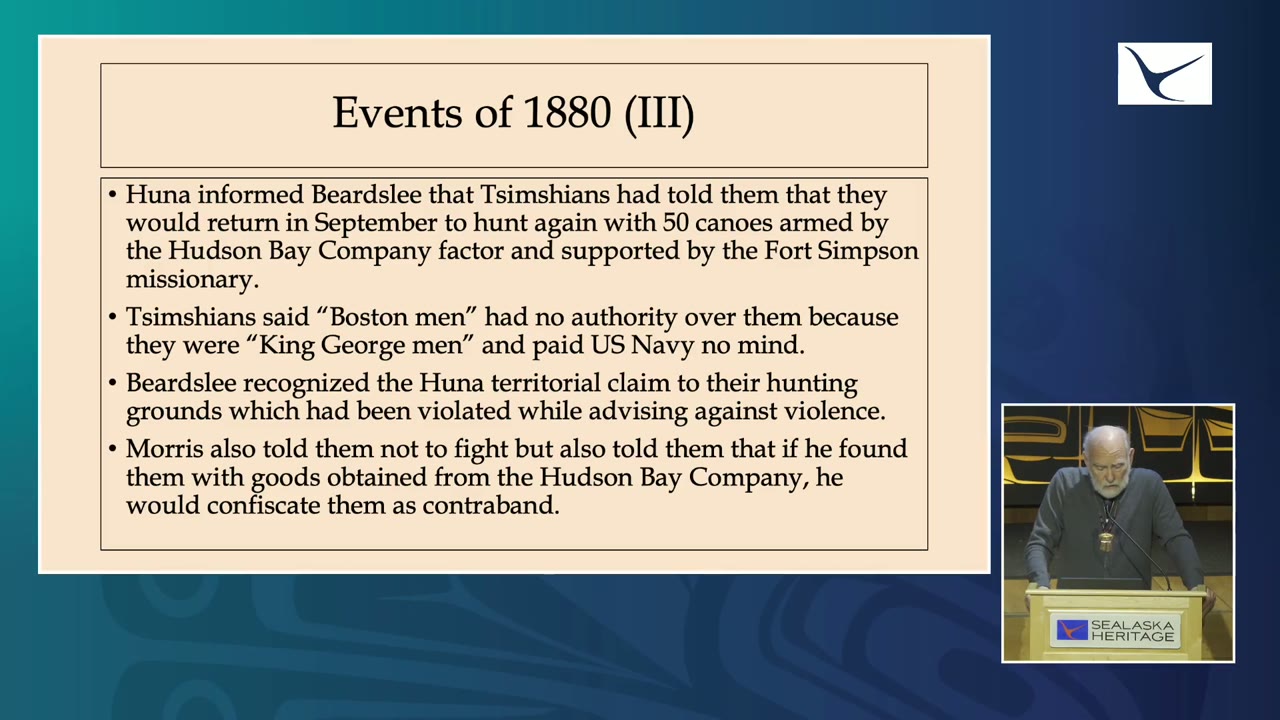
“Beardsley recognized the Hoonah territorial claim to their hunting grounds, which had been violated, while advising against violence.”Sealaska Heritage Institute: NAHM Lecture Series: Territoriality in Offshore Waters Sea Otters Tsimshians and U.S. Response | SHI ·
Natahnee Winder
“Dr. Williams reached out to SHI and asked if they would be the permanent stewards of this collection”Sealaska Heritage Institute: NAHM Lecture Series: The process of rematriating a collection of Tlingit images | Sealaska Heritage ·
Natahnee Winder
“Dr. Williams, you know, I sent her, I worked with Dr. Miles as well, she got sent the link and she identified them that they were from Southeastern Alaska.”Sealaska Heritage Institute: NAHM Lecture Series: The process of rematriating a collection of Tlingit images | Sealaska Heritage ·
Natahnee Winder
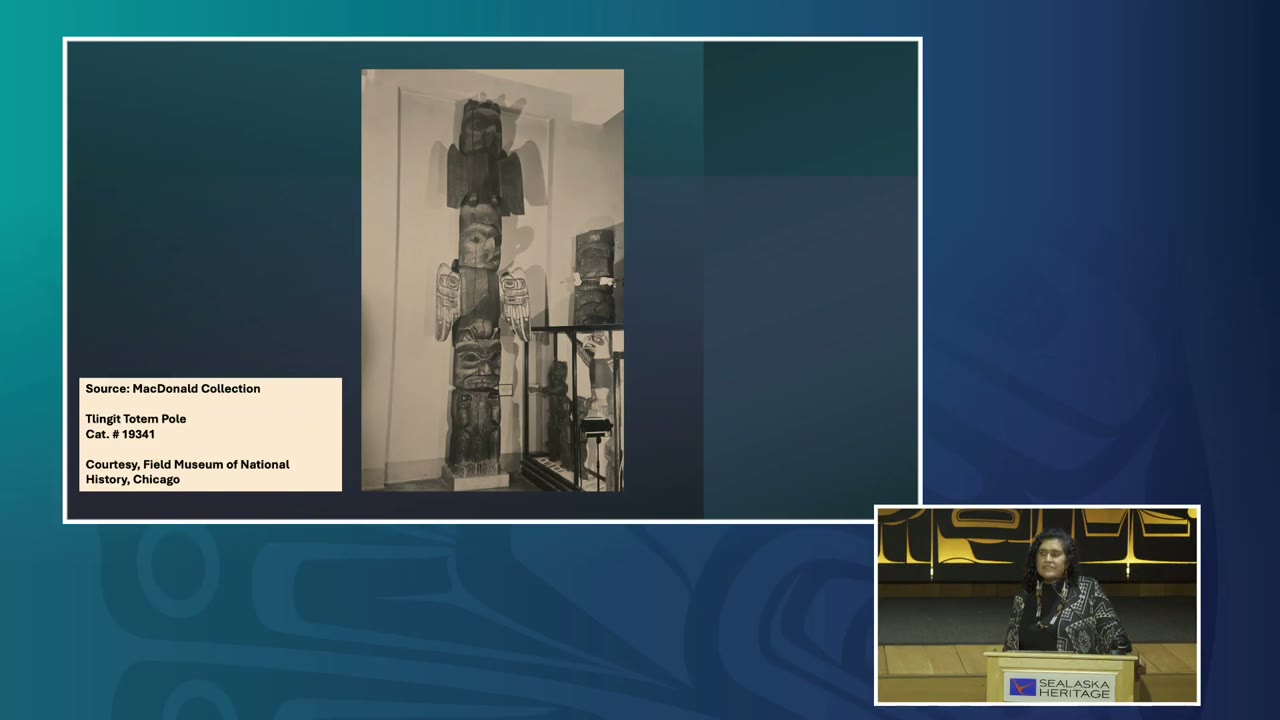
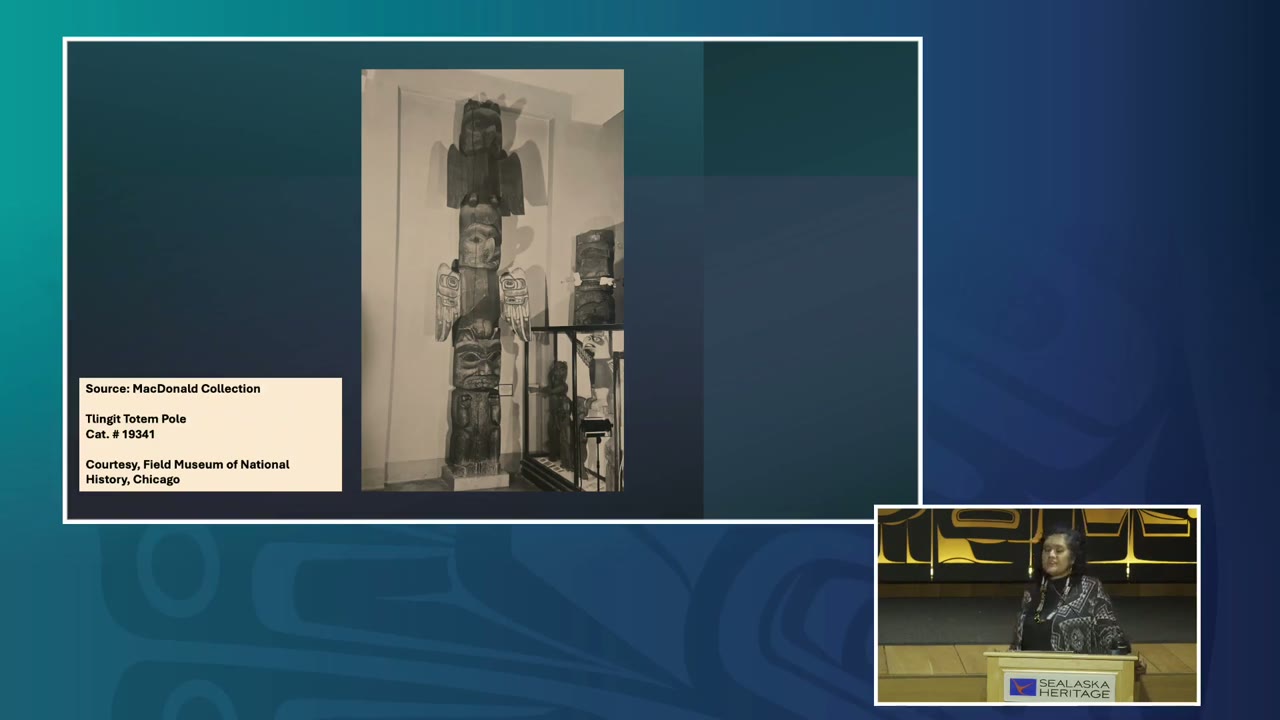
“I'm having my students going through the MacDonald Collection and looking at these images. And what I'm wanting them to do is that I'm wanting them to create new descriptive labels for these images.”Sealaska Heritage Institute: NAHM Lecture Series: The process of rematriating a collection of Tlingit images | Sealaska Heritage ·
Natahnee Winder
“since there's over 10,000 images of this collection, some of the collection is digitized. There is a link at the libraries at SFU, and some of them are not.”Sealaska Heritage Institute: NAHM Lecture Series: The process of rematriating a collection of Tlingit images | Sealaska Heritage ·
Natahnee Winder
“there is overlap with these. But with George McDonald, what he wanted to do is he just wanted to create a big old massive repository of images, you know, Tlingit, Coast Salish, and put them all in one place.”Sealaska Heritage Institute: NAHM Lecture Series: The process of rematriating a collection of Tlingit images | Sealaska Heritage ·
Natahnee Winder
“this process of returning the collection here to CHI is like, we're starting off like bringing the team together. I had a conversation with the archivist from here this morning, and then the two Tlingit scholars”Sealaska Heritage Institute: NAHM Lecture Series: The process of rematriating a collection of Tlingit images | Sealaska Heritage ·
Natahnee Winder
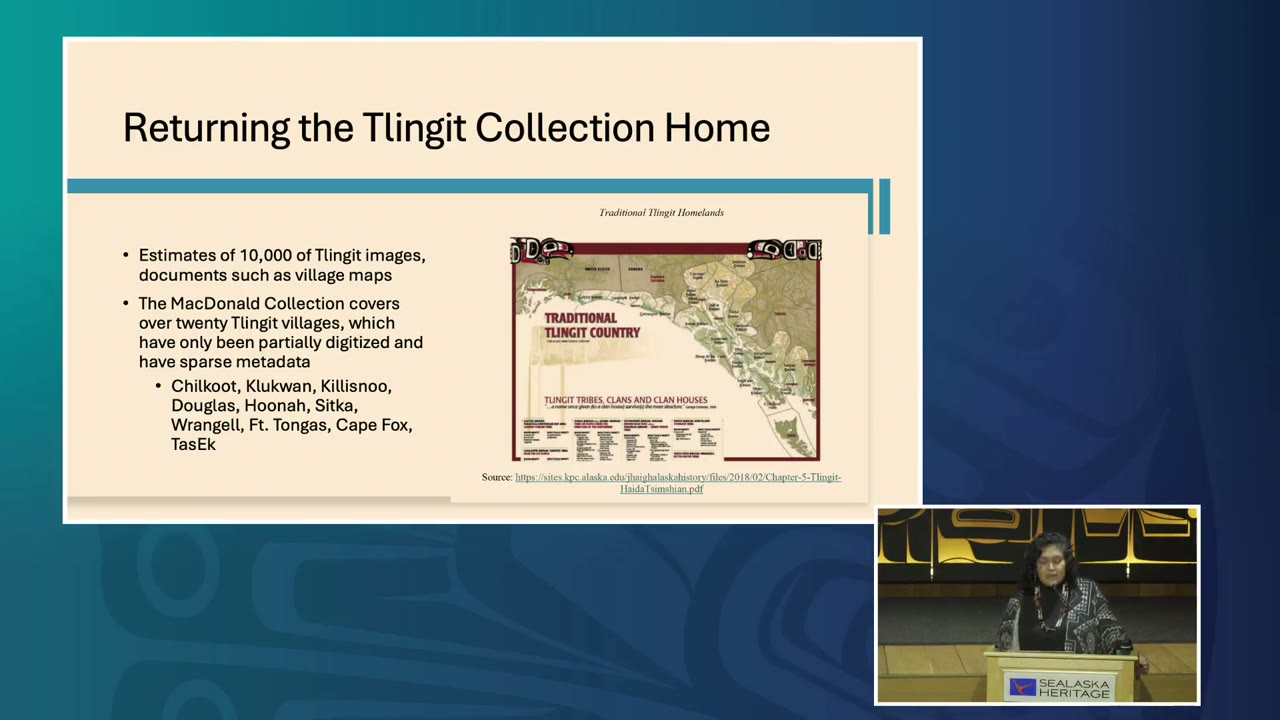
“This project of returning And bringing home the Tlingit collection is something that's going to take, I feel like, you know, at least 2 years or more because there are tens of thousands of images.”Sealaska Heritage Institute: NAHM Lecture Series: The process of rematriating a collection of Tlingit images | Sealaska Heritage ·
Natahnee Winder
“when the center closed in 2025, there was a decision made from myself, the steering committee of the Bill Reese Center, is that we were going to decommissioned the center and the images, the collection was going to be given to different areas. So the Haida took theirs, so all the images in the George MacDonald collection went to the Haida Gwaii Museum and the rest of the images went to the SFU Archaeology Museum. And what I also had noticed is that there was a collection of Tlingit villages in the collection. And for me, I knew that they were just— SFU is working on reconciliation, we have a small museum, but I just didn't want these images of Tlingit just to go into a closet and to not be looked at, so I had reached out to Dr. Maria Williams here Juneau, a professor at the University of Alaska Anchorage”Sealaska Heritage Institute: NAHM Lecture Series: The process of rematriating a collection of Tlingit images | Sealaska Heritage ·
Natahnee Winder
“The other half is at SFU that my students are currently working through, and there's so many different aspects of this process that still need to unravel. And so what my talk today was just to show that these— this collection is being brought back home”Sealaska Heritage Institute: NAHM Lecture Series: The process of rematriating a collection of Tlingit images | Sealaska Heritage ·
Natahnee Winder
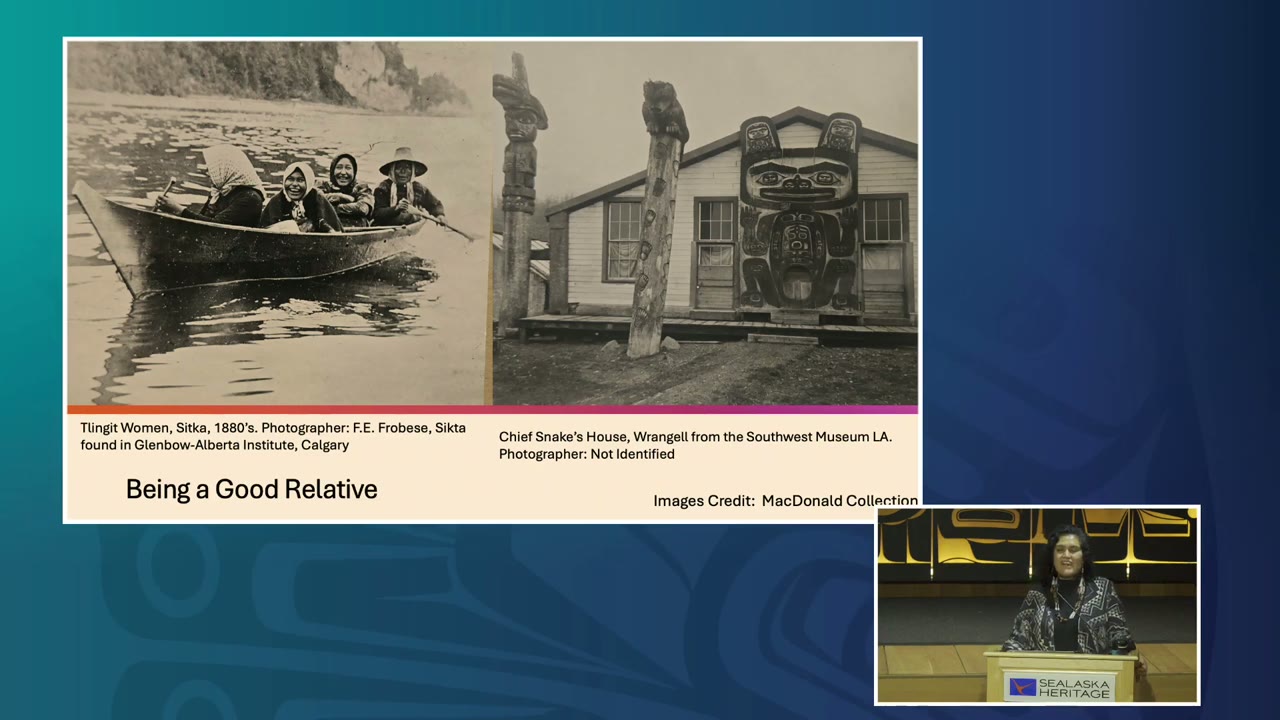
“Dr. Williams brought on SHI. She brought on Dr. Judith Ramos onto the project.”Sealaska Heritage Institute: NAHM Lecture Series: The process of rematriating a collection of Tlingit images | Sealaska Heritage ·
Natahnee Winder
“it was very important for me to return this collection back here to Southeastern Alaska, and I'm really thankful that SHI has, you know, made a commitment to be the permanent stewards of this collection. I brought some of the collection here today with me.”Sealaska Heritage Institute: NAHM Lecture Series: The process of rematriating a collection of Tlingit images | Sealaska Heritage ·
Natahnee Winder
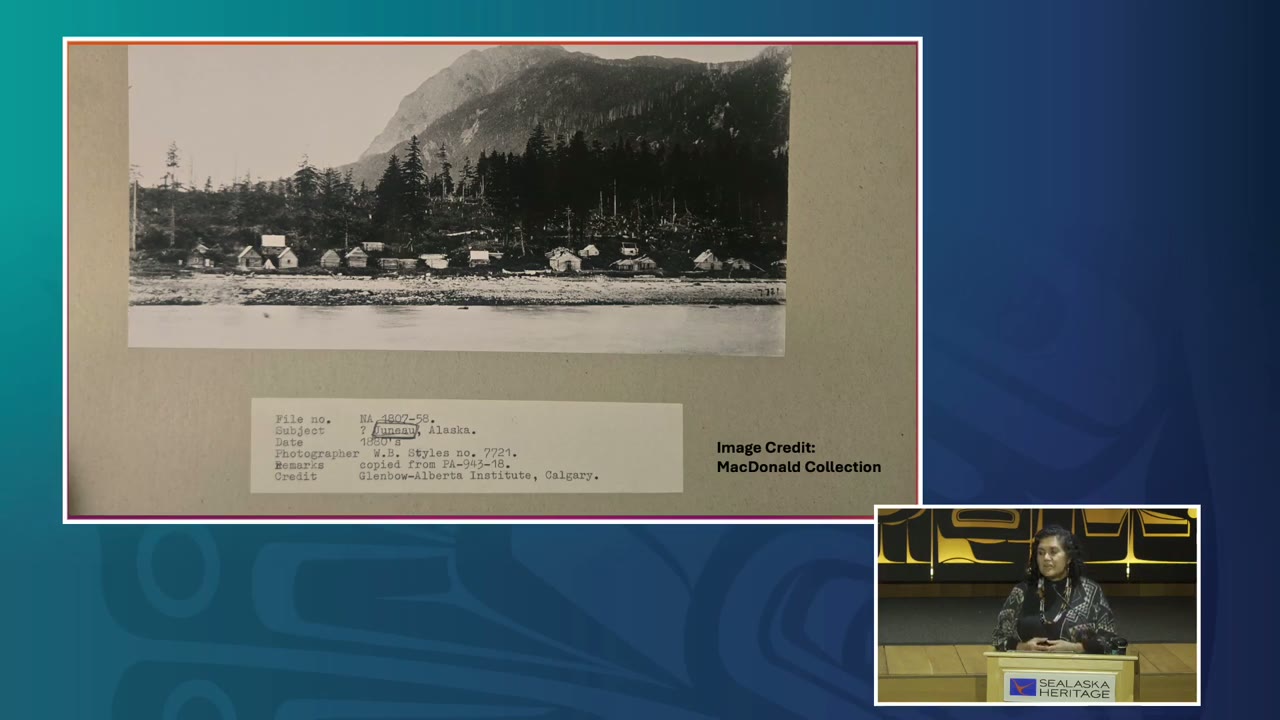
“for educational purposes, I mean, you can't make money off of these images or this collection because that's commercial, because you have to give credit to the photographer for doing that, and then there's the copyright issues as well.”Sealaska Heritage Institute: NAHM Lecture Series: The process of rematriating a collection of Tlingit images | Sealaska Heritage ·
Natahnee Winder
“Dr. Williams did come in and give a Zoom lecture to the students about Tlingit and Alaska Native history to give them more context of what they were working with, with the collection as well. That was recorded. And then Dr. Ramos came in and gave a lecture on ethics in terms of collections as well”Sealaska Heritage Institute: NAHM Lecture Series: The process of rematriating a collection of Tlingit images | Sealaska Heritage ·
Natahnee Winder
“So there's over 20 villages in the McDonald collection. It has a variety of different photographs, different mixed media, copies of other images, there's negatives as well, and I asked if like the university would be interested in taking these images maybe to be taught at a class”Sealaska Heritage Institute: NAHM Lecture Series: The process of rematriating a collection of Tlingit images | Sealaska Heritage ·
Aandaxjoon Allen
“Tlingit political identity is tied to sovereign tribal authority and the ability to determine citizenship, which by definition excludes non-Indigenous residents. Tribal citizenship is important within issues like environmental justice because it provides specific political authority, including to negotiate with the US federal government.”Sealaska Heritage Institute: Temporality of Haa Shuká A Scalar Perspective on Climate Change Lingít Knowledge & Alaskan Identity ·
Aandaxjoon Allen
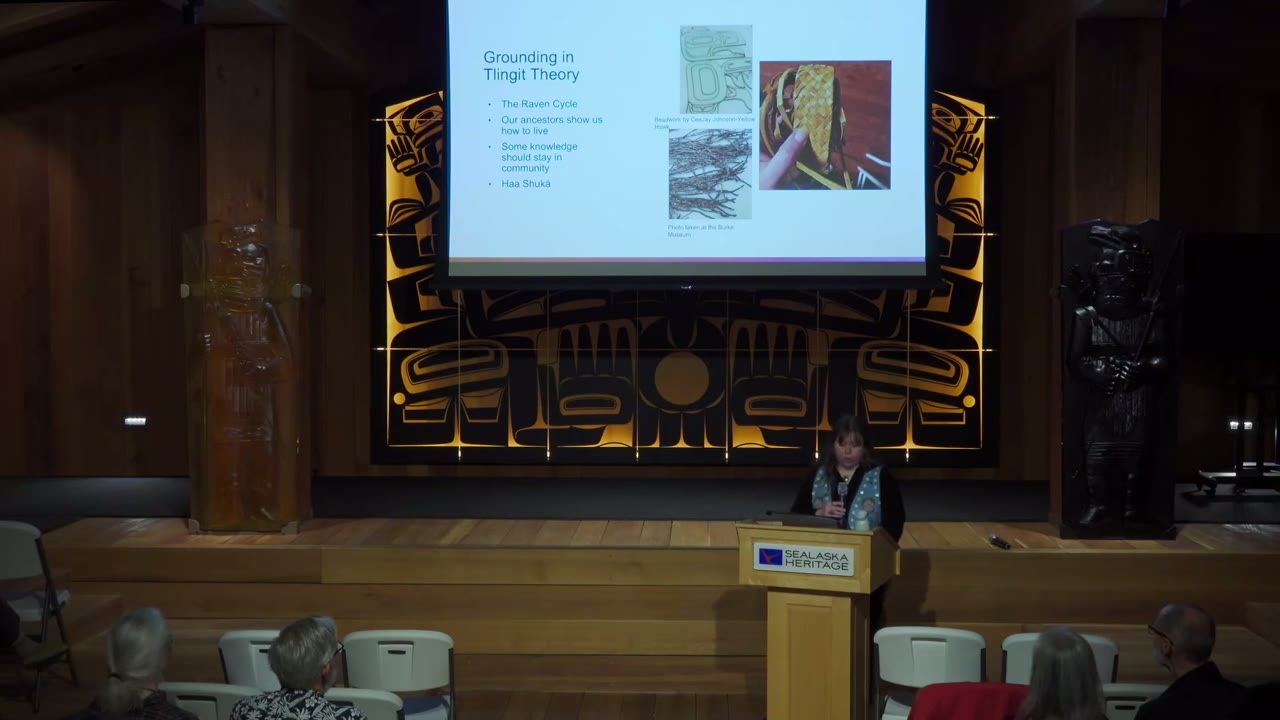
“I drew largely from what is called the Raven Cycle. And if you're not familiar, the Raven Cycle tells of the trickster Raven and kind of his early life.”Sealaska Heritage Institute: Temporality of Haa Shuká A Scalar Perspective on Climate Change Lingít Knowledge & Alaskan Identity ·
Aandaxjoon Allen
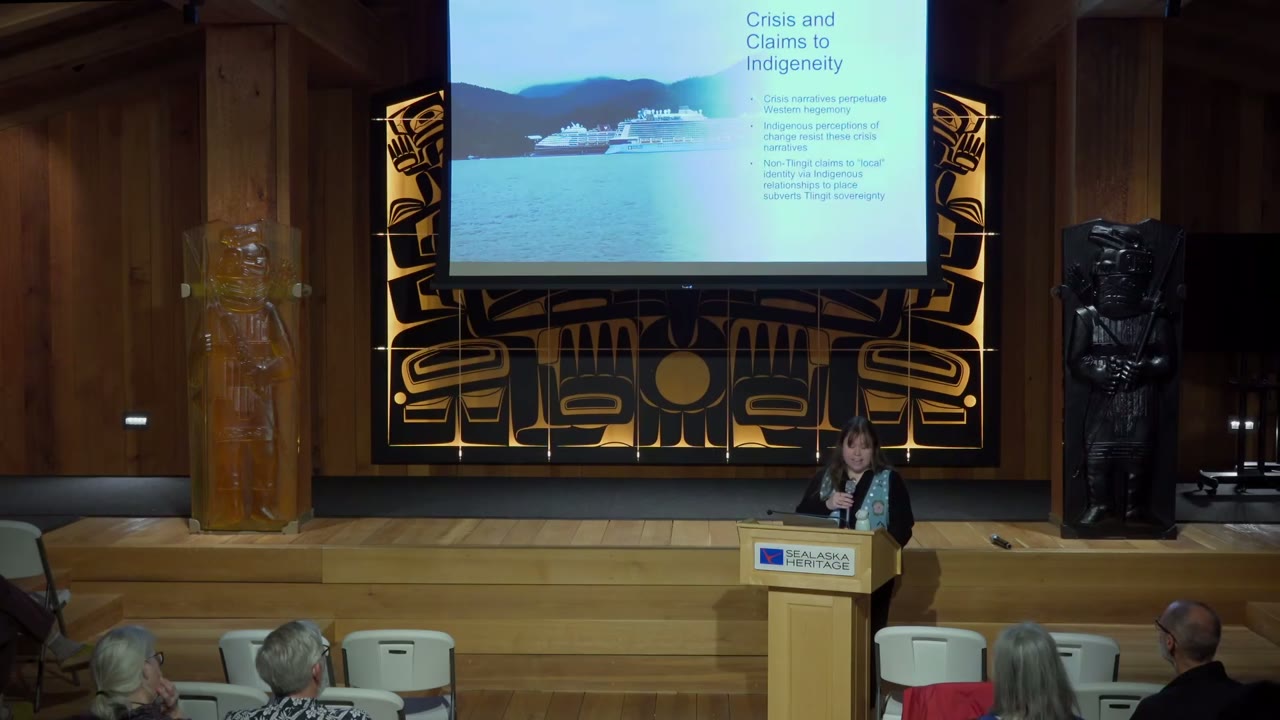
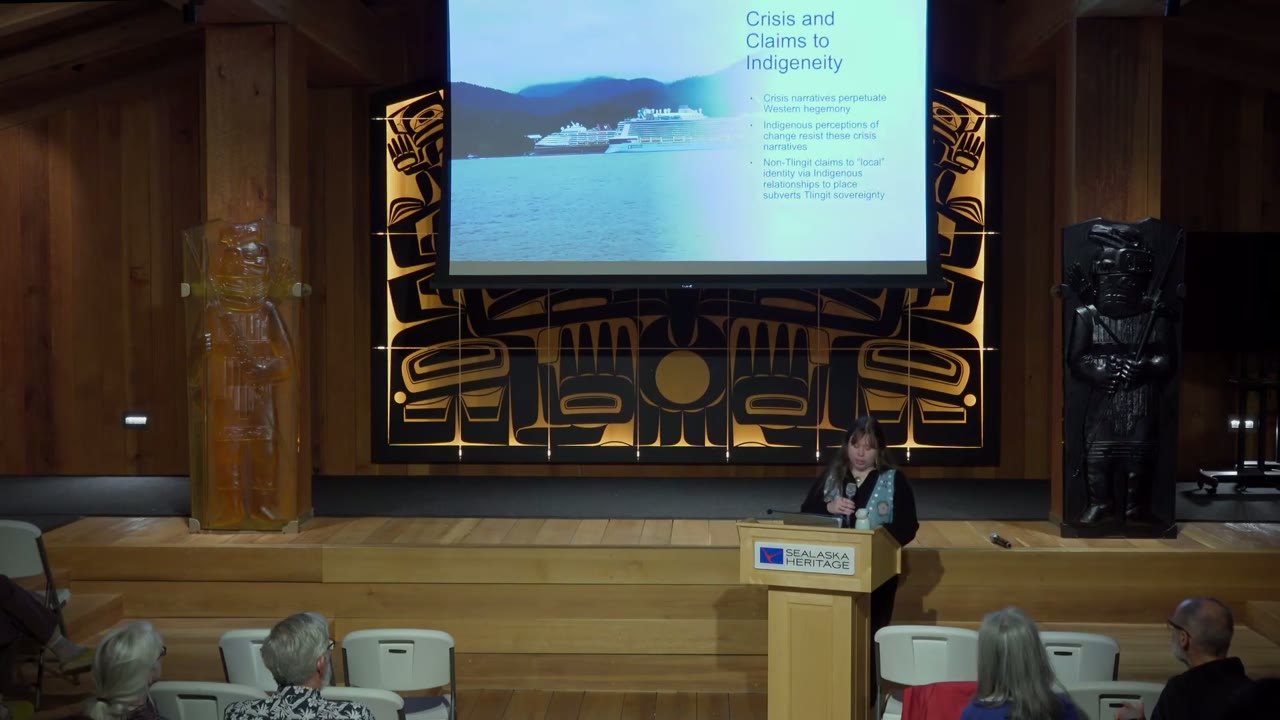
“I'm really interested in the way that indigeneity was coming into these conversations. Especially into anti-tourism conversations from non-Indigenous people who were evoking this Indigenous identity in the arguments that they were making.”Sealaska Heritage Institute: Temporality of Haa Shuká A Scalar Perspective on Climate Change Lingít Knowledge & Alaskan Identity ·
Aandaxjoon Allen
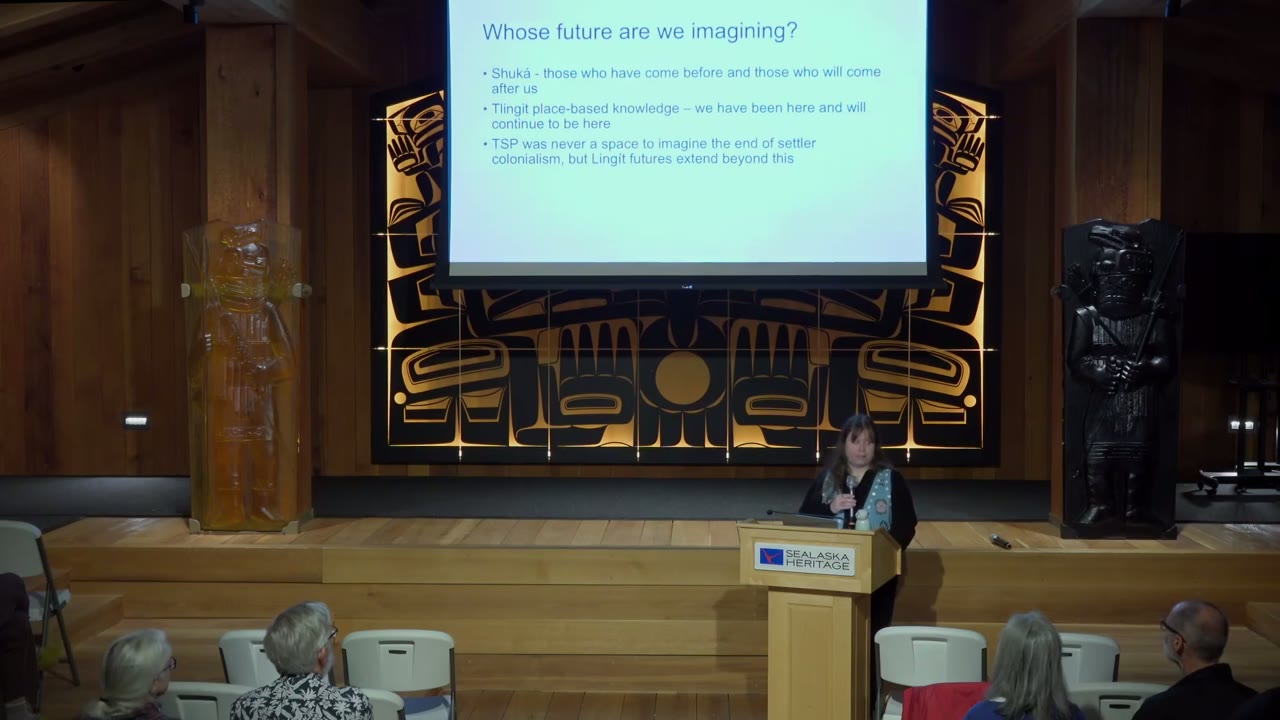
“one scenario actually proposed a future wherein there would be no pligation. People in the region by the end date of the scenarios, which was 2050. And this was very quickly deemed not plausible and was not included in the final scenarios. And this was partially because of the long-term Tlingit presence in the region.”Sealaska Heritage Institute: Temporality of Haa Shuká A Scalar Perspective on Climate Change Lingít Knowledge & Alaskan Identity ·
Aandaxjoon Allen
“because of money, because they have so much power, that industry has really been able to come in and divide communities. And pit us against each other in a lot of cases. And so, you know, there is this kind of unequal distribution where there's no real like bargaining power from the communities.”Sealaska Heritage Institute: Temporality of Haa Shuká A Scalar Perspective on Climate Change Lingít Knowledge & Alaskan Identity ·
Aandaxjoon Allen
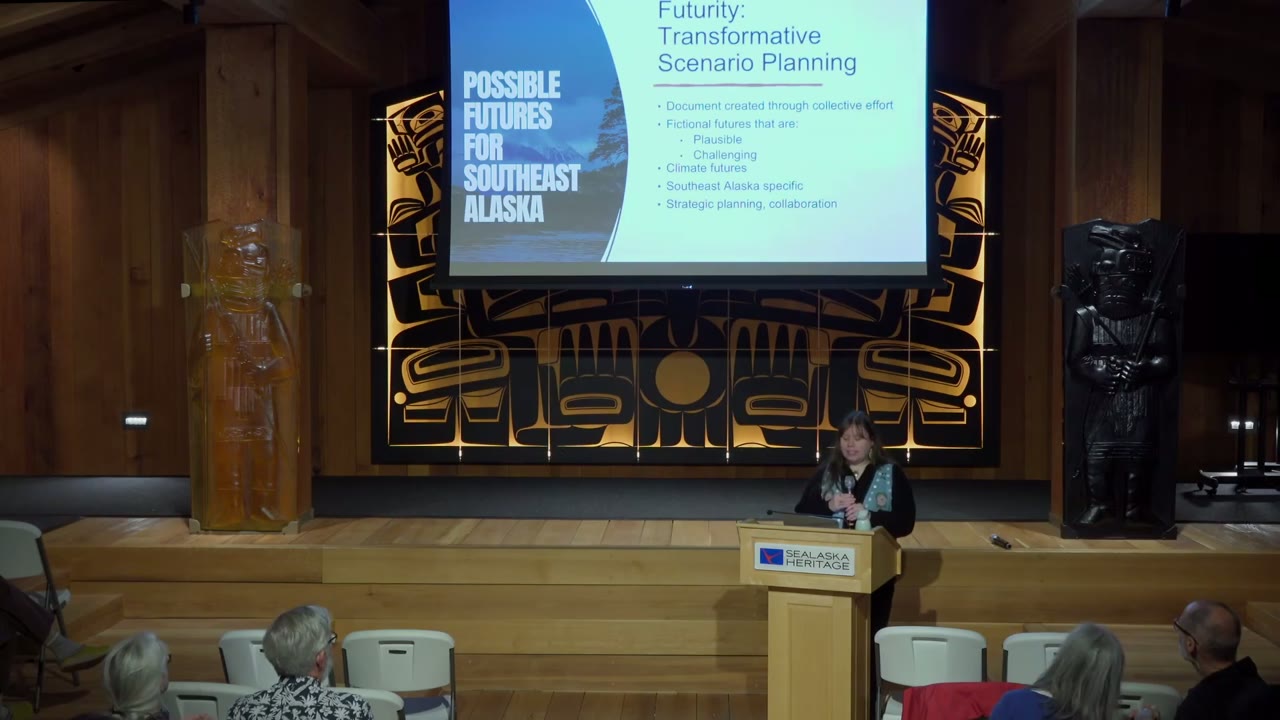
“this process was a collective effort to generate this document, which is called Possible Futures for Southeast Alaska. And it is 4 fictional scenarios that were created that are meant to be plausible and challenging and really push people to think outside of the box.”Sealaska Heritage Institute: Temporality of Haa Shuká A Scalar Perspective on Climate Change Lingít Knowledge & Alaskan Identity ·
Aandaxjoon Allen
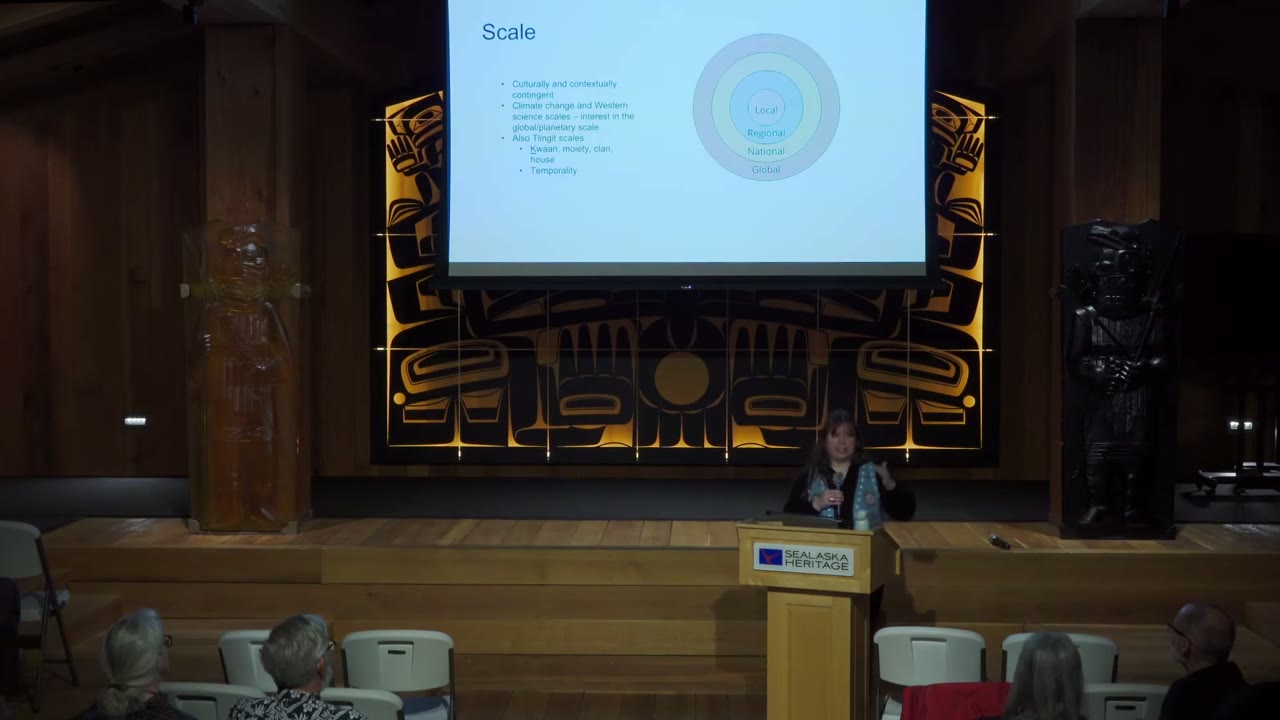
“A lot of Indigenous knowledge is very place-based and rooted in specific context. And so my work pushes back against this planetary scale when it comes to discussions of climate change”Sealaska Heritage Institute: Temporality of Haa Shuká A Scalar Perspective on Climate Change Lingít Knowledge & Alaskan Identity ·
Aandaxjoon Allen
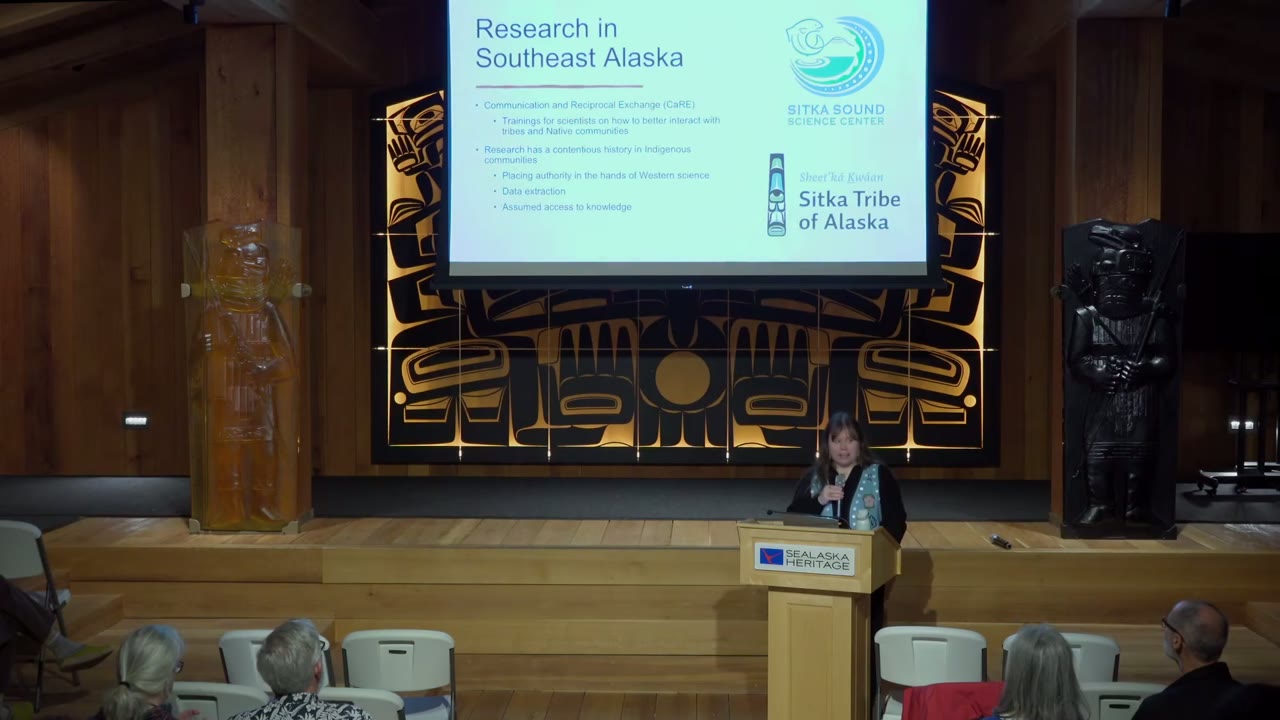
“it is called the Communication and Reciprocal Exchange, or CARE, Initiative. And this initiative includes trainings for scientists on how to better interact with Indigenous communities. So people who are coming in from outside of the region, from other universities, and may not know cultural protocols or how to kind of best present themselves in these situations.”Sealaska Heritage Institute: Temporality of Haa Shuká A Scalar Perspective on Climate Change Lingít Knowledge & Alaskan Identity ·
Aandaxjoon Allen
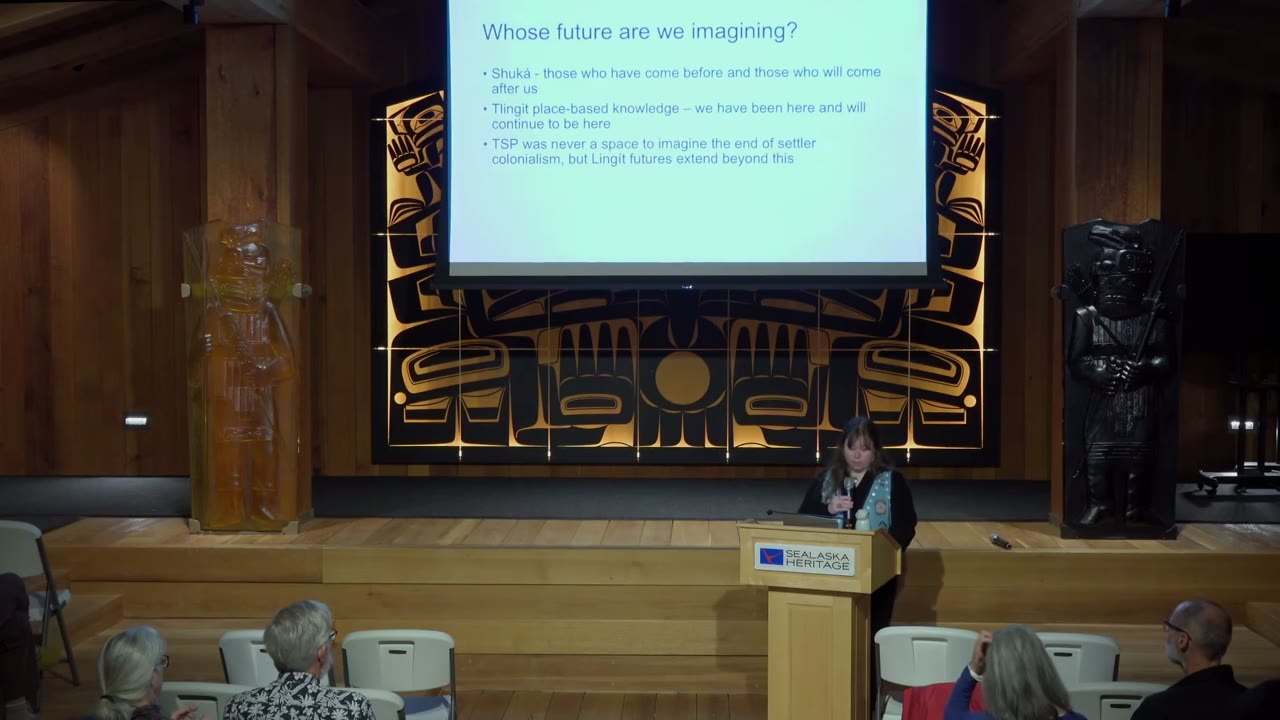
“I ultimately argue that the deep relationships with place and with our ancestors and descendants precedes and will outlast to the forms of futurity of the settler colonial state and of oil and corporate futurity.”Sealaska Heritage Institute: Temporality of Haa Shuká A Scalar Perspective on Climate Change Lingít Knowledge & Alaskan Identity ·