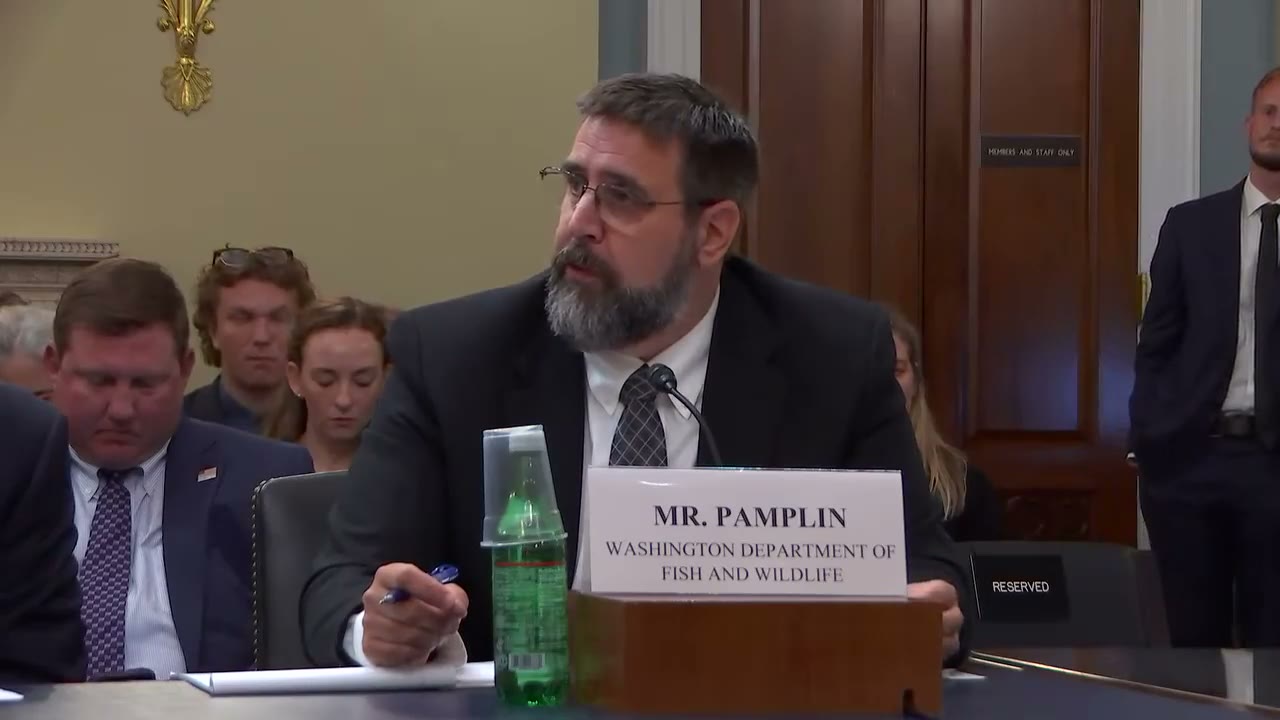
Nate Pamplin
133:50 - 134:23
"the bill has ceilings on the number of pinnipeds that can be removed. There's a potential biological removal under the MMPA and there's a cap of 10%. And even there, for instance, for California sea lions or Steller sea lions, I don't see us approaching that cap."
“the bill has ceilings on the number of pinnipeds that can be removed. There's a potential biological removal under the MMPA and there's a cap of 10%. And even there, for instance, for California sea lions or Steller sea lions, I don't see us approaching that cap.”
- Speaker
- Nate Pamplin
- Timestamp
- 133:50 – 134:23
- Source
- House Natural Resources Subcommittee on Water, Wildlife and Fisheries (Begich): Legislative Hearing
- Community
- Alaska News
- Captured at
- July 21, 2026
From the transcript
And the bill has ceilings on the number of pinnipeds that can be removed. There's a potential biological removal under the MMPA and there's a cap of 10%. And even there, for instance, for California sea lions or Steller sea lions, I don't see us approaching that cap. It's just nice to have, I think, through the optics and making the bill political viable to have those ceilings in place. But the science on where predation is occurring, a lot of times harbor seals are, for instance, generalists.
Related Coverage
The sea lions in Congress's salmon bill breed in Southeast Alaska
A House subcommittee heard competing testimony Tuesday on a bill that would let Washington state and tribal co-managers kill more sea lions across the Columbia River and Western Washington. Supporters cited a dramatic drop in steelhead extinction risk at Willamette Falls; a minority scientist warned habitat loss, not predation, is the real problem.
 by Maggie AlaskaNewsadded 2mo ago2 min read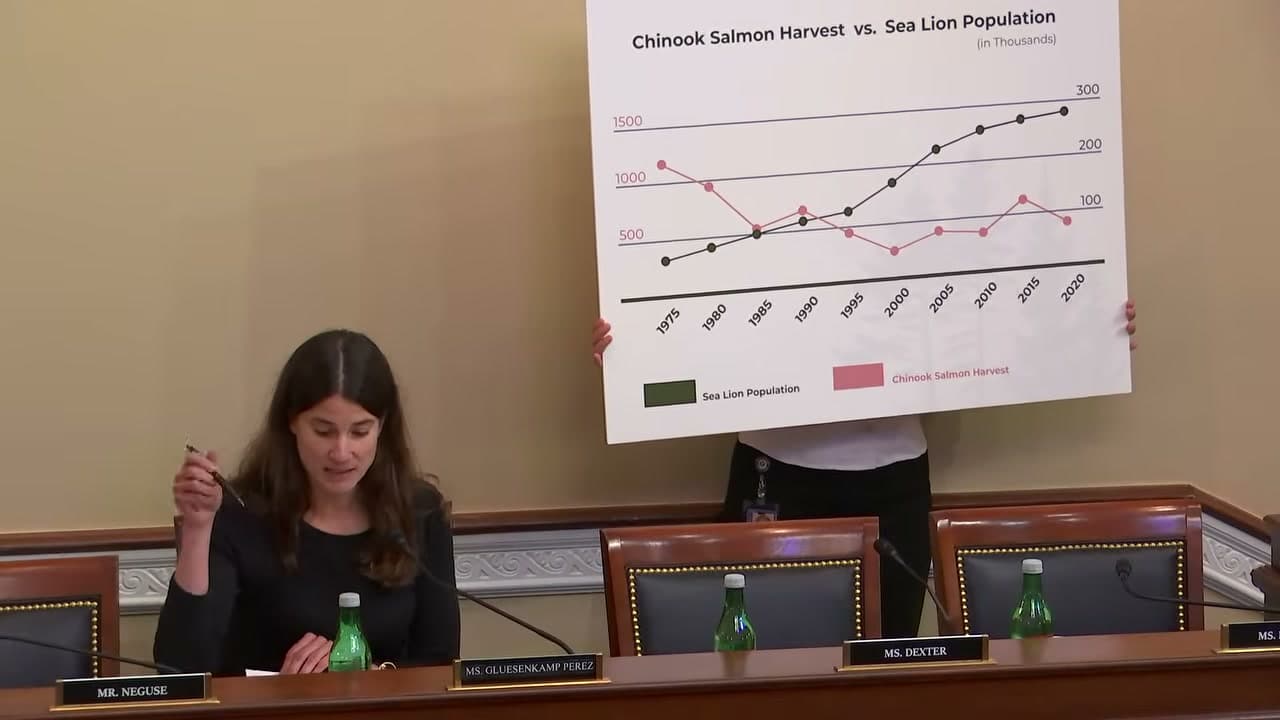
A cattle parasite Alaska will never see could still cost Alaskans
A House subcommittee heard testimony on the SAFE Cattle Act, which would coordinate federal screwworm response — a cattle threat that reaches Alaska through beef prices.
by Maggie AlaskaNewsadded 2mo ago1 min read