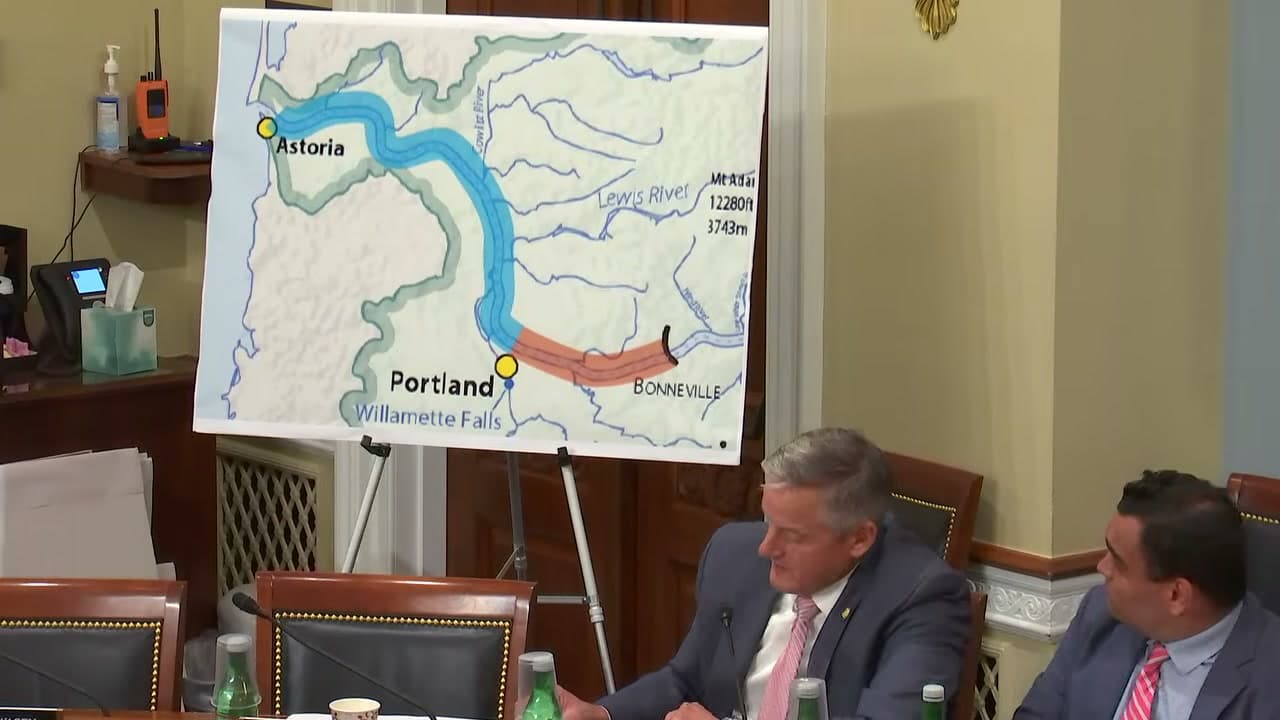
Frame from "House Natural Resources Subcommittee on Water, Wildlife and Fisheries (Begich): Legislative Hearing" · Photo source
A cattle parasite Alaska will never see could still cost Alaskans
New World screwworm cannot survive an Alaska winter, and the state has almost no cattle to lose. What Alaska has is a grocery bill built almost entirely on beef raised somewhere else, at the far end of a supply chain where every disruption arrives as price.
That is the stake in legislation a House subcommittee took up Tuesday. The SAFE Cattle Act would require the Agriculture and Interior departments — which currently run separate tracks on the pest — to sign a formal coordination agreement within 180 days, setting up joint surveillance, shared eradication protocols, and yearly reports to Congress. A 1976 Texas outbreak cost an estimated $732 million in livestock losses.
The split matters because the parasite does not respect the line between the two agencies' jurisdictions. Jared Blankenship of the Texas Farm Bureau told the subcommittee that ranchers can manage their own herds but not the wildlife moving across the same ground. "I can control my livestock," he said. "Wildlife I cannot control." He said sterile fly releases remain the most effective tool, and that eradication depends on cooperation from Mexico.
Rep. Melanie Stansbury, D-N.M., said the monitoring programs meant to catch the pest at the border had been dismantled before it crossed. Those programs, she said, "were gutted."
The bill awaits action by the full House Natural Resources Committee.
This article is based on a public meeting of House Natural Resources Subcommittee on Water, Wildlife and Fisheries (Begich) — House Natural Resources Subcommittee on Water, Wildlife and Fisheries (Begich): Legislative Hearing ().
Made by our human newsroom with AI. How humans and AI work here · Grow with our newsroom Transcript byLucas Brown
Watch key moments from the source meeting. Click to expand.
Stay informed. Support what matters.
Free, permanent access to local news you can verify. Subscribe to support Maggie AlaskaNews and go ad-free.
Related Coverage
New federal money for small meat processors could help Alaska lean less on imported food
Alaska News · 3mo ago
Federal orders reach Alaska's beef labeling and processing gaps
Alaska News · 1mo ago
House panel hears bill to ease farmland leasing, lower costs for Alaska growers
Alaska News · 5mo ago
Begich bill targets illegal foreign fishing that undercuts Alaska fleets
Alaska News · 3mo ago
A new federal complaint line for Alaska's rural producers
Alaska News · 3mo ago
Comments
Sign in to leave a comment.
No comments yet. Be the first to share your thoughts.