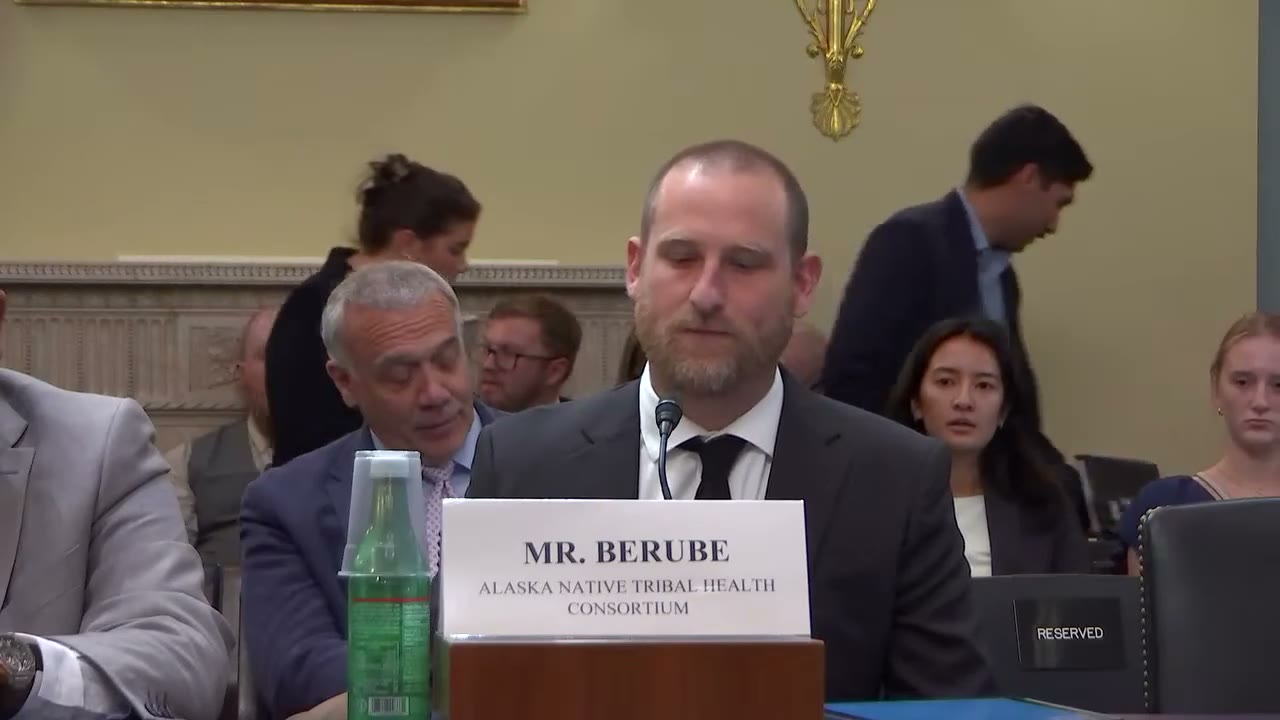
Brian Berube
72:07 - 72:57
"40 Of the roughly 450 residents of Marshall, Alaska, are actually undergoing post-exposure treatment after being exposed by a dog who had come in contact with a rabid fox. And this is not a once-off, this is a fairly common occurrence in our state."
“40 Of the roughly 450 residents of Marshall, Alaska, are actually undergoing post-exposure treatment after being exposed by a dog who had come in contact with a rabid fox. And this is not a once-off, this is a fairly common occurrence in our state.”
- Speaker
- Brian Berube
- Timestamp
- 72:07 – 72:57
- Source
- House Natural Resources Subcommittee on Indian and Insular Affairs (Begich): Legislative Hearing
- Community
- Alaska News
- Captured at
- June 9, 2026
From the transcript
And communities still face acute exposure events as we sit here today. 40 Of the roughly 450 residents of Marshall, Alaska, are actually undergoing post-exposure treatment after being exposed by a dog who had come in contact with a rabid fox. And this is not a once-off, this is a fairly common occurrence in our state. Such events require a rapid and costly medical response and illustrate a lack of the upstream prevention capacity that we all know is so critical to public health. In ANTHC's view, these challenges are driven by limited access to basic veterinary care, including routine rabies vaccination, spay and neuter services, parasite and pathogenic disease surveillance, uh, and prevention.
Related Coverage
House panel hears bill to move tribal regulatory authority to Interior
A House subcommittee took testimony June 9 on legislation that would transfer a dormant 2000 tribal regulatory reform mandate from Commerce to Interior, 25 years after the authority was supposed to convene.
 by Alaska Newsadded 3mo ago2 min read
Begich bill would let the Indian Health Service fund rabies shots and spay/neuter in rural Alaska
Rep. Nick Begich's H.R. 8473 would let the Indian Health Service fund rabies vaccination and spay/neuter in rural Alaska, where rabies is endemic in foxes.
by Alaska Newsadded 3mo ago2 min read