Timothée Petty
76:49 - 77:35
"the work that we have done with our partners in this and with the tribes who have given us clear historic impact that's taken place, the invasives that have come up the river that they have not seen historically in all of their knowledge, gives us clear information that that, uh, we need to be addressing it. We are so focused on trying to manage the salmon. We need to take that same application and also manage the pinnipeds in the same way because it has a direct impact."
“the work that we have done with our partners in this and with the tribes who have given us clear historic impact that's taken place, the invasives that have come up the river that they have not seen historically in all of their knowledge, gives us clear information that that, uh, we need to be addressing it. We are so focused on trying to manage the salmon. We need to take that same application and also manage the pinnipeds in the same way because it has a direct impact.”
- Speaker
- Timothée Petty
- Timestamp
- 76:49 – 77:35
- Source
- House Natural Resources Subcommittee on Water, Wildlife and Fisheries (Begich): Legislative Hearing
- Community
- Alaska News
- Captured at
- July 21, 2026
From the transcript
And I don't believe that the science demonstrates that. Do you agree with that, or do you believe that pinniped predation is worth addressing while we can also do longer-term habitat restoration work at the same time. Yes, the work that we have done with our partners in this and with the tribes who have given us clear historic impact that's taken place, the invasives that have come up the river that they have not seen historically in all of their knowledge, gives us clear information that that, uh, we need to be addressing it. We are so focused on trying to manage the salmon. We need to take that same application and also manage the pinnipeds in the same way because it has a direct impact.
Related Coverage
The sea lions in Congress's salmon bill breed in Southeast Alaska
A House subcommittee heard competing testimony Tuesday on a bill that would let Washington state and tribal co-managers kill more sea lions across the Columbia River and Western Washington. Supporters cited a dramatic drop in steelhead extinction risk at Willamette Falls; a minority scientist warned habitat loss, not predation, is the real problem.
 by Maggie AlaskaNewsadded 2mo ago2 min read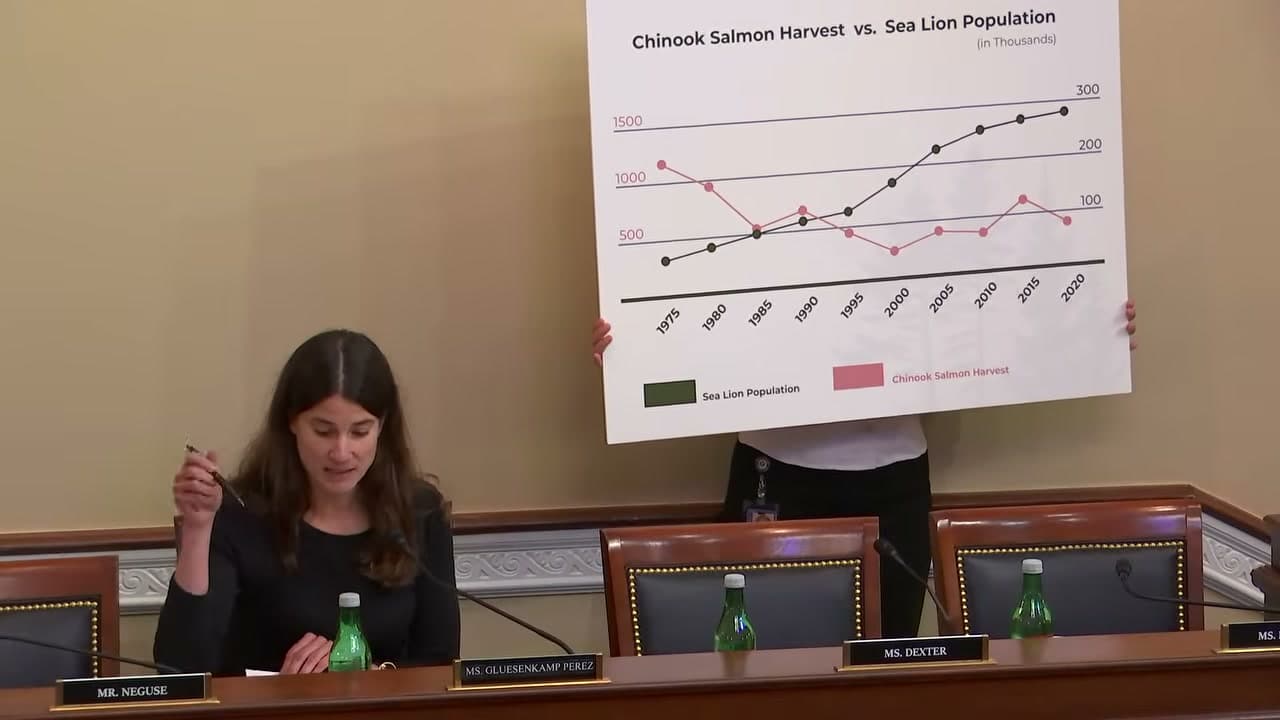
A cattle parasite Alaska will never see could still cost Alaskans
A House subcommittee heard testimony on the SAFE Cattle Act, which would coordinate federal screwworm response — a cattle threat that reaches Alaska through beef prices.
by Maggie AlaskaNewsadded 2mo ago1 min read