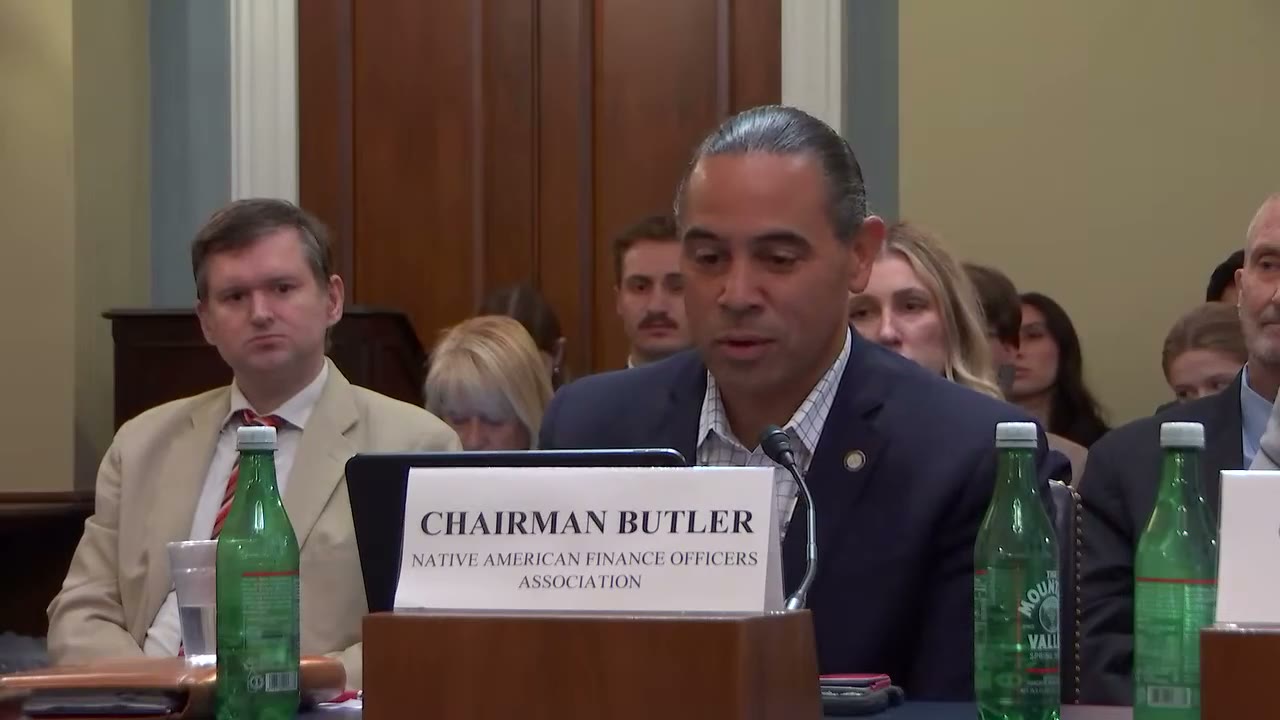
Rodney Butler
56:22 - 57:05
"In 2000, in the year 2000, Congress passed the Indian Tribal Regulatory Reform and Business Development Act with a clear mandate to comprehensively review federal regulations that impede investment in business development on Indian lands and recommend their removal. The legislation established a 21-member authority with 12 seats reserved for tribal representatives, and it directed it to report to Congress within one year. That authority was never convened. 25 Years later, the mandate remains unfilled."
“In 2000, in the year 2000, Congress passed the Indian Tribal Regulatory Reform and Business Development Act with a clear mandate to comprehensively review federal regulations that impede investment in business development on Indian lands and recommend their removal. The legislation established a 21-member authority with 12 seats reserved for tribal representatives, and it directed it to report to Congress within one year. That authority was never convened. 25 Years later, the mandate remains unfilled.”
- Speaker
- Rodney Butler
- Timestamp
- 56:22 – 57:05
- Source
- House Natural Resources Subcommittee on Indian and Insular Affairs (Begich): Legislative Hearing
- Community
- Alaska News
- Captured at
- June 9, 2026
From the transcript
In 2000, in the year 2000, Congress passed the Indian Tribal Regulatory Reform and Business Development Act with a clear mandate to comprehensively review federal regulations that impede investment in business development on Indian lands and recommend their removal. The legislation established a 21-member authority with 12 seats reserved for tribal representatives, and it directed it to report to Congress within one year. That authority was never convened. 25 Years later, the mandate remains unfilled. This legislation originated by the great Senator Ben Nighthorse Campbell of Colorado, a Northern Cheyenne citizen, a former Olympian, and one of the most consequential champions for Indian Country to ever serve in Congress.
Related Coverage
House panel hears bill to move tribal regulatory authority to Interior
A House subcommittee took testimony June 9 on legislation that would transfer a dormant 2000 tribal regulatory reform mandate from Commerce to Interior, 25 years after the authority was supposed to convene.
 by Alaska Newsadded 3mo ago2 min read
Begich bill would let the Indian Health Service fund rabies shots and spay/neuter in rural Alaska
Rep. Nick Begich's H.R. 8473 would let the Indian Health Service fund rabies vaccination and spay/neuter in rural Alaska, where rabies is endemic in foxes.
by Alaska Newsadded 3mo ago2 min read