Hurd
43:43 - 44:26
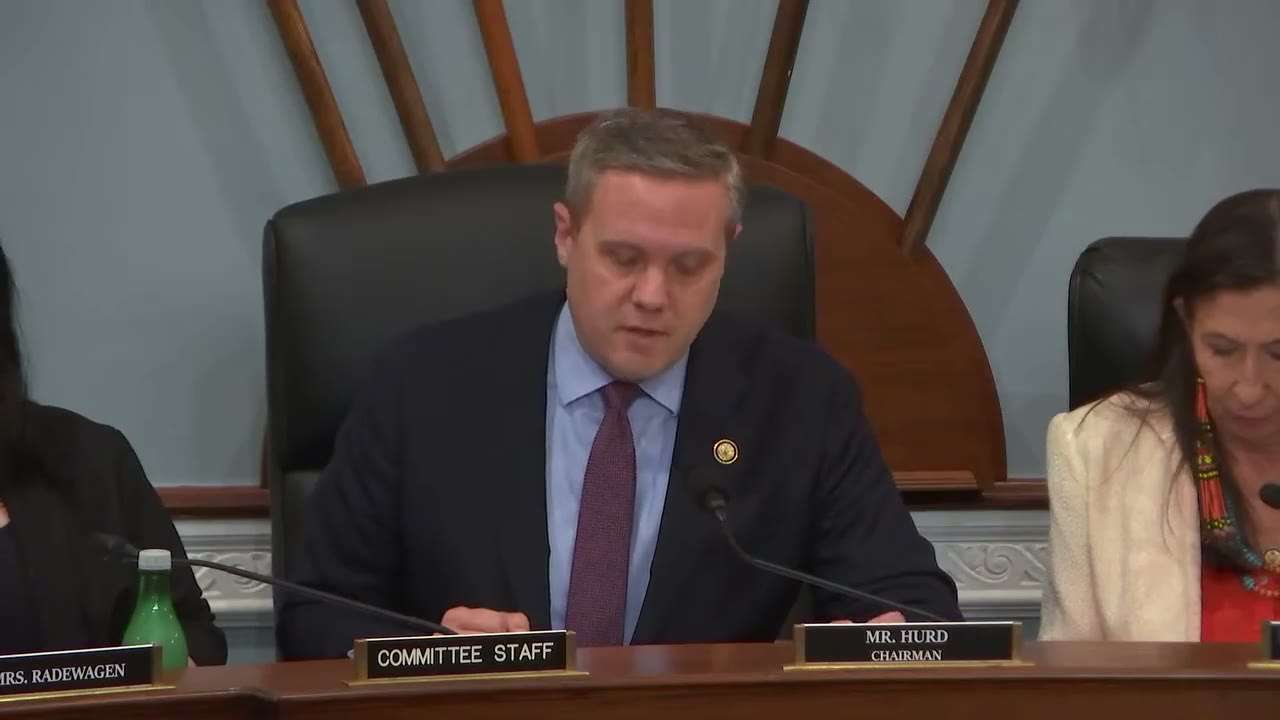
"The Indian Tribal Regulatory Reform and Business Development Act of 2000 was enacted to help identify and remove federal barriers to investment barriers to business development, as well as barriers to wealth creation in Indian Country. Under current law, the Secretary of Commerce was directed to create a 21-member authority to carry out that work, with Interior serving as a supporting role."
“The Indian Tribal Regulatory Reform and Business Development Act of 2000 was enacted to help identify and remove federal barriers to investment barriers to business development, as well as barriers to wealth creation in Indian Country. Under current law, the Secretary of Commerce was directed to create a 21-member authority to carry out that work, with Interior serving as a supporting role.”
- Speaker
- Hurd
- Timestamp
- 43:43 – 44:26
- Source
- House Natural Resources Subcommittee on Indian and Insular Affairs (Begich): Legislative Hearing
- Community
- Alaska News
- Captured at
- June 9, 2026
From the transcript
As the subcommittee has seen, economic development opportunities are crucial for continued growth throughout Indian Country. Limited opportunities, systemic barriers, and inadequate infrastructure all contribute to high rates of poverty on many reservations. The Indian Tribal Regulatory Reform and Business Development Act of 2000 was enacted to help identify and remove federal barriers to investment barriers to business development, as well as barriers to wealth creation in Indian Country. Under current law, the Secretary of Commerce was directed to create a 21-member authority to carry out that work, with Interior serving as a supporting role. Today, proponents of this legislation assert that Interior is better suited than Commerce to lead an authority dedicated to tribal economic development.
Related Coverage
House panel hears bill to move tribal regulatory authority to Interior
A House subcommittee took testimony June 9 on legislation that would transfer a dormant 2000 tribal regulatory reform mandate from Commerce to Interior, 25 years after the authority was supposed to convene.
 by Alaska Newsadded 3mo ago2 min read
Begich bill would let the Indian Health Service fund rabies shots and spay/neuter in rural Alaska
Rep. Nick Begich's H.R. 8473 would let the Indian Health Service fund rabies vaccination and spay/neuter in rural Alaska, where rabies is endemic in foxes.
by Alaska Newsadded 3mo ago2 min read