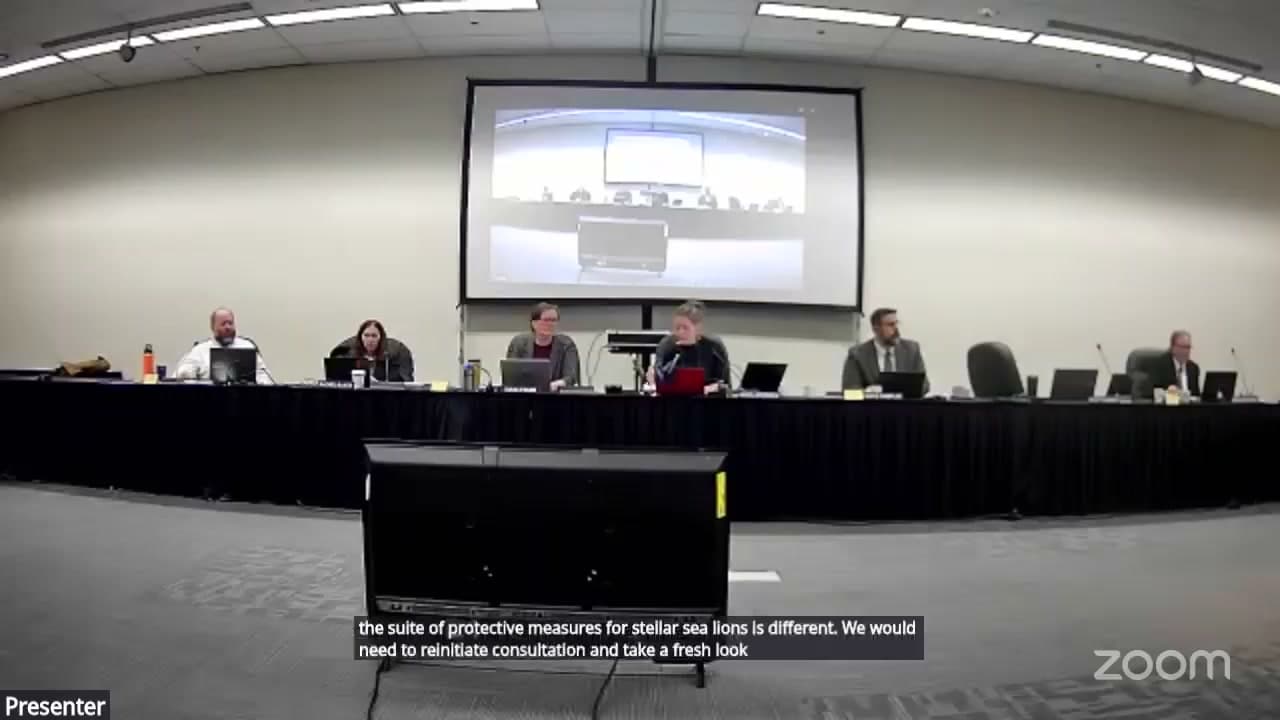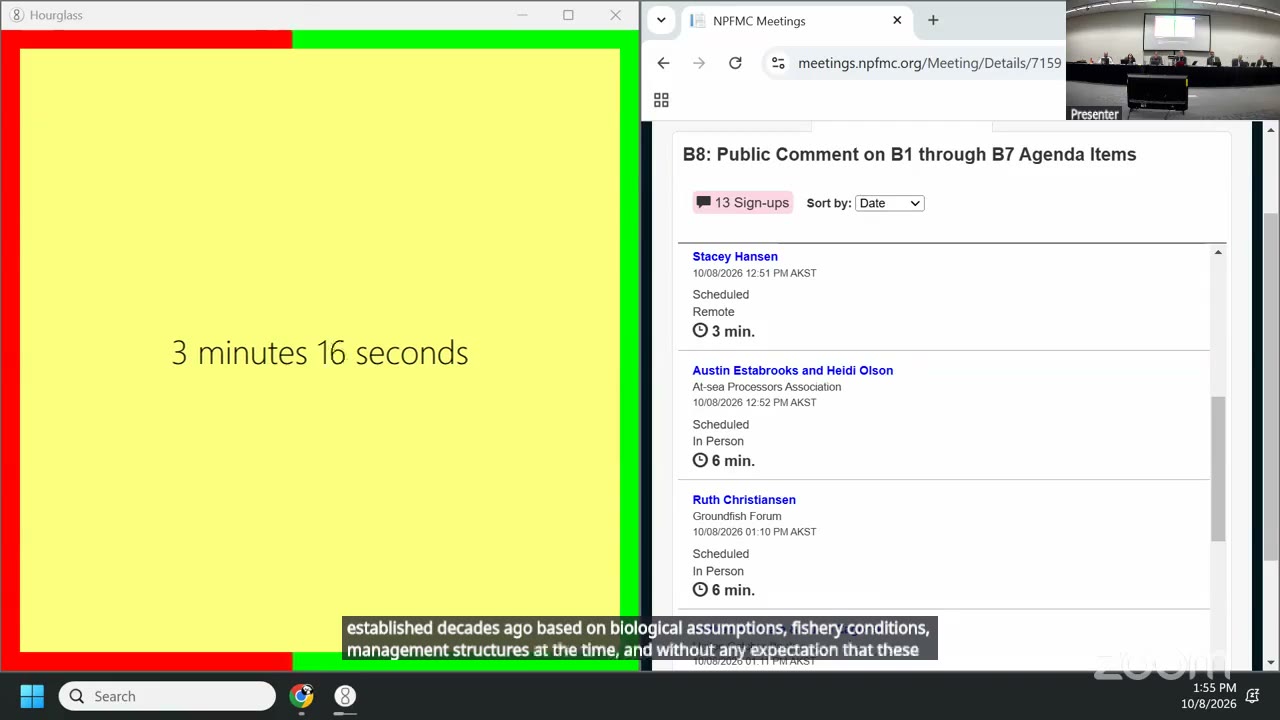
Angel Drobnica
202:14 - 202:51
“Static closure areas are the opposite of adaptive management, and they do not recognize changing ecosystems, updated climate events and changing fishery practices and dynamics. Periodic evaluation is therefore critical.”
- Speaker
- Angel Drobnica
- Timestamp
- 202:14 – 202:51
- Transcript
- NPFMC 280 Day 1 - October 8, 2026
- Community
- Alaska News
- Location
- Alaska
- Captured at
- October 8, 2026
From the transcript
It will also greatly improve our ability to balance multiple fishery trade-offs that we face, including reduction in bycatch, an increase in CPE, and a reduction in habitat impacts because we are all— we are spending less time on the water. So all of this is consistent with the goals of the executive order. So Steller sea lion closure areas are one example of static closure areas established decades ago based on biological assumptions, fishery conditions, management structures at the time, and without any expectation that these areas would be reviewed for their ongoing conservation benefit. Static closure areas are the opposite of adaptive management, and they do not recognize changing ecosystems, updated science, and changing fishery practices and dynamics. Periodic evaluation is therefore critical.
Related Coverage
Glacier Fish, SeaShare present halibut donation permit to council
Glacier Fish and SeaShare asked federal regulators to let the Northern Glacier donate up to 5,000 pounds of halibut it now discards, sending the fish to Western Alaska food banks if approved.

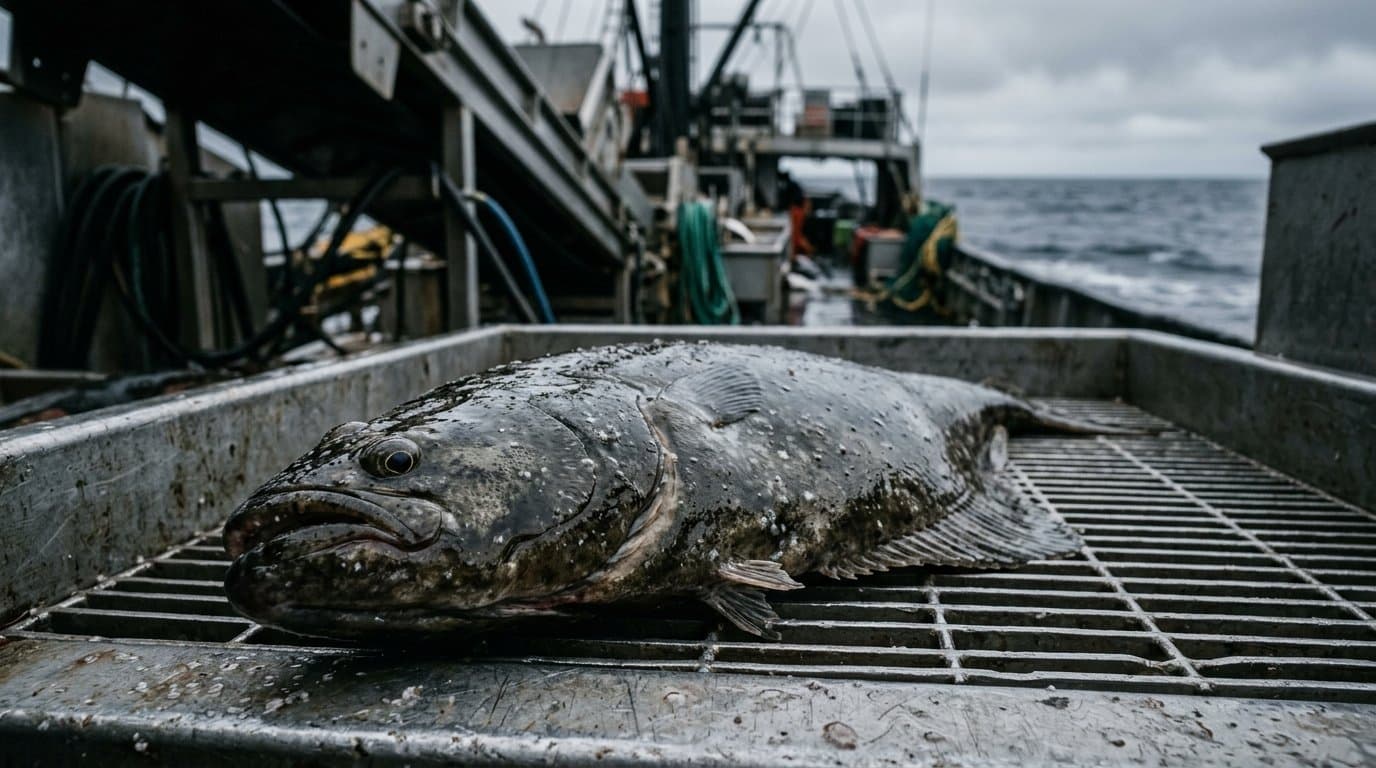
Trawl groups ask fishery council to shrink Steller sea lion closures; conservation groups object
Trawlers want the North Pacific council to shrink Steller sea lion fishing closures, citing fuel and safety. Conservation groups and a tribal commission object.