0:27
Francis Chapelle
28:18 - 28:45
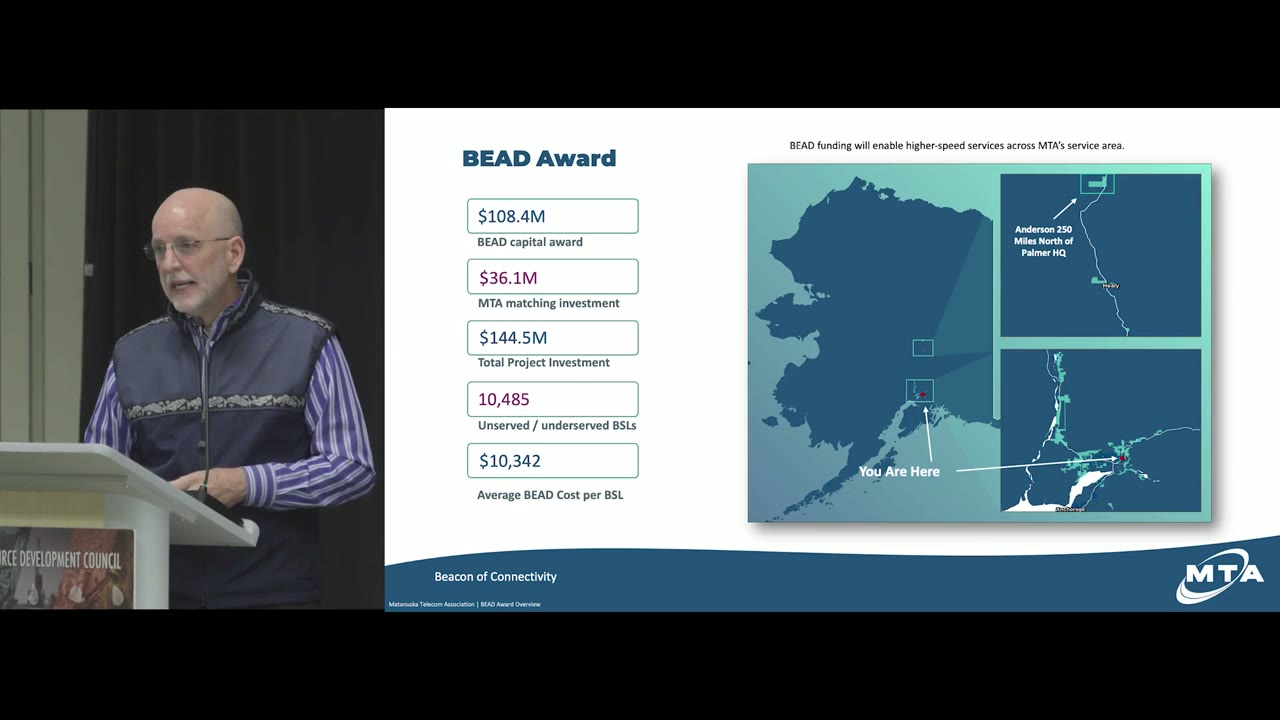
“the effort was to focus on areas where the density of the addresses was lowest, right? So that's where the costs are highest. And so we tried to get— focus our B.E.E.D. Spending where we have existing and where we can leverage our existing network and reach more of those households that are in low-density regions— Big Lake, Palmer, Wasilla, Tulalip, et cetera.”
- Speaker
- Francis Chapelle
- Timestamp
- 28:18 – 28:45
- Community
- Alaska News
- Location
- Alaska
- Captured at
- October 20, 2026
From the transcript
This is the breakdown for the locations that we are adding in our network. And I think what you see is that the— As far as MTA is concerned, the effort was to focus on areas where the density of the addresses was lowest, right? So that's where the costs are highest. And so we tried to get— focus our B.E.E.D. Spending where we have existing and where we can leverage our existing network and reach more of those households that are in low-density regions— Big Lake, Palmer, Wasilla, Tulalip, et cetera.
Related Coverage
Three Alaska telecoms lay out plans for $353 million in federal broadband grants
Three telecoms holding $353 million in federal broadband grants told an Anchorage business crowd where they'll build. One expects to finish by 2030.