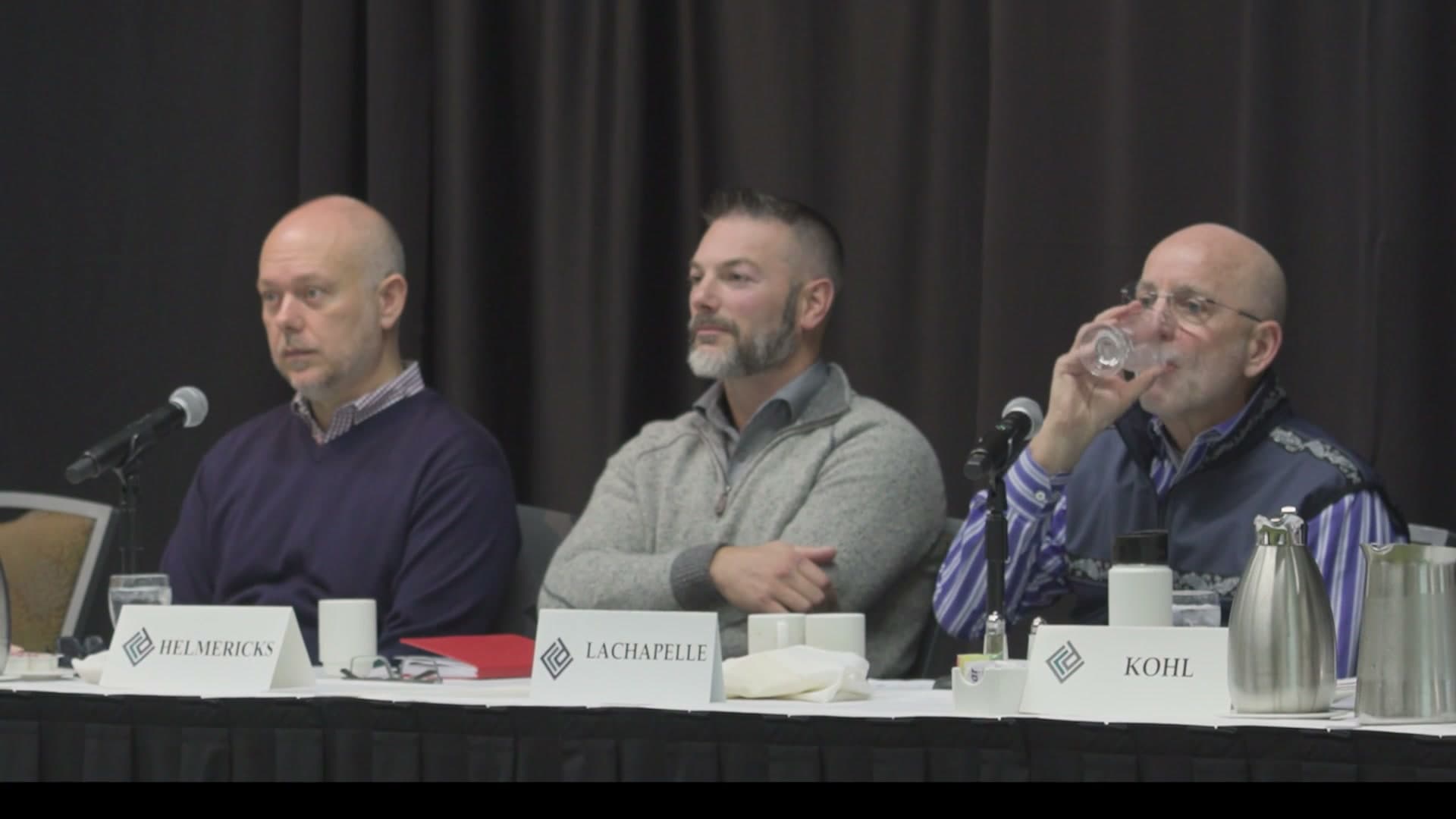
Frame from "10-15-26 RDC Breakfast: An Update from Alaska's Broadband Companies" · Photo source
Three Alaska telecoms lay out plans for $353 million in federal broadband grants
Alaska Communications, GCI and Matanuska Telecom Association, which together won $353 million in federal broadband grants this spring, laid out where and how they plan to build at a Resource Development Council breakfast in Anchorage on Oct. 15.
The money comes from the Broadband Equity, Access and Deployment program, or BEAD, which pays to bring internet service to unserved and underserved locations. The grants were awarded in April, and Alaska Communications expects its grant agreement to be finalized "any day now," said Tony Dodge, who leads network strategy, planning and deployment there. "There's a 4-year commitment, so all of our construction that's BEAD-related will be finished in 2030," he said.
Alaska Communications received $124 million, plus a $26.7 million company match, for about 9,100 locations from Fort Yukon to Akhiok on Kodiak Island. A project with Doyon to reach Fort Yukon will also bring the company to Manley Hot Springs and Minto, which it doesn't serve today, Dodge said.
The company is splitting the work about 50-50 between fiber, in denser areas, and fixed wireless elsewhere. Building all fiber would have pushed the grant to five times its size, Dodge said. Fiber takes about two years from go-ahead to service, he said, and fixed wireless about six months.
GCI received three grants totaling $121 million for 18 communities in western Alaska and the greater Anchorage area, said Aaron Helmericks, GCI's vice president of corporate development. The company builds on a fiber backbone and uses hybrid microwave-fiber systems and fiber to homes and businesses, he said.
MTA received $108 million and is adding $36 million of its own to reach more than 10,000 locations, said Francis LaChapelle, MTA's vice president of strategic initiatives. MTA aimed at low-density areas where costs are highest, such as around Big Lake, Palmer and Wasilla, he said. With 17% of the state's grant money, he said, MTA will reach almost a quarter of the state's locations.
The awards are part of about $630 million in projects the Alaska Broadband Office announced from the state's $1.017 billion BEAD allocation. On Sept. 3, the National Telecommunications and Information Administration said more than 5,000 more Alaska locations could become eligible through a new round funded by program savings.
Helmericks said Alaska has one of the toughest permitting regimes, and industry has called federal permits the bottleneck for rural broadband, Alaska News reported in July. At a July 15 U.S. Senate subcommittee hearing, a federal witness said the Bureau of Land Management receives BEAD permit applications in year three of the four-year build, leaving one year to process them.
This article is based on a public meeting of Resource Development Council for Alaska — 10-15-26 RDC Breakfast: An Update from Alaska's Broadband Companies ().
Made by our human newsroom with AI. Reviewed by Cale Green. How humans and AI work here · Grow with our newsroom Transcript byLucas Brown
Watch key moments from the source meeting. Click to expand.
Stay informed. Support what matters.
Free, permanent access to local news you can verify. Subscribe to support Melinda Communities.News and go ad-free.
Related Coverage
Rural Alaska's internet funding is changing hands as an old federal program ends
Alaska News · 1mo ago
Alaska's mobile service through 2034 gets locked in next week
Alaska News · 1mo ago
Akiachak is in line for fiber broadband, one of seven roadless villages getting wired
Alaska News · 2mo ago
Federal grant of $500,000 would replace generators on the mountaintop relays that carry Akhiok's internet
Alaska News · 1mo ago
Four Yukon villages get money for broadband design, not construction
Alaska News · 1mo ago
Comments
Sign in to leave a comment.
No comments yet. Be the first to share your thoughts.