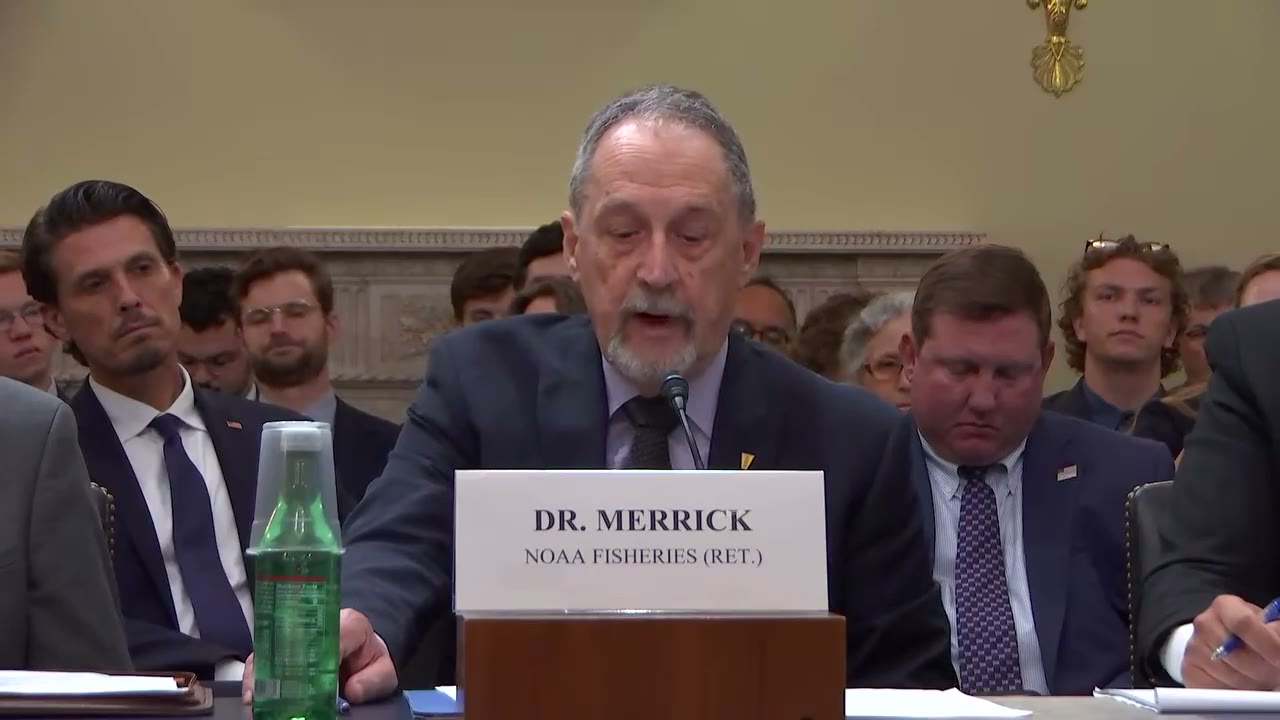
Richard Merrick
109:40 - 110:19
"I'm concerned that because habitat remains limited and ocean conditions are not favorable, It's unlikely that widespread removal of seals and sea lions will have little measurable effect on overall salmon stocks."
“I'm concerned that because habitat remains limited and ocean conditions are not favorable, It's unlikely that widespread removal of seals and sea lions will have little measurable effect on overall salmon stocks.”
- Speaker
- Richard Merrick
- Timestamp
- 109:40 – 110:19
- Source
- House Natural Resources Subcommittee on Water, Wildlife and Fisheries (Begich): Legislative Hearing
- Community
- Alaska News
- Captured at
- July 21, 2026
From the transcript
But like we learned at Ballard Locks, these removal efforts only have short-term effects. New sea lions will return. And so you're going to go in for the long term for this if you want to keep doing this. It may be more effective to remove some of those hydrodynamic bottlenecks that cause salmon to queue up at high predation sites or develop barriers that separate pinnipeds from salmon or provide sound deterrents. But ultimately, looking at this as an ecosystem scientist, I'm concerned that because habitat remains limited and ocean conditions are not favorable, It's unlikely that widespread removal of seals and sea lions will have little measurable effect on overall salmon stocks.
Related Coverage
The sea lions in Congress's salmon bill breed in Southeast Alaska
A House subcommittee heard competing testimony Tuesday on a bill that would let Washington state and tribal co-managers kill more sea lions across the Columbia River and Western Washington. Supporters cited a dramatic drop in steelhead extinction risk at Willamette Falls; a minority scientist warned habitat loss, not predation, is the real problem.
 by Maggie AlaskaNewsadded 2mo ago2 min read
A cattle parasite Alaska will never see could still cost Alaskans
A House subcommittee heard testimony on the SAFE Cattle Act, which would coordinate federal screwworm response — a cattle threat that reaches Alaska through beef prices.
by Maggie AlaskaNewsadded 2mo ago1 min read