0:57
Pete Stauber
7:17 - 8:15
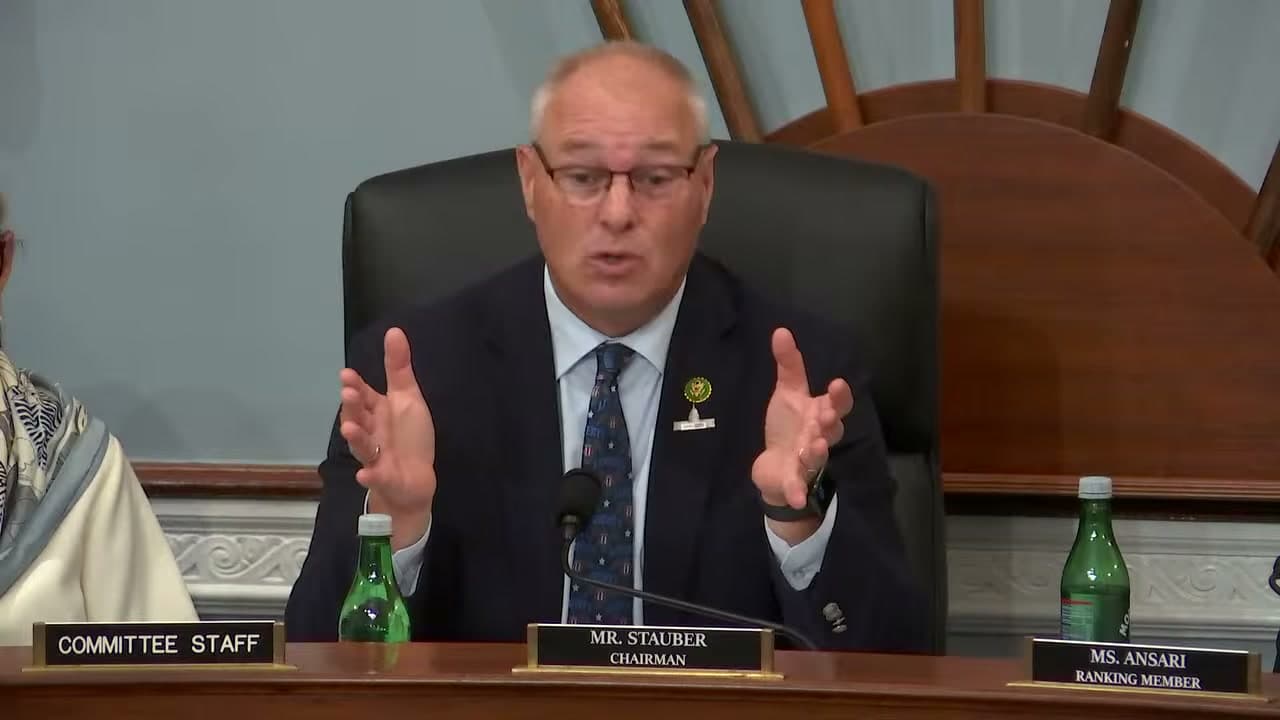
"H.R. 9646, Introduced by Representatives Hurd and Carbajal, directs the USGS to establish a quantum-enhanced critical mineral survey program and incorporate the survey data into Earth MRI data platforms. This initiative would utilize quantum gravity to produce ultra-high-resolution maps subsurface density variations, which are useful for geologic mapping, mineral exploration, and locating underground features."
“H.R. 9646, Introduced by Representatives Hurd and Carbajal, directs the USGS to establish a quantum-enhanced critical mineral survey program and incorporate the survey data into Earth MRI data platforms. This initiative would utilize quantum gravity to produce ultra-high-resolution maps subsurface density variations, which are useful for geologic mapping, mineral exploration, and locating underground features.”
- Speaker
- Pete Stauber
- Timestamp
- 7:17 – 8:15
- Community
- Alaska News
- Captured at
- July 21, 2026
From the transcript
Just last month, President Trump signed Executive Order 14413, ushering in the next frontier of quantum innovation, establishing a whole-of-government effort to accelerate U.S. leadership in quantum information science and technology. President Trump recognizes the importance of quantum capability as a strategic driver of economic growth, scientific discovery, and national security. H.R. 9646, Introduced by Representatives Hurd and Carbajal, directs the USGS to establish a quantum-enhanced critical mineral survey program and incorporate the survey data into Earth MRI data platforms. This initiative would utilize quantum gravity to produce ultra-high-resolution maps subsurface density variations, which are useful for geologic mapping, mineral exploration, and locating underground features.
Related Coverage
Earth MRI mapping program set to expire; two House bills would extend it and add quantum sensing
The federal geological mapping program that nearly doubled Alaska's publicly available subsurface data expires at year end. Two House bills heard Tuesday would reauthorize it through 2031 and layer quantum gravity sensing onto the effort, with Alaska's unmapped interior at the center of the case for both.
 by Maggie AlaskaNews1d ago2 min readAI
Alaska