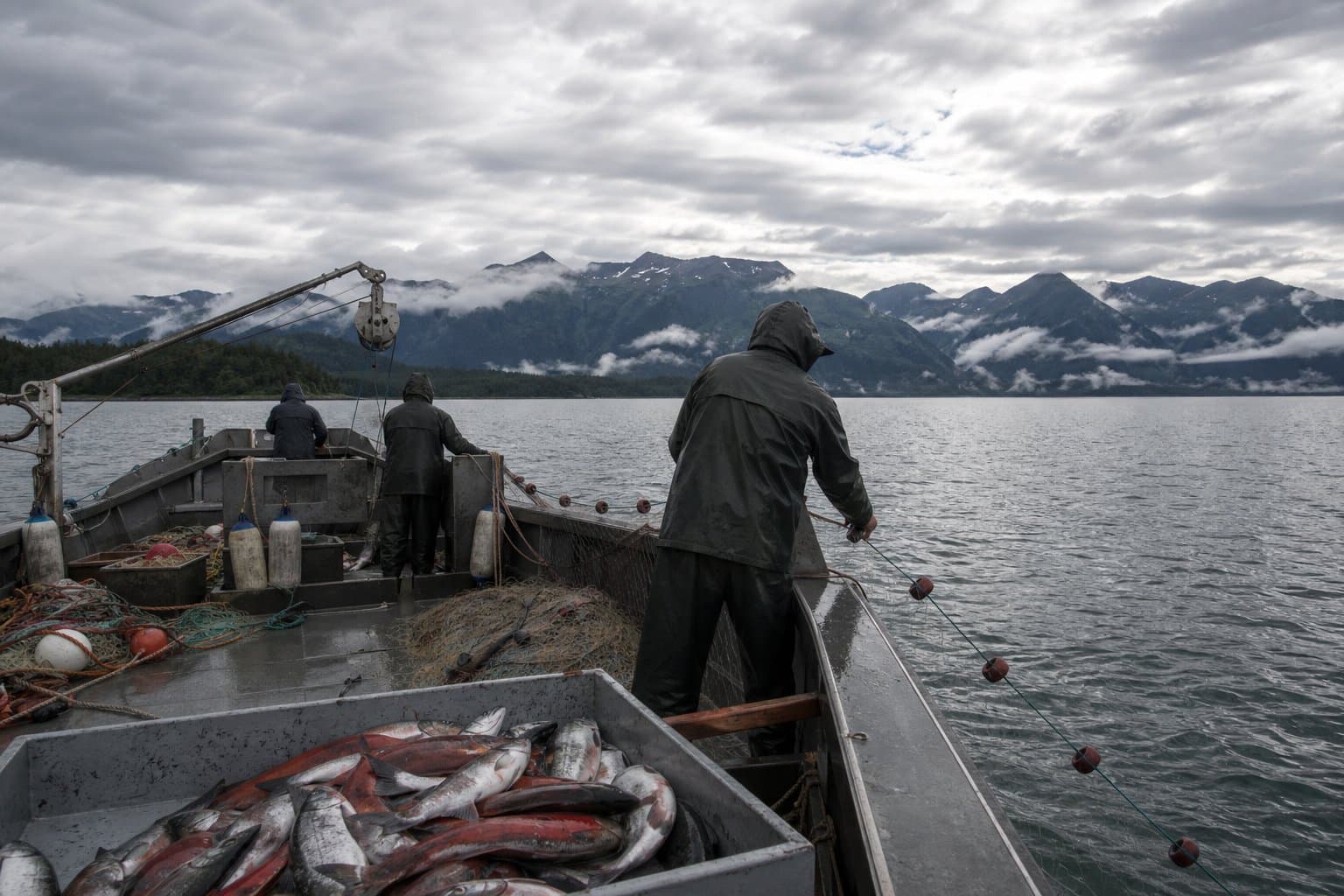
Yakutat sockeye openings hold as Situk-Ahrnklin kings stay off-limits
Yakutat set gillnetters have kept fishing for sockeye through the summer, but Chinook salmon have been off-limits in the Situk-Ahrnklin Inlet since late June, a restriction still in force when the inlet reopened July 19-21. The Alaska Department of Fish and Game's June 25 advisory opened Yakutat Bay, the Dangerous River, the Situk-Ahrnklin Inlet, Manby Shore and the remainder of the Yakutat District from 6 a.m. Sunday, June 28, through 6 p.m. Tuesday, June 30. The Alsek River ran 12:01 p.m. June 28 to noon June 29 under a 6-inch maximum mesh restriction, and the Seal River opened from 7 a.m. June 28 to 7 p.m. June 29 with waters above the East Fork confluence closed. The Lost River stayed closed until further notice.
The binding restriction was on Chinook, and it varied by river. In the Situk-Ahrnklin Inlet, kings of any size could not be kept for sale or personal use; a Chinook found dead in the net had to have the dorsal fin removed immediately, be recorded on a fish ticket as donated, and go either to a buyer at the time of the sockeye sale or to the Yakutat ADF&G office for distribution to community members in need. On the Alsek, there was no such prohibition, only a request: Yakutat Area Management Biologist Rick Hoffman wrote that "the department is requesting that any live Chinook salmon be released." The June advisory also barred the use of dual permits in the Situk-Ahrnklin Inlet and parts of Yakutat Bay.
That late-June window has long since closed, but the underlying restrictions have not. When the Situk-Ahrnklin Inlet reopened July 19-21, Chinook nonretention was still in place, and dual permits remained prohibited because the Situk king run had not reached the 750-fish escapement threshold required to authorize them. My read is that the practical weight of this falls on permit holders: they carry the handling and reporting requirements on kings caught incidentally, even though they cannot sell those fish. The approach is a local instance of a broader Alaska pattern, in which mesh size limits, time-and-area management and nonretention rules protect vulnerable Chinook stocks while allowing targeted harvests of more abundant species.
AI-assisted, reviewed by editors. Spot an error?
Comments
Sign in to leave a comment.
No comments yet. Be the first to share your thoughts.