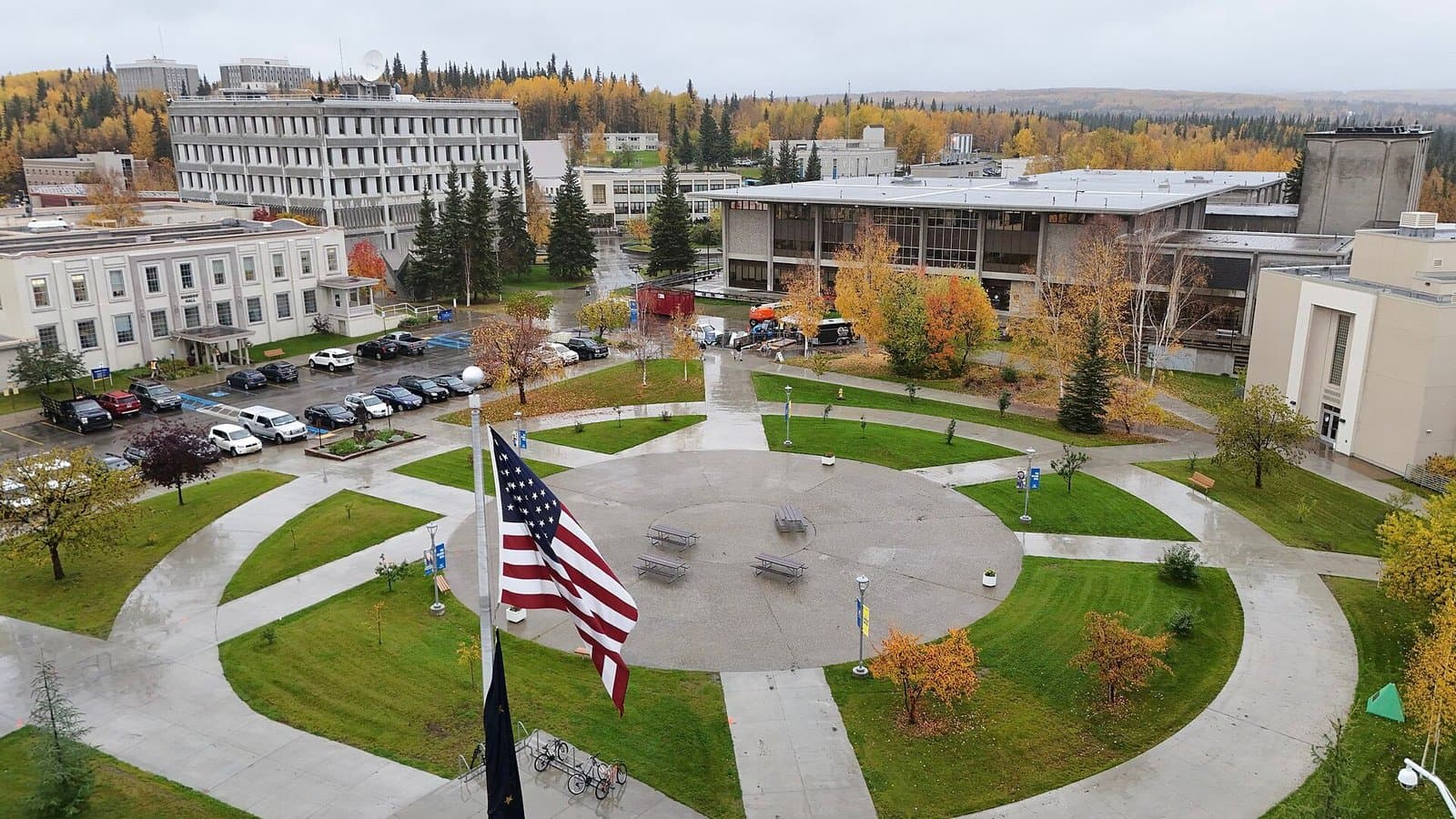
Photo: Quintin Soloviev via Wikimedia Commons · Photo source · CC BY 4.0
University of Alaska regents adopt per-program tuition and seek $49 million more from state
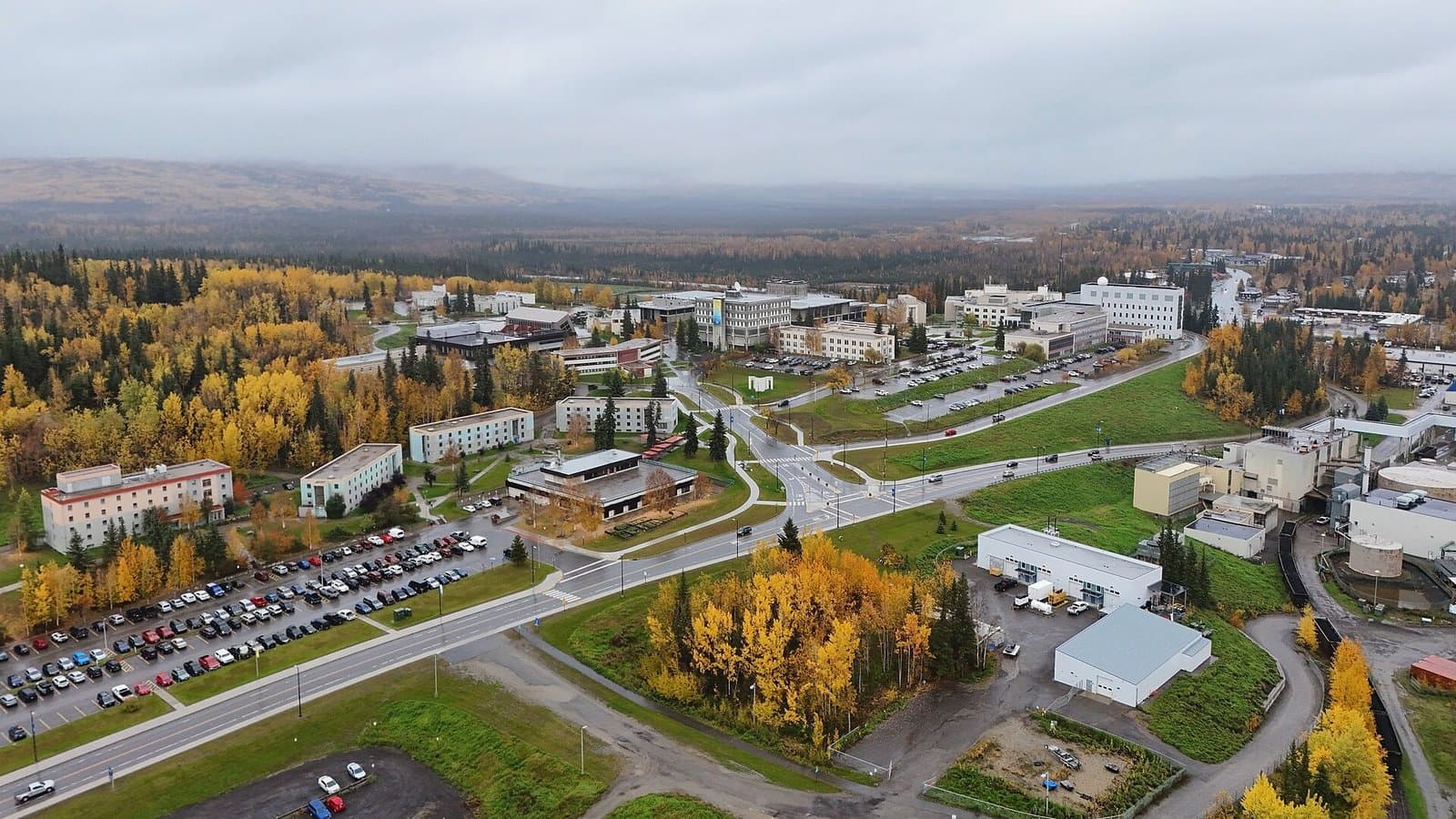
The University of Alaska Board of Regents on Friday, Nov. 6, in Fairbanks approved a single tuition rate for each academic program and asked the state for $49 million more in general funds for the 2028 fiscal year.
Starting in fall 2027, tuition and academic surcharges fold into one per-credit price tied to a student's program. Undeclared students, and students not in a program, pay a separate undeclared rate. UA says more of a student's cost will count toward financial aid. The board agenda says the rates raise systemwide tuition revenue by less than 2%.
"The move to program-based tuition will benefit our students and our university as a whole," University of Alaska President Matt Cooper said in the university's Nov. 6 release.
Alaska News covered the October budget draft, reported then as $31.4 million more, and previewed the tuition vote. The agenda says the tuition policy updates reflect the regents' August vote to eliminate nonresident tuition starting fall 2027.
Per credit, bachelor's programs at the University of Alaska Fairbanks (UAF) will cost $312 ($358 in business and security management and in engineering and mines), and at UA Anchorage (UAA) $278 ($303 in aviation, business and public policy, and engineering). UA Southeast undergraduate programs will cost $271 ($340 in maritime). Graduate rates run from $549 to $677. UAA associate and certificate programs will charge $252 ($277 in those three UAA fields), as will UAF associate, certificate and community college programs ($277 for aviation, automotive, welding and process technology at its community and technical college).
Faculty raised questions before the vote. "Faculty questions about the proposal center on the cost of GERs and pre-GERs (preparatory courses), fairness in tuition pricing, when program tuition would take effect for students, program tuition's effects on unit budgets, its effect on student behavior, and how to support student academic advising," Faculty Alliance Chair Andrea Dewees wrote in an Oct. 11 report to the board. GERs are general education requirements.
On Oct. 26, a regents committee reviewed a version seeking $396 million in state general funds, up $32 million from $364 million in the current fiscal year. The board's final version seeks $413 million: $22.2 million for compensation and cost increases and $26.7 million in program requests.
Three UAF items account for the largest change from October. In October they sat in an informational tier, described as "approved by the Board of Regents but are not included in the formal budget request to the Governor and Legislature." Now included in the formal request are $7.5 million for graduate student stipends and assistantships, unchanged; the drone program, cut from $12 million to $6 million in state money plus $24 million federal; and agriculture and food systems research, cut from $3 million to $1.5 million.
The board also added $1.5 million for Alaska Center for Energy and Power work and $650,000 to expand UAA air traffic control, raised UAA nursing pathways funding from $975,000 to $1.375 million, and dropped a $1 million UAA item to prepare workers for the Alaska LNG project. UA expects its Nursing Pathways Student Success Program to increase bachelor's-in-nursing enrollment by up to 75 students a year. That tier grew from $3.9 million to $20.4 million in general funds.
The request covers union contract raises and 3.25% raises for non-union staff but excludes three unions still bargaining: Local 6070 (crafts and trades workers), the Alaska Graduate Workers Association and CAUSE, newly unionized university staff negotiating their first contract. UA projects health care claims will rise $8.9 million, from $82.6 million to $91.5 million; UA's 82% employer share of that increase is $7.3 million. The capital request's top tier seeks $127.4 million in general funds, including $60 million for deferred maintenance and $67.4 million for student housing (UAA residential expansion and UAF graduate and family housing), plus $51.6 million in university receipts.
"We are actively managing costs where we can, and the budget proposal the Board approved reflects cost-conscious management and opportunities for the University," Cooper said. Board Chair Scott Jepsen said, "The actions we've taken today will improve our students' experience and support our faculty and staff in their work to help students succeed."
The request now goes to Gov. Mike Dunleavy and the Alaska State Legislature, which will decide how much of it to fund.
What did you make of this story? (no account needed)
Made by our human newsroom with AI. How humans and AI work here · Grow with our newsroom ·
Get Alaska News in your inbox
Create your free account and get the day’s top stories around 6 each morning, in a few minutes’ read.
Top stories, around 6 each morning.
Stories on what you follow, on Sundays.
Source: University of Alaska regents adopt one-rate-per-program tuition for fall 2027 and ask the state for $49 million more, up from $32 million in the October draft.









Comments
Sign in to leave a comment.
No comments yet. Be the first to share your thoughts.