AI image
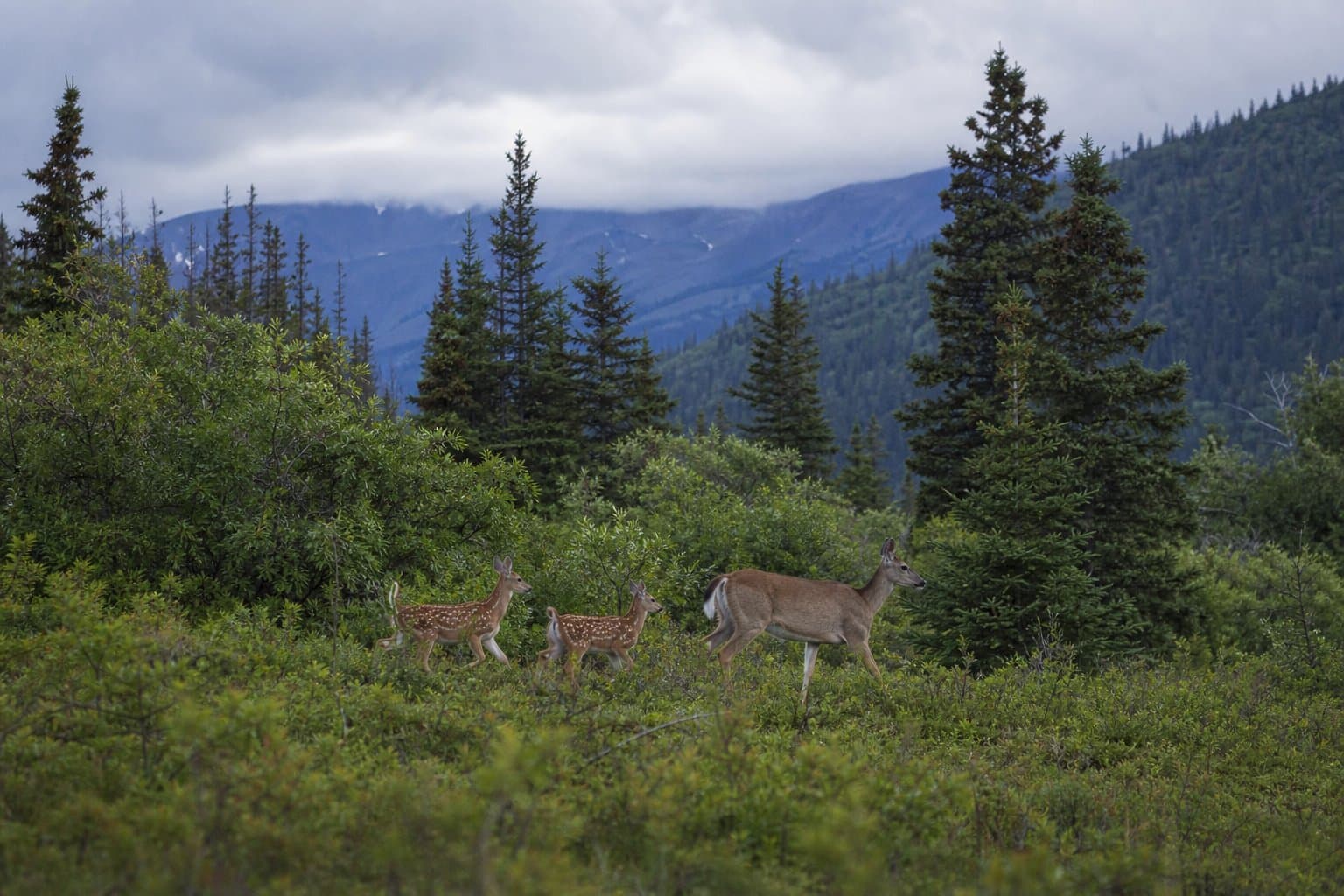
Trail camera shows first fawns from deer moved to the southern Kenai Peninsula
A collared doe with two fawns, caught on an Alaska Department of Fish and Game trail camera in early August, is the first evidence that Sitka black-tailed deer moved to the southern Kenai Peninsula in 2025 have reproduced, the department said Tuesday. For hunters, the practical answer has not changed: there is no deer season anywhere on the Kenai Peninsula while biologists keep evaluating the population.
Regional Supervisor Cyndi Wardlow said people have reported deer on the peninsula for years, but the department had never documented a population that stays and reproduces. Part of the project is finding out whether moved deer can do that and "hopefully add to the deer that are naturally moving in," she said.
In June and early July, biologists located each collared doe from a small plane but saw no fawns, which the department said are hard to spot even in ideal conditions because of their small size and camouflage coloring. It said most of the 2025 deer stayed within five miles of each other during the last rut, or breeding season, improving the odds that does were bred.
The department's August update reported that 13 of the 19 deer moved from Sitkinak Island died, nine of them between November and the end of April. By July 28, only two does and three bucks still wore active collars, and the update said a huntable population could take decades. A 1923 deer transplant to the Homer Spit also failed, according to the department's bulletin Game Transplants in Alaska.
In late September, the department moved nine more deer, seven does and two bucks, from Sitkinak Island to the release site near Port Chatham. One doe was euthanized during the operation after biologists found lesions of unknown cause and collected samples for testing. A separate flight carrying five does was called off because of weather; those deer were released on Afognak Island instead and now wear yellow and blue ear tags reading "Do Not Consume" because they were recently sedated, and the department is asking hunters not to harvest them. The move brings the collared herd on the Kenai Peninsula to nine does and five bucks. The department asks anyone who sees deer on the peninsula to call its Soldotna or Homer office.
Based on a press release from ADF&G.
AI-assisted. Reviewed by Cale Green. How we use AI
Stay informed. Support what matters.
Free, permanent access to local news you can verify. Subscribe to support Bill AlaskaNews and go ad-free.
Related Coverage
Most of the deer Alaska moved to the Kenai died over winter. The state is trying again.
Alaska News · 2mo ago
State extends Unit 9B resident moose season to Sept. 30 after bad weather limited hunting
Alaska News · 3d ago
The state is opening Kenai lynx season — and already predicting it'll close next year
Alaska News · 2mo ago
Necker Bay's goat zone closes after two billies fill the quota
Alaska News · 3w ago
Nelchina caribou could be hunted again in 2027 under a state proposal
Alaska News · 1w ago
Comments
Sign in to leave a comment.
No comments yet. Be the first to share your thoughts.