AI image
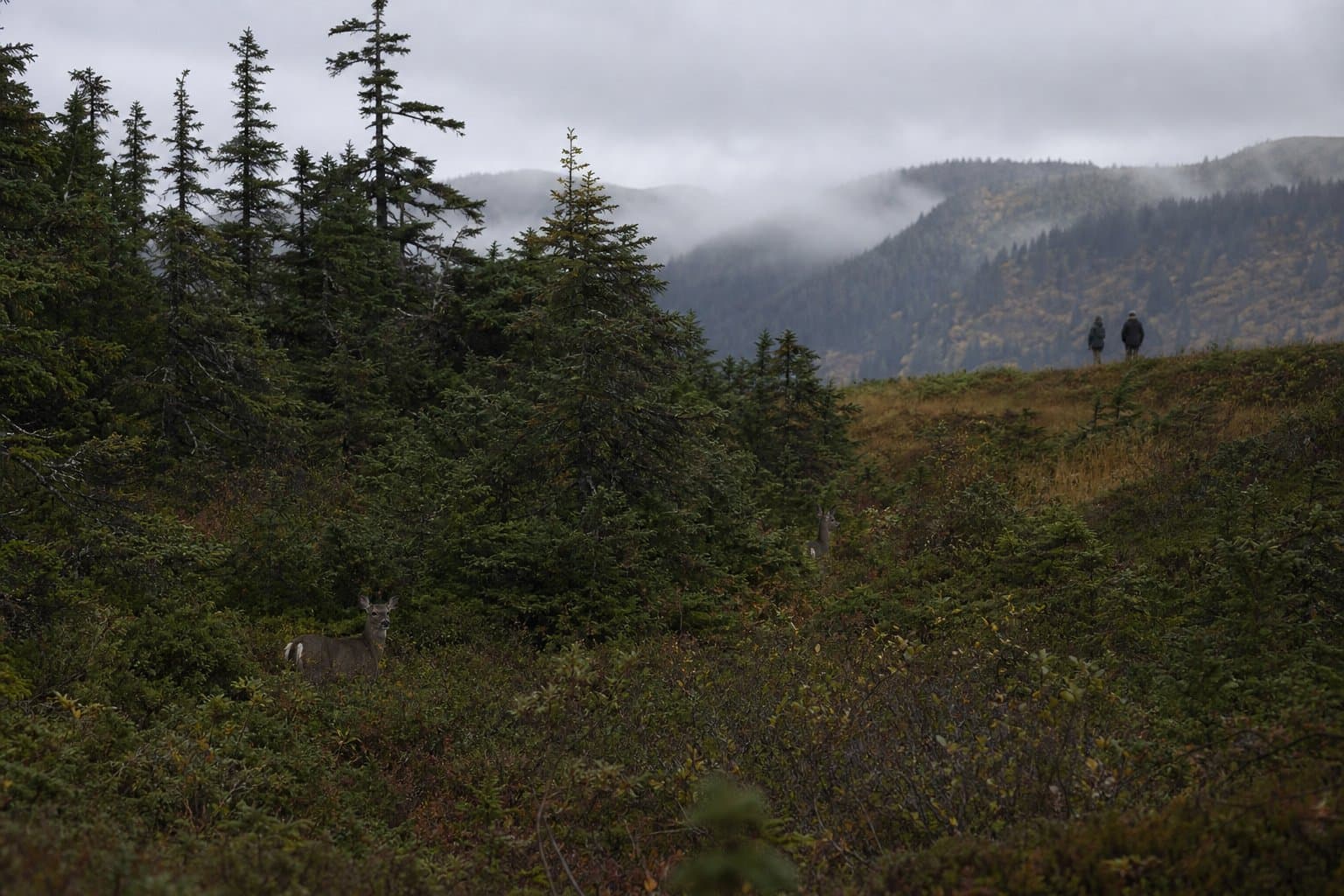
Most of the deer Alaska moved to the Kenai died over winter. The state is trying again.
Thirteen of the 19 Sitka black-tailed deer that Alaska Department of Fish and Game biologists moved to the southern Kenai Peninsula last fall are dead, and the department says it will release another 15 to 20 animals, primarily does, near Port Chatham this fall to supplement the survivors.
The original translocation, in late September and early October 2025, brought 14 does and five bucks from Sitkinak Island in the Kodiak Archipelago to a soft-release pen at the south end of the peninsula. "The goal of this is to provide hunting opportunity and food security for Alaskans," said Doug Vincent-Lang, commissioner of the Alaska Department of Fish and Game. There is no legal deer season on the Kenai Peninsula now, and the department says a huntable population may be decades away.
The winter die-off
Nine of the 13 deaths occurred between November and the end of April, during what the department describes as an especially long and harsh winter. Documented causes include two drownings, one coyote predation, one case of non-infectious pneumonia, and one hypothermia death after a deer fell into a creek with banks too steep to climb out. The most recent came in late July, when hikers found a drowned doe. Eight carcasses were too heavily scavenged for a full necropsy, some within 24 to 48 hours of death, with sign from ravens, eagles, coyotes, wolverines, and in one case a bear. Where leg bones survived, biologists found no marrow evidence of malnutrition; the exact cause of death for those eight animals remains unknown.
As of July 28, two does and three bucks carry active GPS collars. One buck slipped his collar shortly after release, and his status is unknown. Most of the deer stayed within five miles of one another during the last rut, which the department says increases the chances of successful breeding. Fixed-wing flights in June and early July located each of the three does then alive, and no fawns were spotted — though the department says fawns are cryptic and may have been hidden in vegetation.
Alaska's mixed transplant history
The effort has precedent both ways. Kodiak Island's deer population began with a 1935 transplant of five does and four bucks, following an earlier introduction, and legal hunting there started in 1953. But the department's own transplant history records failures alongside the successes — including a 1923 deer transplant to the Homer Spit, elsewhere on the Kenai Peninsula, that didn't take.
There's also a tension the effort carries quietly: hunters are the intended beneficiaries of a self-sustaining Kenai herd, while the deer themselves come from Kodiak Archipelago populations that local residents rely on for subsistence harvest.
The department will again capture and move the deer by net-gunning from helicopters.
Based on a press release from ADF&G.
Drafted with AI. Edited by Cale Green (1 revision). No full editor review is on record. Who is accountable.
Stay informed. Support what matters.
Free, permanent access to local news you can verify. Subscribe to support Bill AlaskaNews and go ad-free.
Related Coverage
Alaska is about to burn 54,000 acres on purpose, to grow more moose
Alaska News · 2mo ago
Five muskoxen are stuck on a 15-acre island, so Alaska is opening a hunt
Alaska News · 1mo ago
The state is opening Kenai lynx season — and already predicting it'll close next year
Alaska News · 1mo ago
ADF&G asks Kenai bull moose hunters for tissue samples within 24 hours of harvest
Alaska News · 1mo ago
Alaska plans to burn the Alphabet Hills to grow more moose forage
Alaska News · 2mo ago
Comments
Sign in to leave a comment.
No comments yet. Be the first to share your thoughts.