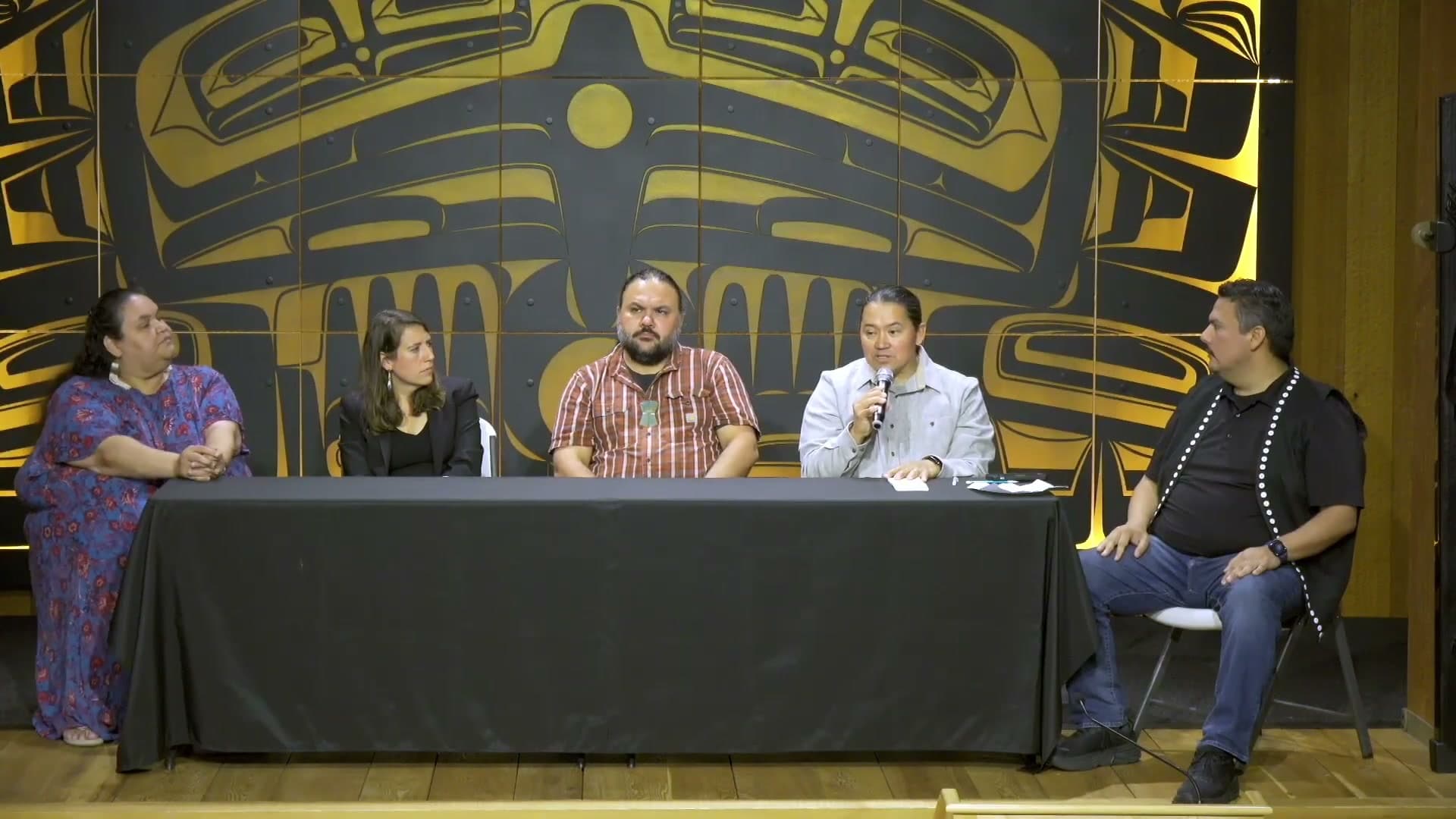
Tlingit opera adds program guide and pre-show storyteller for audiences who do not speak the language
The creative team behind "Ḵutulagaaw: The Tlingit-Russian Battles," the first opera sung entirely in Tlingit, described accessibility choices Thursday at a Sealaska Heritage Institute panel in Juneau. The SHI and Perseverance Theatre production draws on historical facts and oral traditions to tell the 1802-1804 Tlingit-Russian War from a Tlingit perspective. It is part of broader efforts to normalize the language in Alaska schools and public life. Audiences get a printed scene-by-scene summary, a pre-show storyteller and no dress code. "If you want to come in jeans, great. If you want to come in a ball gown, I'm dressing," librettist Vera Starbard said. The storytelling follows tradition, she said: "That was also a tradition for Tlingit performing arts, that you would have oratory or storytelling before you even performed it."
Director Madeline Sayet, a Mohegan Tribe citizen, said each scene is built as a series of images. Chasing literal meaning is less joyous, she said, "than if you hear the sounds, hear the poetry, watch the performers." Composer Ed Littlefield wrote melody first, extending Tlingit pentatonic scales across roughly 90 minutes. "While it doesn't have 100% Tlingit melodies, it is— at its core, it is Tlingit," he said. Starbard traced the project to a conversation with SHI President Rosita Worl eight and a half years ago. Her text went to translator X'unei Lance Twitchell and back before reaching Littlefield.
Jerick Lang, who is Kiksádi, said narrating a clan-owned story "doesn't necessarily sit well with all people," though he backed the project. Twitchell said perhaps six speakers remain who can tell such stories in Tlingit. "How are we going to learn if we're always hiding them, keeping them from being shown and talked about?" he said. Worl said SHI reached the same conclusion publishing Richard and Nora Dauenhauer and Lydia Black's history. All clans and the Haida united against the Russians in 1802, she said, so the story is not the Kiksádi's alone.
Performances run Sept. 11-20 at Thunder Mountain Middle School, moved from Juneau-Douglas High School after an electrical failure disabled stage lighting. Ticket holders are reassigned by Aug. 28. Tickets are available at ptalaska.org, with a free student matinee Sept. 16.
This article is based on a public meeting of Sealaska Heritage Institute — Sealaska Heritage Institute: A Panel Discussion with the Tlingit Opera Creative Team | Sealaska Heritage ().
Made by our human newsroom with AI. How humans and AI work here · Grow with our newsroom Transcript byLucas Brown
Watch key moments from the source meeting. Click to expand.
Stay informed. Support what matters.
Free, permanent access to local news you can verify. Subscribe to support Maggie AlaskaNews and go ad-free.
Related Coverage
The first Tlingit opera in recorded history opens in Juneau next month
Alaska News · 2mo ago
Creators of first Tlingit opera take public questions Thursday in Juneau
Alaska News · 1mo ago
Juneau to host world premiere of first Tlingit opera
Alaska News · 3mo ago
Sealaska Heritage president says Tlingit-Russian War story belongs to all clans, not Kiks.ádi alone
Alaska News · 1mo ago
You can name your own price to see the Tlingit opera in Juneau
Alaska News · 1mo ago
Comments
Sign in to leave a comment.
No comments yet. Be the first to share your thoughts.