AI image
Tidal energy permit application opens in Isanotski Strait near False Pass
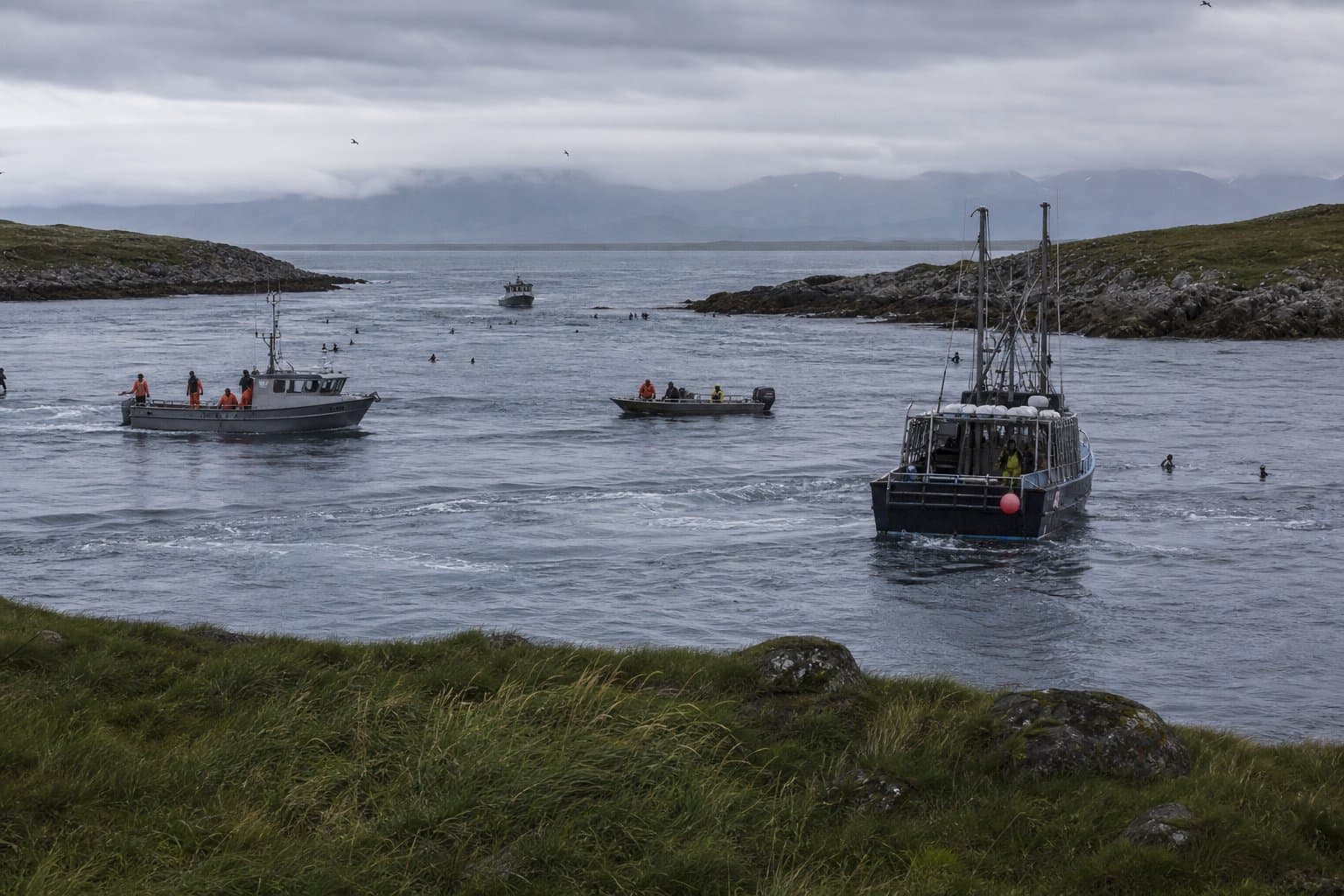
The Alaska Department of Natural Resources has opened a public comment period on a permit application from Ocean Renewable Power Company to place two tidal research devices in the submerged lands of Isanotski Strait — the narrow Alaska Peninsula passage between Bechevin Bay (Bering Sea side) and Ikatan Bay (Pacific Ocean side), near the small community of False Pass on Unimak Island.
The application is small on its face — two research-scale devices, not a commercial array. But it lands inside a much larger Alaska energy picture. Alaska has the largest tidal energy resource potential in the United States, according to federal Department of Energy resource assessments. The state's combination of large tidal ranges, narrow passages with strong currents, and substantial coastline creates more theoretical tidal generation capacity than the rest of the country combined. Cook Inlet has gotten most of the regulatory attention so far, but the Aleutian and Alaska Peninsula passages — Isanotski among them — carry significant resource potential.
The timing connects to a substantive energy moment in Alaska. Cook Inlet gas production has been declining for years; Southcentral utilities are scrambling to import gas while they pursue diversification (Chugach Electric has filed preliminary permits for four hydroelectric projects). Rural Alaska communities face the highest electricity costs in the country, with locally-generated diesel power routinely costing two to three times what Anchorage residents pay. Marine renewables — tidal and ocean-current — are one of the few generation categories that could potentially serve coastal Alaska communities without long fuel supply chains.
Ocean Renewable Power Company is headquartered in Portland, Maine with an Anchorage field office. ORPC previously pursued tidal energy permitting in Cook Inlet and has operated tidal R&D projects elsewhere.
The substantive concerns that public comment will surface include vessel traffic through the strait (Isanotski is one of the few passages that vessels routinely transit through the Aleutian Chain), commercial fisheries (salmon and other species migrate through the strait), marine mammal habitat (Steller sea lions, sea otters, and harbor seals use Aleut waters), and subsistence and cultural use by the Aleut community.
ORPC filed the application with DNR's Southcentral Regional Land Office under AS 38.05.850, the state land use permit statute (LAS 36048).
Source: Department of Natural Resources ().
Drafted with AI. Edited by Cale Green (1 revision). No full editor review is on record. Who is accountable.
Stay informed. Support what matters.
Free, permanent access to local news you can verify. Subscribe to support Maggie AlaskaNews and go ad-free.
Related Coverage
Massachusetts firm seeks study permit for a 66-pod undersea data center in Cook Inlet
Alaska News · 1w ago
A Juneau company turning idle fishing boats into tidal power just cracked a deep-fjord problem
Alaska News · 4w ago
Sitkana's new patent covers how its tidal generator looks, not how it works
Alaska News · 2w ago
A fishing advocate warns Kenai over an undersea Cook Inlet data center
Alaska News · 1d ago
Chignik moves to surrender the federal license on its long-dormant hydro plant
Alaska News · 1mo ago
Comments
Sign in to leave a comment.
No comments yet. Be the first to share your thoughts.