AI image
Two Alaska towns run on water — and want more of it
Two roadless island towns in Southeast Alaska, Wrangell and Petersburg, keep the lights on with falling water — and they're about to squeeze more power out of the lake that feeds them.
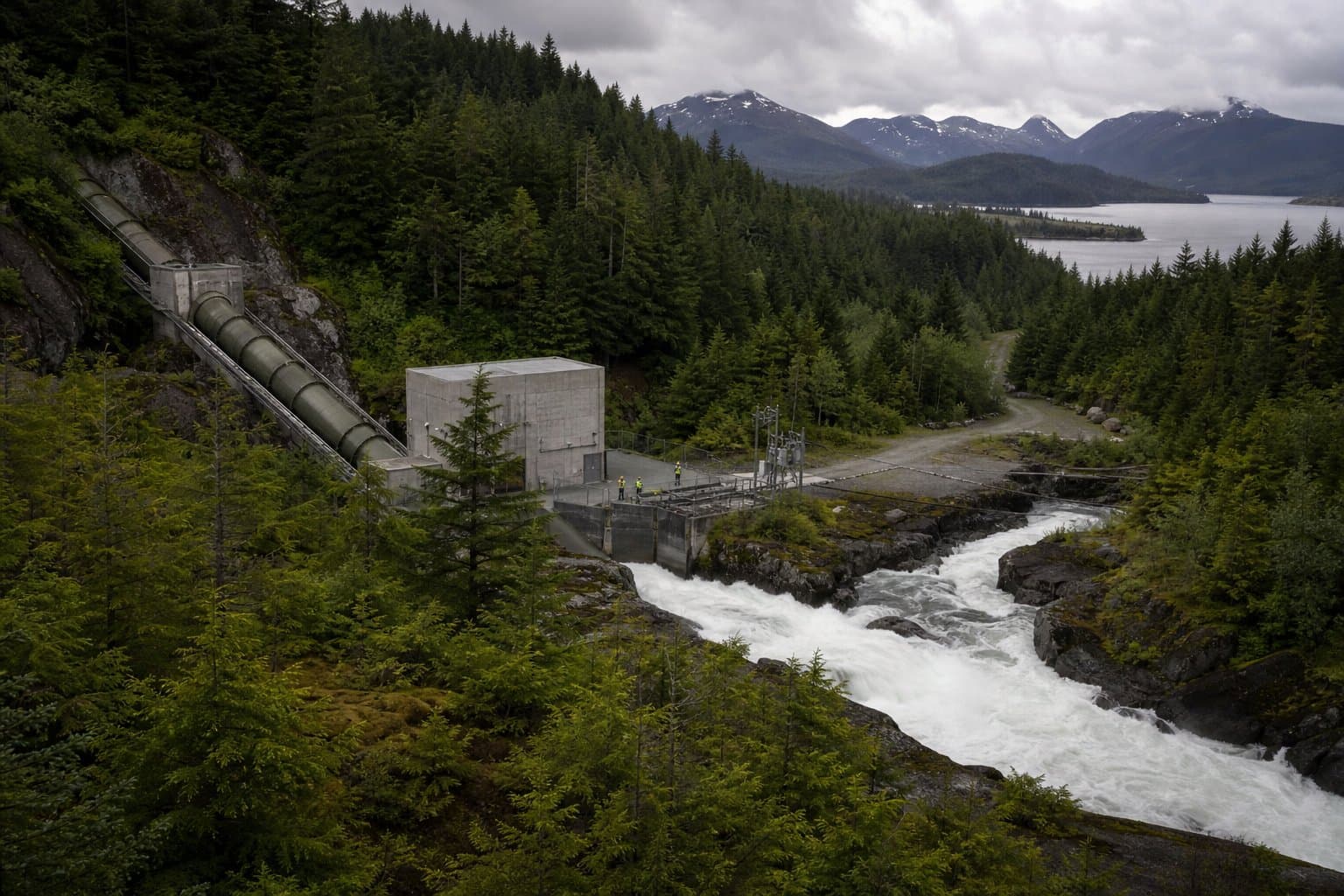
The plan is to add a third turbine to the Tyee Lake Hydroelectric Project, a remote plant tucked into the Tongass wilderness that has supplied both communities since the 1980s. The upgrade would lift the project's capacity from about 22.6 to 33.75 megawatts — roughly 12 more megawatts of clean power drawn from the same mountain lake. Federal regulators just cleared the licensing path for it, and SEAPA, the public agency that runs the system, says it's the top priority in its five-year plan: the turbine's design is finished, construction bids are expected this summer, and the goal is to have it spinning by 2027.
Tyee Lake is a natural reservoir, filled each year by snowmelt and rain. In good water years it carries Wrangell and Petersburg almost entirely. But in dry stretches, especially late spring before the snow melts, the lake can drop too low to keep the generators running — and when that happens, the towns fall back on diesel, trucked and barged in at high cost, with the fumes and spill risk that come with burning fossil fuel.
A third turbine lets the system capture and convert more water that might otherwise be spilled, meaning more hydropower banked and fewer days running on diesel.
Hydropower is already the state's largest source of renewable energy, supplying about a quarter of Alaska's electricity in a normal year, and Southeast.
Source: FERC grants letter to Southeast Alaska Power Agency on Tyee Lake project.
AI-assisted. How we use AI
Stay informed. Support what matters.
Free, permanent access to local news you can verify. Subscribe to support Maggie AlaskaNews and go ad-free.
Related Coverage
SEAPA files federal notice to begin Tyee Lake relicensing ahead of 2031 expiration
Alaska News · 5mo ago
The line that powers Petersburg would leave federal license oversight
Alaska News · 1w ago
Murkowski targets federal conditions on Southeast's hydropower licenses
Alaska News · 2mo ago
An Alaska village will own its solar power — and sell it back to the utility
Alaska News · 2mo ago
In Ouzinkie, one lake is water and power, so the village is building solar
Alaska News · 1mo ago
Comments
Sign in to leave a comment.
No comments yet. Be the first to share your thoughts.