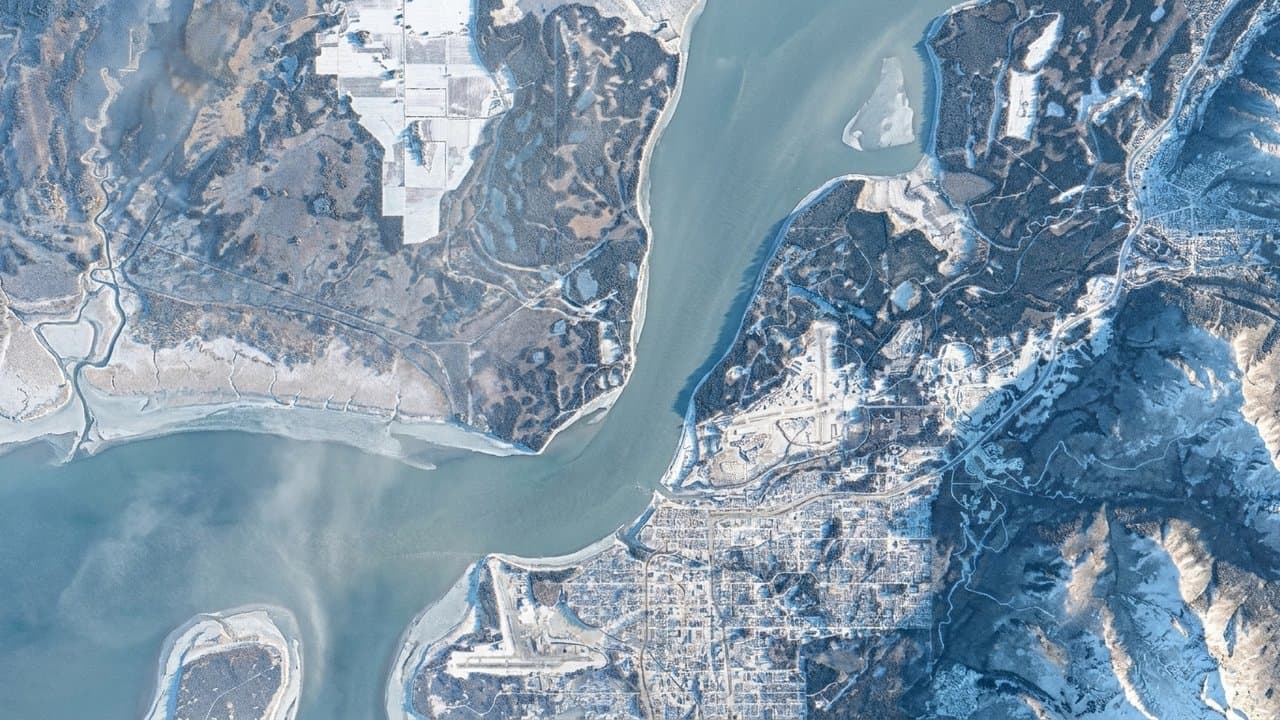
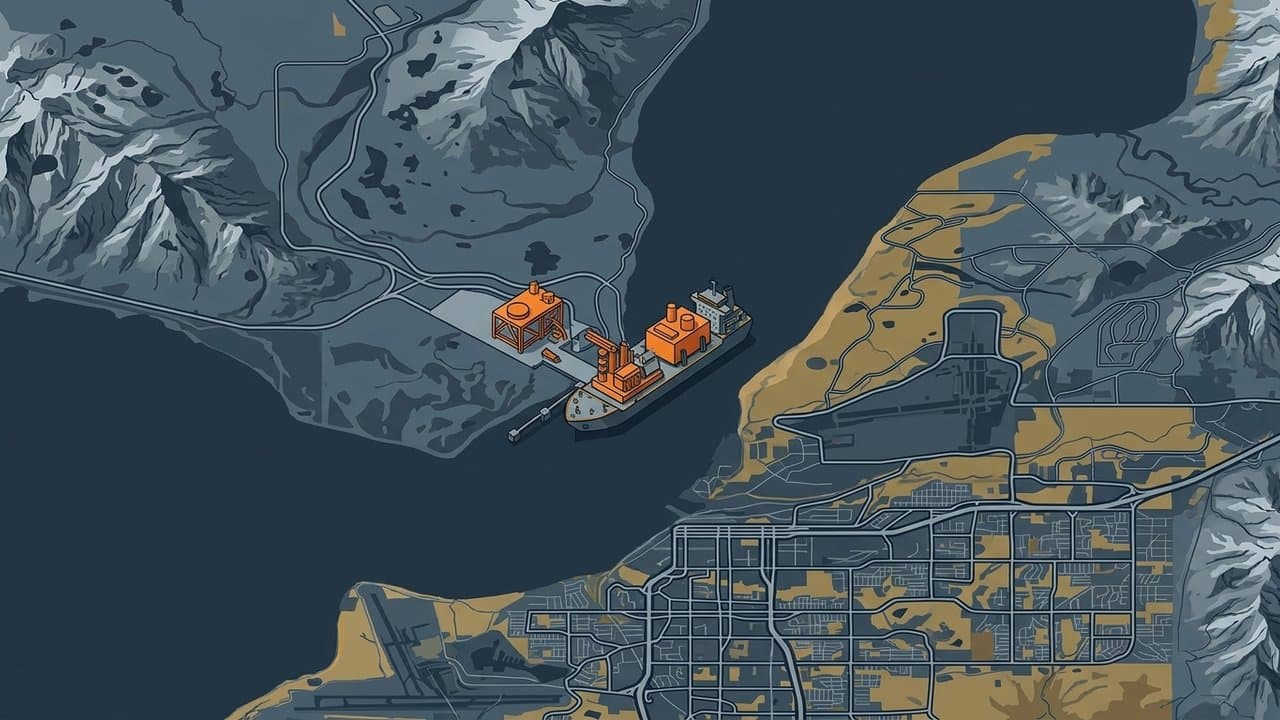
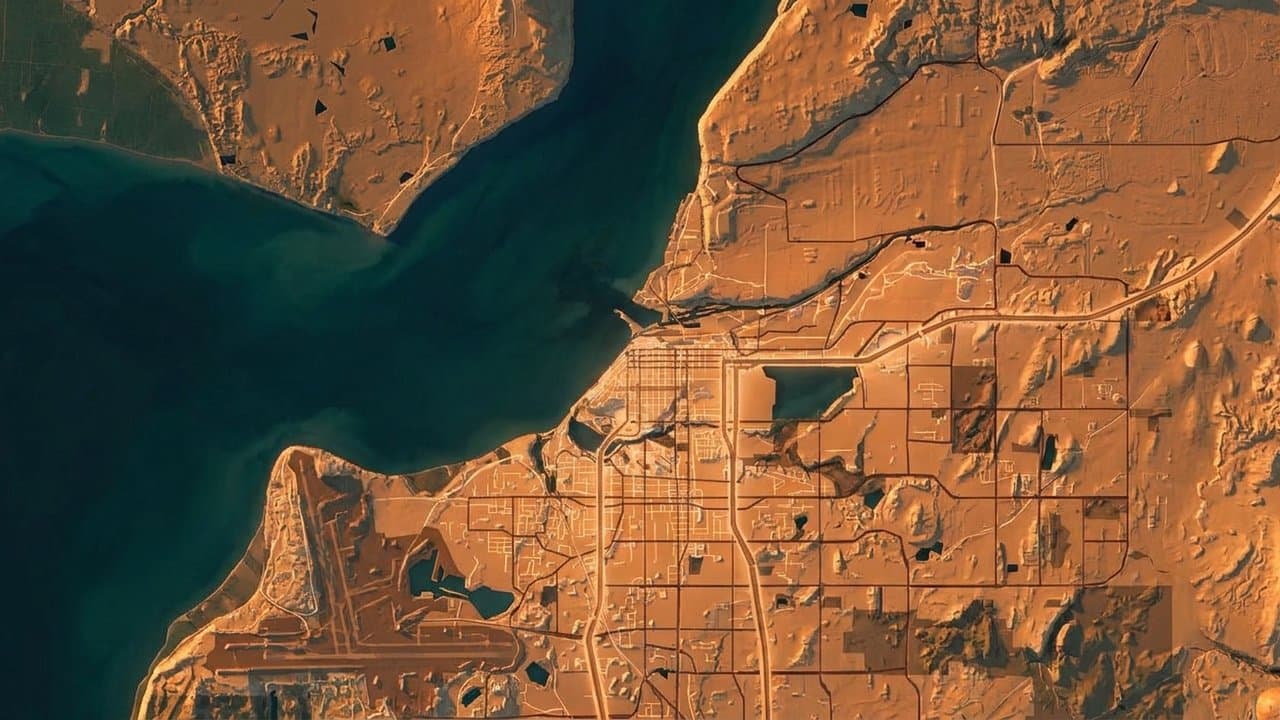
Editorial map (Gemini + Google Maps)
State permits Port MacKenzie antimony plant without dust monitors residents sought
The state has given the antimony plant near Port MacKenzie the air permit it needs to crush and grind ore. The permit includes none of the air monitors, dust modeling or farmland soil testing that residents and a conservation group asked for.
The state calculated that the plant could put as much as 3.87 tons of antimony dust into the air a year, and wrote that the dust "may deposit" on the surrounding Point MacKenzie Agricultural District, which the Susitna River Coalition described as an agricultural area of about 13,000 acres. The nearest home is about 1.5 miles away, according to the company's application. The nearest other occupied building, a contractor's yard office, is about 400 yards away.
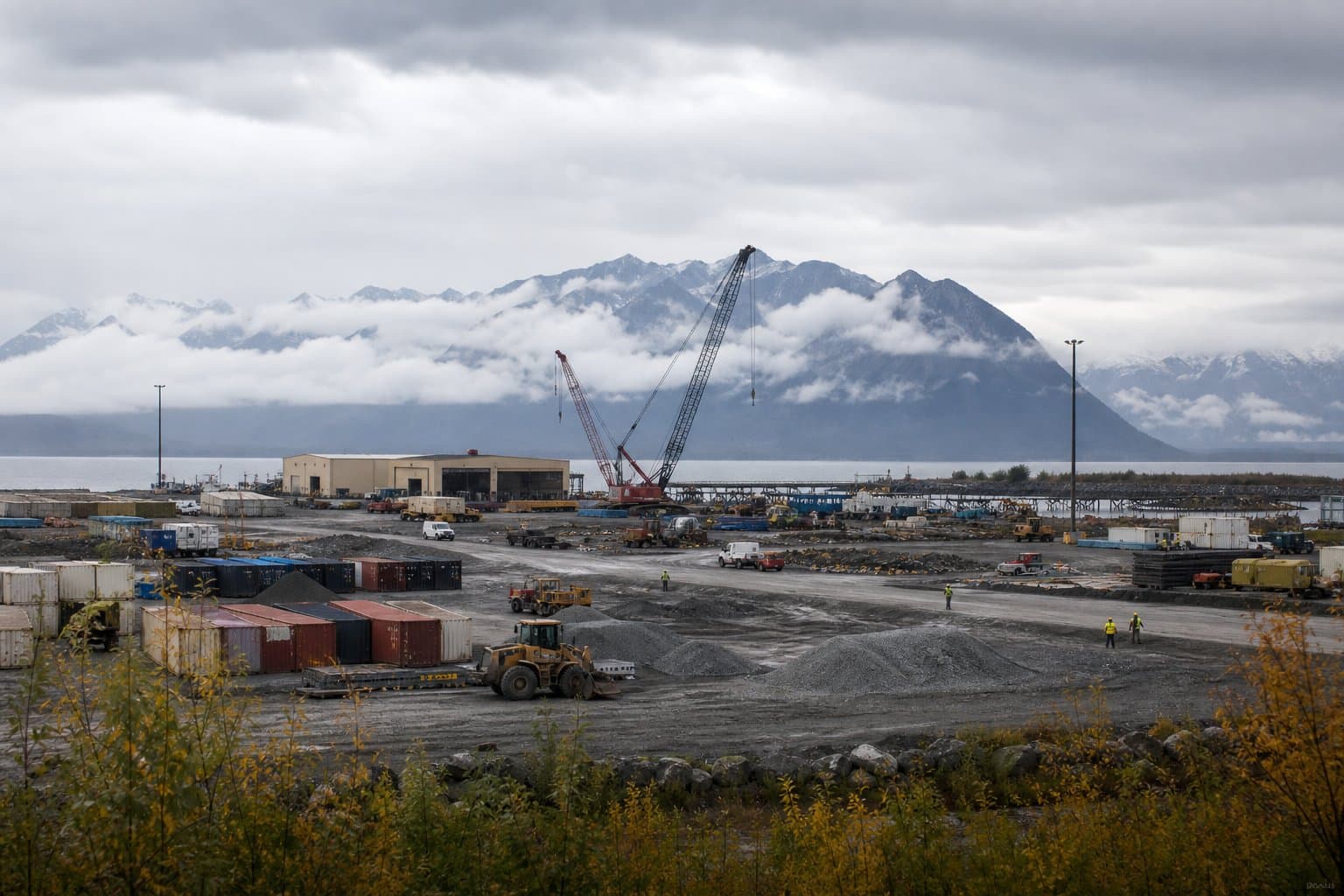
The permit was issued Nov. 6 to Alaska Range Resources, a Palmer-based subsidiary of Nova Minerals, which may operate the plant as of that date, according to the Department of Environmental Conservation's technical report. The permit doesn't say when it will start. Its equipment came ashore in September, and Nova told federal securities regulators that early earthworks had begun by Sept. 30.
Judy Tymick, who wrote that she has lived in Big Lake for 40 years, asked whether the state would require real-time monitors at the property line to track antimony in the air, and whether it had modeled how much dust would settle on wetlands, lakes and salmon streams.
The Susitna River Coalition asked for dust sampling at the fence line, soil sampling near the plant before it opens and after its first year, including on farmland where landowners consent, and limits on how much ore the plant may process and how many hours it may run.
The state turned down each request in a 20-page response to public comments.
Mat-Su Borough Mayor Edna DeVries and Borough Manager Michael Brown wrote in support of the permit. They said the plant would bring career-track jobs and a domestic supply of critical minerals "without an air quality risk to the public."
On monitors at the property line, the state wrote that "there is not a regulatory basis for such monitoring." It said soil sampling on the farmland isn't warranted because the plant falls below the threshold for a major source of hazardous air pollutants, a category antimony dust belongs to. That threshold is 10 tons a year of any one such pollutant.
The 3.87 tons is the state's calculation of the most the plant could emit. It assumes ore that is 10% stibnite, the antimony mineral. The state calls that assumption conservative; the actual ore grade is confidential. Running every hour of the year, the plant would need ore of 25.8% stibnite to reach 10 tons, and the first prospects' yields are below that, the state says.
The state estimated the plant could emit up to 53.93 tons a year of PM10, the particles small enough to be inhaled. That assumes it runs at full capacity around the clock all year, with water sprays cutting emissions in half, which is why, the state said, caps on ore or hours weren't needed.
The state also didn't model where the plant's dust would travel or settle, and didn't require the company to. It counts all of the plant's dust as fugitive dust, which escapes into the open air rather than through a stack. Under state regulation, fugitive dust from this kind of plant doesn't count toward the 15-ton-a-year PM10 threshold that would otherwise require modeling.
Among the requirements the state pointed to is a distance rule: crushers and diesel engines may not run within 400 feet of the nearest occupied building that isn't part of the work site. The state took that distance from generic modeling done in 2003 for rock crushers in general, not for this plant, and the 400-foot result assumed wetted material. The same modeling ran a what-if worst case with dust left uncontrolled. In that case, the state's daily PM10 standard could be exceeded as far as 2,000 feet from the edge of the operation. The state's response says modeled impacts fell with distance.
Becky Long asked the state to confirm a statement that her comment attributed to Nova Chief Executive Christopher Gerteisen: that the site is "well outside the distance thresholds for potential air quality impacts to any residential area." The state said it didn't review that statement. Without a demonstration of the plant's effect on the surrounding air, it wrote, it "cannot specify with relative certainty that potential impacts from the permitted source do not impact residential areas."
In the same answer, the state said it is "confident that the proposed operations under this and other requirements will not cause or contribute to violations" of the state's air standards, which were set to protect health and welfare.
Tim Kelley wrote that Port MacKenzie gets high winds out of the north that could carry dust to Anchorage. The state answered that the emissions would spread out over time and distance, so concentrations would drop by the time they reached population centers.
The permit requires the ball mill that grinds ore to run wet, limits visible dust and requires the company to follow a dust control plan that calls for water spray during crushing. The plan says operations "may be slowed or temporarily stopped" in high winds. The state declined to set a wind speed that would force a shutdown, saying the company's duty to take reasonable precautions already covers that.
The permit records also show a change in how the plant will crush ore. Drawings in the application showed the first crushing step inside a building. In Oct. 13 comments, the company told the state, "The crushing activities will not be enclosed within a building." The state counted those emissions as going straight into the open air. The conveyors will be covered on top but not enclosed.
In the same comments, the company said the facility "does not include an antimony refining process" and that antimony concentrate "will be exported to an offsite antimony refinery for further processing."
Other records describe refining at the site. The Department of Natural Resources' September notice said a "small-scale pilot plant" at Port MacKenzie would "further process, refine, and package antimony trisulfide," and Nova's latest quarterly report refers to "the downstream processing and refining facility at Port MacKenzie." The air permit records don't say where the offsite refinery would be or whether it would be a separate operation at the same site.
The air division said it flagged other permits the project may need: groundwater discharge permits for its flotation and leaching steps, and Nuclear Regulatory Commission permits for radioactive sources used to sort ore.
The company had sought a fast-track permit, which skips public comment unless someone asks for it. Someone did, and the state took comment through Oct. 14. Camden Yehle wrote that the Meadow Lakes Community Council was meeting that day and was interested in commenting. The state declined to extend the deadline.
Antimony is used in ammunition and military optics, and the project holds a $43.4 million Defense Production Act award from the U.S. Department of War. In its latest quarterly report, Nova said the Department of Natural Resources' Oct. 27 approvals of its plans to mine antimony at its Estelle project and refine it at Port MacKenzie completed "the permitting process." The report doesn't mention an air permit.
People who took part in the comment period may ask the air division's director for an informal review within 20 days of the permit, or ask the environmental commissioner for a formal hearing within 30 days, under the state's review rules.
What did you make of this story? (no account needed)
Made by our human newsroom with AI. Reviewed by Cale Green. How humans and AI work here · Grow with our newsroom ·
Keep Alaska News free for everyone.
No paywall, ever. Members pay so everyone can read the meetings and records Alaska News covers.
Get Alaska News in your inbox
Create your free account and get the day’s top stories around 6 each morning, in a few minutes’ read.
Top stories, around 6 each morning.
Stories on what you follow, on Sundays.
Source: Alaska Department of Environmental Conservation, State issues air permit for Port MacKenzie antimony plant without the dust monitoring residents requested.



Comments
Sign in to leave a comment.
No comments yet. Be the first to share your thoughts.