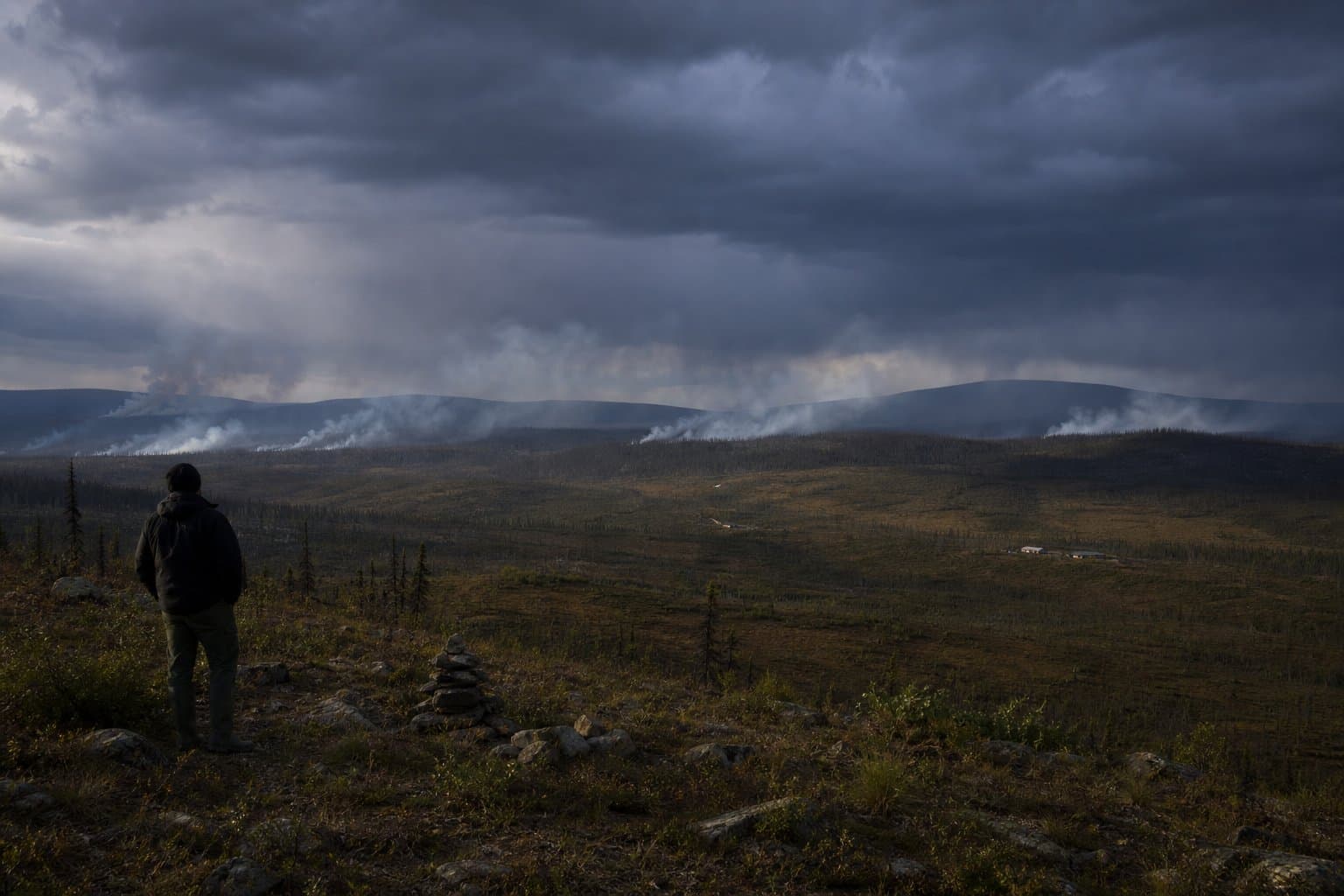
NWS issues Red Flag Warnings for Koyukuk, Kobuk, and Yukon valleys as 11 new wildfires confirmed
Three concurrent Red Flag Warnings are in effect across a broad stretch of Interior and Western Alaska. The National Weather Service in Fairbanks confirmed that more than 7,000 lightning strikes have ignited 11 new wildfires in the past two days.
The warnings cover the Upper Koyukuk Valley, Middle Yukon Valley, Upper Kobuk Valleys, and Lower Koyukuk Valley. The Upper Koyukuk and Middle Yukon warnings run from noon through midnight AKDT tonight. The Upper Kobuk Valleys and Lower Koyukuk Valley warning runs from noon today through midnight AKDT on July 9. Communities along the Koyukuk and Kobuk rivers face scattered thunderstorms, dry fuels, and active lightning.
NWS Fairbanks described the conditions as dangerous. "Any lightning can cause new ignitions since the fuels are dry and burnable," the agency said in each of the three warnings. Humidity in the Upper Koyukuk Valley is expected to drop as low as 25 percent. Temperatures are forecast to reach the low 80s. Sustained winds are forecast at 5 to 10 mph across the warned areas.
The warnings span hundreds of miles of remote country where dry fuels, heat, and scattered thunderstorms are capable of starting new fires. The Upper Kobuk and Lower Koyukuk warning also notes that sea breezes Wednesday afternoon are expected to limit thunderstorm potential along the coast.
The 11 new wildfires were announced alongside the 7,000-plus lightning strike count in an 8:30 p.m. update Tuesday. Near Ruby, the Cecil Fire reached full containment at 724 acres and the Big Fire stood at 70 percent containment across 258 acres as of Monday. Both were lightning-caused and detected June 26, according to Alaska Wildland Fire Information.
What Comes Next
Fire Weather Watches remain in effect for the Lower Kobuk Valley and Northern Seward Peninsula through Wednesday evening. NWS also noted that Wednesday's thunderstorm activity could push as far north as the North Slope. On the Northern Seward Peninsula, thunderstorm coverage is expected to be isolated rather than scattered.
AI-assisted, reviewed by editors. Spot an error?
Comments
Sign in to leave a comment.
No comments yet. Be the first to share your thoughts.