AI image
EPA has carried a Red Dog port dust violation as unaddressed since 2019, with no formal action and no penalty
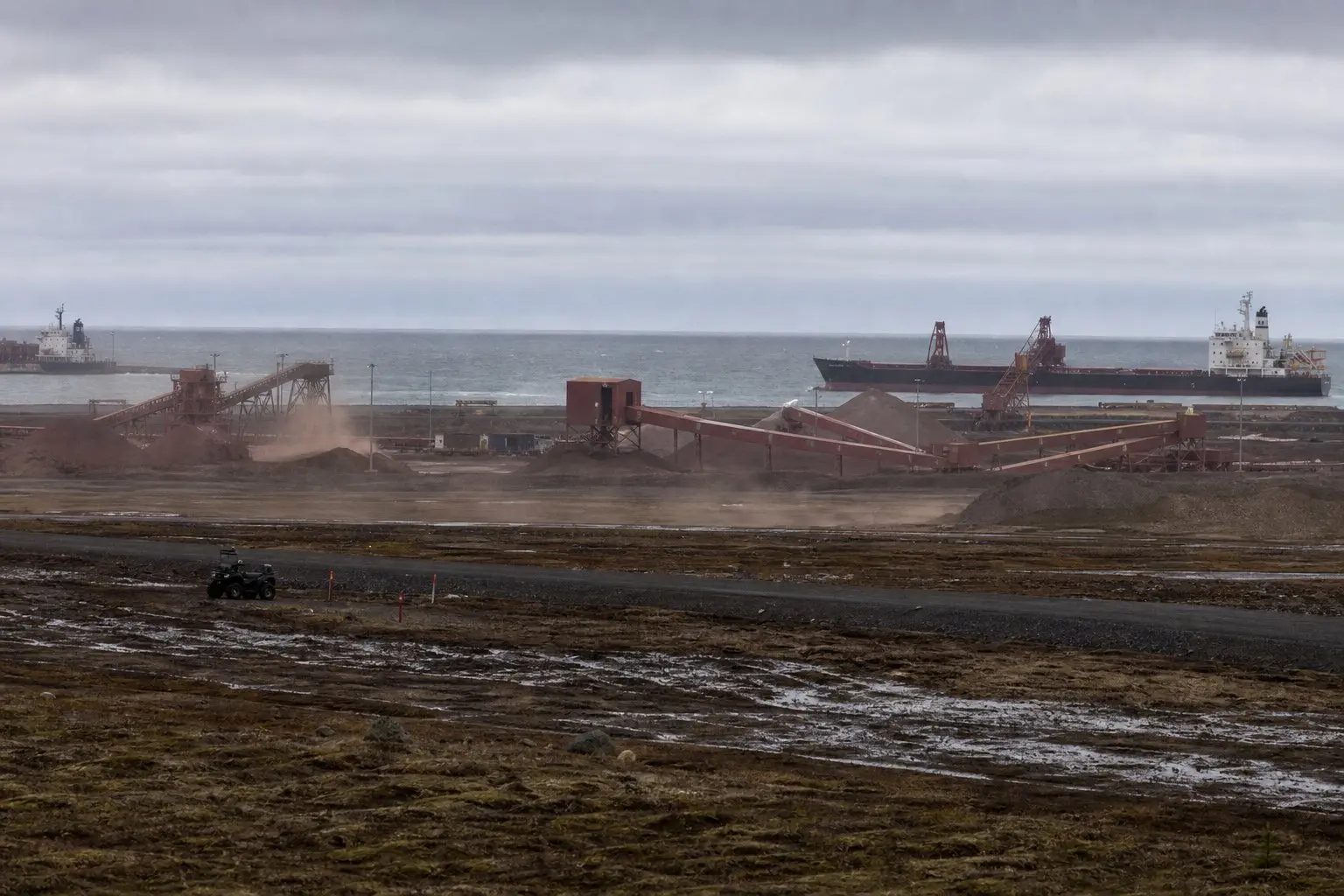
The federal record for the port that ships Red Dog's ore has carried a Clean Air Act violation for total particulate matter, the category covering airborne dust, as unresolved by the State of Alaska since November 20, 2019. Across the twelve quarters the EPA displays, October 2023 through September 2026, the violation stands in every one, flagged High Priority Violation, the agency's tier for the most serious Clean Air Act cases, and Unaddressed-State, its category for a violation the responsible state agency has not resolved through formal action. The record shows no formal enforcement action and total penalties of zero dollars.
The port ships zinc and lead concentrate from the Red Dog mine, about 55 miles northwest of Kotzebue in the Northwest Arctic Borough. The mine sits on land owned by NANA Regional Corporation, and Teck trucks concentrate year-round down a haul road through Cape Krusenstern National Monument to the shallow-water port. DEC calls that whole corridor, road, port and barges, the DeLong Mountain Regional Transportation System, or DMTS. The EPA's record names the Native Village of Kivalina as the nearest tribe, 17 miles from the facility.
The violation falls under the Clean Air Act Title V permit program, which requires a major source to hold an operating permit and certify its own compliance each year. The facility is a major emissions source, still operating.
The record counts 33 evaluations of the source, all of them by the state, in the five years it displays. Three are full compliance evaluations, the comprehensive review EPA counts as an inspection. The other 30 are partial: 23 recorded as off-site, five as reviews of Teck's annual Title V compliance certification, and two as stack tests. Two of the 33 are recorded as on-site. Against those 33 evaluations stand only two enforcement notices, both warning letters issued by the state on July 6, 2022, the only Clean Air Act enforcement notices in the five years the EPA displays.
The last full compliance evaluation was on site on March 27, 2026. Two stack tests were run on April 29, 2026, with findings still pending, and an off-site evaluation followed on May 20. The state's review of Teck's most recent annual compliance certification, logged on March 20, 2026, is recorded as undetermined.
Separately, the Alaska Department of Environmental Conservation issued the DMTS Port Facility a new Air Quality Operating Permit, AQ0289TVP04, on August 23, 2023, expiring August 23, 2028. DEC's Red Dog Mine site page also documents ongoing work to determine the extent of contamination from dust along the DMTS corridor, covering the road, port facilities and barges. That work began after a 2001 National Park Service moss study found elevated metals in tundra along the road and near the port. Sampling since has found lead, zinc and cadmium in road surface soil, creek water and vegetation, and in marine and lagoon water and sediment and tundra soil at the port. Monitoring has run since 2004 and now covers annual dustfall jar and road surface sampling, marine sediment every two years, vegetation and soil every three, caribou tissue every six, and blood lead testing in workers.
A human health and ecological risk assessment DEC approved in December 2007 identified no current human health risks but did identify potential risks to ecological receptors. A 2001 study by the state's Environmental Public Health Program found it was safe to continue eating subsistence foods. Teck, in materials tied to its 2023 air permit, says its monitoring found no detectable trends in fugitive dust emissions in the port-area record it reviewed, a claim from Teck's own materials.
This account is drawn largely from EPA compliance records extracted September 4, 2026, which contain no statement from DEC, Teck Alaska, the Native Village of Kivalina, the Northwest Arctic Borough, or NANA Regional Corporation. The classification is produced by EPA rules from state-supplied data, not the state's own account of its enforcement decisions. The state's permit file and inspection reports, held by DEC, would show what the 33 evaluations found and what the warning letters demanded, and are obtainable through a public records request.
Source: The Red Dog port has been in high priority violation of the Clean Air Act since November 2019, and the federal record still marks it unaddressed by the state ().
AI-assisted. No editor review is on record for this article. Who is accountable.
Stay informed. Support what matters.
Free, permanent access to local news you can verify. Subscribe to support Walter AlaskaNews and go ad-free.
Related Coverage
The state gave Red Dog another decade of eased water limits as the mine looks to run longer
Alaska News · 5mo ago
The fight to keep Red Dog alive past 2031
Alaska News · 1mo ago
Kotzebue has been over a federal water limit since 2019, one of 92 Alaska systems the state has not formally enforced against since August 2020
Alaska News · 8h ago
Red Dog is one approval away from a new corporate owner
Alaska News · 6d ago
EPA proposes a $5,859 penalty over Dutch Harbor discharges
Alaska News · 1mo ago
Comments
Sign in to leave a comment.
No comments yet. Be the first to share your thoughts.