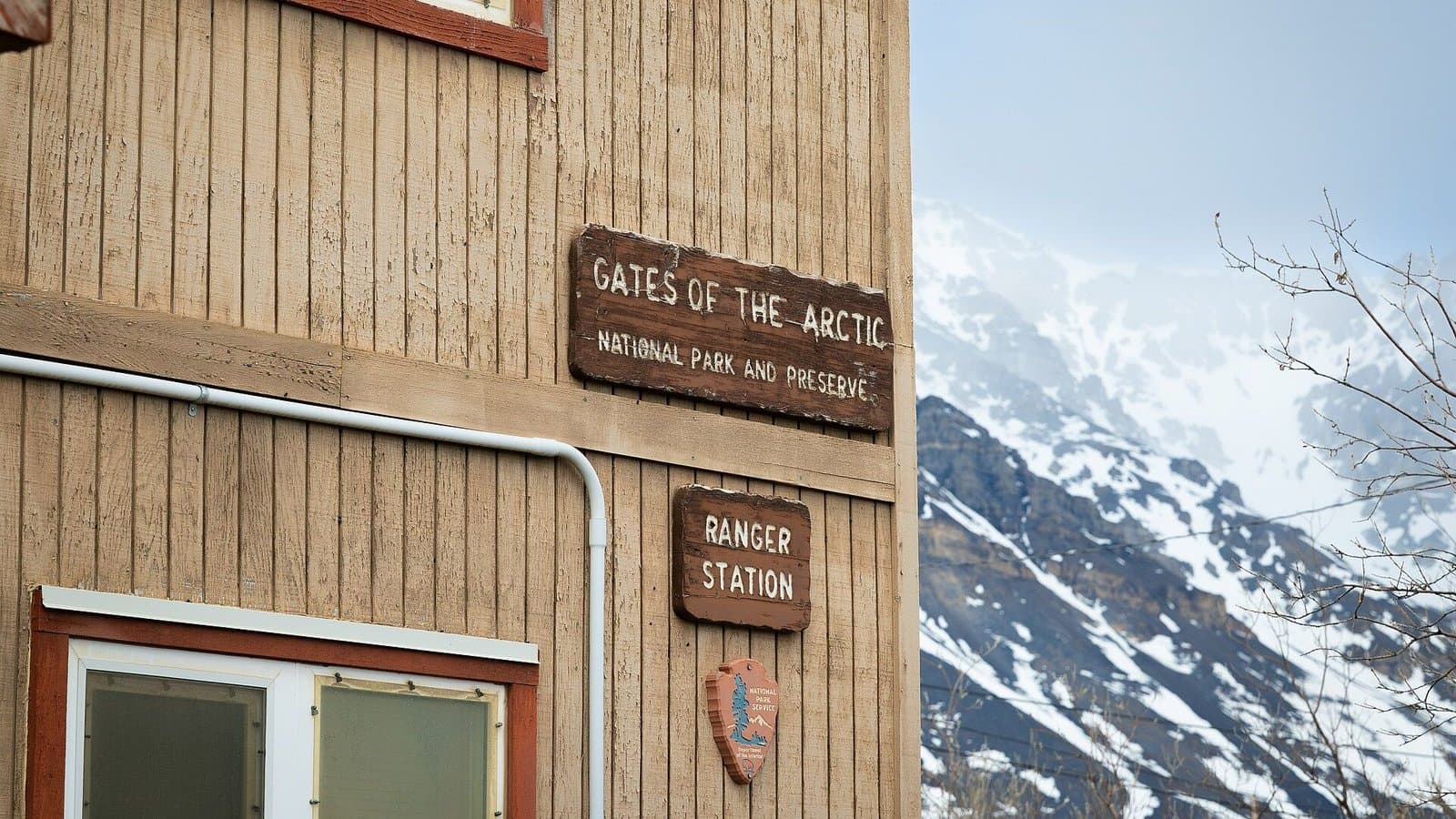
Photo: U.S. Department of the Interior via Wikimedia Commons · Photo source · Public domain
Park Service proposes ATV access across Gates of the Arctic for Anaktuvuk Pass residents
The National Park Service on Friday announced proposed rules that would let residents of Anaktuvuk Pass, a Nunamiut village inside Gates of the Arctic National Park and Preserve, drive off-road vehicles across the park to hunt caribou and gather food.
The proposal, scheduled for publication Monday, would write into federal regulation a May decision by Interior Secretary Doug Burgum that overturned a policy dating to 1986. That year, a Park Service official cited two dictionaries to conclude that all-terrain vehicles had "not been shown" to be a traditional means of reaching subsistence resources in the park, and so were not permitted under federal law.
The rules would apply only to local rural residents of Anaktuvuk Pass and only for lawful subsistence, not recreation. They would create a presumption in favor of the vehicles' use and limit when park managers could restrict it. The rule permits the vehicles in the park without excluding the more than 7.1 million acres that are federally designated wilderness, and neither it nor the Interior Department's announcement addresses wilderness directly.
Burgum said the proposal "recognizes the importance of traditional transportation methods while maintaining protections" for the park's natural resources.
A village surrounded by a park
Nunamiut families settled Anaktuvuk Pass between 1948 and the early 1960s, after elder Simon Paneak told bush pilot Sig Wien that his people wanted a permanent place where their children could go to school, according to a 1995 federal historic buildings survey. A post office opened in 1951, and when the state finished a school in 1961, most families settled for good. Living in one place meant hunters could no longer follow the caribou on their migrations, so they traveled out from town, the rule says. Residents began using off-road vehicles for that in the 1960s.
Today the village has about 400 residents, and public-sector jobs make up about three-quarters of local work, according to the North Slope Borough. The village is not connected to Alaska's road system.
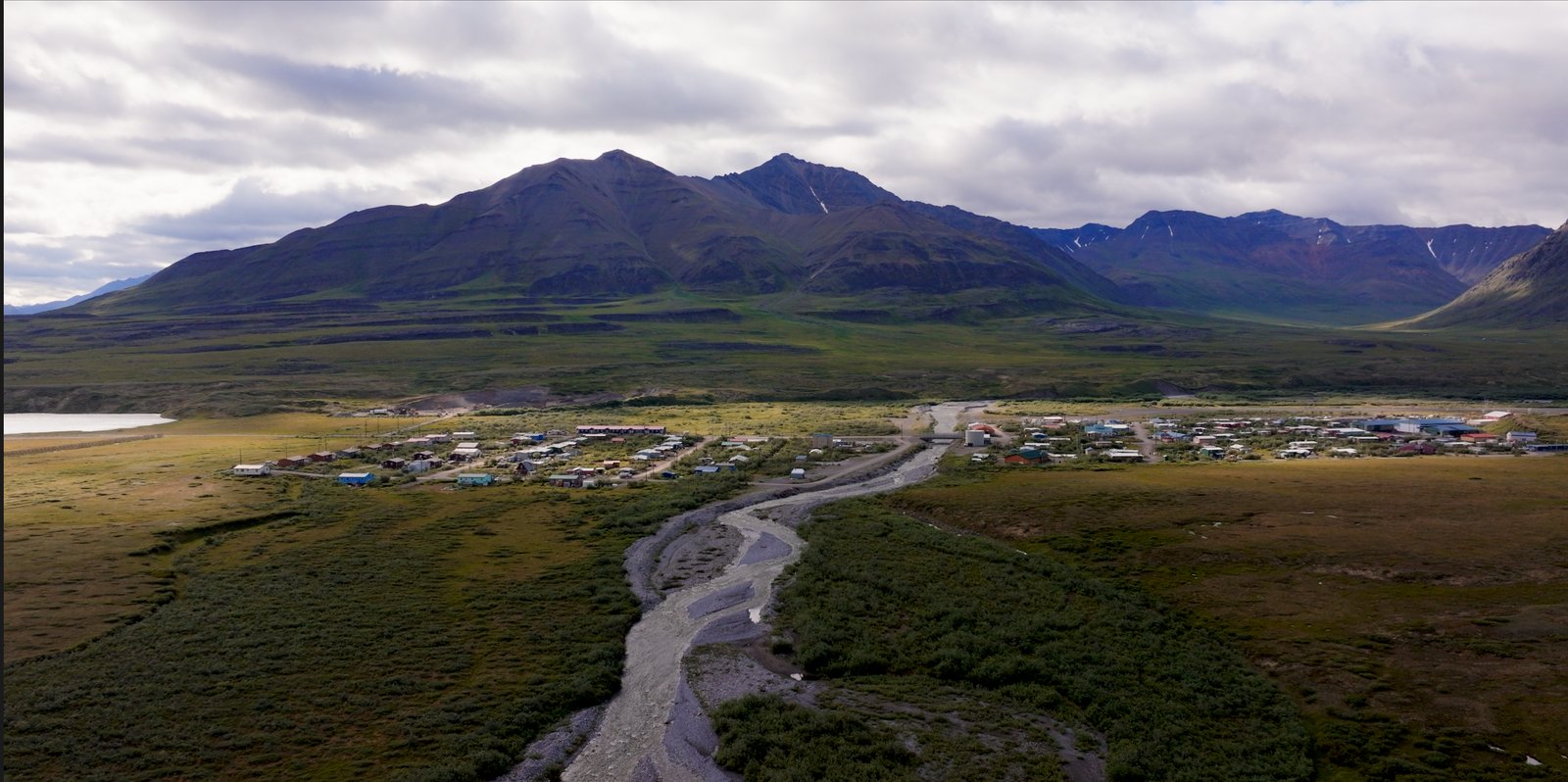
The 1971 Alaska Native Claims Settlement Act led to the formation of the village corporation, Nunamiut Corp., and Arctic Slope Regional Corp., which own much of the land around town. The same law set aside up to 80 million acres of federal land in Alaska for possible new parks, refuges and forests, a process that led to the 1980 conservation act and a national park around the village. That law guarantees rural residents reasonable access to subsistence resources and says the Interior secretary "shall permit" transportation "traditionally employed" for subsistence, subject to reasonable regulation. It specifically names snowmobiles and motorboats. Burgum's memo read the phrase to cover vehicles already in use when the park was created.
Vehicle corridors the Iñupiat reserved in a 1983 land exchange "provided inadequate access to subsistence resources while causing excessive environmental impact from concentrated use," Congress found in 1996. That year it ratified a deal among the Park Service, the two corporations and the City of Anaktuvuk Pass that allowed 6- and 8-wheeled ATVs on non-wilderness park land around the village. Residents have told the agency that area is no longer enough, because caribou now migrate farther west and south and often gather where the vehicles have not been allowed, the rule says.
A 1988 Army Corps of Engineers study, which the rule cites as evidence of longtime vehicle use, found that deep ruts formed quickly on moist tundra once the cottongrass tussocks were destroyed, and drivers then cut new tracks alongside, widening the trails. Damage generally lessened with distance from the village.
How limits would work
The park superintendent could restrict or close vehicle use only on "clear evidence" that it is causing or is likely to cause a direct, significant harm to public safety, park resources, historic or scientific values, subsistence or a threatened or endangered species. The harm must be happening or reasonably foreseeable and cannot rest on impacts that are "speculative," tied to "generalized climatic patterns" or "derived from any type of modeling."
A restriction would have to be the least restrictive option, come with 30 days' notice and a public hearing, and leave reasonable access in place. Emergency limits could skip those steps but would expire after 45 days. Drivers would have to avoid unnecessary damage to park resources and avoid herding or harassing wildlife.
The agency is not doing a detailed environmental review. It says the rule fits a category of regulations that do not increase use enough to damage an area or introduce incompatible uses. It also asked the public for information on how many off-road vehicles are used in the park each year and how that number might change under the rule.
The proposal tracks much of a bill Rep. Nick Begich introduced in September, Alaska News reported Sept. 15. The bill would write the access into federal law and exempt it from the provision allowing reasonable regulation.
Comments on the proposal are due Dec. 18.
Source: NPS proposes broad ATV access for Anaktuvuk Pass subsistence users.
Made by our human newsroom with AI. Reviewed by Cale Green. How humans and AI work here · Grow with our newsroom
From prior coverage
Stay informed. Support what matters.
Free, permanent access to local news you can verify. Subscribe to support Alaska News and go ad-free.
Related Coverage
A bill would guarantee vehicle access for the village inside Gates of the Arctic
Alaska News · 1mo ago
State proposes five snowmachine trails near Wiseman after Dalton corridor transfer
Alaska News · 6d ago
Park Service final rule allows bear baiting again in Alaska national preserves
Alaska News · 21h ago
BLM rule would let NPR-A operators waive subsistence conditions without public notice
Alaska News · 1mo ago
Denali proposes a daily vehicle cap on its previously restricted road
Alaska News · 3mo ago
Comments
Sign in to leave a comment.
No comments yet. Be the first to share your thoughts.