NSF awards UAF $746,168 to sequence snow scorpionfly genomes
The National Science Foundation awarded $746,168 to the University of Alaska Fairbanks on July 9, 2026, for a three-year project that will produce the first whole-genome sequences for most snow scorpionfly species, a cold-adapted, flightless insect group found across the northern hemisphere but rarely observed and poorly understood.
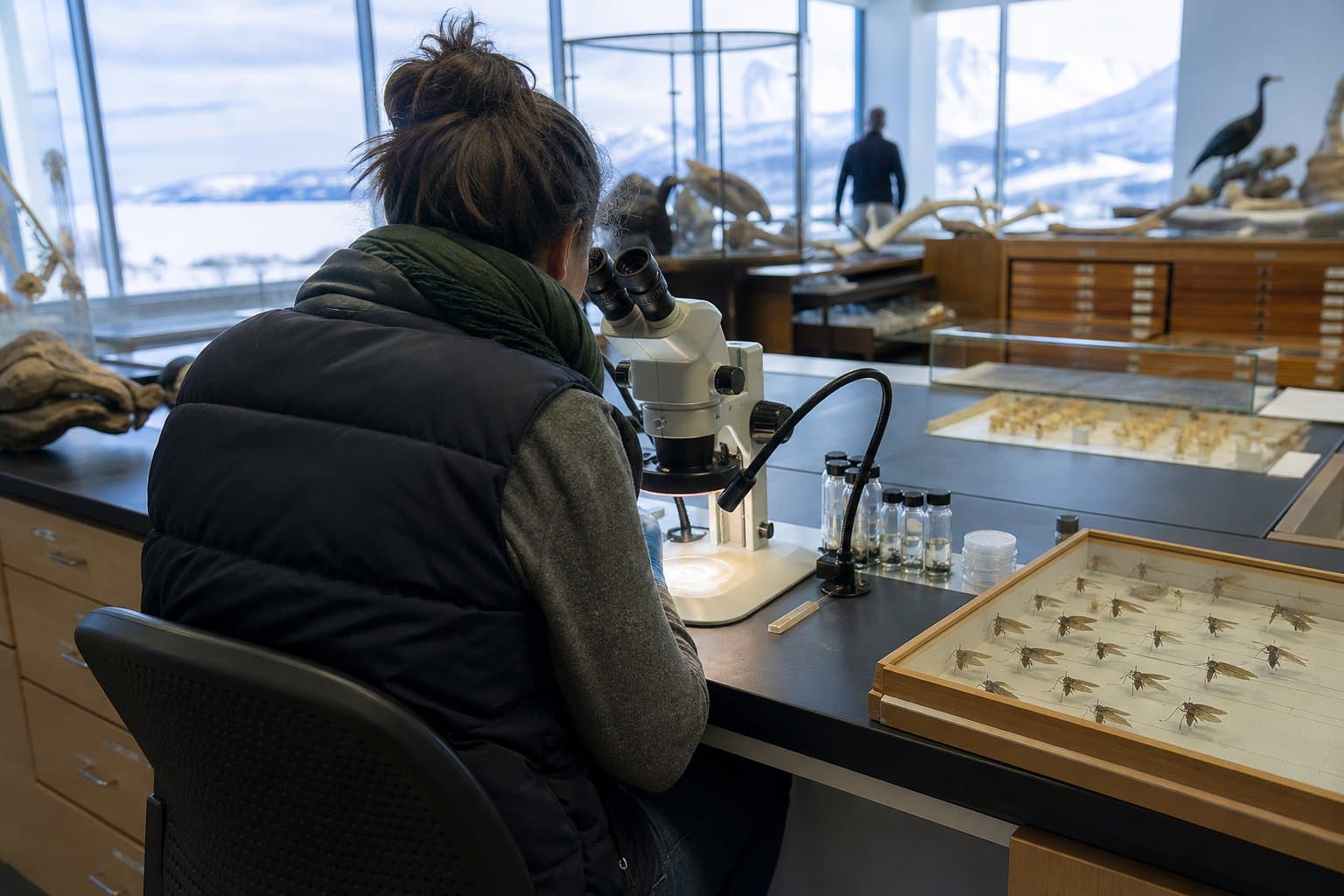
Snow scorpionflies belong to the family Boreidae within the order Mecoptera; they are neither scorpions nor flies, and most species are so seldom encountered that basic questions about their distribution, taxonomy, and evolutionary history remain unanswered. The project will combine morphological, geographic, and genomic data to build a time-calibrated phylogeny, a family tree anchored to geological time, for the group. That phylogeny will be used to clarify species boundaries, detect overlooked cryptic diversity, and inform an updated taxonomy, helping document and name previously undiscovered species. Researchers will conduct fieldwork and sample museum specimens to generate the genomic and morphological datasets; the project will also add a dedicated snow scorpionfly collection and an adult identification key to the University of Alaska Museum of the North's holdings.
Derek S. Sikes, curator of insects and professor of entomology at the museum, will lead the research. The grant carries a secondary scientific stake that reaches beyond the Boreidae: one of the few remaining unresolved order-level evolutionary questions in insects is the relationship between Mecoptera and Siphonaptera, the order that contains fleas. Because boreids are a candidate sister family to the Siphonaptera, the whole-genome data generated here will bear directly on that question, according to the NSF award abstract.
The grant will fund one postdoctoral researcher and two undergraduate students at UAF in phylogenomic and bioinformatic methods. Results will be shared freely online and through museum exhibits, outreach, and summer bug camps taught by the researchers, with an emphasis on K-12 students. The project runs from January 2027 through December 2029. The new award is more than three times the size of a $237,453 NSF grant Sikes received in 2009 to bring the museum's insect collection up to modern standards, and it shifts the work from curation to genomics.
AI-assisted, reviewed by editors. Spot an error?
Comments
Sign in to leave a comment.
No comments yet. Be the first to share your thoughts.