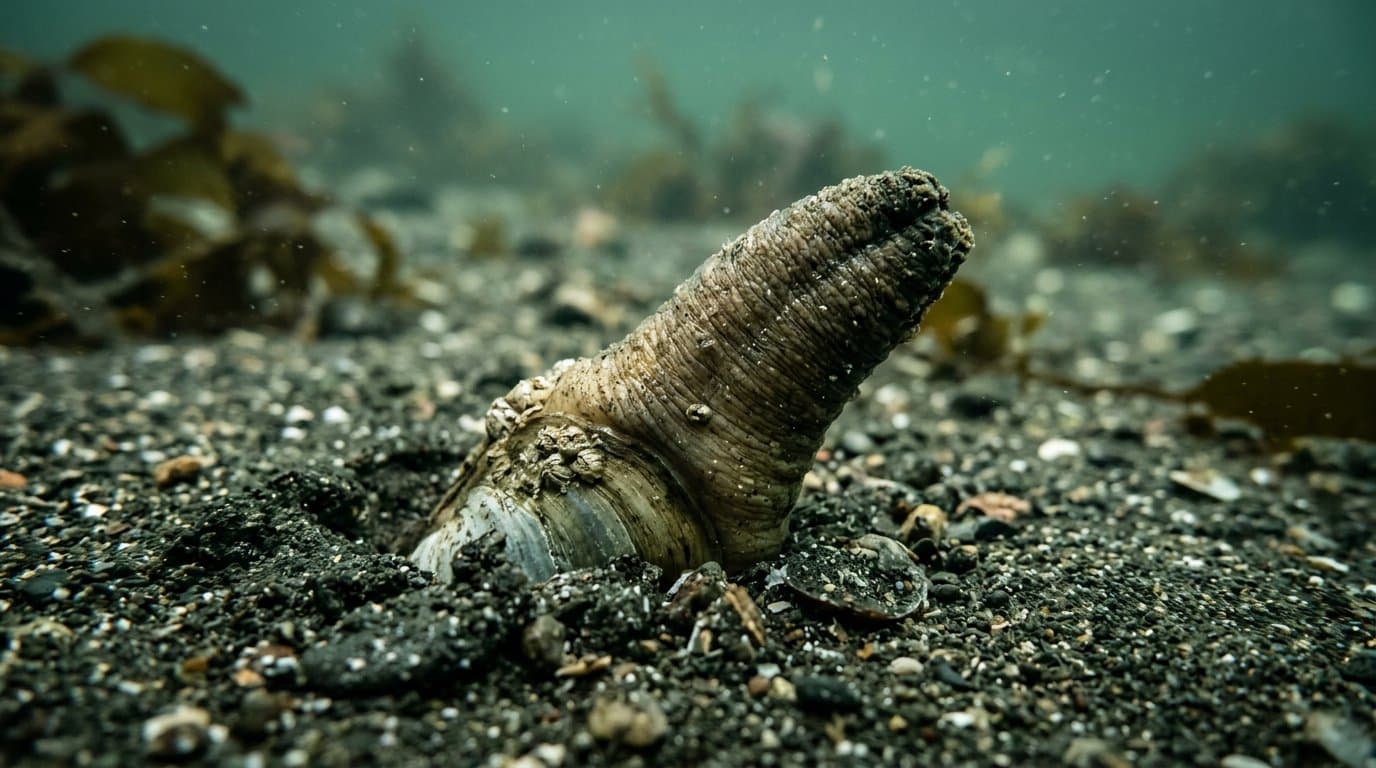
AI image
No Southeast geoduck opening after dive association votes against toxin sampling
Southeast Alaska's commercial geoduck fishery didn't open the week of Nov. 8 after the region's dive fisheries association voted not to collect the toxin samples the state requires before every opening.
The Southeast Alaska Regional Dive Fisheries Association voted Nov. 6 "to not collect geoduck paralytic shellfish poison samples this week," the Alaska Department of Fish and Game said in a Nov. 9 announcement. "Therefore, no areas will be available for a live geoduck fishery this week."
The notice doesn't say why the association voted that way.
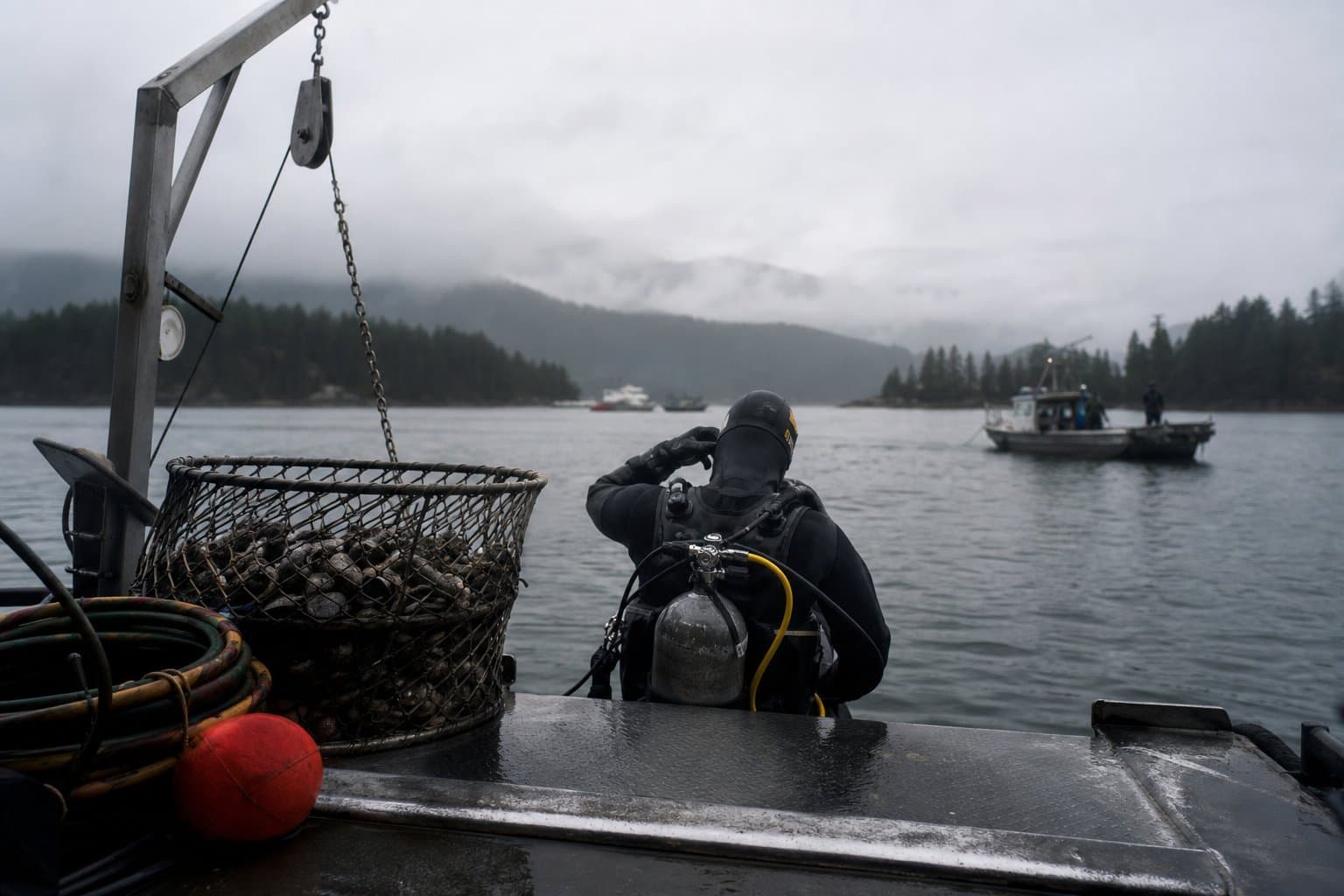
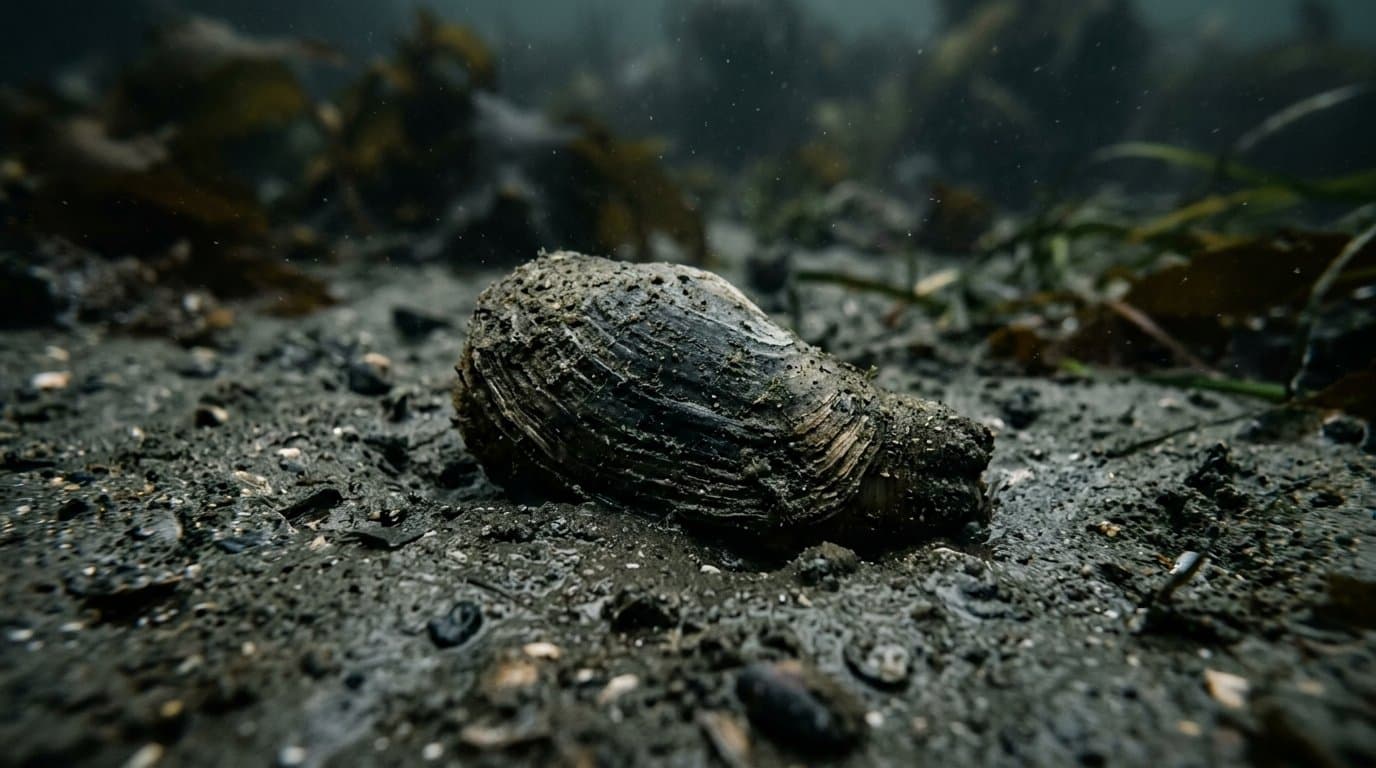
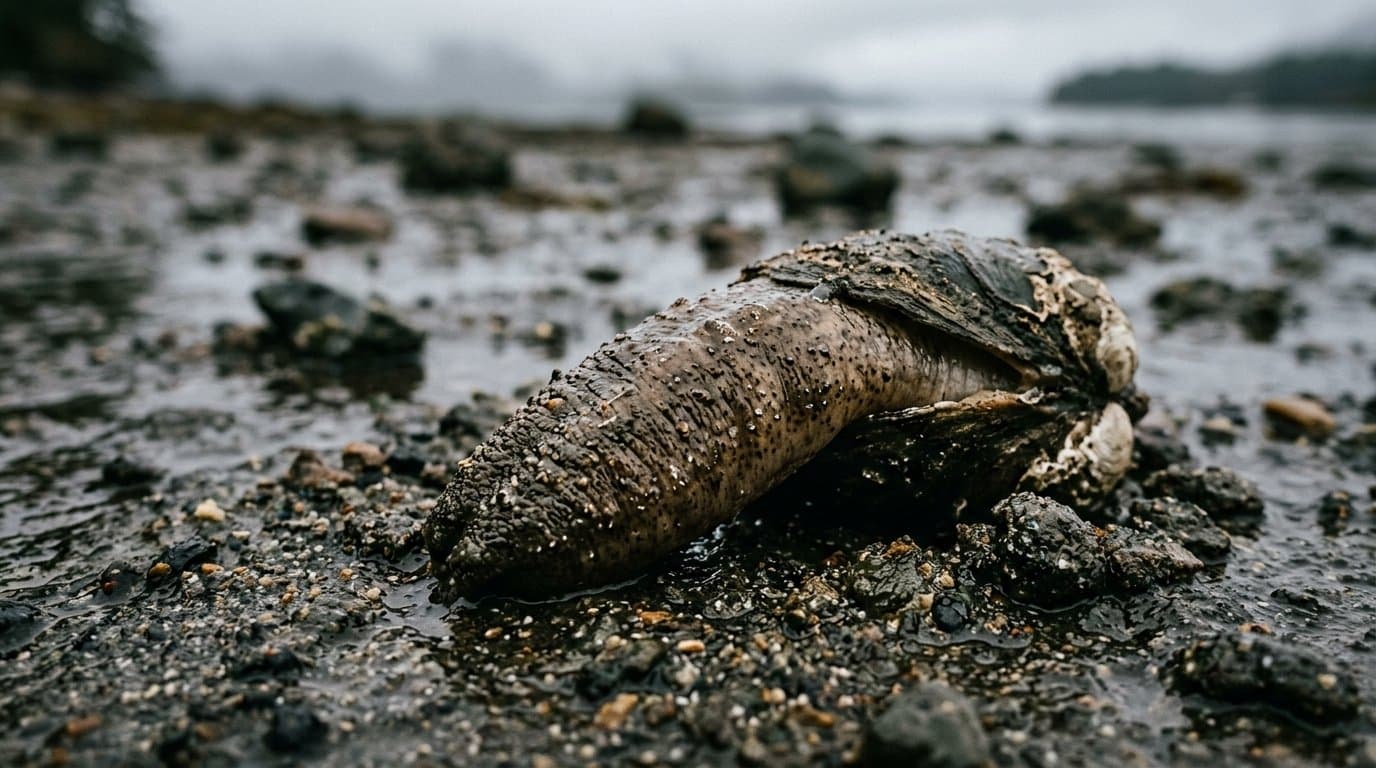
Geoducks, pronounced "gooey-ducks," are big clams that live buried in sand. Shells have been measured at up to about 8 inches long, on a clam weighing about 7 pounds. Geoducks can live up to about 4 feet below the seafloor, reach the surface with siphons up to about 3 feet long and live more than 100 years, according to Fish and Game. In Alaska, they're fished commercially only in Southeast, where divers dig them out with hand-held water jets.
Like other clams, geoducks eat by filtering tiny algae out of the water. Some of those algae make the toxins behind paralytic shellfish poisoning, which build up in filter-feeding shellfish; cooking or freezing doesn't destroy them, and a big enough dose can kill, according to Alaska Sea Grant. In Southeast geoducks, Fish and Game says, the toxin is concentrated mostly in the guts.
Before any area opens, clams from it have to be sampled and tested by the Alaska Department of Environmental Conservation, according to Fish and Game's geoduck fishery page. Clams that pass can be sold whole and live; the department says processed clams with the guts removed sell for much less. This season, every area passed testing for inorganic arsenic, so the clams can be sold to mainland China, the department said in its season announcement.
On May 15, the department closed the rest of the 2025-26 season after the association halted paralytic shellfish toxin testing. Divers had taken 438,100 of the 443,600 pounds allowed by then, according to that closure notice.
This season's harvest target is smaller: 264,000 pounds, about 40% below last season's. Two beds that would normally have been fished this year are closed because surveys found their biomass had fallen below 30% of original estimates, and the department has documented evidence of sea otters eating geoducks there.
The most recent opening, Nov. 4 and 5 at Cat and Dog Islands near Ketchikan, had about 13,000 pounds left of that area's target and a 400-pound limit for each diver.
The next possible opening is Wednesday, Nov. 18, with details to come before then. In the Ketchikan area, openings generally run Wednesdays and Thursdays, and one can be pushed back a day if sampling is delayed. The fishery then closes for Thanksgiving from Nov. 20 through Dec. 1, and again for Christmas and New Year's from Dec. 18 through Jan. 12.
What did you make of this story? (no account needed)
Made by our human newsroom with AI. Reviewed by Cale Green. How humans and AI work here · Grow with our newsroom ·
Get Alaska News in your inbox
Create your free account and get the day’s top stories around 6 each morning, in a few minutes’ read.
Top stories, around 6 each morning.
Stories on what you follow, on Sundays.
Source: ADF&G closes Southeast geoduck fishery for week of Nov 8-14 over missing PSP samples.



Comments
Sign in to leave a comment.
No comments yet. Be the first to share your thoughts.