Navy Arctic research permit opens 30-day comment window for Beaufort, Chukchi communities
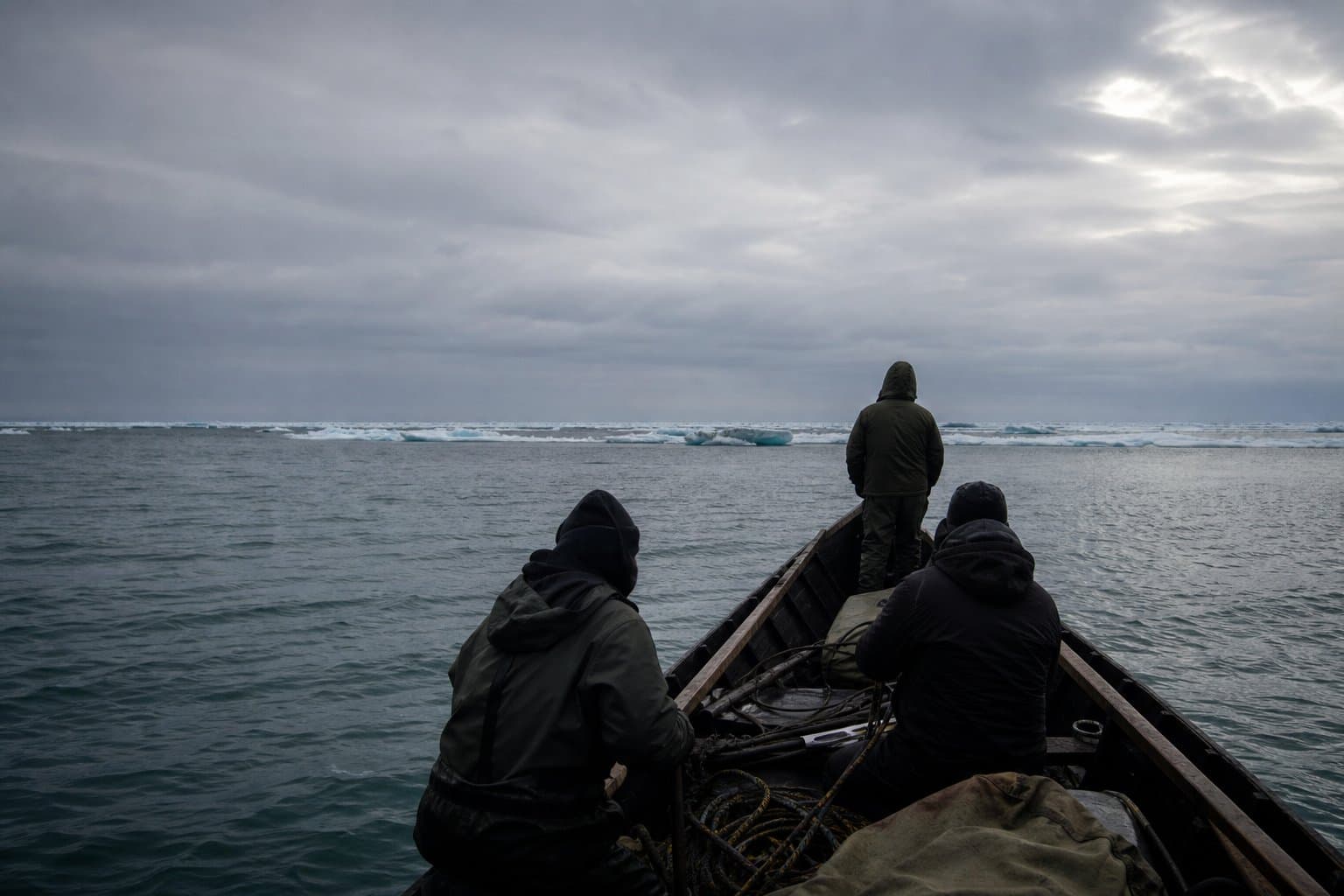
The National Marine Fisheries Service has opened a public comment period on a proposed permit that would allow the Office of Naval Research to legally disturb marine mammals during Arctic research operations in the Beaufort Sea and eastern Chukchi Sea, waters where Alaska Native communities hunt bowhead whales, seals, and walrus for subsistence. The Beaufort and Chukchi Seas are where North Slope and Bering Strait communities run their whaling and sealing seasons.
The authorization, now in its ninth year, would be issued under the Marine Mammal Protection Act as an incidental harassment authorization. NMFS is also soliciting comment on a possible one-time, one-year renewal of the permit, meaning the authorization could extend beyond a single season if conditions are met. NMFS will consider public comments before making any final decision, and agency responses will be summarized in the final notice of its decision.
Military Readiness Classification
The Marine Mammal Protection Act prohibits the take of marine mammals in U.S. waters, with certain exceptions. NOAA Fisheries describes the law as prohibiting, with certain exceptions, "the 'take' of marine mammals in U.S. waters and by U.S. citizens on the high seas." The ONR's activities are classified as military readiness activities under the National Defense Authorization Act for Fiscal Year 2004, a designation that shapes how NMFS evaluates mitigation requirements.
Competing Interests
The Center for Biological Diversity has argued that military readiness exemptions "threaten already-imperiled whales, dolphins, and other marine mammals, especially in ecologically sensitive areas." The Inupiat Community of the Arctic Slope has separately argued that federal authorizations allowing disturbance of marine mammals in these waters must prioritize subsistence resources and cultural practices. The Alaska Beluga Whale Committee has warned that repeated disturbance over multiple years may alter migration timing and distribution in ways a single-season authorization does not fully capture.
The ONR's 2026 Science and Technology Strategy, announced in June, directs the agency to "Speed: Leverage artificial intelligence to accelerate scientific discovery; compress research timelines; and solve complex problems, aiming to outpace adversaries in invention and fielding — while also establishing robust frameworks for validation and ethical oversight."
How to Comment
Comments are due by August 21, 2026. Submissions must go to [email protected] and must not exceed 25 megabytes. Comments sent by any other method, to any other address, or received after the deadline will not be accepted. All submitted information, including personal identifying information, becomes part of the public record. Electronic copies of the application and supporting documents are available at the NOAA Fisheries incidental take authorizations page for military readiness activities.
AI-assisted, reviewed by editors. Spot an error?
Comments
Sign in to leave a comment.
No comments yet. Be the first to share your thoughts.