AI image
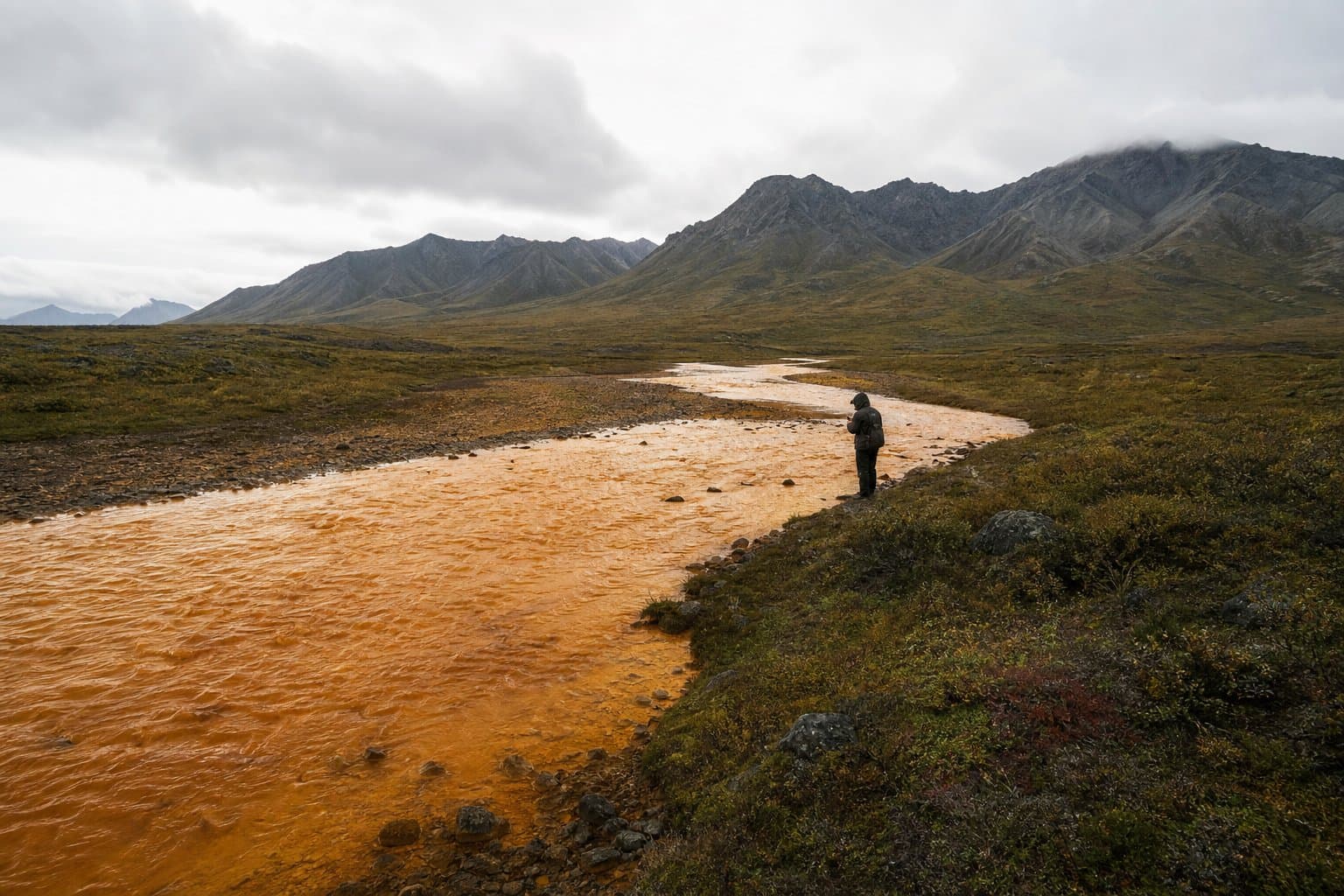
More than 200 Alaska watersheds have turned orange
Alaska's rivers are turning orange, and scientists are still catching up to why.
More than 200 watersheds across the Brooks Range have shifted from clear to rust-colored in barely a decade, a change so sudden that researchers who first surveyed these streams in 2013 found most of them running clean. "Now we're seeing hundreds of streams that have changed color seemingly overnight," said Brett Poulin, an environmental toxicologist at UC Davis who has tracked the phenomenon since the start.
Some of the affected water now carries metals — cadmium, nickel, manganese — at levels above EPA drinking-water criteria.
The leading suspect is the ground itself. As permafrost thaws, it exposes sulfide minerals like pyrite that had been locked in frozen soil for millennia. Weathering releases sulfuric acid, iron, and trace metals into groundwater, which seeps into streams — a process scientists say looks a lot like acid mine drainage, except no one mined anything. The orange is the iron, oxidizing in flowing water, essentially rusting the river.
Some streams turned in 2018 and have stayed that way; others rusted, then cleared again.
It isn't one simple cause — wildfires, natural rock drainage, and shifting hydrology all play a part. But the timing is hard to miss: the change is concentrated in the last decade, tracking closely with rapid Arctic warming.
Rural Alaska Native communities draw drinking water from these rivers and depend on them for Dolly Varden, chum salmon, and whitefish. Researchers have already documented fewer fish and less insect diversity in affected streams. The next phase of the work is mapping where the orange water overlaps with fish spawning grounds — figuring out, in other words, which rivers matter most and which are most at risk.
Assembled from public records the newsroom collected.
Made by our human newsroom with AI. How humans and AI work here · Grow with our newsroom
Stay informed. Support what matters.
Free, permanent access to local news you can verify. Subscribe to support Maggie AlaskaNews and go ad-free.
Related Coverage
As Alaska's permafrost thaws, its rivers are running rusty.
Alaska News · 3mo ago
Alaska mines release toxic metals into rivers, state data shows
Alaska News · 5mo ago
Permafrost Thaw Releases Unexpected Methane in Alaska Uplands
Alaska News · 5mo ago
NOAA pulled the plug on its 20-year Arctic climate record — and Alaska's scientists are scrambling to save it
Alaska News · 1mo ago
As melting ice opens the Arctic to more ships, a UAA scientist studies how a spill would behave
Alaska News · 2mo ago
Comments
Sign in to leave a comment.
No comments yet. Be the first to share your thoughts.