
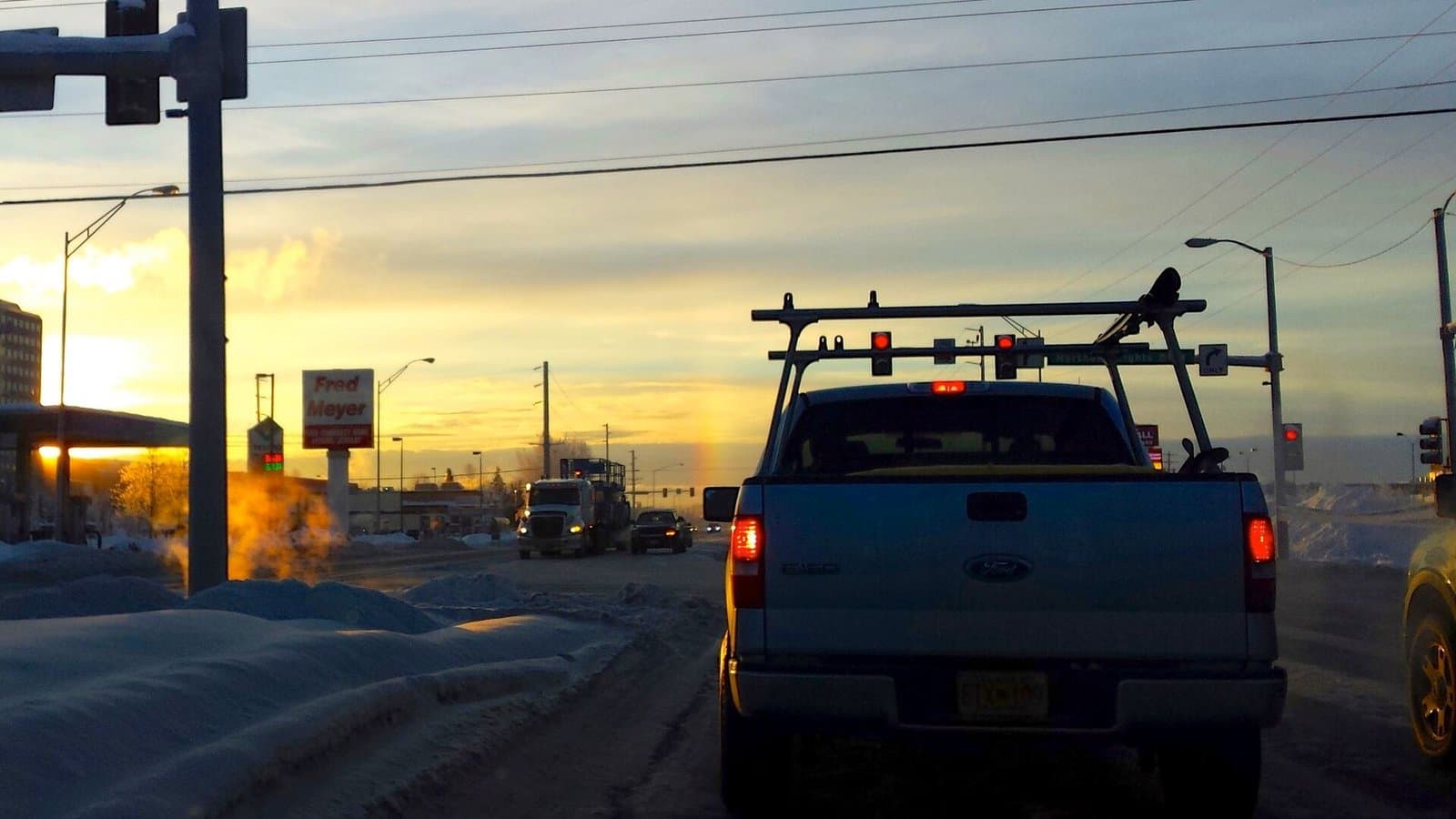
Photo: Quintin Soloviev via Wikimedia Commons · Photo source · CC BY 4.0
Late food aid applications drive Alaska's costly SNAP error rate, official says
Alaska could get its food assistance error rate down to about 6%, close to the point where it would owe nothing under a new federal law, if it processed every application on time, the state's public assistance director told legislators Tuesday.
The stakes are tens of millions of dollars. Under the federal law known as H.R. 1, states whose SNAP payment error rate is 6% or more must pay part of the cost of the food benefits themselves. Based on projected 2030 spending, Alaska would owe about $16 million a year at a rate of 6% to under 8%, nearly $33 million at 8% to under 10%, and $49 million at 10% or more, according to the Alaska Department of Health's briefing to lawmakers. The department says the payments may be delayed for some states and will depend on future error rates.
The error rate measures how accurately the state decides who qualifies for SNAP benefits and how much they get. Alaska's was 24.66% in 2024, the highest of any state, and 23.15% in 2025. The department projects about 18% for 2026, a figure that isn't final.
Division of Public Assistance Director Deb Etheridge told a joint hearing of the House and Senate Health and Social Services committees that she believed the rate peaked around 60%, during a stretch when the state was "delayed and untimely" in deciding who qualified. Much of what remains comes from applications that haven't been worked on time, she said. Without those, the rate would be about 6%.
Asked when it would fall below 10%, Etheridge said, "It's my goal to have our error rate down by next year."
The division has added 15 eligibility technician positions the Legislature funded, contracted staff and a virtual call center, and it has trained workers on common mistakes, such as who counts as part of a household, Etheridge said. More staff will be needed, she said.
Lawmakers from both parties pressed the department. "It makes financial sense for the state of Alaska to hire $10 or $20 million worth of additional staff if it can save us $30 million," said Sen. Forrest Dunbar, who chairs the Senate committee and said he would advocate for more positions. Rep. Rebecca Schwanke said of Alaska's error rate, "I find that absolutely unacceptable."
Health Commissioner Heidi Hedberg said the department needs more staff, updated computer systems and better ways to help applicants turn in complete information. Workers enter SNAP cases by hand in an old system, Etheridge said, and the department plans a tool that flags likely errors before a decision is final.
The state is also paying more to run the program. Its share of SNAP's administrative costs rose to 75% from 50% on Oct. 1.
For people who get SNAP, the law's expanded work rules are mostly on hold for another year. They extend a limit of three months of benefits in three years to adults without dependents up to age 64, from 54, and to parents whose youngest child is 14 or older, unless they work or train an average of 20 hours a week. Alaska Native and American Indian people, as defined under federal Indian health law, are newly exempt.
A federal waiver now runs through Oct. 31, 2027, after the state was granted a second year, Etheridge said. It keeps the time limit off everywhere except Anchorage, where it already applies, though older exemptions, such as for adults 56 to 64, still hold there, according to the state SNAP page.
What did you make of this story? (no account needed)
Made by our human newsroom with AI. Reviewed by Cale Green. How humans and AI work here · Grow with our newsroom · Transcript byWalter AlaskaNews
Get Alaska News in your inbox
Create your free account and get the day’s top stories around 6 each morning, in a few minutes’ read.
Top stories, around 6 each morning.
Stories on what you follow, on Sundays.
This article is based on a public meeting of Alaska State Legislature — Alaska Legislature HHSS committee — 2026-11-10 ().














Comments
Sign in to leave a comment.
No comments yet. Be the first to share your thoughts.