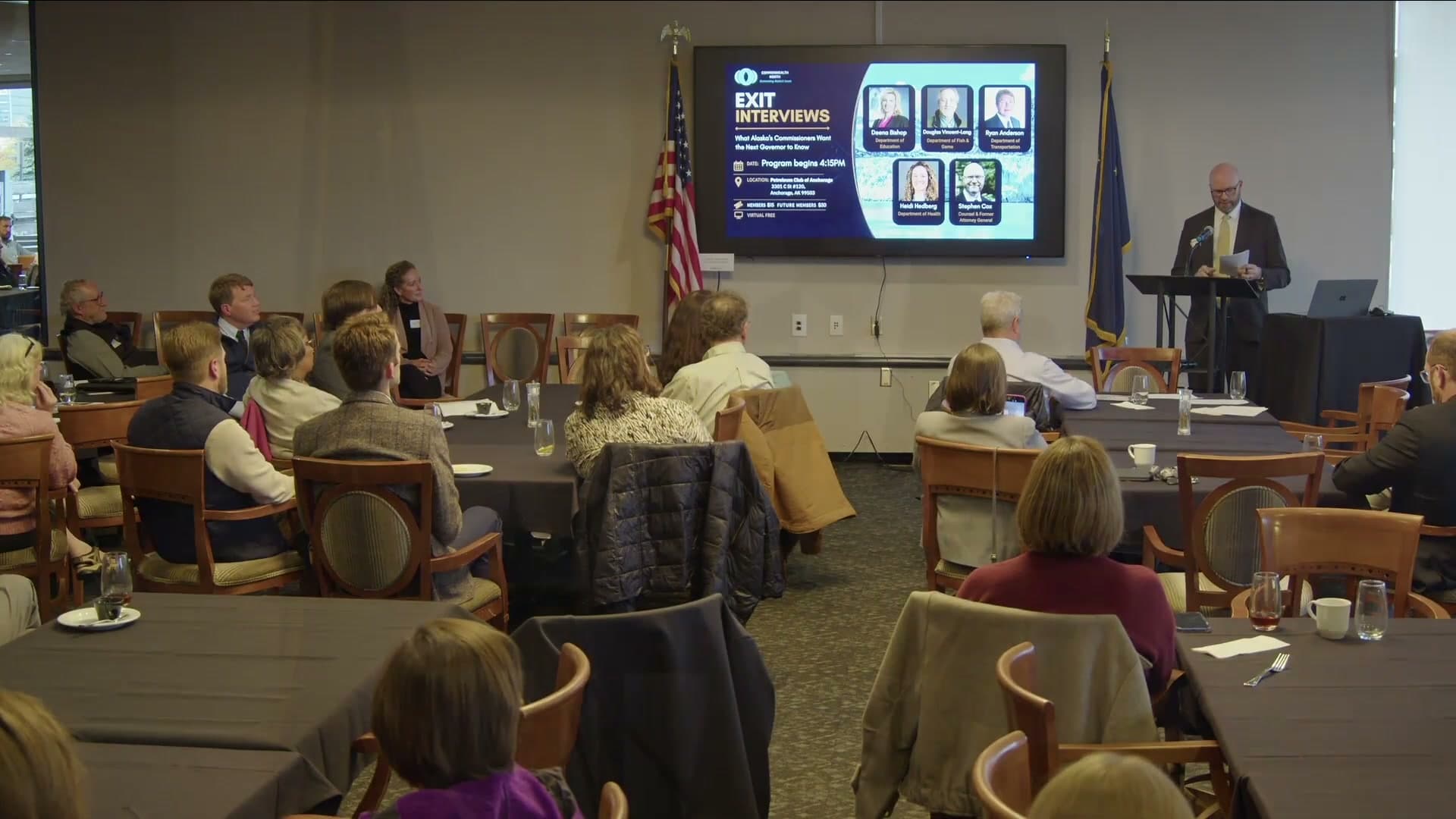
Frame from "xit Interviews: What Alaska's Commissioners Want the Next Governor to Know - October 15, 2026" · Photo source
Alaska faces $45 million SNAP bill unless error rate drops below 6%, commissioner says
Alaska must cut its SNAP food assistance payment error rate from 20% to below 6% by the end of the year or the next administration will face a $45 million bill, Alaska Department of Health Commissioner Heidi Hedberg said Thursday.
"We have a lot of work to reduce our payment error rate to get it below 6% by the end of this calendar year, and we're sitting at 20%," Hedberg said at a Commonwealth North forum in Anchorage. "Otherwise, the new administration, it's a $45 million price tag to pay for those benefits."
Hedberg was one of five of Gov. Mike Dunleavy's commissioners and senior officials who told the forum what the next governor should know. Alaskans elect a new governor Nov. 3, and the winner takes office Dec. 7, about three weeks before the error-rate deadline Hedberg described.
The error rate measures mistakes in how much food assistance households are paid. The federal tax and spending law known as H.R. 1 ties each state's share of SNAP benefit costs to that rate starting in fiscal year 2028. Alaska has had the worst SNAP error rate among states three years running, Alaska News reported June 24.
Alaska's congressional delegation wrote language into the bill giving the state more time, Hedberg said, but "the workflow, the work changes have to happen this year."
Hedberg pointed to faster processing. When she became commissioner four years ago, she said, SNAP applications took 12 months to process. The average is now 47 days, she said, against a federal target of 30.
H.R. 1 also requires Alaska to renew Medicaid eligibility every six months for the roughly 47,000 people in its Medicaid expansion group, Hedberg said. That work started Oct. 1 for people whose coverage comes up in January. "I still have the same number of staff," she said, adding that there are "significant concerns around supporting the IT modernization efforts."
Starting in January, some expansion adults ages 19 to 64 will also have to work, go to school or a training program, or volunteer to keep coverage, under the law. People likely not affected include those who are pregnant, those who live in areas with high unemployment and those who are Alaska Native or American Indian, according to the department's guidance.
Hedberg also pointed to the federal Rural Health Transformation Program, which she said will bring Alaska about $1.3 billion over five years to change how health care is delivered.
This article is based on a public meeting of Commonwealth North — xit Interviews: What Alaska's Commissioners Want the Next Governor to Know - October 15, 2026 ().
Made by our human newsroom with AI. Reviewed by Cale Green. How humans and AI work here · Grow with our newsroom Transcript byLucas Brown
Watch key moments from the source meeting. Click to expand.
Stay informed. Support what matters.
Free, permanent access to local news you can verify. Subscribe to support Walter AlaskaNews and go ad-free.
Related Coverage
Alaska Has the Nation's Worst SNAP Error Rate — and a Bill Coming
Alaska News · 3mo ago
Federal SNAP changes could put Alaska food aid and state budget under new pressure
Alaska News · 4mo ago
Alaska launches online renewals for SNAP, Medicaid and four other programs
Alaska News · 1w ago
New Medicaid work-reporting rule puts Alaska's paperwork system in the middle of health coverage
Alaska News · 4mo ago
Maximum SNAP food benefits in Alaska rise about 1.6% starting Thursday, with rural areas highest
Alaska News · 3w ago
Comments
Sign in to leave a comment.
No comments yet. Be the first to share your thoughts.