
AI image
Kenai Peninsula school board rejects Soldotna Elementary charter, citing no building
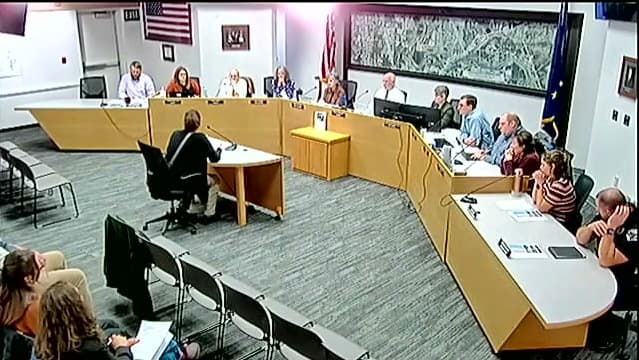
The Kenai Peninsula Borough School District board voted 8-0 on Monday, Nov. 2, to reject the Soldotna Elementary charter school application, a plan by parents and staff to convert the existing school into a K-6 charter for about 290 students.
District leaders had urged the board to reject it, as Alaska News reported Nov. 1. Administration cited the lack of a facility, about $1.1 million in budget discrepancies, an incomplete busing plan and an enrollment model that would have automatically admitted students from the attendance area.
Board members' stated reasons were mostly the building and the budget. The application asked to stay in the existing Soldotna Elementary building or share space at the consolidated campus, and the district says it has no building available.
Board President Jason Tauriainen called the building and budget "the real reason" for his vote. He said the board closed schools to balance its budget and the charter "basically tried to keep one open."
Several members who voted no praised the plan. Vice President Daugharty called it "one of the greatest models that we've seen come through here." VanBuskirk said she did not want the board to simply deny the application and move on, and asked why families "feel they need to create a charter school to feel heard."
Parent Michael Spencer asked why the board rejected one charter for lack of space while renewing Fireweed Academy the same night. Fireweed's renewal application says consolidation options the district has discussed "would displace Big Fireweed." Superintendent Clayton Holland said Fireweed's renewal includes language allowing a move if needed, and that he does not want any consolidation this year.
The charter may not be over. State law requires a written decision within 60 days of the application, which the district dates to Sept. 30. Applicants then have 60 days to appeal to the state education commissioner. If the commissioner upholds the denial, they have 30 days to appeal to the State Board of Education and Early Development, which must decide within 90 days. If the state board overturns a local denial, the local board must operate the school. The applicants have not said whether they will appeal. Daugharty said the process runs through "a state appointed board who has really no vested interest in our district."
The board also approved, 8-0, a seven-year busing contract worth about $78.3 million with MV Transportation, also known as Reliant. It replaces First Student, the current contractor, starting July 1, 2027.
The first year, about $10 million, costs about $2.2 million more than this year's roughly $7.7 million transportation budget, as Alaska News reported Oct. 29. The prices assume fuel at $3 a gallon. Under the contract's terms, the district repays MV the difference when fuel costs more, and MV credits the district when it costs less.
VanBuskirk said at the work session that with lower enrollment and fuel costs, the shortfall could reach around $3 million. "We simply just don't have this amount of money in that budget," she said before the vote, warning of possible cuts to routes or service. The contract lets the district cut or end service if funding falls.
Cizek, who voted yes, objected to having about 20 minutes to read the contract before voting, saying she was told legal review had slowed it. State transportation money is set at $1,112 per student, and Holland said the options are general funds, route cuts or a change in state law. Board members said they will press the state for more transportation money.
The board also renewed Fireweed for 10 years without objection.
What did you make of this story? (no account needed)
Made by our human newsroom with AI. How humans and AI work here · Grow with our newsroom ·
Get Alaska News in your inbox
Create your free account and get the day’s top stories around 6 each morning, in a few minutes’ read.
The day's top stories around 6 each morning. Unsubscribe in one click.
Source: Kenai Peninsula school board rejects Soldotna Elementary charter 8-0, citing no building and budget gaps, and approves a $78.3 million busing contract members say the budget cannot yet cover.











Comments
Sign in to leave a comment.
No comments yet. Be the first to share your thoughts.