AI image
Kaktovik leaders back 1002 Area development and press AIDEA to weigh local knowledge
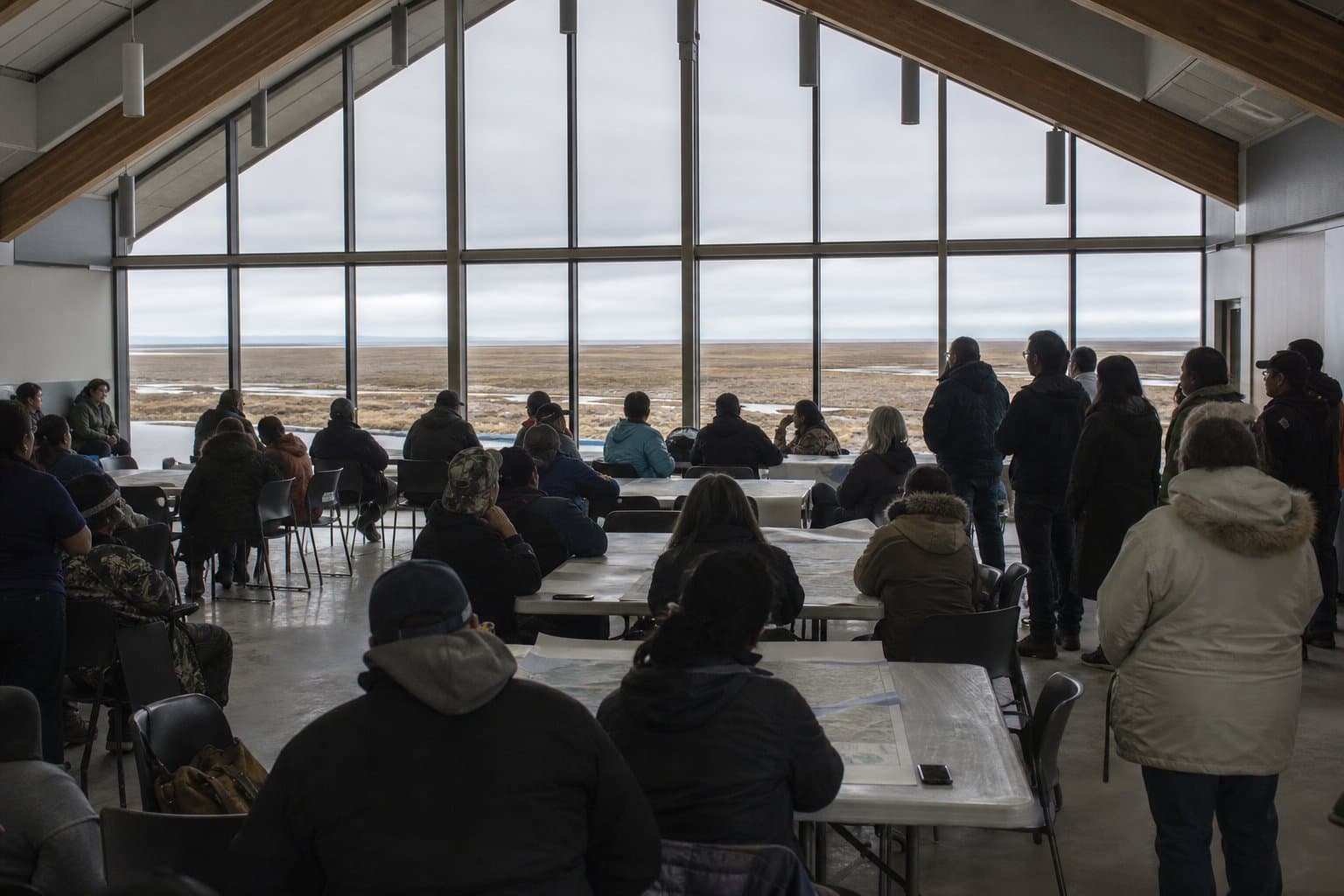
Kaktovik's city and tribal leaders told visiting state development officials this week that they want oil and gas development on the Arctic National Wildlife Refuge coastal plain, and that people who live inside the refuge should be in the room when decisions get made about it.
The town has a claim nobody else does. Kaktovik is the only community inside the roughly 19.6-million-acre refuge, and Kaktovik Iñupiat Corporation owns 92,000 acres in the 1002 Area, the stretch Congress set aside for possible development. It is the only private landowner there.
"Responsible development can provide real opportunities for our community and for Alaska," said Nathan Gordon Jr., mayor of the City of Kaktovik. Matthew Rexford, tribal administrator for the Native Village of Kaktovik, said outside voices too often speak about the area without hearing from the people who live in it. Corporation board member Charles Lampe put it more plainly: "this is our homelands."
They are making that case into a fight that has run for four decades and has never stayed settled for long. Congress mandated coastal plain leasing in 2017. The Alaska Industrial Development and Export Authority took seven leases in 2021. The Interior Department canceled them in 2023. A federal court reinstated them in March 2025. AIDEA's board authorized up to $190 million in May for seismic work, permitting and regulatory costs, and a June federal lease sale drew bids on five tracts covering 72,049 acres.
Opposition has been just as durable. Environmental organizations have fought coastal plain leasing since before it was authorized, and the Gwich'in Steering Committee, whose people rely on the Porcupine caribou herd, calls the area "The Sacred Place Where Life Begins." Major banks have declined to finance Arctic refuge drilling. The oil majors did not bid in the first lease sale.
Even the caribou are contested. The Gwich'in say the Porcupine herd calves primarily on the coastal plain. Kaktovik's tribal president has pointed to state and federal survey data showing the herd calving mostly on the Canadian side of the border.
AIDEA argues development would generate long-term revenue for the state while supporting jobs, public services and the Permanent Fund. Its board members were in Kaktovik this week to hear from the community whose land sits at the center of it.
Source: Alaska Industrial Development and Export Authority, Alaska Industrial Development and Export Authority: AIDEA Visits and Works with Kaktovik.
Made by our human newsroom with AI. How humans and AI work here · Grow with our newsroom
Stay informed. Support what matters.
Free, permanent access to local news you can verify. Subscribe to support Bill AlaskaNews and go ad-free.
Related Coverage
AIDEA authorized $190 million for ANWR — backed by Kaktovik, the residents
Alaska News · 4mo ago
Draft settlement would protect ANWR leasing terms
Alaska News · 2mo ago
AIDEA approves $190 million for ANWR seismic surveys and lease evaluation
Alaska News · 4mo ago
Alaska's development bank meets behind closed doors on the Arctic Refuge, a mining road, and a port
Alaska News · 3mo ago
ANWR lease sale will test whether Alaska oil appetite reaches the Arctic Refuge
Alaska News · 4mo ago
Comments
Sign in to leave a comment.
No comments yet. Be the first to share your thoughts.