AI image
Alaska's development bank meets behind closed doors on the Arctic Refuge, a mining road, and a port
When the board of the Alaska Industrial Development and Export Authority meets July 8, the most consequential part of the agenda is the part the public won't see. Behind a closed executive session sit the state's most contested development fights — the Arctic Refuge, the Ambler mining road, Port MacKenzie, and the agency's legislative agenda, among other matters — and unless the board takes a public vote afterward, no record of what was said will be released.
That matters because AIDEA is not an ordinary agency.
It is Alaska's state-owned investment bank, and its purpose is to spend public money to advance projects that private industry, on its own, will not. Executive Director Randy Ruaro told a conference in May that the board had approved close to $400 million in project commitments in roughly nine months. Where that money goes is a question about what kind of economy Alaska is betting on — and who is on the hook if the bets don't pay.
Nowhere is that clearer than the Arctic Refuge. On June 5, the federal government held the first of four oil-lease sales that Congress ordered for the refuge's coastal plain last year. Only two bidders turned up — AIDEA and a small Alaska company, Hex Energy — and between them they took five tracts for $3.7 million; not one major North Slope producer placed a bid. It is, in short, a fight over public money that even oil companies have judged too costly and too legally fraught to enter.
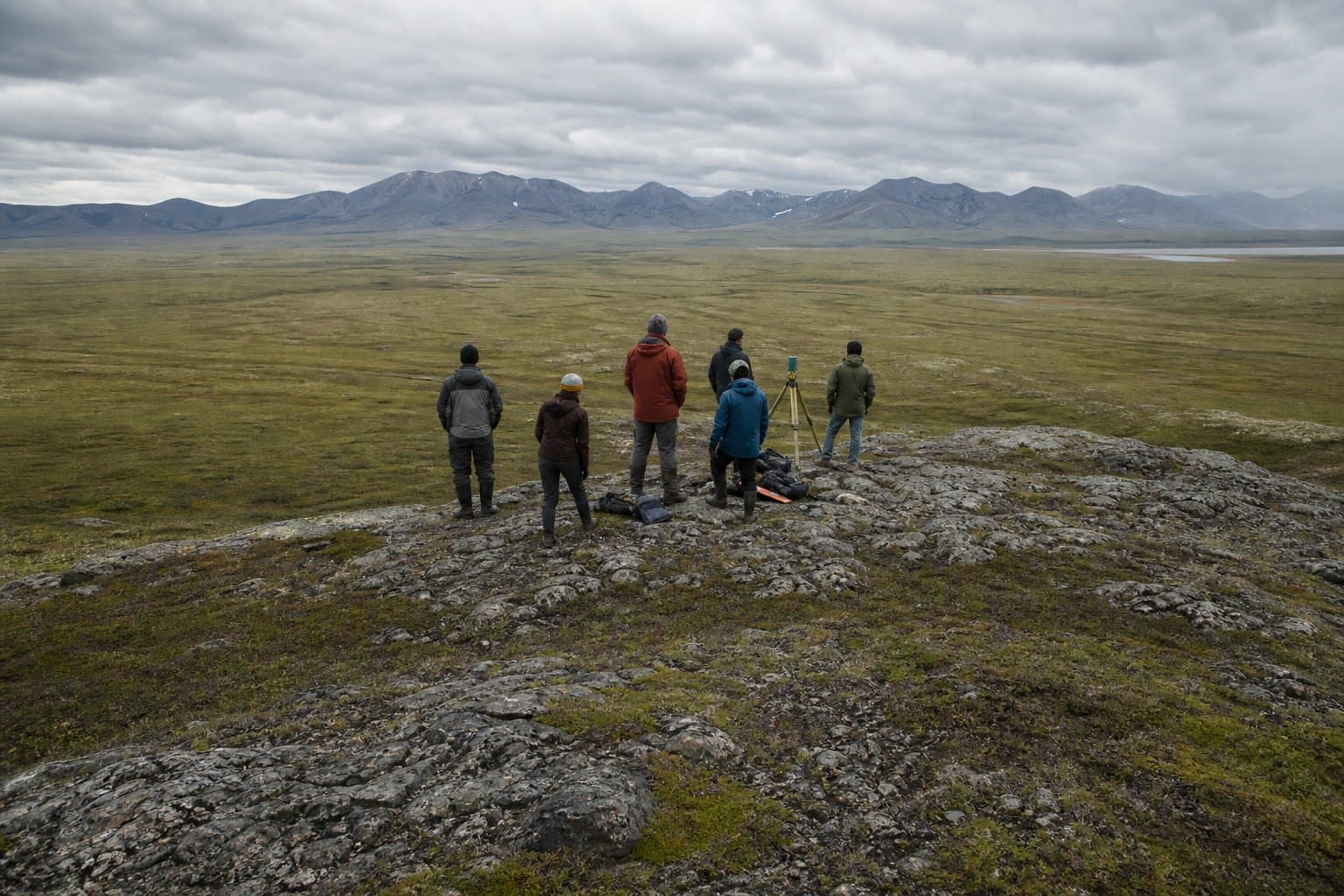
The Ambler road is the same argument in a different landscape. AIDEA wants to build a 211-mile industrial road — gravel, toll-only, closed to the public — from the Dalton Highway west to a copper-rich mining district in the Brooks Range foothills.
President Trump reversed a Biden-era decision that had blocked the road last fall, and the federal government took an ownership stake in the mining company that would use it. The state says the project would create thousands of jobs and eventually return more than a billion dollars, and eleven villages nearest the district have backed moving the permits forward. But the route would cross Gates of the Arctic, some 3,000 streams, and the range of the Western Arctic caribou herd.
Port MacKenzie is where the mineral vision is meant to reach tidewater. Across Cook Inlet from Anchorage, the underused Mat-Su port — saddled for years with an unfinished rail line — is being pitched by AIDEA as the export terminal for Ambler's copper and other Alaska minerals, and a landing point for inbound freight. It is the least contested of the three, and the most dependent on the other two actually happening.
The board will weigh all of it July 8. Most of that weighing will happen where no one can watch. Alaskans who want a say can send written comment to the agency by 4 p.m. July 7.
Source: Alaska Industrial Development and Export Authority, Alaska Industrial Development and Export Authority: Alaska Industrial Development and Export Authority Board Meeting Agenda.
AI-assisted. How we use AI
Stay informed. Support what matters.
Free, permanent access to local news you can verify. Subscribe to support Walter AlaskaNews and go ad-free.
Related Coverage
Alaska's development authority again takes ANWR and Ambler to closed session
Alaska News · 1mo ago
AIDEA's board takes six major projects into executive session in Kotzebue
Alaska News · 1w ago
AIDEA will discuss the Ambler road in Kotzebue, with the public out
Alaska News · 2w ago
AIDEA's board will sign off on refreshing its due diligence fund
Alaska News · 1mo ago
AIDEA approves $190 million for ANWR seismic surveys and lease evaluation
Alaska News · 4mo ago
Comments
Sign in to leave a comment.
No comments yet. Be the first to share your thoughts.