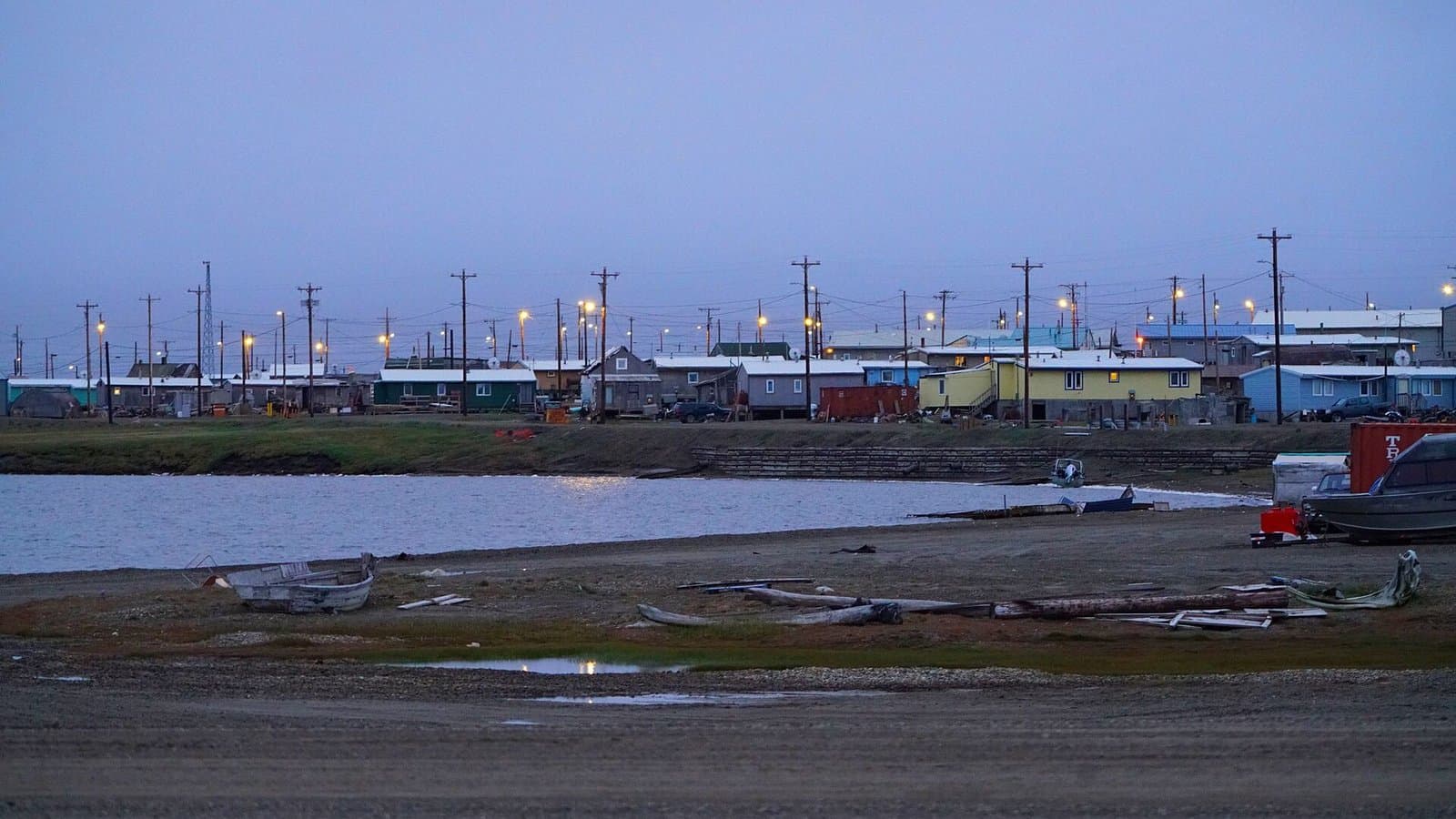
Kaktovik glycol response cost roughly $200,000, North Slope mayor estimates
North Slope Borough Mayor Josiah Patkotak told the Assembly on Tuesday that the response to Kaktovik's glycol-contaminated water probably cost a couple hundred thousand dollars, and that the borough is working with the state to make glycol testing a requirement for water operator certification.
Kaktovik was under a do-not-drink order for most of September after lab tests found ethylene glycol, the toxic compound in antifreeze, in the village's water. The state Department of Environmental Conservation lifted the order in late September.
Answering a question from Assembly Vice President Trina Paul, Patkotak described what went wrong.
It started with a drum that once held chlorine. It was emptied, refilled with used glycol and never relabeled. Whether a borough contractor or a borough employee filled it is still under investigation, Patkotak said. The drum was taken to the water plant to dose chlorine, and about 2 to 4 gallons of glycol went into the south tank, which he said holds about 3.5 million gallons, before the mistake was caught and the tank isolated.
But routine chlorine readings then showed signs of glycol elsewhere in the system. The borough ruled out a water line repair near the power plant's heat loop and home boiler systems. Checking heat exchangers at the same time, crews found one in the north tank leaking glycol. It was installed in 2003 and was never put on a replacement or maintenance schedule, Patkotak said. The borough replaced it and drained the tank.
The lab results don't align with the amount of glycol in either system, Patkotak said. By his math, they point to roughly 400 gallons of undiluted glycol. Waste glycol is diluted, he said, so that would equal about six drums of a 50/50 mix.
Asked by another Assembly member what the incident has cost, Patkotak gave a rough estimate. It covers chartered cases of water, draining the tank and replacing the heat exchanger. ConocoPhillips helped under a good-neighbor arrangement, and he said he thinks the borough is paying only for fuel.
Patkotak said the borough is putting all heat exchangers across the slope on a replacement schedule, adding annual testing and quarterly pressure tests, and starting field test kits that can detect glycol in about five minutes. He said he believes a compliance officer is now working in Kaktovik to check drum labeling.
Water operator certification in Alaska follows federal criteria, and the state doesn't require glycol testing, Patkotak said. "So technically we're in compliance, but we're not testing for glycol," he said.
This article is based on a public meeting of NSB Assembly — NSB Assembly: NSB Assembly — Regular Meeting & Public Hearing ().
Made by our human newsroom with AI. Reviewed by Cale Green. How humans and AI work here · Grow with our newsroom Transcript byWalter AlaskaNews
Stay informed. Support what matters.
Free, permanent access to local news you can verify. Subscribe to support Bill AlaskaNews and go ad-free.
Related Coverage
Kaktovik flushes millions of gallons of glycol-tainted water after plant mistake
Alaska News · 1mo ago
State lifts Kaktovik do-not-drink water order
Alaska News · 2w ago
Kaktovik under a do-not-drink notice after ethylene glycol found
Alaska News · 1mo ago
Kaktovik's do-not-drink notice stays until sharper lab results arrive
Alaska News · 3w ago
Kaktovik residents press North Slope Borough on cracked homes
Alaska News · 2mo ago
Comments
Sign in to leave a comment.
No comments yet. Be the first to share your thoughts.