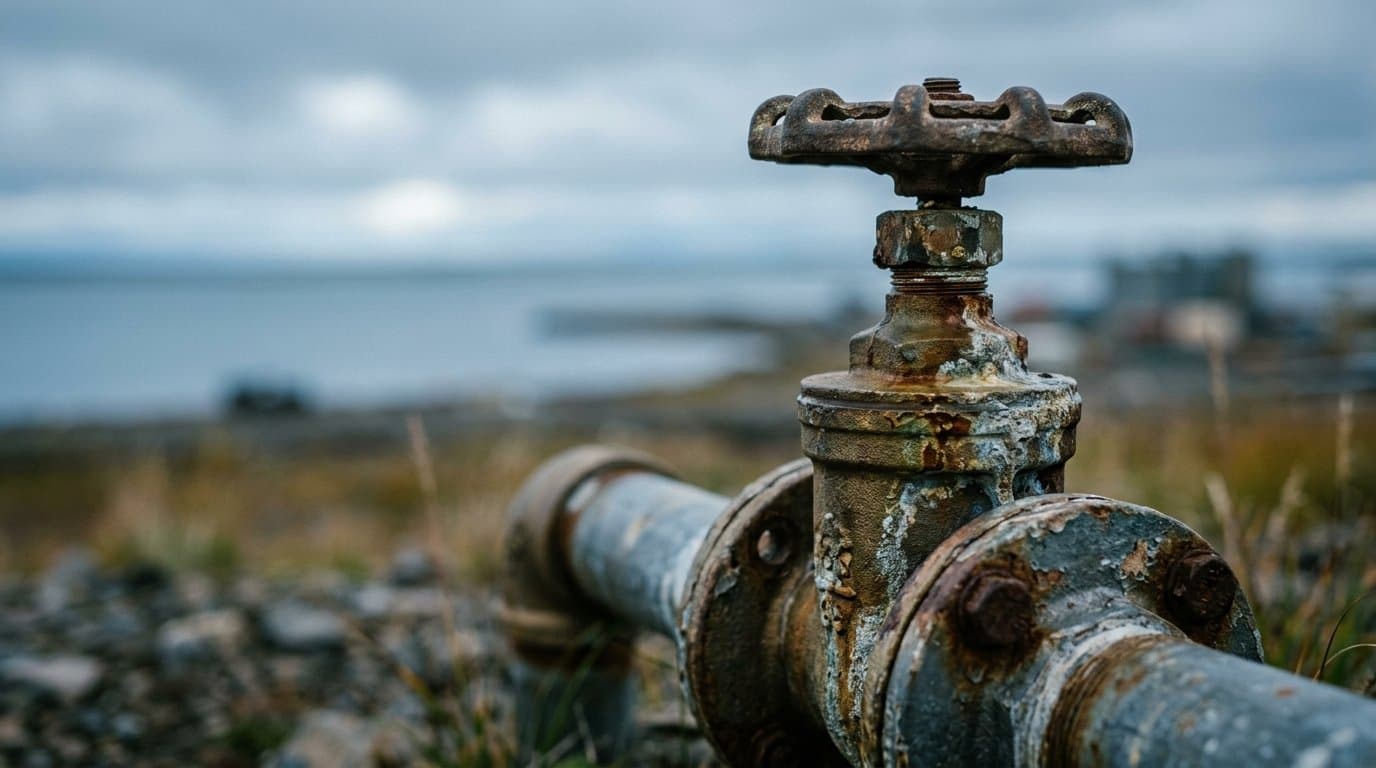
AI image
Kaktovik flushes millions of gallons of glycol-tainted water after plant mistake
The North Slope Borough starts flushing Kaktovik's contaminated water system Sunday, pumping out as much as 3 million gallons of water tainted with ethylene glycol so the tanks can be refilled with something safe to drink. The do-not-drink order stays in force through the work and afterward.
The pumping — routed into Kaktovik Lagoon near the wastewater plant — was expected to take about 36 hours. State regulators from three agencies signed off on the discharge, concluding that because the lagoon is tidal, the one-time release "will not adversely affect aquatic life," the borough said, adding it would monitor for any impact. Water left in the system still provides fire protection, and emergency airport access continues; Public Works is also drawing up a winter water-haul backup plan in case the cold arrives early.
The contamination traces to an Aug. 16 mistake at the treatment plant, which the borough now identifies as the source: an operator used a mislabeled chemical container while mixing a disinfectant solution. The affected tank was taken offline, but glycol later showed up in the backup tank too. The scale of the problem wasn't clear at first — an early state estimate put the concentration around 0.024 mg/L, but a certified lab measured 26 mg/L in the system on Sept. 5, roughly a thousand times higher, and the do-not-drink order went out that day. Emergency water and Arctic Slope Native Association medical staff arrived within a day or two.
The bigger question is how dangerous 26 mg/L actually is. The borough's messaging leans reassuring — it says state health officials advise the level "does not represent a known acute health risk for adults." But that framing carries some caveats worth spelling out. The measured level exceeded every federal drinking-water health guideline for ethylene glycol: it's about 1.9 times the lifetime advisory, 1.3 times the one-day, and more than four times the ten-day advisory. And the one-day and ten-day guidelines are built around a small child, not an adult — a distinction the borough's notice, which cited only the adult figure, didn't address.
The borough's own health flyer is blunter than its reassurance suggests. It warns that "a person may initially feel well after exposure, with serious effects developing over the following hours or days, including kidney injury," and tells residents with symptoms like repeated vomiting, confusion, slurred speech, irregular heartbeat, decreased urination or seizures to seek emergency care rather than wait.
Residents are told not to drink, cook with, make ice from, or brush teeth with the piped water — and that boiling will not make it safe. It remains fine for bathing, dishes and laundry. Safe drinking water is available for pickup at the Kaktovik Water Treatment Plant. The borough's notices remain the only public account of what happened, and include no response from residents.
Source: north-slope.org, Kaktovik is dumping up to three million gallons of glycol-tainted water into its lagoon today, and the level found in the pipes exceeded three federal advisories, not the one the borough cited ().
AI-assisted, reviewed by Cale Green. Who is accountable.
Stay informed. Support what matters.
Free, permanent access to local news you can verify. Subscribe to support Walter AlaskaNews and go ad-free.
Related Coverage
Kaktovik under a do-not-drink notice after ethylene glycol found
Alaska News · 6d ago
A remote Kodiak village tries tp fix its water
Alaska News · 2mo ago
Bethel's water plant has been sending filter backwash onto open ground
Alaska News · 1h ago
Doyon says the Rig 26 tundra cleanup is in its final phase
Alaska News · 1w ago
A new federal water-testing rule could check rural Alaska for 'forever chemicals' — if it reaches us
Alaska News · 2mo ago
Comments
Sign in to leave a comment.
No comments yet. Be the first to share your thoughts.