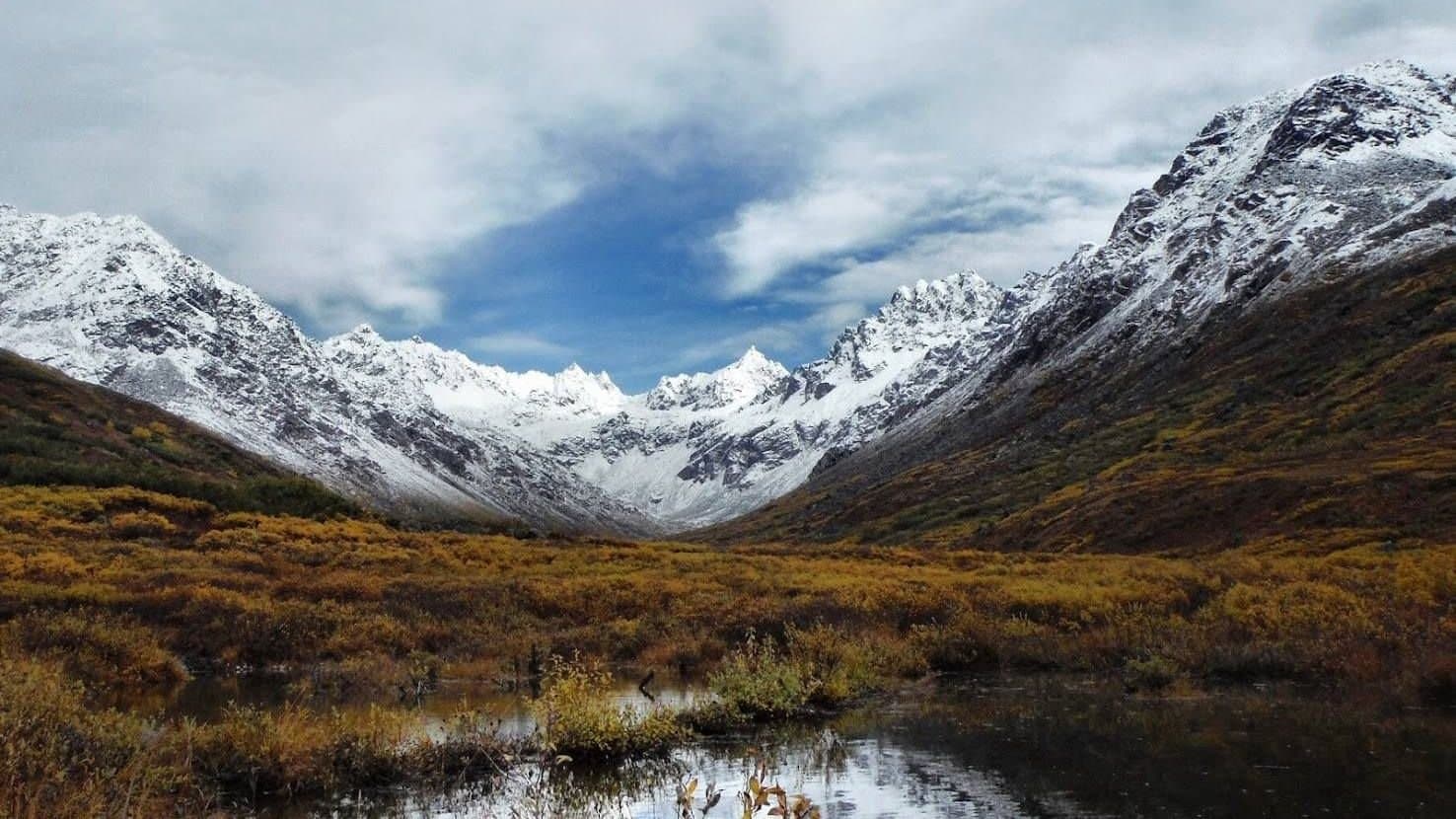
Photo: Shawn Carter, U.S. Geological Survey via Wikimedia Commons · Photo source · Public domain
Fish and Game sets free March webinar on Fortymile caribou research
Alaska's winter hunt on the Fortymile caribou herd closed in its last zones Nov. 11, two weeks after it opened and more than four months before it was scheduled to end.
The state expected hunters to reach the 100-bull winter quota by then, according to a Department of Fish and Game closure notice. The zones along the Steese Highway had already closed Oct. 30.
The fall hunt went fast too. Hunters took 577 bulls, more than the 550 the state had set as its quota for the whole year.
The department put the herd at about 27,000 caribou this summer, about a third of its size in 2017.
The Fortymile herd, which ranges from the hills east of Fairbanks into Canada's Yukon, has risen and fallen before. It dropped from at least 46,000 caribou around 1950 to an estimated 5,000 in the early 1970s, then grew slowly to about 23,000 by 1990, according to the herd's 2025-2030 harvest plan.
It stayed near that size until 1995, then grew. The plan credits private wolf trapping, nonlethal predator management, good weather and lighter hunting for growth to at least 43,375 caribou by 2003. Lethal wolf control by the public and the department followed, beginning in 2005. By 2017, the herd was estimated at 83,659.
But as it grew, the caribou's nutrition declined. A longtime department biologist found declining birth rates among 3-year-old cows and lighter calves in October, and the plan says that decline led to the herd's drop beginning in 2018.
Managers responded by raising hunting quotas in 2020 and 2021, aiming to bring the herd down to a more sustainable level. They cut quotas once it fell below 50,000. The plan now says the herd should be managed based on the caribou's condition rather than a target number, and it lists a goal of 30,000 to 50,000 animals. The harvest is split 65% to Alaska and 35% to Yukon.
The herd has kept falling. The department projects it could drop to 17,500 or fewer by 2028 to 2030. At that point, state law would require a Tier II hunt, which rations permits based largely on how much hunters depend on the herd, and the department wants a Tier II plan ready before then.
The Alaska Board of Game takes up that plan and other Fortymile proposals, including several that would limit nonresident hunters, March 19 to 26 in Fairbanks. The night before, Torsten Bentzen, a department research biologist who has studied the herd for more than a decade, is scheduled to present the department's research on the herd in a free online talk.
What did you make of this story? (no account needed)
Made by our human newsroom with AI. How humans and AI work here · Grow with our newsroom ·
Keep Alaska News free for everyone.
No paywall, ever. Members pay so everyone can read the meetings and records Alaska News covers.
Get Alaska News in your inbox
Create your free account and get the day’s top stories around 6 each morning, in a few minutes’ read.
Top stories, around 6 each morning.
Stories on what you follow, on Sundays.
Based on a press release from Alaska Department of Fish and Game.






Comments
Sign in to leave a comment.
No comments yet. Be the first to share your thoughts.