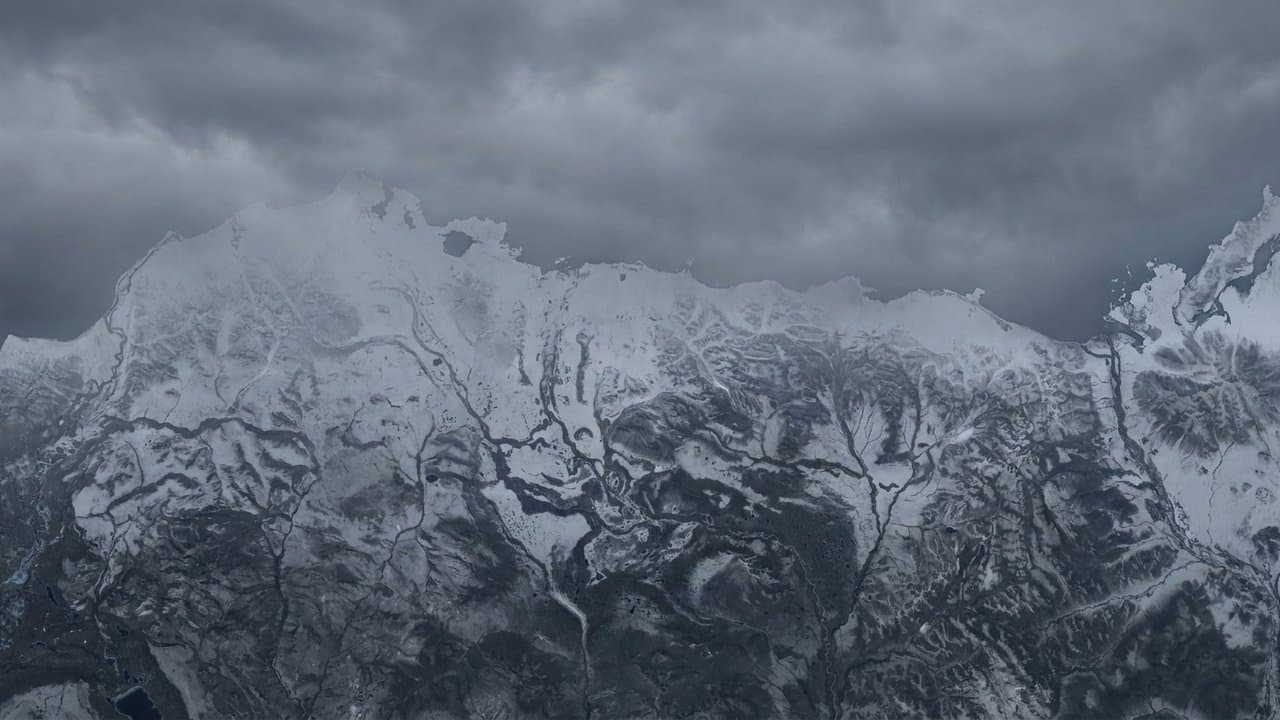
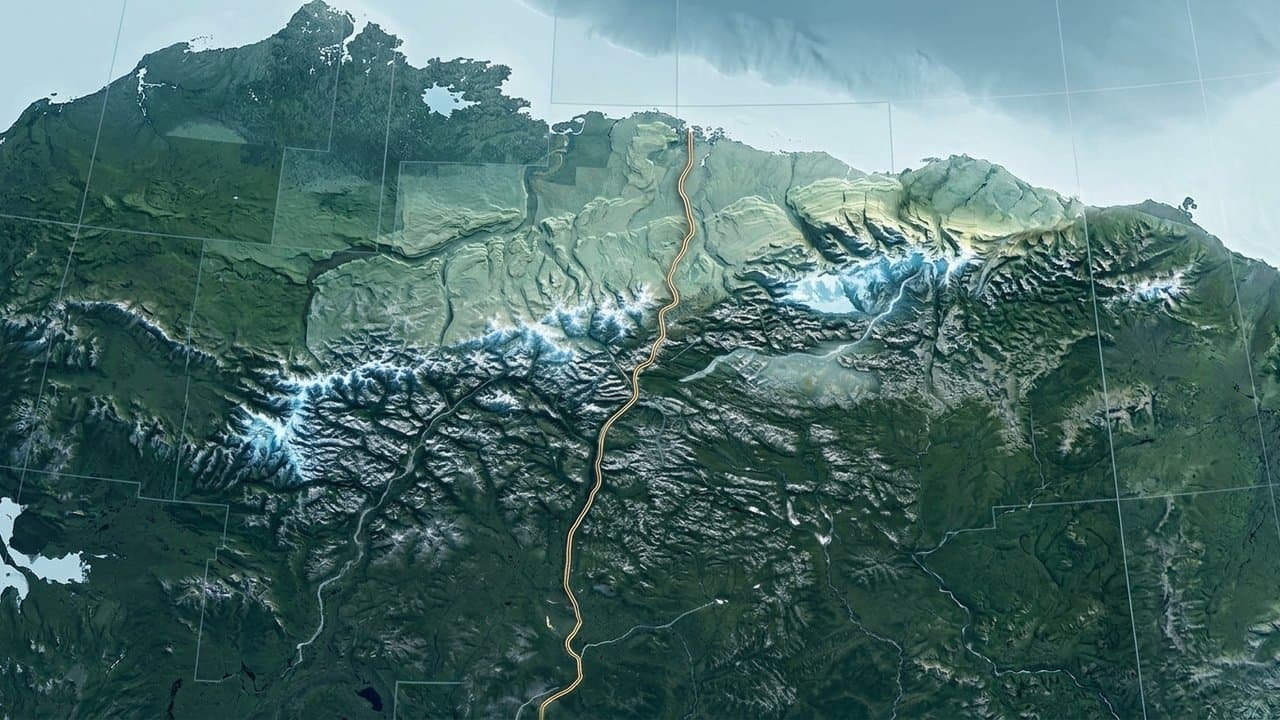
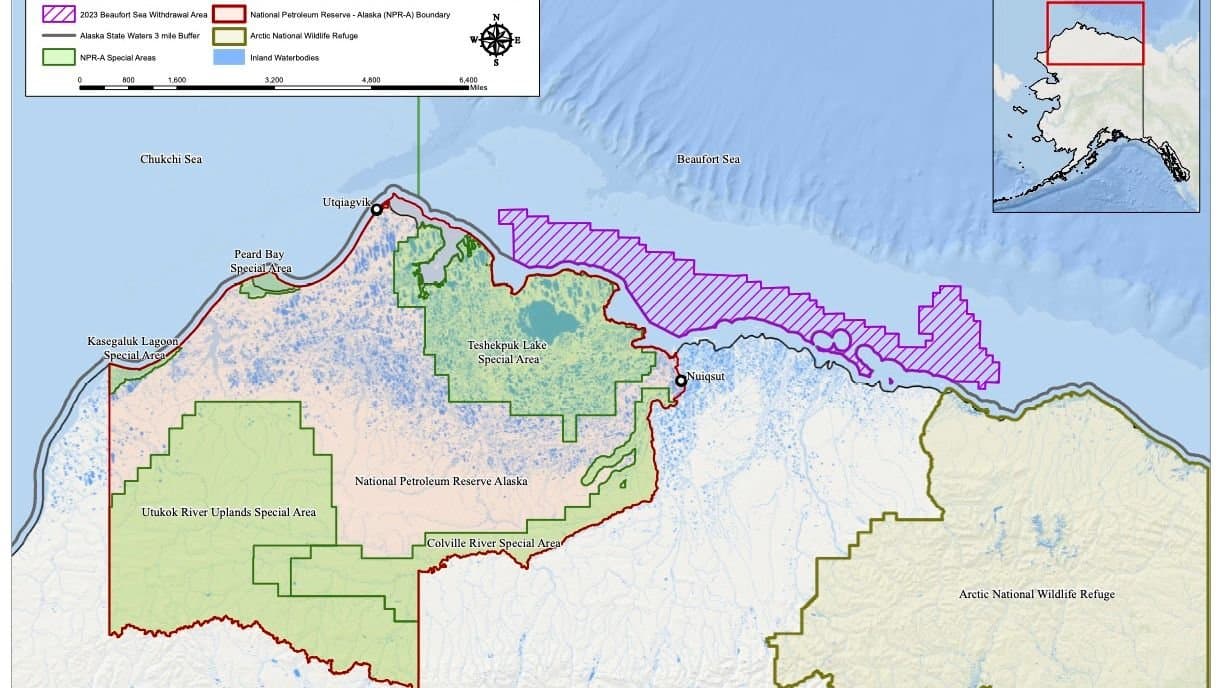
Editorial map (Gemini + Google Maps)
Federal wildlife agency proposes letting AIDEA run seismic surveys in ANWR
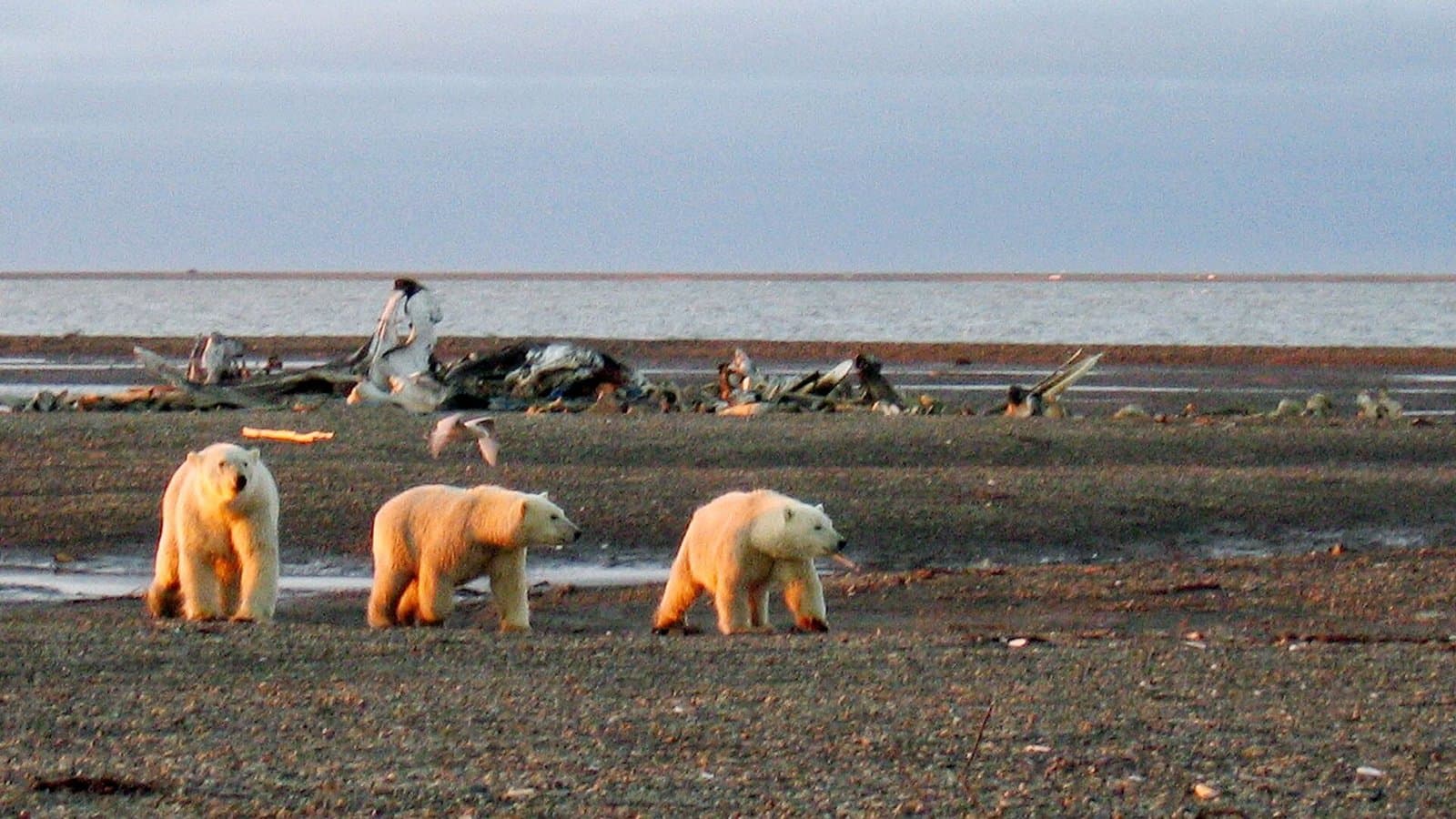
The U.S. Fish and Wildlife Service on Monday proposed allowing the state's development authority to run a seismic survey on the Arctic National Wildlife Refuge's coastal plain, saying that with required precautions it expects "no more than short-term, temporary, and minor impacts" on individual polar bears.
The proposal, made under the Marine Mammal Protection Act, would cover one year of work by the Alaska Industrial Development and Export Authority, the state-owned development finance corporation. Seismic surveys map potential oil and gas deposits underground.
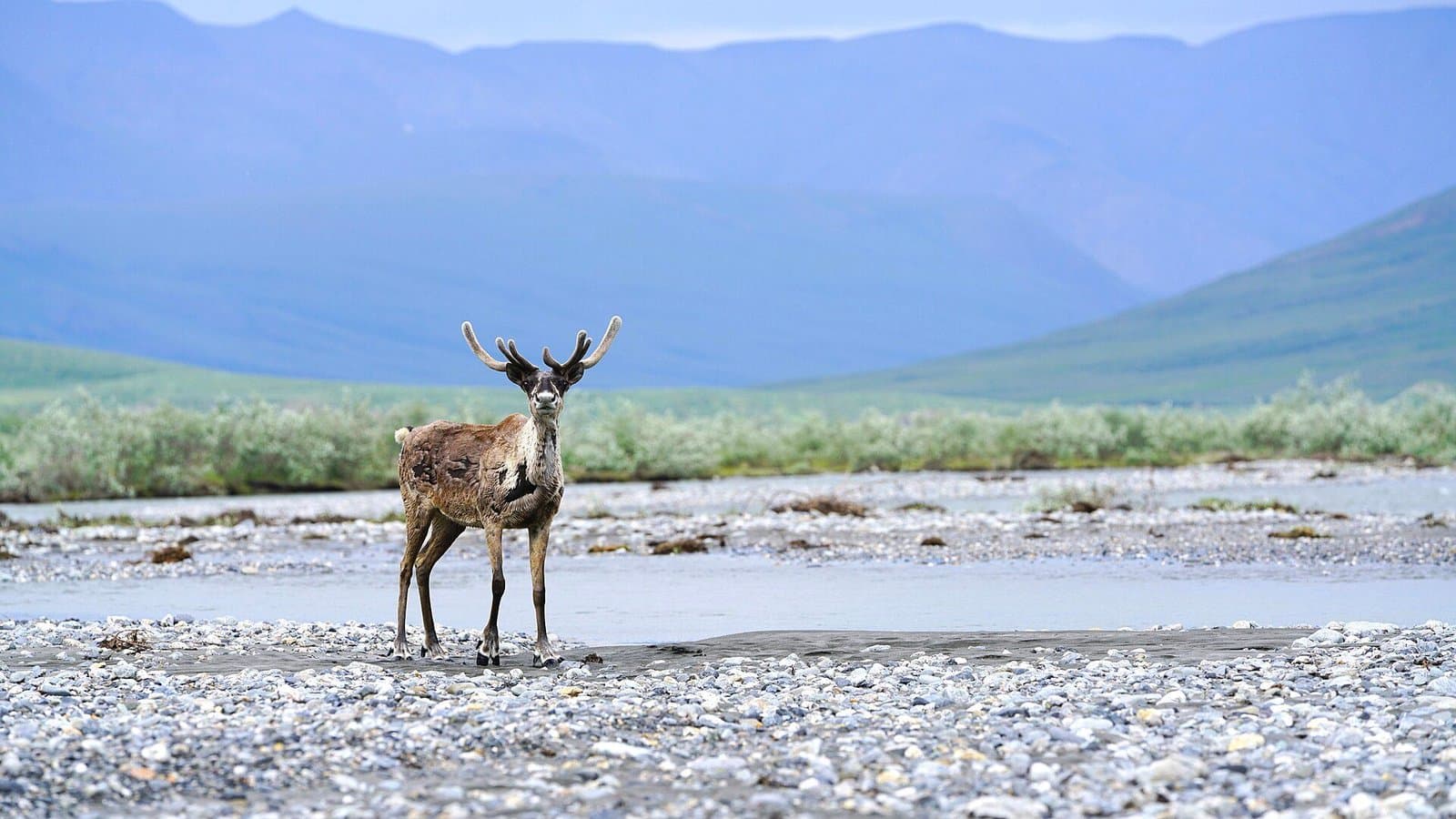
The service estimates the work could affect up to 12 bears from the Southern Beaufort Sea population, which it puts at 907 animals. That's about 1.3 percent. It does not expect any bear to be killed.
Ten of the 12 would fall under what the law calls Level B harassment, which covers acts with the potential to disrupt an animal's behavioral patterns, including migration, breathing, nursing, breeding, feeding or sheltering. Four would come from work on the ground, four from activity near dens and two from aircraft.
The other two would be cubs in dens, counted under Level A, the law's category for acts with the potential to injure.
The service says its models are "more likely to contribute to an overestimate, rather than an underestimate."
The proposal isn't final. The public can comment through Dec. 17. The agency also released a draft environmental assessment, a shorter review than a full environmental impact statement.
AIDEA's board meets Thursday to amend its budget for its coastal plain work. U.S. District Judge Sharon Gleason has said she would try to rule by Nov. 20 on lawsuits seeking to throw out the coastal plain leasing program and the leases sold under it.
The Gwich'in Steering Committee brought one of those suits along with 11 conservation groups, including the Sierra Club and The Wilderness Society. The Native Village of Venetie Tribal Government brought another, and the Natural Resources Defense Council and other groups brought the third.
In Kaktovik, the only community inside the refuge, the tribe and the village corporation, which owns 92,000 acres on the coastal plain, joined the case on the government's side. So did the North Slope Borough, the state, AIDEA, the Alaska Oil and Gas Association and the American Petroleum Institute.
Under the proposal, AIDEA would have to meet with the Village of Kaktovik before work begins and employ subsistence representatives on each shift.
It would also have to fly two infrared surveys from the air to find polar bear dens before ground work proceeds, the first between Nov. 25 and Dec. 25 and the second between Dec. 15 and Jan. 15. Crews would have to stay at least a mile away from any den the surveys find.
Aircraft would have to stay at least 1,500 feet above the ground when it's safe to do so, never fly lower within half a mile of a bear except in an emergency, and limit sudden changes in movement and direction.
The agency's estimates rely on studies in which researchers flew the coast between Point Barrow and the Canadian border, approaching bears at lower and lower altitudes until the animals changed their behavior.
In the agency's calculations, a helicopter taking off, landing or flying between 400 and 1,000 feet has a better than 99 percent chance of drawing a reaction from a bear. Between 1,000 and 1,500 feet, the chance is 82 percent for a helicopter and 3 percent for a fixed-wing plane. Above 1,500 feet, the chances fall to 5 percent for helicopters and less than 1 percent for planes.
The service said it used the response rates for active bears on barrier islands, the group that reacted most often, and applied a one-mile buffer around every flight path.
AIDEA's board in May approved up to $190 million for its coastal plain work, including permitting, studies and what it called "low-impact" 3D seismic, plus money to bid in a June federal lease sale. AIDEA holds leases from the refuge's first lease sale in 2021 and won three more tracts in June.
What did you make of this story? (no account needed)
Made by our human newsroom with AI. Reviewed by Cale Green. How humans and AI work here · Grow with our newsroom ·
Get Alaska News in your inbox
Create your free account and get the day’s top stories around 6 each morning, in a few minutes’ read.
Top stories, around 6 each morning.
Stories on what you follow, on Sundays.
Source: Equation 1: Equation 1 calculation method; Equation 2: Harassment estimates for surface and aircraft activities.





Comments
Sign in to leave a comment.
No comments yet. Be the first to share your thoughts.