AI image
Fairbanks' utility is writing down when it would start turning off your power
Golden Valley Electric Association is formalizing the point at which it would begin shutting off power to its members. Under a three-level alert system staff described to the board last month, the final level means rotating outages of 30 to 60 minutes, moving from one neighborhood to the next.
The levels track how much spare generating capacity is left. At Level 1, when the margin falls below 38 megawatts, the co-op posts to social media and calls its largest industrial customers. At Level 2, below 15 megawatts, members get texts and emails. Level 3 is no margin at all, and the lights start going off.
Golden Valley has never reached Level 3, and staff say it has come close to Level 1 several times in the past six months. The co-op has also said it operated with inadequate reserves on 236 of the last 250 days, more than 94 percent of the time. It has not explained publicly how that figure lines up with the alert thresholds.
The squeeze dates to February 2025, when the utility lost access to natural gas-fired power from the Anchorage area and started burning more diesel. On June 1 its fuel charge rose about 61 percent, roughly $46 a month for an average household.
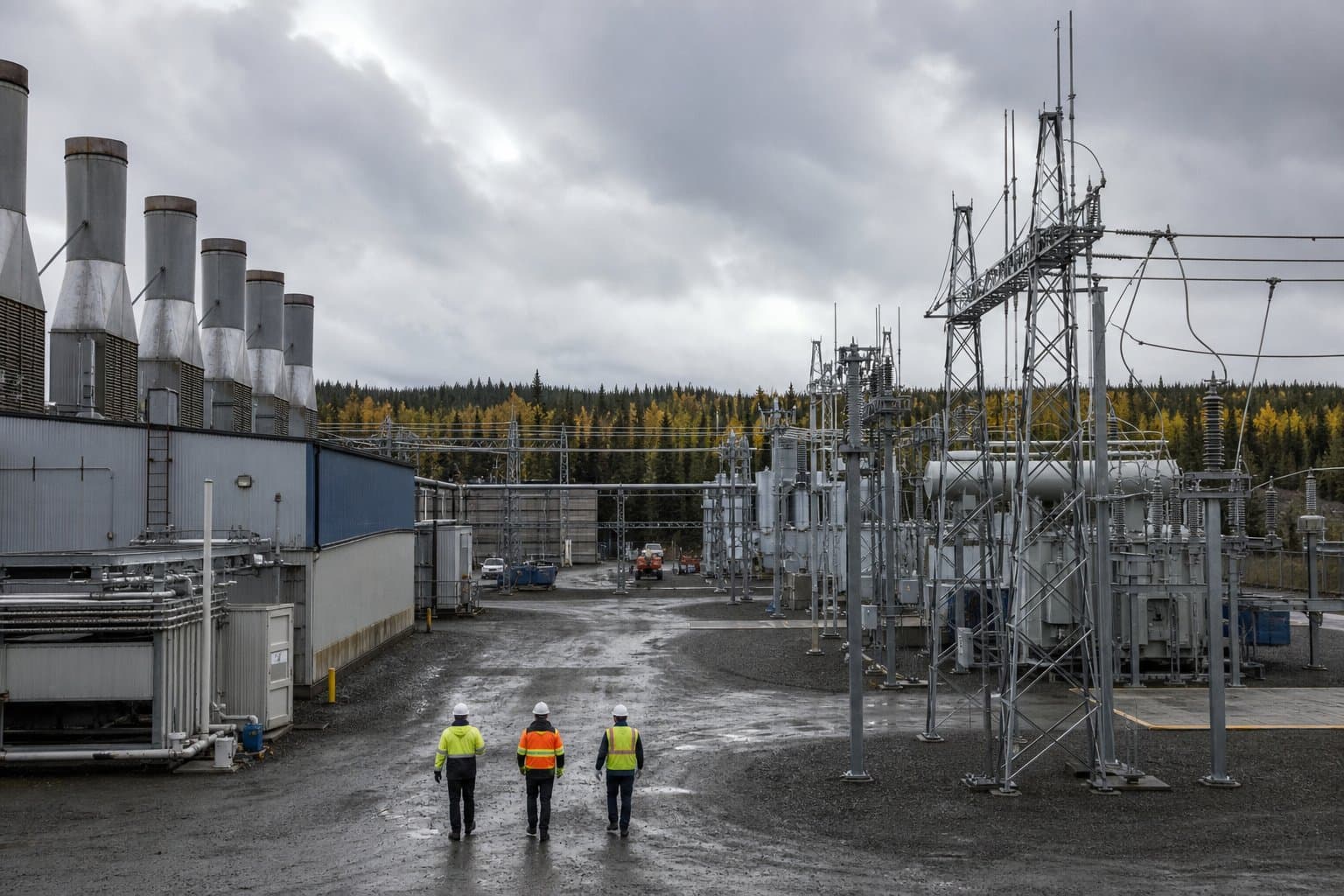
The board's answer is more generation. It voted Aug. 25 to authorize CEO Travis Million to pursue up to $80 million toward a new source of around-the-clock power, most likely a used gas turbine at the North Pole plant, running on naphtha rather than diesel. GVEA has inspected two units. Modeling put the fuel savings near $35 million a year and projected bills falling about 5 percent. Best case, it is in service in three to four years, financed over 30 years, dropping the co-op's equity from 41.8 percent to 37.9 percent.
That authorization is permission to go looking, not a purchase. Any contract returns to the board.
Members who testified at the Delta Junction meeting pressed the board to keep wind, solar, battery storage, demand response and residential solar rebates in the review alongside new thermal generation.
The alert rules go to state regulators in mid-September, where the public can file written comments. Staff will walk the board and members through the program at the Sept. 22 meeting.
AI-assisted, reviewed by editors.
Stay informed. Support what matters.
Free, permanent access to local news you can verify. Subscribe to support Melinda Communities.News and go ad-free.
Related Coverage
Golden Valley was short on reserves 94 percent of the last 250 days
Alaska News · 2w ago
Utility warns of rolling blackouts in Southcentral as soon as this winter
Alaska News · 1mo ago
GVEA's fuel charge drops 12.6%, reversing about a third of June's increase
Alaska News · 3d ago
GVEA files 62% cost-of-power increase with regulators
Alaska News · 3mo ago
GVEA updates rules for connecting generators 20 MW and larger
Alaska News · 2mo ago
Comments
Sign in to leave a comment.
No comments yet. Be the first to share your thoughts.