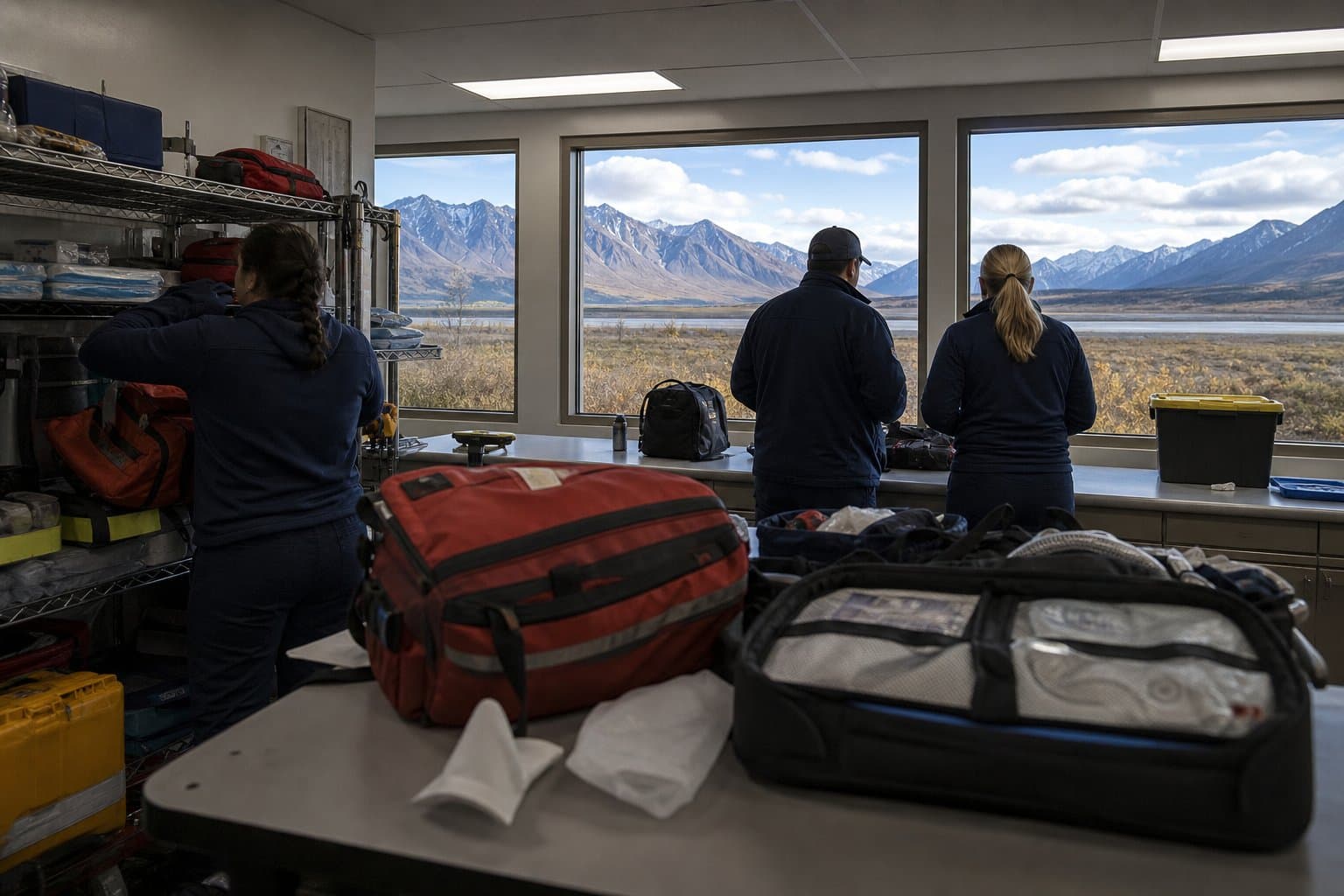
AI image
Copper River responders will learn to start addiction treatment in the field
One paid ambulance crew and more than 20 volunteers cover the Copper River Census Area: 24,692 square miles, slightly larger than West Virginia, with 2,617 people spread across 19 communities and eight federally recognized tribes.
A $300,000 federal grant over two years will train them to reverse opioid overdoses, handle behavioral health emergencies, and start patients on buprenorphine before they ever reach a hospital. The money goes to the Copper River Emergency Medical Services Council in Glennallen, a nonprofit that has served the basin since the early 1980s, and includes recruiting at least five more responders and training 40 in all.
Starting buprenorphine in the field is the newer piece. Anchorage has been doing it since spring: the fire department administered it ten times between March and June, and six of those patients were connected to treatment afterward, Dr. Jennifer Pierce told an Assembly committee in August.
The need is not in dispute. Alaska's drug overdose death rate rose 47 percent between 2022 and 2023, according to the state health department.
The same federal agency awarded another $300,000 the same day to Norton Sound Health Corporation in Nome, to train at least 80 responders across Nome and 15 remote communities in overdose reversal, crisis intervention, suicide prevention and buprenorphine.
Source: Department of Health and Human Services ().
Drafted with AI. Edited by Cale Green (1 revision). Reviewed by Cale Green. Who is accountable.
Stay informed. Support what matters.
Free, permanent access to local news you can verify. Subscribe to support Maggie AlaskaNews and go ad-free.
Related Coverage
Nine Southeast Alaska communities are getting naloxone vending machines
Alaska News · 2w ago
Anchorage set to get $3 million to expand its crisis-response system
Alaska News · 4w ago
Recover Alaska wins $349,809 to put a peer recovery specialist on the lower Kenai Peninsula
Alaska News · 2w ago
Federal money will put naloxone and first aid training on remote Alaska fishing boats
Alaska News · 2w ago
Alaska offers fast-track fall training for substance-abuse counselors
Alaska News · 3mo ago
Comments
Sign in to leave a comment.
No comments yet. Be the first to share your thoughts.