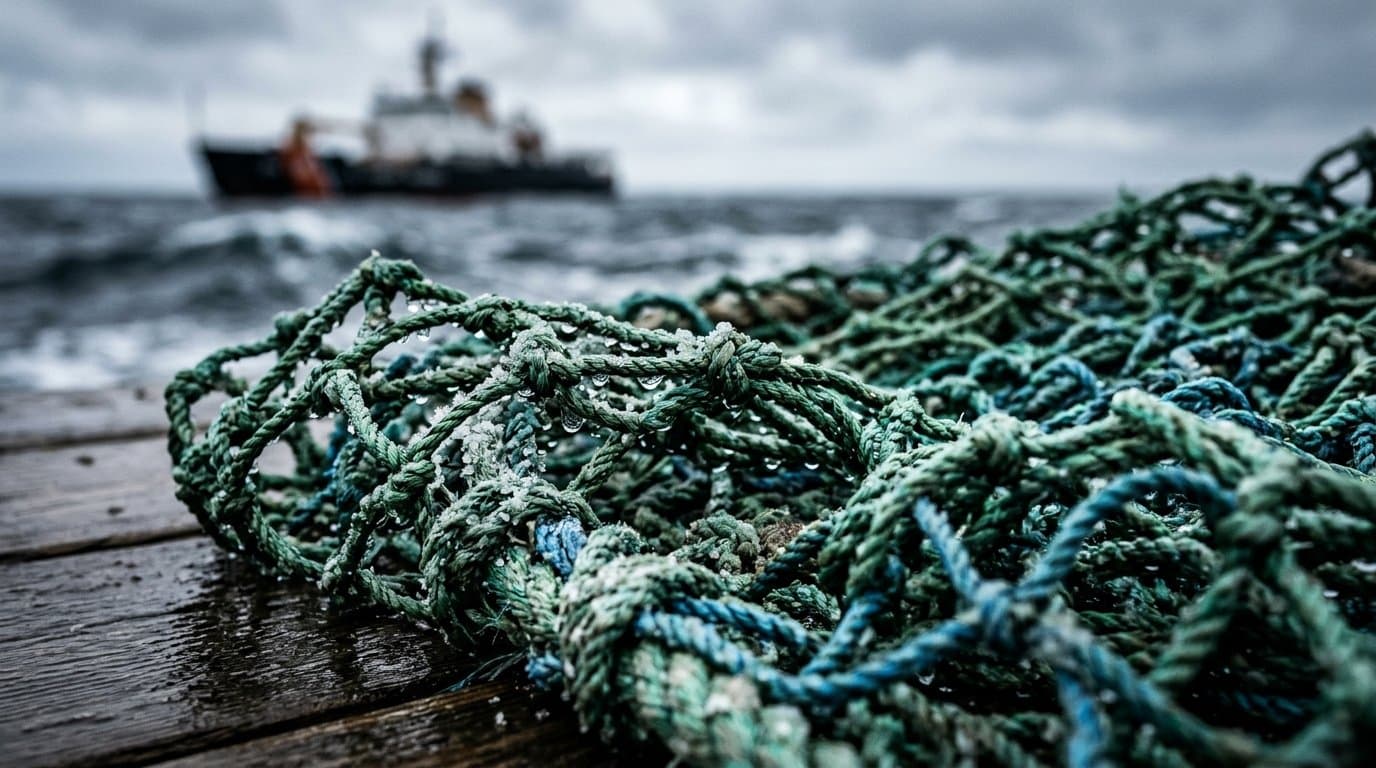
AI image
Cutter Munro returns from Bering Sea patrol that tracked three Chinese research ships
The Coast Guard Cutter Munro returned to Alameda, California, on Oct. 9 after a 112-day patrol of the Bering Sea and Arctic Ocean, where its crew monitored three Chinese-flagged research vessels and boarded commercial fishing boats, the Coast Guard said.
The Munro covered more than 23,000 nautical miles. Under what the Coast Guard called Operation Frontier Sentinel, its crew monitored the Chinese research vessels operating in and around U.S. Arctic waters. The crew also conducted exercises with the Royal Canadian Navy and took part in Operation Tundra Merlin, a homeland defense operation with U.S. and Canadian military forces.
Closer to Alaska's fishing fleet, law enforcement teams boarded commercial fishing vessels to check compliance with federal safety regulations and fisheries laws meant to preserve fish stocks. The agency called Munro the "frontline guardian of the $6 billion Alaskan commercial fishery."
The Coast Guard did not say how many vessels Munro boarded or whether teams found violations. A photo caption describes one team finishing an inspection aboard a fishing vessel Aug. 25, then riding the cutter's small boat back through rough Bering Sea conditions. It does not name the vessel.
The cutter Waesche, also based in Alameda, reported 15 boardings and 11 violations from its own 113-day Bering Sea patrol, the Coast Guard said in May. That crew also rescued five mariners from the fishing vessel Ocean Bay near Umnak Island.
"The Arctic is a demanding maritime environment that can test any crew and vessel," said Capt. Adam J. Disque, Munro's commanding officer. Disque took command of Munro in June, succeeding Capt. James O'Mara.
Commissioned in 2017, Munro is one of four 418-foot Legend-class national security cutters based in Alameda.
Source: U.S. Coast Guard.
Made by our human newsroom with AI. Reviewed by Cale Green. How humans and AI work here · Grow with our newsroom
Stay informed. Support what matters.
Free, permanent access to local news you can verify. Subscribe to support Maggie AlaskaNews and go ad-free.
Related Coverage
Coast Guard's Seward shipyard job on the Sitka cutter Kukui reaches $3.3 million
Alaska News · 4d ago
Coast Guard cutter Stratton changes command at anchor off Kotzebue
Alaska News · 1mo ago
Federal agencies inspect cargo at the port that supplies most of Alaska
Alaska News · 4h ago
NOAA moves to renew paperwork for a Bering Sea trawl fleet down to 14 active vessels
Alaska News · 4d ago
NMFS closes Central Gulf cod for hook-and-line vessels 50 feet and up
Alaska News · 1mo ago
Comments
Sign in to leave a comment.
No comments yet. Be the first to share your thoughts.