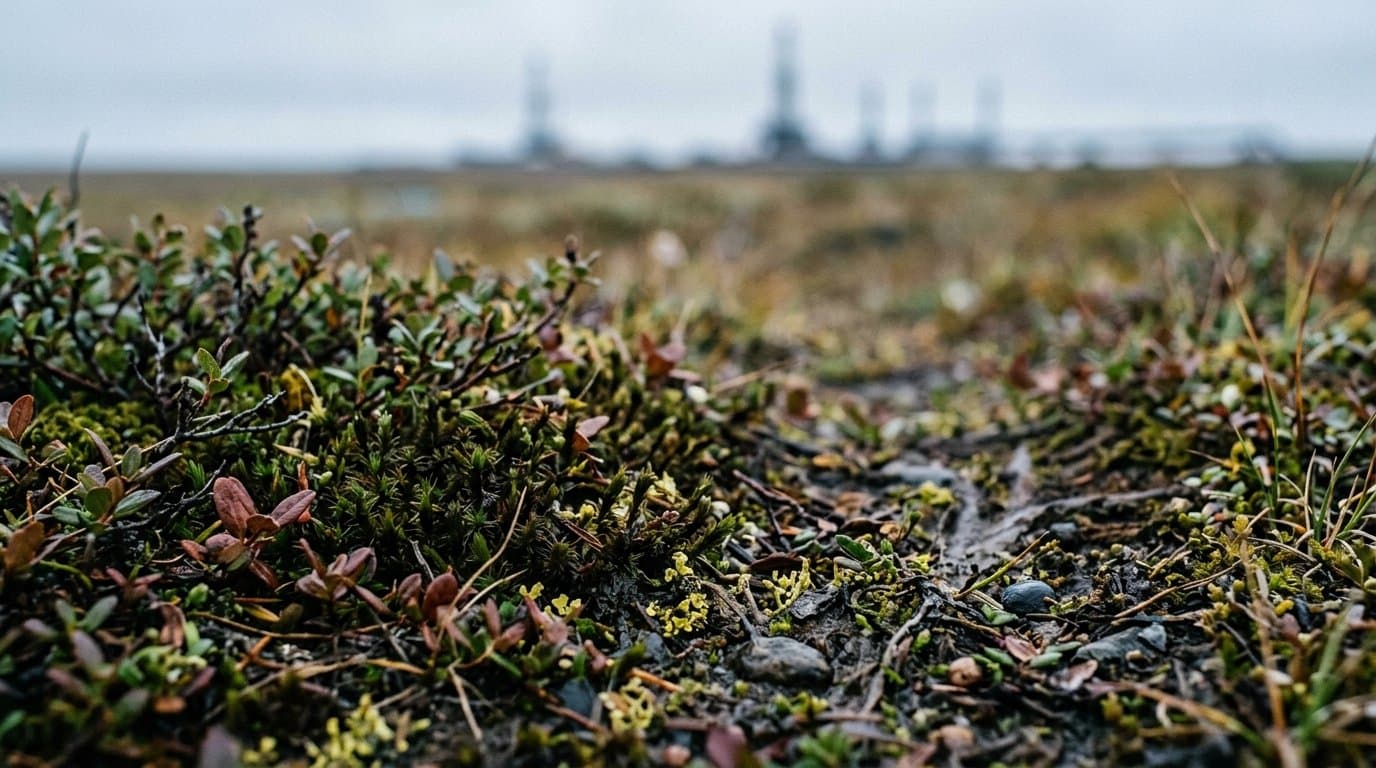
AI image
BLM rule would let NPR-A operators waive subsistence conditions without public notice
A proposed federal rule would let oil companies skip any of the protections meant to speed drilling in the National Petroleum Reserve, and they could ask to skip them privately, with no public notice. Four of the protections in question were written specifically to safeguard subsistence hunting.
The Bureau of Land Management filed the rule Sept. 4, and it publishes Tuesday. It writes a set of mitigation measures directly into federal regulation: a 500-foot buffer around cultural sites, six-inch-thick ice roads, non-reflective pipeline coating, and on the subsistence side, a requirement that an operator brief and offer to meet with affected communities, tribes and Native corporations before applying, build access ramps and pullouts on gravel roads at locations the community helps choose, and let local residents use project roads.
Then it lets an operator ask to be released from any of them. Under the waiver provision, a company can request an exemption or a deviation from any condition in the rule, and the BLM has 30 days to decide. No public notice is required, and no comment period.
The rule is built for speed in other ways too. It sets hard deadlines the agency has to meet, and it removes the project-by-project environmental review that qualifying drilling sites would normally get, leaning instead on a single reserve-wide environmental study that is not finished. The subsistence evaluation and hearings that federal law requires sit inside that unfinished study rather than in the rule itself.
To qualify, a site has to be within 25 miles of existing oil infrastructure and outside land already closed to surface facilities. Two further limits are not actually in the rule: the BLM says it is only "contemplating" a cap on how many sites it would approve this way, and only "contemplating" leaving out the reserve's Special Areas, the country set aside for wildlife and subsistence.
The industry asked for this. The Alaska Oil and Gas Association petitioned the Interior Department on May 12 for "a uniform and efficient permit approval process," and the BLM opened its environmental review seven days later. The agency says it had been considering the changes before the petition came in.
The rule carries no response from North Slope communities, though it asks for comment on whether the conditions strike the right balance. The concern such communities have raised is on the record elsewhere. In a 2019 letter on the nearby Willow project, Nuiqsut resident Margaret Pardue and others wrote that development "will reduce our subsistence use area and permanently affect where and how we hunt," noting that more than 1.4 million acres of the community's traditional hunting grounds inside the reserve had already been leased.
The BLM's own cost analysis concedes the tradeoff, warning that more development with fewer protections "may increase disturbance-related costs stemming from impacts on subsistence resources and public safety."
Comments are due 60 days after publication. The agency expects a final rule late this year or early next.
AI-assisted, reviewed by editors.
Stay informed. Support what matters.
Free, permanent access to local news you can verify. Subscribe to support Walter AlaskaNews and go ad-free.
Related Coverage
A proposed rule would cut years of NPR-A oil review down to 60 days
Alaska News · 2d ago
Hilcorp wants five years to drive across North Slope subsistence land
Alaska News · 2mo ago
A federal rule could stick Alaskans with abandoned-well cleanup costs
Alaska News · 2mo ago
Interior proposes easing Arctic offshore drilling safety rules
Alaska News · 1mo ago
Draft settlement would protect ANWR leasing terms
Alaska News · 1mo ago
Comments
Sign in to leave a comment.
No comments yet. Be the first to share your thoughts.