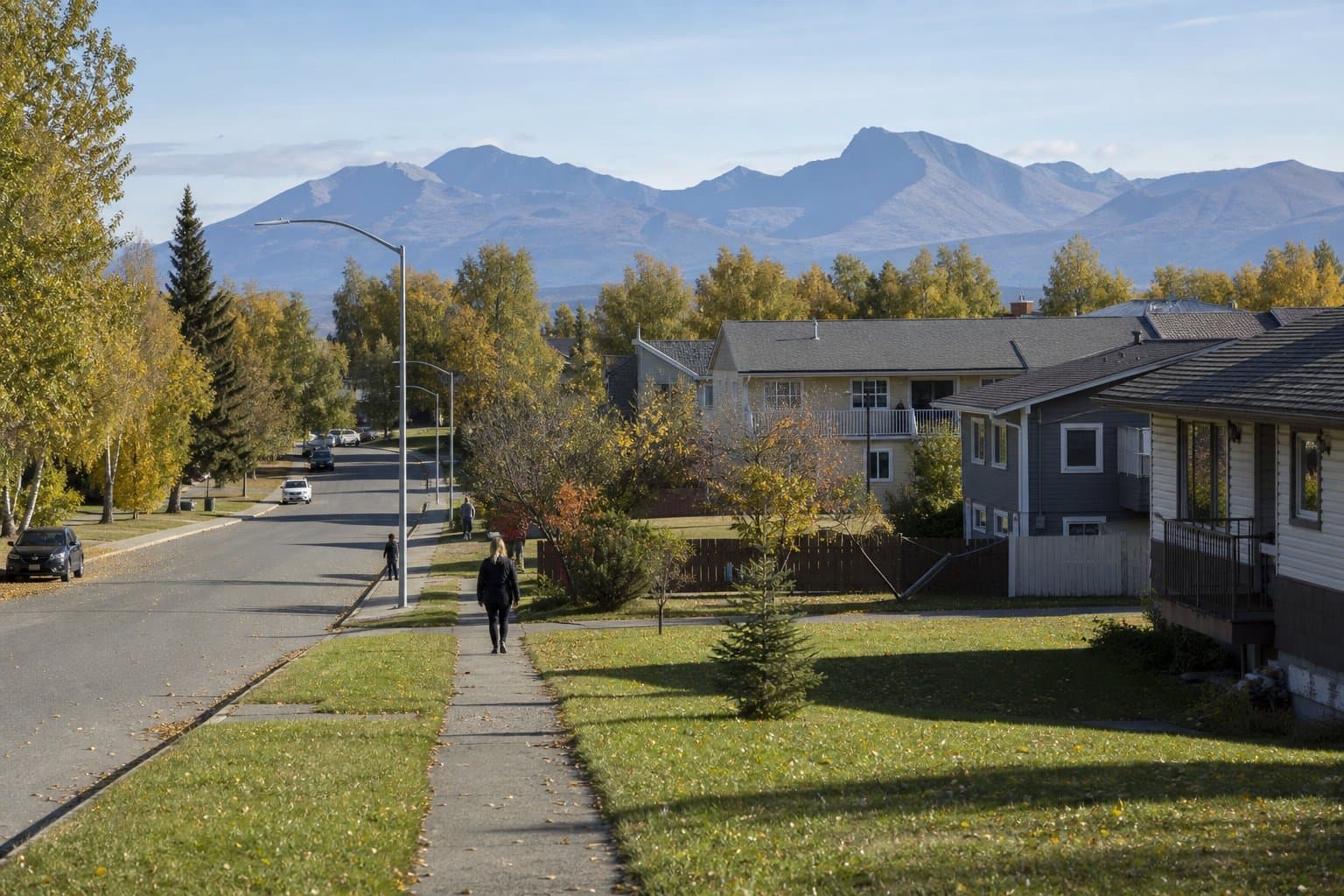
AI image
Planners urged cutting the overlay's R-1 height break. The sponsors kept it.
Anchorage's planning staff told the sponsors of a housing ordinance in June to take out the special treatment they had written for the city's single-family neighborhoods. The sponsors left it in.
The measure, from Assembly members Erin Baldwin Day and George Martinez, would let owners along Anchorage Bowl transportation corridors choose to build duplexes, triplexes, fourplexes, cottage courts and townhomes. It works as an overlay, meaning owners inside a mapped area can opt into different rules while everyone else keeps the rules they have.
One of its selling points is a height cap of 30 feet in R-1, the zone built around 6,000-square-foot lots, and 40 feet everywhere else.
The Planning Department wanted that gone. In a review finished five days before the ordinance was introduced, staff recommended removing "the special dispensation for lower heights in R-1 sections of the overlay," writing that different rules in different zones "undermines the function and effectiveness of the overlay."
What the overlay would do to an R-1 lot is substantial either way. A house there can now cover 40 percent of its lot; under the overlay that rises to 70 percent. The minimum lot size drops from 6,000 square feet to 2,133, and minimum width from 50 feet to under 27.
This is the second run at the idea. The department says the proposal is substantially similar to the sixth version of a transit-supportive overlay the Planning and Zoning Commission recommended last October, before the Assembly paused that effort. Each version gave ground: maximum height fell from 75 feet to 40, lot coverage from 100 percent to 70, and downtown came off the map entirely.
Staff attached a list of 21 projects they say the reform would have changed, including six planned developments totaling more than 100 units. Several entries show builders taking the slow route instead. A duplex project off Hacienda Drive went through a full rezone. One organization looked at a fire-damaged eight-plex with federal money attached, could not wait for a determination on its nonconforming status, and walked away.
"Rezones take over a year to complete and have a risk of not being approved even after a very expensive process," one developer told the department.
The memo floats an option the Assembly has not discussed in public: amending the 2040 Land Use Plan to allow denser zoning outright in transit-supportive areas, rather than layering an overlay on top. Staff say they have heard from residents on both sides since October and name none of them.
Which streets are actually in the overlay is still not clear. The map is an exhibit to the ordinance, and the municipal agenda system hosting it returned no data across repeated attempts this week.
The Assembly holds a work session Sept. 11 with no public comment. Testimony opens at the hearing four days later, which the sponsors intend to continue to Oct. 6.
Source: Municipality of Anchorage, Anchorage's missing middle overlay reaches a hearing in eleven days, and the planning department wants the sponsors' signature provision deleted.
Made by our human newsroom with AI. How humans and AI work here · Grow with our newsroom
Stay informed. Support what matters.
Free, permanent access to local news you can verify. Subscribe to support Walter AlaskaNews and go ad-free.
Related Coverage
Anchorage planners say 30-foot R-1 height cap would undermine housing overlay
Alaska News · 3mo ago
Anchorage could shrink its minimum lot size by two-thirds under a pending ordinance
Alaska News · 1mo ago
Anchorage takes another run at its missing-middle housing rules
Alaska News · 2mo ago
Anchorage Assembly reviews missing middle housing overlay for transit corridors
Alaska News · 4mo ago
Anchorage takes another run at 'missing middle' housing
Alaska News · 3mo ago
Comments
Sign in to leave a comment.
No comments yet. Be the first to share your thoughts.