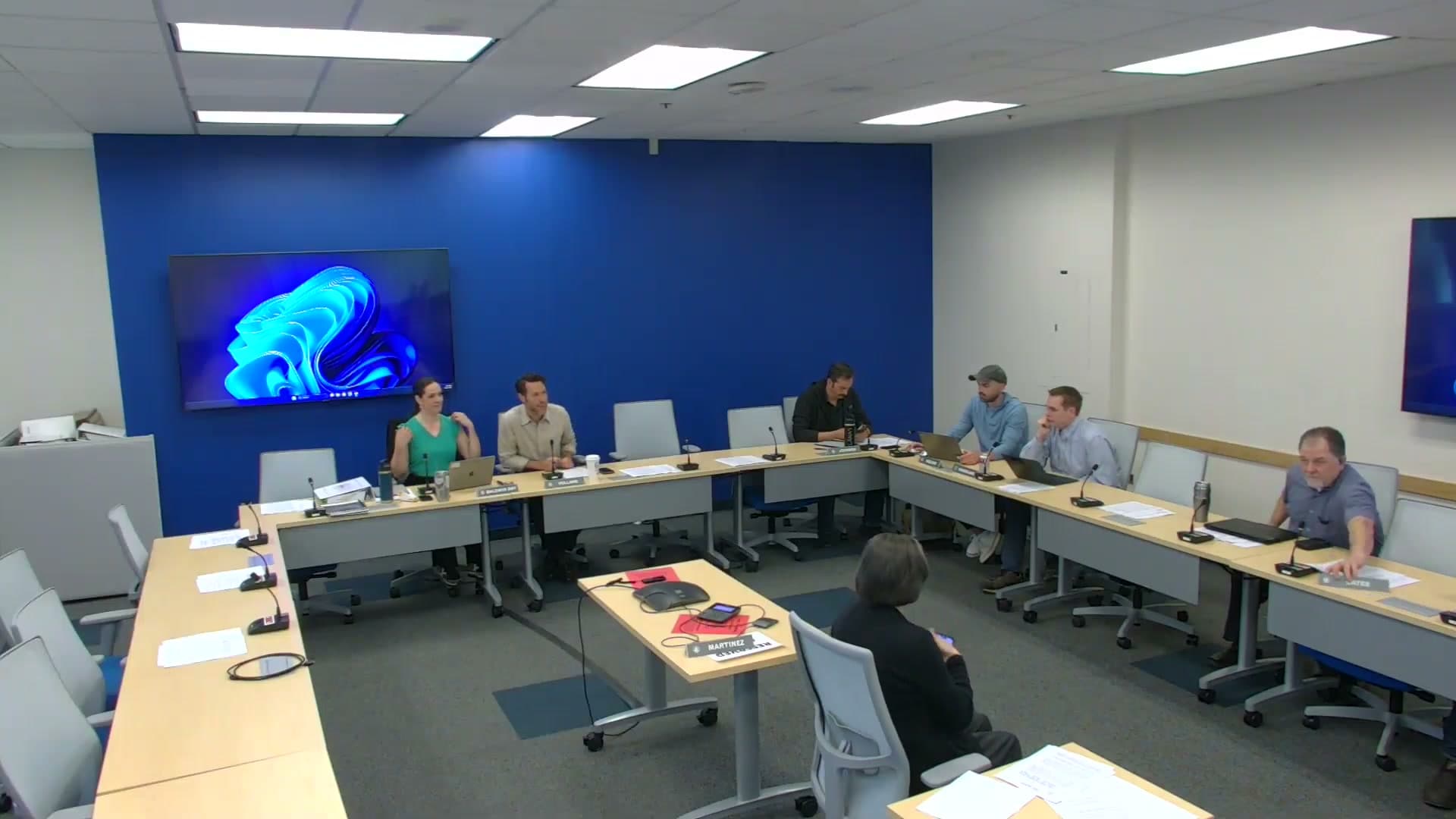
Frame from "Anchorage Assembly: Worksession re AO 2026-85 amending Anchorage Municipal Code Title 21 to create a new missing..." · Source
Anchorage Assembly reviews missing middle housing overlay for transit corridors
Property owners along Anchorage's major transit corridors could gain an easier path to building duplexes and small apartment buildings — without a rezone — under a zoning overlay the Assembly took up in a Wednesday worksession. The Missing Middle Housing Opportunity Overlay, AO 2026-85, would implement transit-supportive corridors from the Anchorage 2040 Land Use Plan, aiming to close the gap between what the city's comprehensive plan has urged since 2001 and what the zoning code actually permits.
The overlay is opt-in and does not change underlying zoning: a property owner chooses whether to use the looser standards. Those would allow lot coverage up to 70 percent, eliminate front setbacks, and permit heights up to 40 feet — though the cap stays at 30 feet in R-1 single-family zones, a change made in response to shadow concerns raised during an earlier version. It refines the 2025 Transit Supportive Development Overlay (TSDO), which sponsors Erin Baldwin Day and George Martinez paused last fall for more community dialogue.
Supporters frame it as a tool to hit housing targets the city keeps missing. Baldwin Day pointed to residential permits rising from 261 units in 2023 to 299 in 2024 and 393 in 2025 — a pace she said "does not get us to 10,000 homes in 10 years." She tied it to prior steps: the 2023 HOME Initiative, which allowed accessory dwelling units citywide and duplexes by right across the Bowl, and the 2022 end of parking minimums. Vice Chair Anna Brawley cast it as a 25-year-old unmet plan — "If not this, then what?" — and Martinez argued Anchorage repeatedly stalls "where the rubber meets the road."
The skepticism the overlay is meant to navigate is more specific than the sponsors' framing suggests. Critics of corridor upzoning argue that taller, lot-filling buildings change the scale and character of established neighborhoods; that eliminating setbacks places structures close to existing homes, raising shadow and privacy concerns; and that added density strains infrastructure — aging water and sewer lines, narrow streets, and snow storage — that wasn't built for it. With parking minimums already gone citywide, some residents expect new multi-unit buildings to push cars onto neighborhood streets. Others question the procedure itself: because the overlay is opt-in and skips the rezone process, neighbors of a parcel that opts in wouldn't get the formal notice and hearing a conventional rezone provides. And some doubt that loosening standards will yield the affordable housing the city wants, rather than market-rate or speculative redevelopment.
That tension — a density goal written into city plans for a quarter century, against persistent neighborhood resistance — is what the overlay tries to thread, with opt-in participation and the R-1 height cap as its main concessions. The ordinance remains in the worksession stage, and no vote was scheduled Wednesday.
This article is based on a public meeting of Municipality of Anchorage — Anchorage Assembly: Worksession re AO 2026-85 amending Anchorage Municipal Code Title 21 to create a new missing... ().
Drafted with AI. Edited by Cale Green (1 revision). No full editor review is on record. Who is accountable. Transcript byLucas Brown
Watch key moments from the source meeting. Click to expand.
Stay informed. Support what matters.
Free, permanent access to local news you can verify. Subscribe to support Walter AlaskaNews and go ad-free.
Related Coverage
Anchorage takes another run at its missing-middle housing rules
Alaska News · 1mo ago
Anchorage takes another run at 'missing middle' housing
Alaska News · 2mo ago
Denser housing on 30,000 Anchorage lots: hearing resumes Oct. 6
Alaska News · 7h ago
Anchorage could shrink its minimum lot size by two-thirds under a pending ordinance
Alaska News · 1w ago
Planners urged cutting the overlay's R-1 height break. The sponsors kept it.
Alaska News · 1w ago
Comments
Sign in to leave a comment.
No comments yet. Be the first to share your thoughts.