AI image
Anchorage paid to expand the crime center, then put off the rules
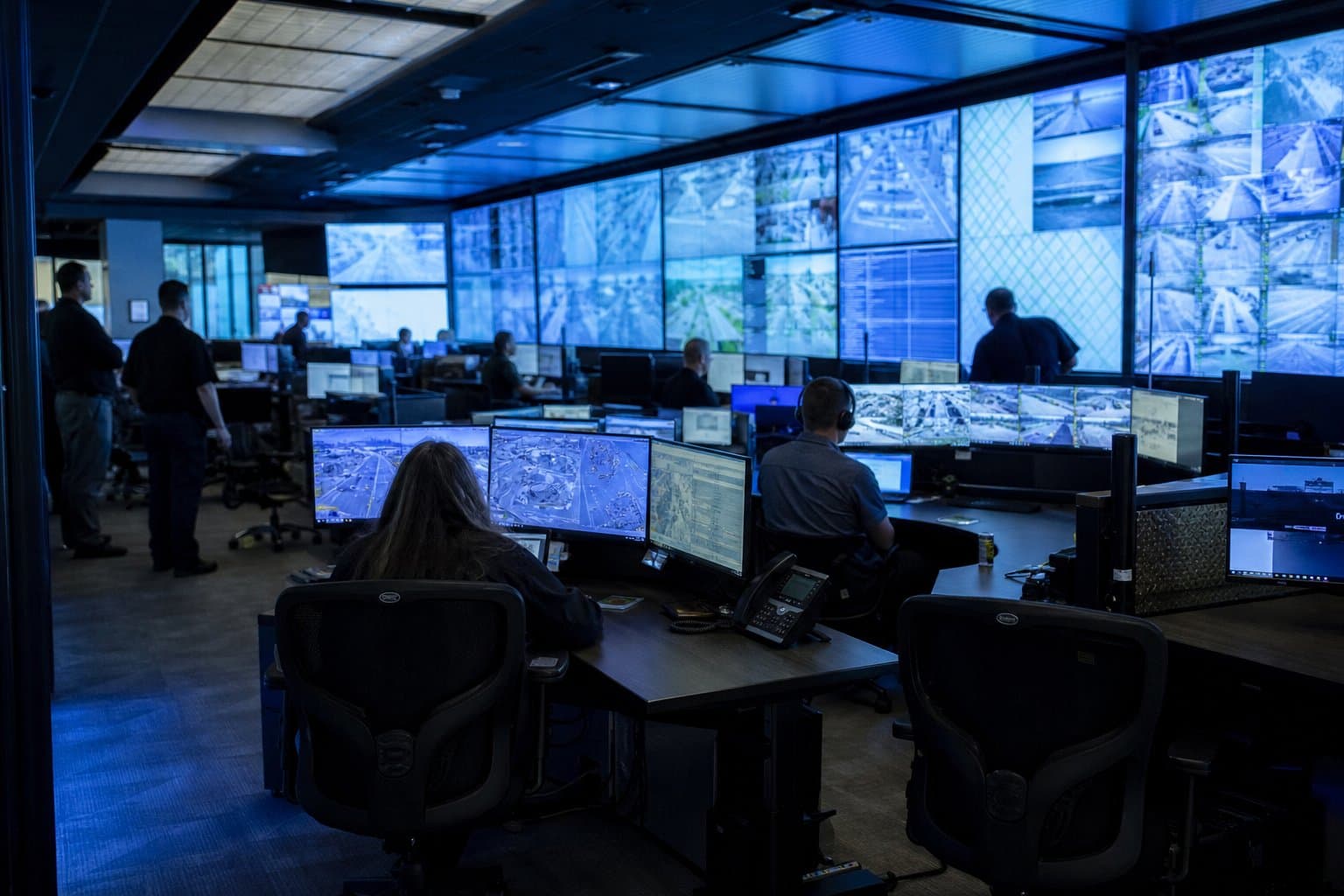
The Anchorage Assembly paid to expand the police department's Real Time Crime Center on Tuesday, and then postponed the hearing on the rules meant to govern it.
Members approved a $598,998 buildout the same night they continued, without a vote, the public hearing on an ordinance that would write limits on the center into city code. That hearing moves to Sept. 15. Until it happens, the center runs on police department policy rather than law.
The purchase goes to ThunderCat Technology, paid out of the fund that holds fines and forfeited property rather than general municipal revenue. Chief Sean Case recommended it and Mayor Suzanne LaFrance submitted it. It had been postponed twice before passing.
The Assembly approved the center itself last September, in a five-year contract with Axon Enterprise worth about $11.8 million, built to take up to 750 camera feeds along with license plate readers and drones. The ordinance's findings say what happened next: "the operation of these technologies is presently governed only by departmental policy which by its own terms does not apply in any criminal or civil proceeding."
Case wrote those policies himself, effective in February. They cap plate-reader data at 14 days, limit search access to fewer than 10 employees, and require him to assess quarterly whether the public safety benefit outweighs the privacy risk. The ordinance would take limits like those out of the chief's hands and put them in code.
Sponsored by Assembly members Keith McCormick and Sydney Scout and Vice Chair Daniel Volland, it would require plate, video, audio and sensor data deleted within 14 days unless preserved as evidence or under a warrant, litigation hold or records request. Plate readers could only check against five categories: stolen vehicles, emergency alerts, felony warrants, felony investigations and missing persons. Not misdemeanors. Live camera monitoring would shut off after 60 minutes without a supervisor's written justification. The plate reader authorization would expire at the start of 2031 unless renewed, and any new surveillance technology would need Assembly approval for a 90-day trial first.
The sponsors wrote that the center "may provide situational awareness for specific incidents, but it may not serve as a system of continuous observation or virtual patrol."
Case made a similar distinction himself last month. A slide he showed the Assembly set video against plate readers, with the video column reading "We cannot find and track people" directly above "It's possible to find and track objects." The plate reader column said the department can pull a plate and a vehicle's location going back 14 days, but not who was driving.
Testimony reopens Sept. 15. Anyone who signed up for Tuesday has to sign up again.
Source: Anchorage approved the crime center's $599,000 buildout on September 1, and sent the ordinance that would govern it to another hearing on September 15.
Made by our human newsroom with AI. How humans and AI work here · Grow with our newsroom
Discussed in
Stay informed. Support what matters.
Free, permanent access to local news you can verify. Subscribe to support Walter AlaskaNews and go ad-free.
Related Coverage
Anchorage Assembly takes up a $599,000 crime center purchase and surveillance limits
Alaska News · 1mo ago
Anchorage weighs surveillance rules 11 months after buying the system
Alaska News · 1mo ago
As a crime center vote nears, Anchorage weighs whether its privacy limits should be policy or law
Alaska News · 1mo ago
Anchorage delays surveillance rules as sponsors and mayor remain divided
Alaska News · 1mo ago
Mayor's substitute puts Anchorage's surveillance network before the Assembly Tuesday
Alaska News · 1mo ago
Comments
Sign in to leave a comment.
No comments yet. Be the first to share your thoughts.