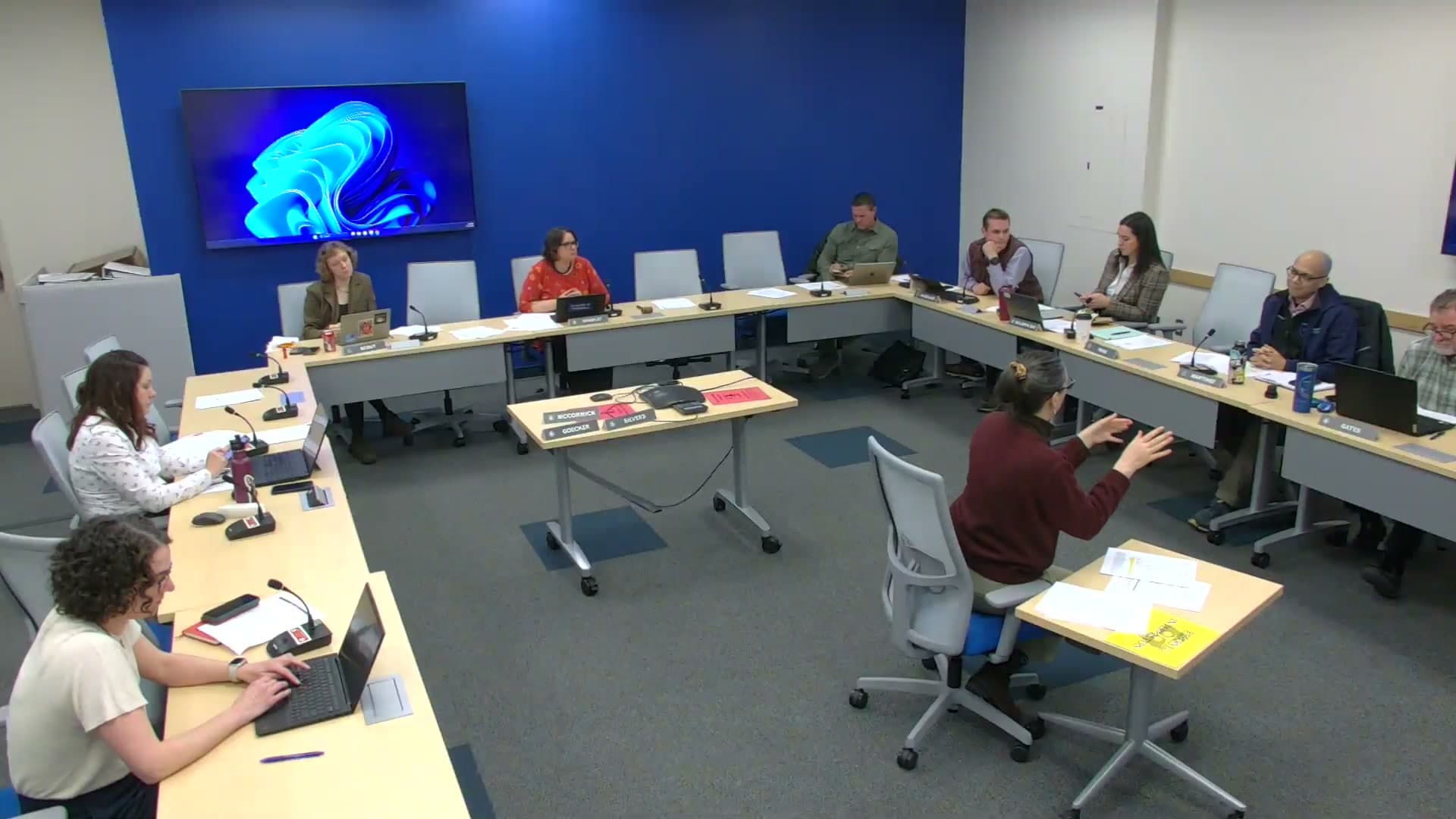
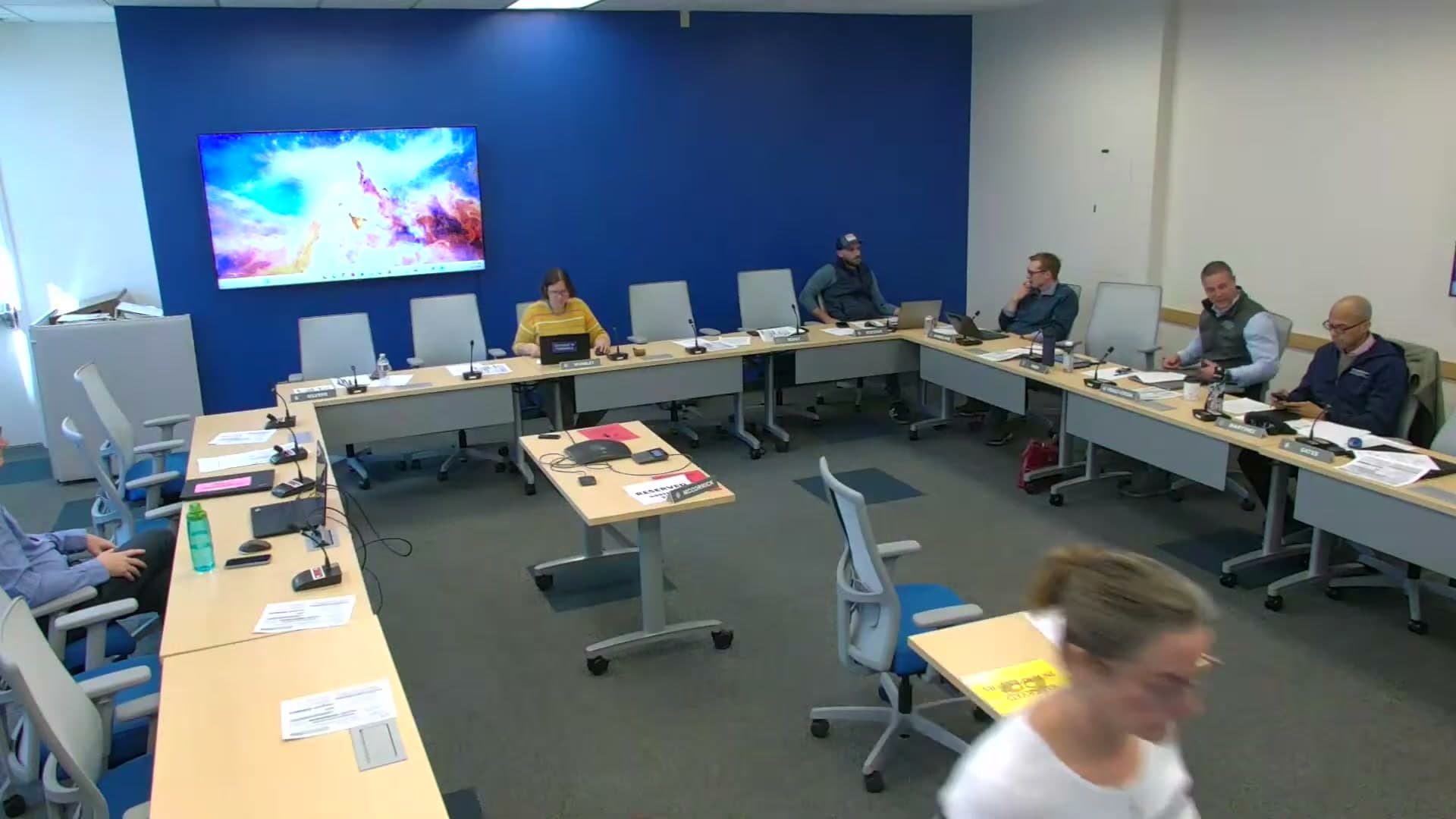
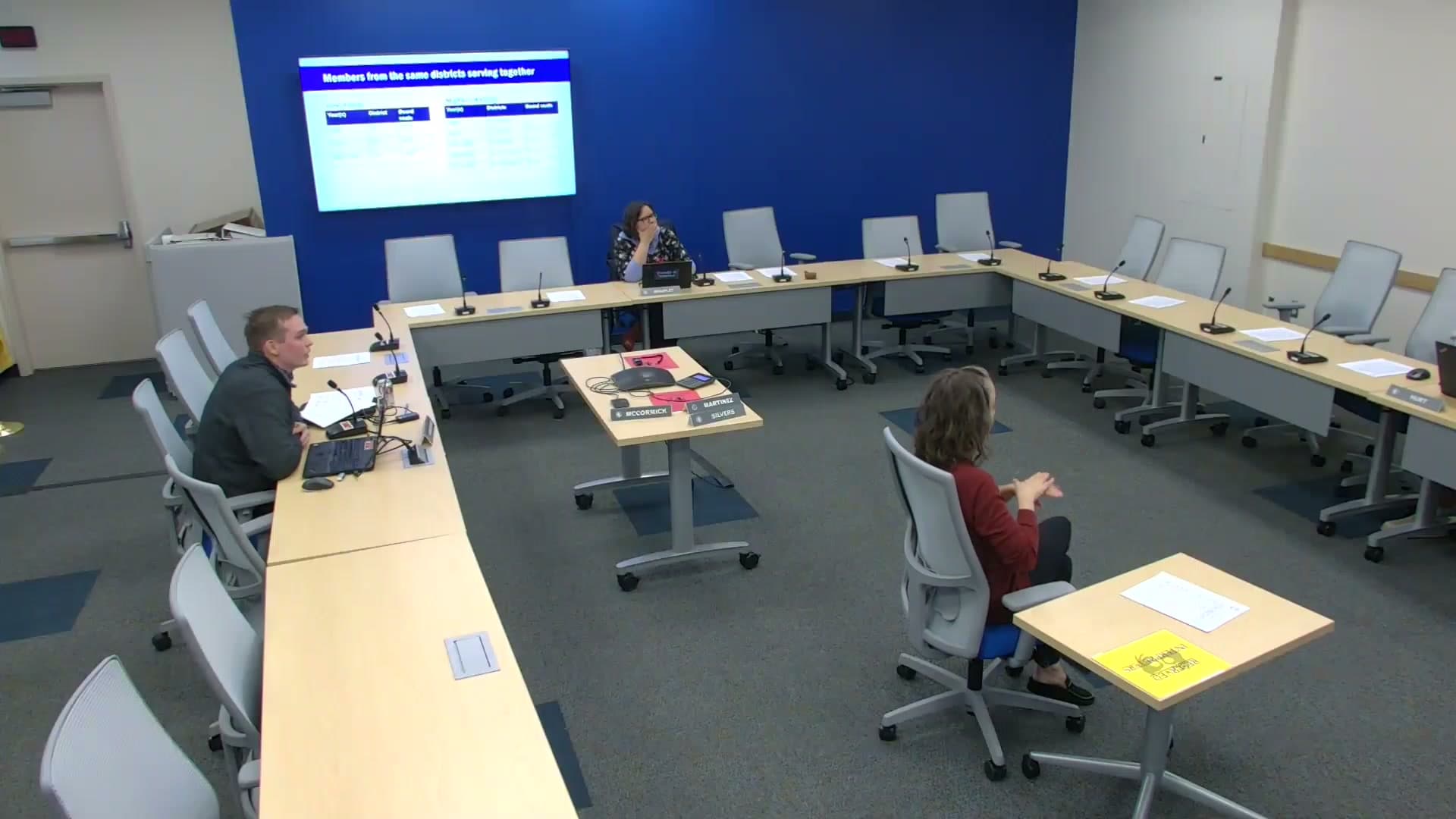
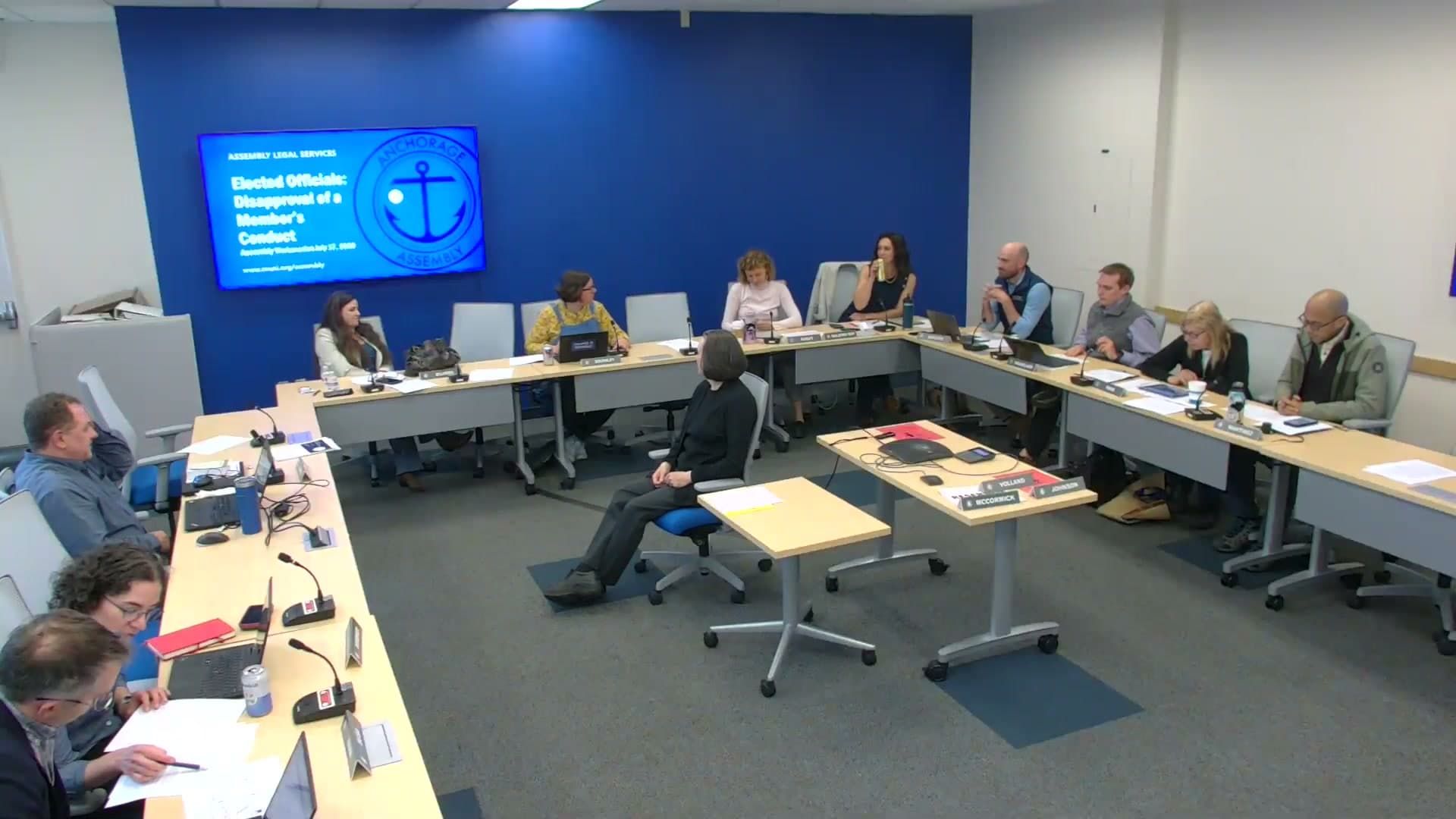
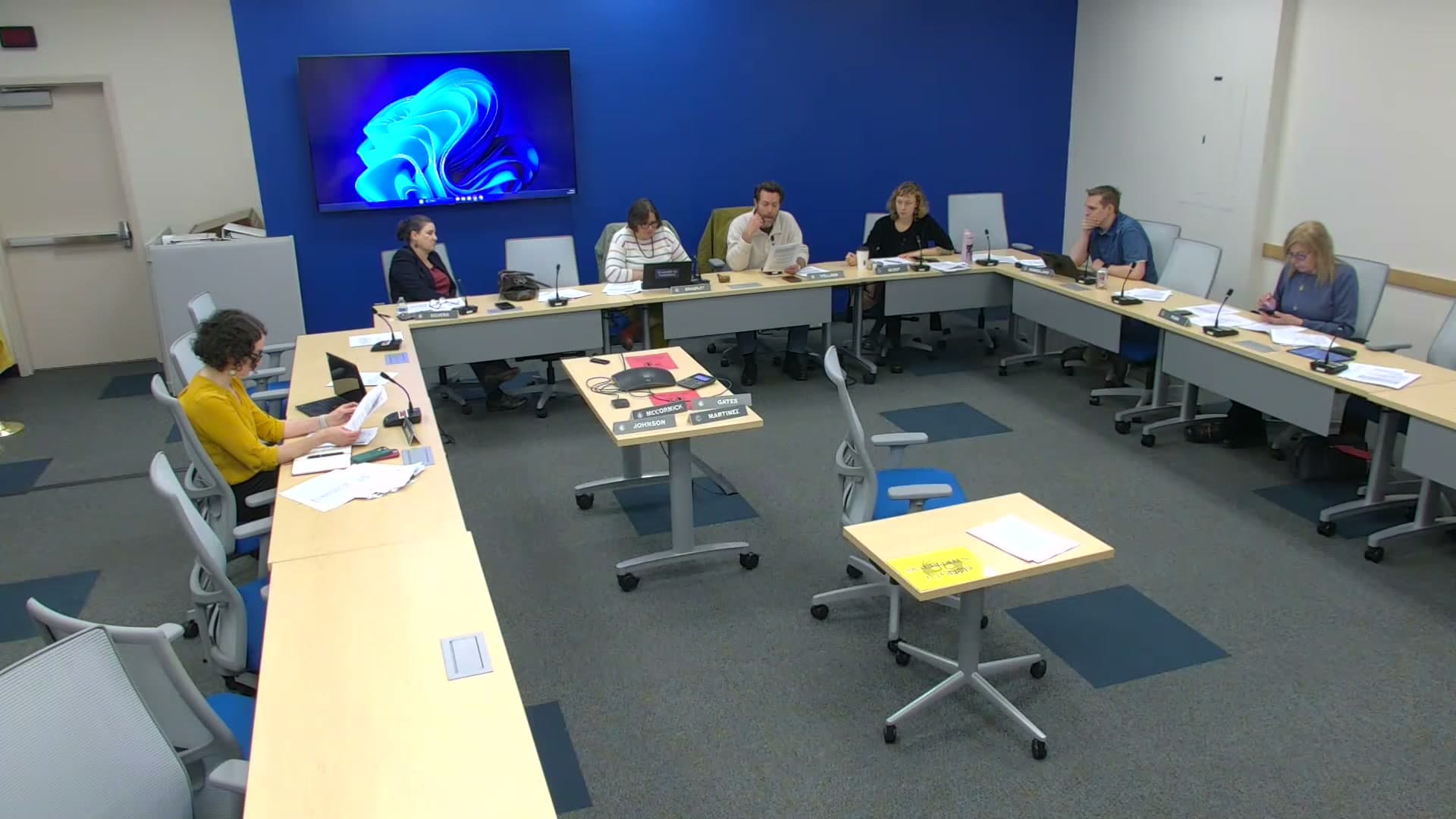
Frame from "Anchorage Assembly: Governance Committee-of-the-Whole Meeting" · Photo source
Anchorage Assembly members push back on draft social media rules
Anchorage Assembly members pushed back Thursday on a draft social media policy that, read literally, would keep them from talking about city government on their own campaign accounts.
"I can't talk about, hey, I've been a good assembly member, please elect me to another 3-year term?" Eagle River-Chugiak Assembly Member Donald Handeland asked at the Assembly's Governance Committee.
"I would say that's a legitimate reading of that," replied Matthew Hurt, an Assembly attorney who presented the draft. "That obviously was not the intent, but I see your point."
Hurt opened with a joke: "I would like once again to recommend just not using social media, period." The Assembly, he said, had been treating the issue "kind of like an unexpected clown at a birthday party," hoping it would go away. "I feel like we're to the point where the clown is like juggling in our face, so we need to address it." He said the policy has to fit four areas of law: the First Amendment, the city's ethics code, public records and the Open Meetings Act.
The draft, at least a year in the works, would set the first rules for members' official social media accounts. Everything posted on them would be a public record, and members couldn't delete their own posts. Members couldn't use official accounts to campaign.
The city clerk would provide free archiving for official accounts. Members who opt out would have to keep the records themselves. "It's the boogers on your forehead, to use the legal term," Hurt said.
The draft would also wall off members' personal and campaign accounts, which "shall not … feature posts relating to municipal government or the performance of the Member's office," or link to their official accounts.
"I don't know how you could ever run a campaign for reelection and have a social media account with this," Handeland said. He said the draft goes "way too far" in trying to "micromanage" what members do outside their Assembly role.
East Anchorage Assembly Member Yarrow Silvers said she has a post on her personal account sending people to her official one for Assembly business, and the draft would bar that. South Anchorage Assembly Member Keith McCormick asked what gives the city authority over members' personal accounts. He said he saw "an incredible amount of liability" in that section.
Under the city's ethics code, members speaking in a personal capacity "can really say whatever you want" as long as they don't use city resources or imply they speak for the Assembly, Municipal Attorney Eva Gardner said.
Gardner said the firewall is meant to protect members as well as the city. Under recent U.S. Supreme Court case law, she said, an official who shares official business on a personal account can face First Amendment limits there, including personal liability for blocking people or deleting their comments.
Assembly Chair Anna Brawley of West Anchorage said the goal is "a clear, bright, hard legal line" between members' official and private roles, not limiting their speech. "When we take office, we self-limit," she said. "You are always an assembly member in the public, even if you say that you're not."
"I'm not arguing this language is the perfect language," she said. "I am very open to other versions of this language that still achieves that goal."
Handeland also asked about the draft's definition of defamatory content, which doesn't require that it be false. What if the mayor proposed "a tax on puppies," he asked, and he called it a bad policy? Hurt said criticizing an official's policy decision "would not qualify as defamatory."
McCormick questioned the municipal attorney's office, which he described as part of the executive branch, deciding whether a member gets a city-paid legal defense under the policy. Brawley said the office serves both branches under the city charter.
Until there's a policy, members should assume they're personally responsible for preserving their official social media as public records, Hurt said.
The committee put off the rest of the discussion to a work session or a future meeting. Brawley said the chair would adopt the policy, as is generally done with Assembly policies. It would apply only to Assembly members, not the mayor's office, and would take effect Jan. 1 at the earliest.
What did you make of this story? (no account needed)
Made by our human newsroom with AI. Reviewed by Cale Green. How humans and AI work here · Grow with our newsroom · Transcript byWalter AlaskaNews
Get Alaska News in your inbox
Create your free account and get the day’s top stories around 6 each morning, in a few minutes’ read.
Top stories, around 6 each morning.
Stories on what you follow, on Sundays.
This article is based on a public meeting of Municipality of Anchorage — Anchorage Assembly: Governance Committee-of-the-Whole Meeting ().







Comments
Sign in to leave a comment.
No comments yet. Be the first to share your thoughts.